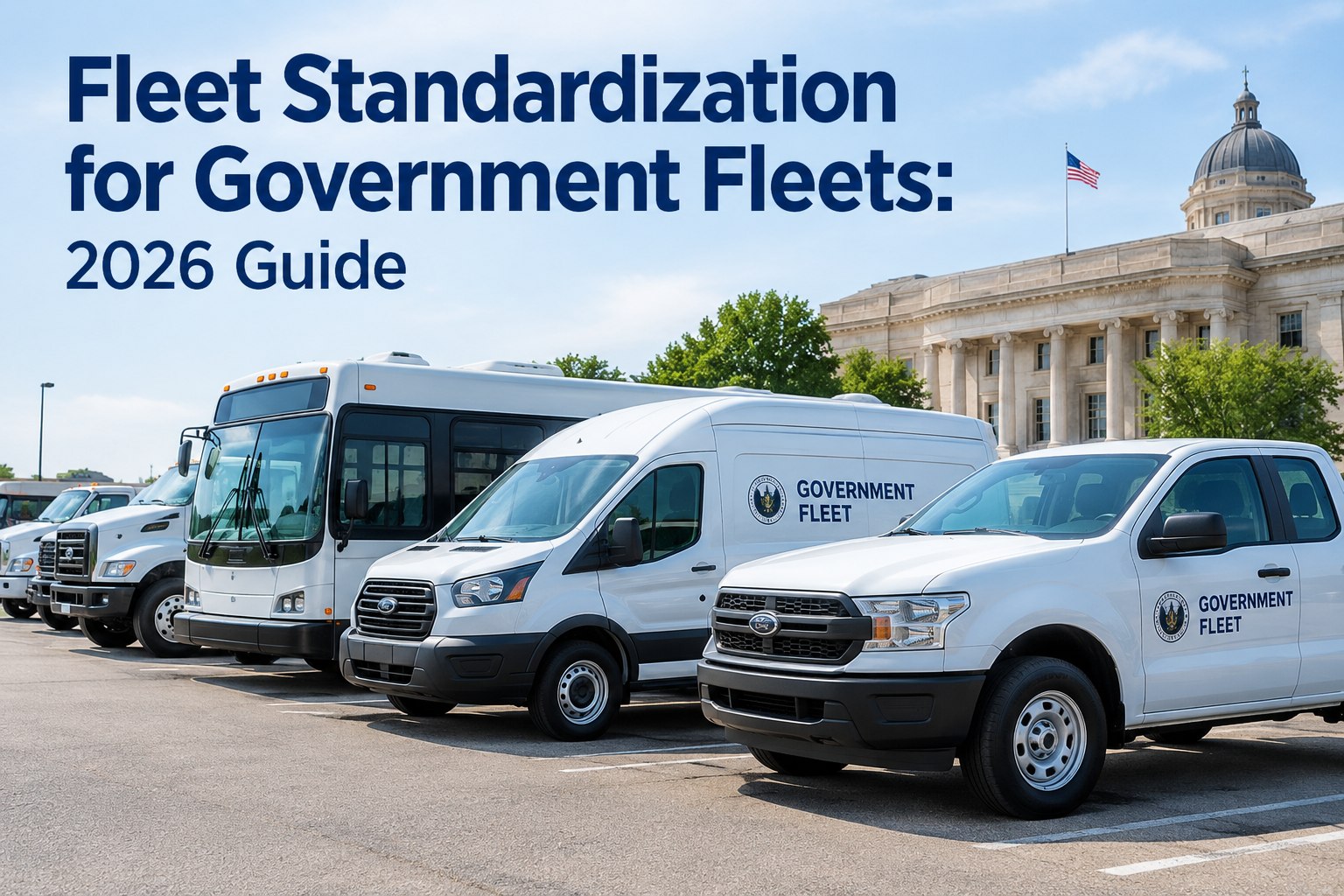
A government fleet doesn't get complicated on purpose. It happens one procurement at a time — whoever won the bid that year — until the shop is maintaining thirty models, stocking parts for all of them, and running techs who know none deeply. Fleet standardization is the deliberate reversal of that drift: consolidating makes, models, and specs so the shop gets simpler and cheaper to run. But it's a genuine trade-off, not a free win — and the only way to make the call is with the cost data to back it. See cost per asset class to guide what to standardize
Thirty Models, Thirty of Everything. Standardization Cuts the Multiplier.
Each vehicle type you add multiplies parts, training, tooling, and procurement effort. Tap a cost to see fragmented versus standardized.
Standardization is one of the few fleet moves that cuts cost and complexity at once — but it isn't free, and it isn't all-or-nothing. Below is the honest version: the real savings, the genuine trade-off you take on, the smart middle path most public fleets actually use, and the data that tells you what to standardize toward.
Where the savings actually come from
The headline is a smaller parts room, but standardization pays back in four connected ways — and the operational ones often matter more than the inventory line on paper.
Smaller parts inventory
Fewer unique SKUs means less cash tied up on shelves, less shop space consumed, and bulk-buy leverage on the parts you do stock. It's the most measurable saving.
Deeper technician skill
Techs who work the same platforms daily diagnose faster and repair with confidence — and training a few models well beats spreading it thin across many.
Less tooling to buy & licence
One diagnostic scan tool, one software suite, one set of special tools covers most of the fleet instead of a different rig per make — real capital and licensing savings.
Operator familiarity & safety
When operators know the controls and feel of a unit, you can reassign drivers freely without a productivity or safety hit — a quiet but real operational gain.
Notice most of these are workload and uptime savings, not just an inventory figure — which is why the case is stronger when you can show the maintenance-cost and technician-workload impact, not just the parts count. Book a demo to see maintenance cost and workload by asset class.
The honest trade-off: competition vs consolidation
Here's the part the one-sided guides skip. Standardizing means committing to fewer suppliers — which is exactly what gives you the volume leverage and simplicity, but also what a public procurement officer is duty-bound to question. You're trading some competitive bidding for consolidation savings, and that trade has to be defensible.
What you gain
- Volume pricing and simpler specs
- Smaller inventory, tooling, training load
- Faster repairs, better uptime
What you give up
- Some open competitive bidding
- Independence from one supplier
- Flexibility to chase the year's best deal
How fleets mitigate it
- Multi-year agreements from a competitive bid
- Require 2+ vendors able to bid the spec
- Easy-out clauses & cost-escalation limits
The trade-off isn't a reason not to standardize — it's a reason to standardize deliberately, with a procurement structure that preserves enough competition to satisfy the rules. Documented cost analysis is what makes that case to a procurement board. Start free and export the cost analysis procurement will ask for.
Don't standardize the fleet — standardize within each class
The mistake is treating standardization as one fleet-wide spec. You can't run a plow, a patrol car, and a backhoe on the same platform. The smart public-fleet move is standardizing within each asset class — every half-ton pickup the same, every dump truck the same — capturing the savings without forcing incompatible vehicles into one mould.
One spec for the whole fleet
Impossible across dissimilar vehicle types, and it forces compromises that hurt the work the vehicle exists to do. Nobody actually does this.
One spec within each asset class
All light-duty pickups on one platform, all medium-duty trucks on another, all mowers the same. Full parts, tooling, and training savings per class — no forced compromises.
Standardizing by class is where the theory meets a real public fleet — you keep the right tool for each job while still collapsing parts, tooling, and training within the classes that dominate your maintenance load. Book a demo to see cost and parts consolidation modelled by asset class.
Let the data pick what to standardize toward
Standardization only saves money if you consolidate toward the right platform — the one that's actually cheaper to own and run, not just the one you have most of. That's a data question, and answering it wrong locks a bad choice into your fleet for a decade.
Compare cost per asset class
Rank models within each class by real maintenance cost per mile or hour — the cheapest-to-run platform is your standardization target.
Weigh age & utilisation
Factor in how hard each model actually works, so you standardize on a platform proven under your duty cycle, not a light-duty flatterer.
Model the parts consolidation
See which SKUs collapse and how much inventory shrinks under each candidate platform — the concrete saving to put in the request.
Export the analysis
Hand procurement and finance a documented cost case — not a hunch about which brand the shop happens to like.
Do it on data and standardization is one of the most defensible cost decisions a public fleet can make; do it on preference and you've just made your fleet uniform in the wrong direction. The difference is whether the cost history exists to guide it. Book a demo to rank platforms by real cost per class.
The fleet standardization checklist
Work through this before locking a standard spec — it turns "let's just buy the same truck" into a defensible, phased strategy. Use this standardization checklist online free, backed by your own parts, cost, and utilisation data.
Map your current make/model spread
Count how many distinct platforms you run per asset class — the complexity you're paying for now.Rank platforms by cost to own
Compare real maintenance cost per class to find the cheapest-to-run standardization target.Model the parts & tooling savings
Quantify the SKU reduction and tooling you'd retire — the concrete number for the request.Standardize within class, not across
Set one spec per asset class — not one impossible spec for the whole fleet.Structure procurement to keep competition
Multi-year agreement or spec bid with 2+ eligible vendors and an easy-out clause.Phase it to replacement cycles
Standardize as vehicles come up for renewal — no scrapping serviceable units to force uniformity.From a fleet director who consolidated on purpose
Our fleet had drifted into a mess — we'd buy whatever won the bid each year, so the shop was stocking parts for eleven different medium-duty trucks. The parts room was overflowing and half of it never moved. My techs couldn't be good at everything, so nobody was really fast at anything.
We pulled the cost data by model, picked the two platforms that were cheapest to run, and standardized every new medium-duty purchase onto them — within class, phased to replacements. Parts inventory is down sharply, the techs are quicker, and when procurement pushed back on competition I had the cost analysis to show why it was worth a multi-year agreement. It was the data that won that argument, not my opinion.
Frequently asked questions
What is fleet standardization?
Fleet standardization is deliberately consolidating the makes, models, and specifications a fleet operates — ideally within each asset class — so the shop stocks fewer unique parts, buys less diagnostic tooling, and trains technicians on fewer platforms. Government fleets pursue it to cut inventory, tooling, and training costs and to improve maintenance efficiency. One county that standardized its heavy trucks to a common engine, transmission, and tires projected a 25% parts-inventory reduction worth about $75,000 a year.
What are the benefits of standardizing a government fleet?
Four main gains: a smaller parts inventory (less cash on shelves, less space, bulk-buy leverage), deeper technician skill from working fewer platforms, less diagnostic tooling and software to buy and licence, and operator familiarity that lets you reassign drivers without a productivity or safety hit. Together these lower maintenance cost and reduce downtime. The operational savings — faster repairs, better uptime — often outweigh the headline inventory figure on paper.
What's the downside of fleet standardization?
The main trade-off is reduced competitive bidding and increased supplier dependency — the same commitment that delivers volume pricing also ties you to fewer vendors, which a public procurement process is bound to scrutinise. Fleets mitigate this with multi-year agreements awarded from a competitive bid, spec requirements that at least two vendors can meet, and easy-out clauses. The trade-off doesn't rule standardization out; it means doing it deliberately with a defensible procurement structure.
Should a fleet standardize entirely or by asset class?
By asset class. You can't run a plow, a patrol car, and a backhoe on one specification, so a single fleet-wide standard is impractical. The effective approach is standardizing within each class — every light-duty pickup on one platform, every medium-duty truck on another — which captures the parts, tooling, and training savings for the classes that dominate your maintenance load without forcing incompatible vehicles into one mould.
How do you decide which platform to standardize on?
With cost data, not the model you happen to own most of. Rank the models in each asset class by real maintenance cost per mile or hour, weigh age and utilisation so you're comparing them under your actual duty cycle, and model how much parts inventory each candidate would consolidate. The cheapest-to-own platform that meets the work requirement is the target — standardizing toward the wrong one locks a costly choice in for years, so the call should rest on documented cost history.
Make standardization a cost decision, not a habit
HVI tracks consolidated parts and inventory, cost per asset class, maintenance history, and age and utilisation across every department, and exports the analysis for procurement and budget. So you standardize toward the platform that's genuinely cheaper to own, keep enough competition to satisfy the rules, and prove the saving — instead of buying uniform in the wrong direction.
No credit card · Cost by asset class & parts consolidation · Exportable analysis