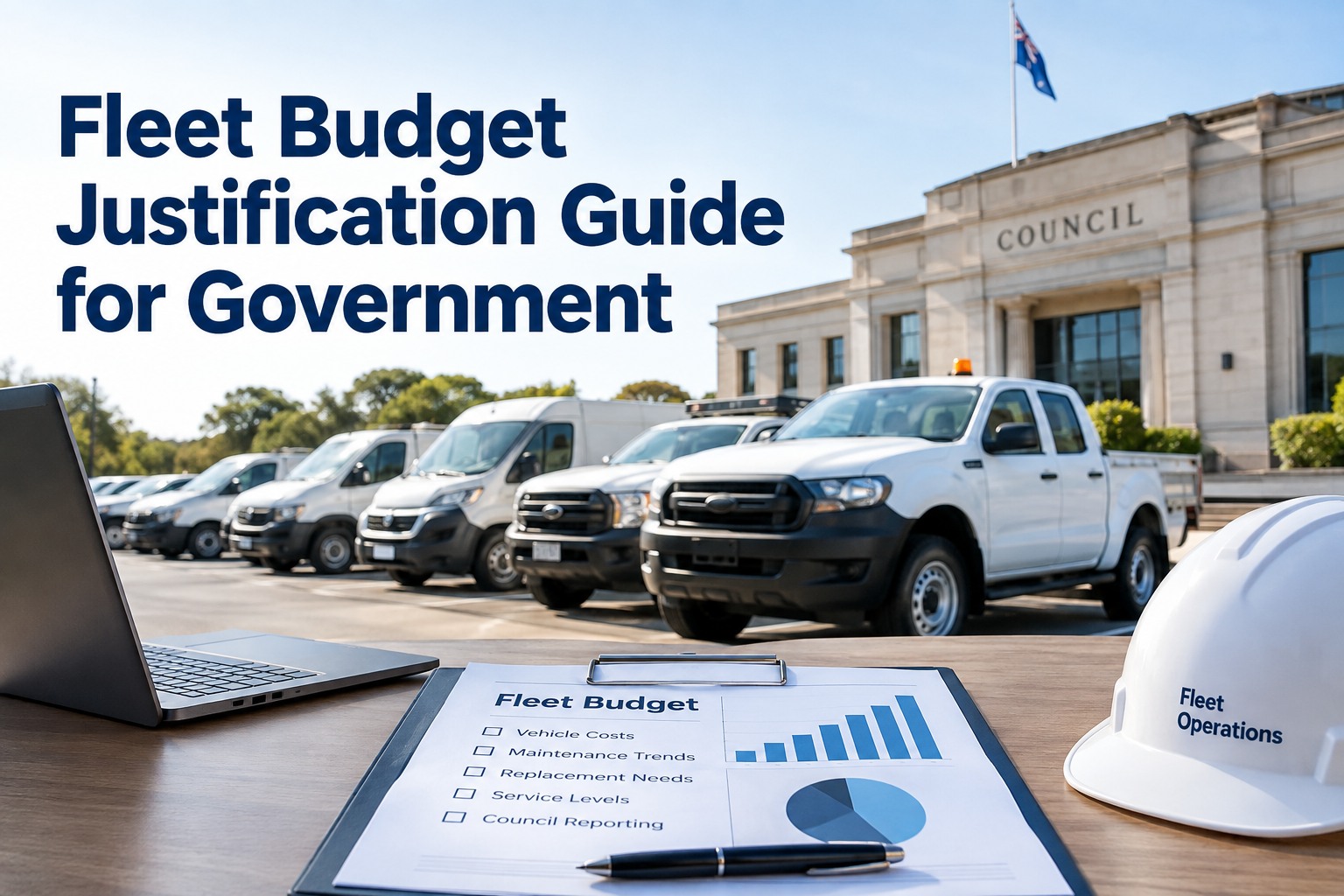
A department gets billed $4,200 for "vehicle usage" this month and has no way to trace where that number came from — and that's the moment a government fleet chargeback program loses credibility, whether or not the number is actually correct. Untraceable charges become budget disputes, budget disputes become council questions, and council questions land on the fleet director's desk. Here's how the three common chargeback models work, what a defensible rate requires, and the annual cycle that keeps a rate from becoming a fight.
Which Chargeback Model Fits Your Fleet?
Pick a model. See what it actually charges for, who it fits, and where it tends to break down.
What Full Cost Recovery Actually Includes in Government Fleet Chargeback
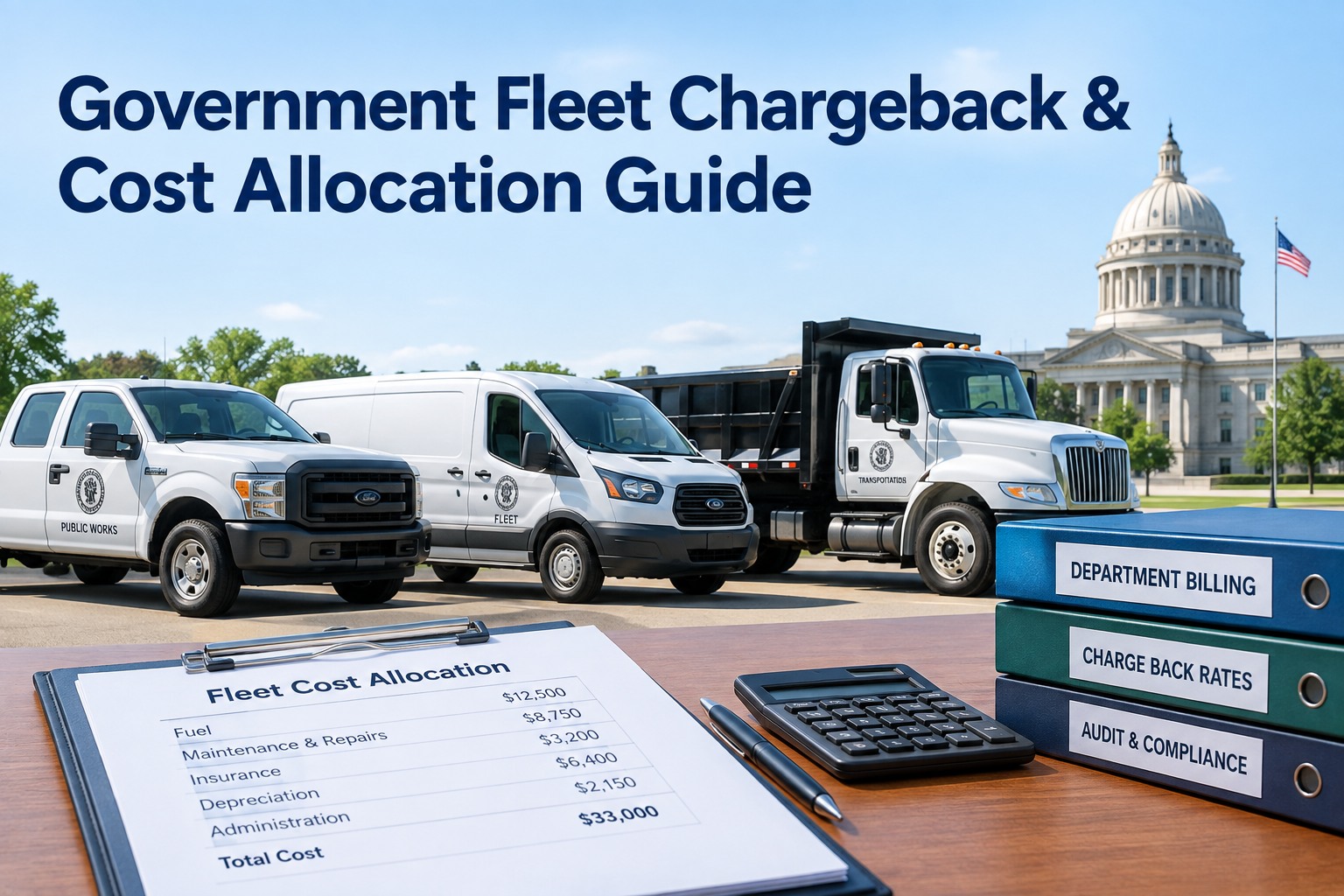
Most government fleets that outgrow a flat per-class rate move toward full cost recovery — the model the Government Finance Officers Association recognizes as best practice for fleet internal service funds. It isn't one number; it's four distinct cost components rolled together.
Maintenance & Repair
An hourly in-house labor rate applied to actual technician time per work order, plus a parts markup covering procurement and inventory carrying cost — or the outsourced repair invoice where work leaves the shop.
Fuel
Actual consumption at the vehicle or department level, not an estimate split evenly — the single most common source of "that doesn't look right" disputes when it's missing.
Depreciation & Replacement Reserve
A per-vehicle contribution set aside over the asset's useful life so replacement funding exists when the vehicle actually needs replacing — the piece departments consume even in a month with zero repair activity.
Overhead & Administration
Fleet management staff time, facility cost, software and systems — the smallest line item by dollar amount, usually, but the one most often left out entirely.
Book a demo to see all four components rolled up automatically per vehicle, instead of assembled by hand from separate maintenance, fuel and finance systems each budget season.
The Data That Makes a Government Fleet Chargeback Rate Defensible
A rate survives a council question or an audit for one reason: every number in it traces back to something retrievable, not something remembered. That means vehicle-level cost history, correct department assignment for every vehicle (not the department that requested it three reorganizations ago), actual utilization in miles or hours, and maintenance and fuel records tied to the specific asset rather than a fleet-wide average. Missing any one of these doesn't just weaken the rate — it's usually the exact thing an auditor or a skeptical department head asks for first. Book a demo to see vehicle, department and fiscal-year cost views pulled from the same underlying record, ready before the question is asked, not after.
The Annual Rate-Setting Cycle
Skip step 2 — the true-up — and a fund can drift for years without anyone noticing until it's badly over- or under-collected. One city audit found a fleet reserve fund had grown so far past its target that the following year's replacement charges were eliminated entirely to bring it back down — a correction that would have been a small annual adjustment if the true-up had happened on schedule instead of being skipped repeatedly.
The 15% Rule Almost Everyone Misreads
GFOA's widely cited reserve guidance suggests fleet replacement reserves target roughly 15% — but 15% of what trips up more finance teams than any other detail in this process. It's 15% of annual fleet expenditures, not 15% of the total value of the fleet's assets. One municipal audit found a department had set its reserve target using the asset-value interpretation, producing an emergency reserve figure many times larger than intended and quietly overcollecting from departments for years as a result. Getting this one definition wrong doesn't just misstate a target — it directly overcharges or undercharges every department paying into the fund. Sign up free to check your own replacement reserve math against actual annual expenditure data, not a manually maintained spreadsheet assumption.
Where Chargeback Programs Actually Break Down
A department that's never paid a traceable vehicle cost will push back the first time a real number appears on its budget. Running a "showback" period — sharing the true cost before charging it — lets department heads see and question the number before it hits a live budget line, cutting disputes sharply once real chargeback starts.
Maintenance logged on paper in one shop and digitally in another, fuel cards not matched to the right vehicle, work orders missing labor hours — a rate built on inconsistent source data will always produce a number someone can successfully challenge.
Most disputes aren't actually about whether the rate is fair — they're about whether it's explainable. A rate with a documented formula and retrievable supporting records rarely gets successfully challenged; a rate that can only be explained as "that's what finance calculated" almost always does. Book a demo to see how a documented, traceable rate holds up under a department's first real question.
What a Fleet Director Actually Has to Defend Internally
Every budget season, Public Works would ask why their number went up, and for years my honest answer was some version of "trust me." Once we could actually show the maintenance hours, the fuel spend and the replacement contribution behind their specific vehicles, the same conversation changed completely. Now department heads argue about their own driving habits instead of arguing with me about whether the number is real.
The Takeaway
A government fleet chargeback program earns trust the same way every year, on every invoice: the number traces to a real record, the rate follows a documented annual cycle, and departments see it explained before they see it billed. Whether you're running a simple flat rate today or building toward GFOA-aligned full cost recovery, the fastest way to lose department buy-in is a number nobody can trace, and the fastest way to keep it is retrievable cost-per-vehicle and cost-per-department data behind every figure. Sign up free and start building that record before your next rate-setting cycle.
Frequently Asked Questions
What is a government fleet chargeback system?
A government fleet chargeback system bills departments for the actual cost of the vehicles they operate — typically maintenance, fuel, depreciation or replacement reserve contribution, and a share of fleet overhead — rather than funding fleet operations through a single, undifferentiated general fund line item. It's usually run through an internal service fund, a structure the Government Finance Officers Association recognizes as best practice for accounting for fleet operations.
What's the difference between a fixed rate and full cost recovery chargeback model?
A fixed rate model charges a flat monthly or annual amount per vehicle class regardless of actual use, which is simple but doesn't distinguish a heavily used vehicle from a lightly used one. Full cost recovery rolls together direct maintenance and repair cost, fuel, a per-vehicle depreciation or replacement reserve contribution, and administrative overhead into a rate that reflects each vehicle's actual cost — more defensible under audit, but requiring significantly more complete underlying cost data.
What is the GFOA's 15% reserve guidance for fleet replacement funds?
GFOA's commonly cited reserve target for fleet replacement funds is roughly 15% — but specifically 15% of annual fleet expenditures, not 15% of the total asset value of the fleet. This distinction matters because the asset-value interpretation produces a dramatically larger target, and at least one documented municipal audit found this misinterpretation had led to a fleet reserve fund significantly overcollecting from user departments for years.
How often should a government fleet review and adjust its chargeback rates?
Most agencies following GFOA-aligned practice review chargeback rates annually, as part of the budget cycle — closing out prior-year actuals, reconciling (or "truing up") the variance between what was charged and what was actually spent, projecting next year's costs by vehicle class, and formally adopting the new rate through council or board approval. Skipping the annual true-up step is one of the most common causes of a reserve fund drifting significantly over- or under-collected over several years.
Why do departments dispute fleet chargeback rates?
Most disputes trace back to traceability rather than fairness — a department is far more likely to accept a higher charge it can see the underlying maintenance, fuel and replacement-reserve records behind than a lower charge it can't verify. Common root causes include inconsistent cost record-keeping across shops or systems, charges introduced without a prior "showback" period letting departments see the real number before it's billed, and a rate formula that isn't documented or explainable on request.
Build a Defensible Chargeback Rate From Real Fleet Data
HVI rolls maintenance, fuel and operating cost up to cost per vehicle, per department and per fiscal year automatically, with council-ready reporting behind every figure — so your next rate-setting cycle starts from retrievable records, not a spreadsheet reconstruction.
No credit card · No hardware required · Live before your next budget cycle