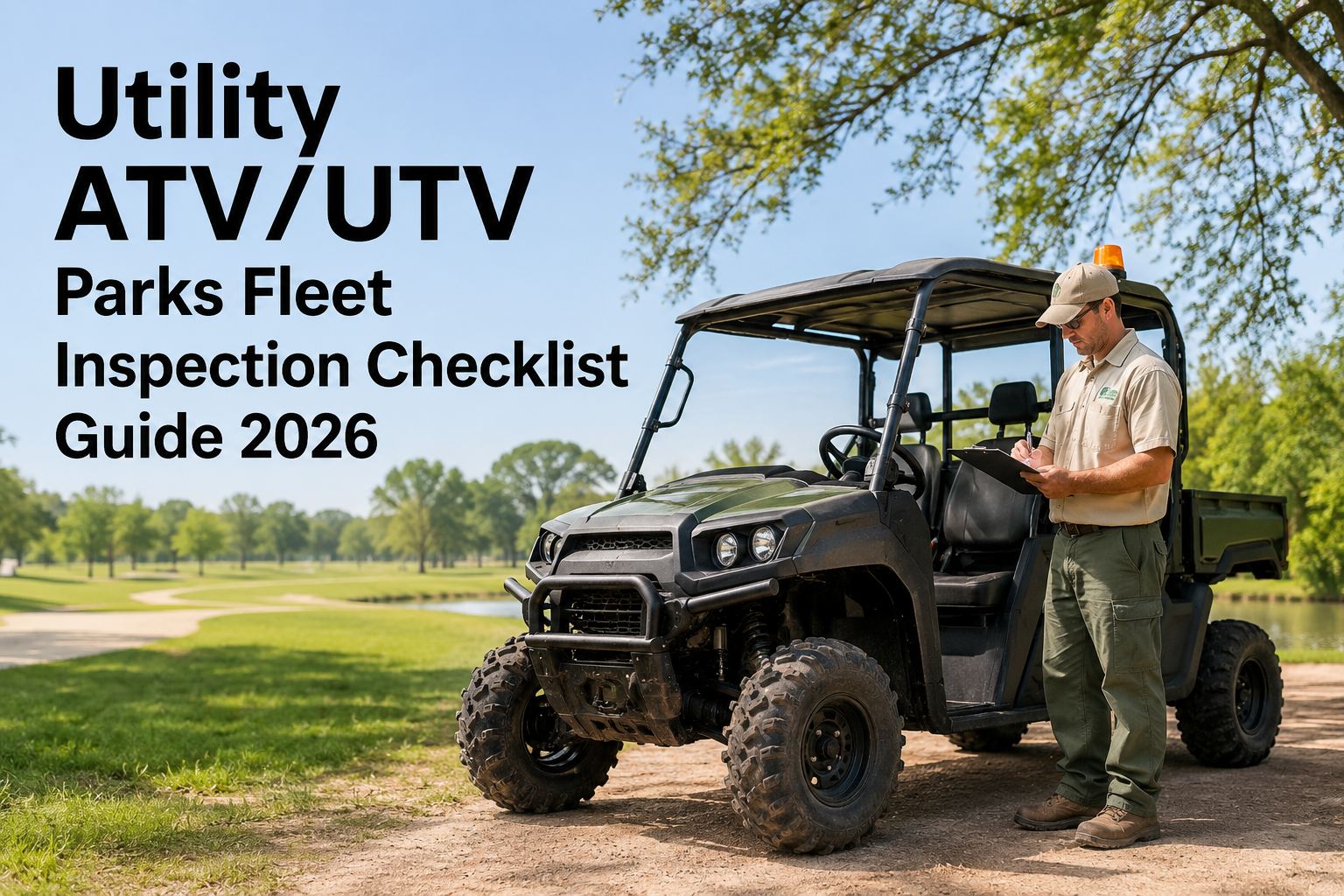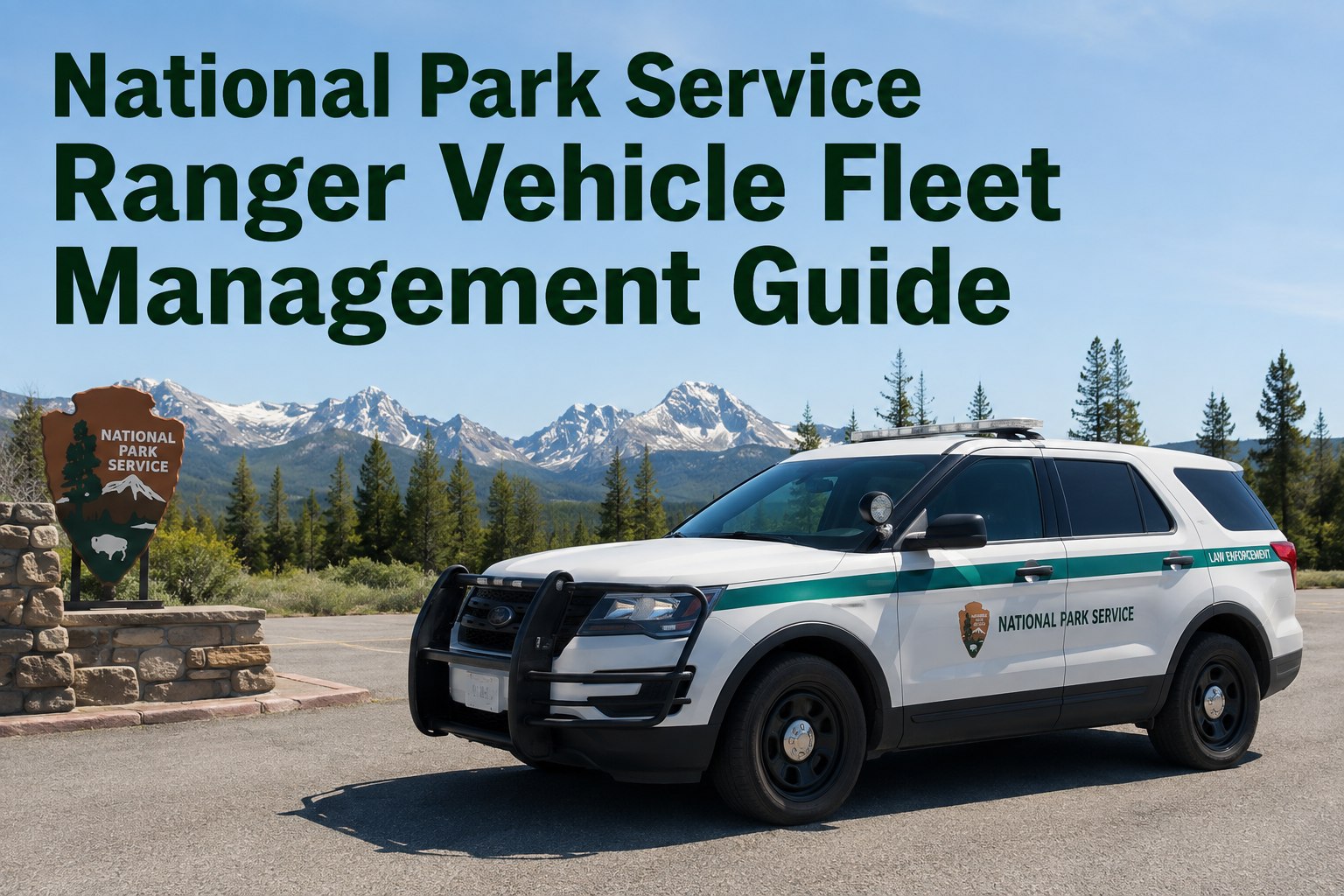
It's 6:40 a.m. at a high-country ranger station. The overnight low hit -18°F, a patrol truck won't crank, and the nearest parts counter is a 90-minute drive down a mountain road that may or may not be plowed. If you manage a National Park Service ranger vehicle fleet, this isn't a bad dream — it's Tuesday. Across roughly 400 park units, the NPS operates more than 8,000 vehicles under DOI Interior fleet management policy, from law enforcement interceptors and 4x4 patrol trucks to utility mules, boats, and concession-operated shuttles. Keeping that mixed fleet alive at 12,000 feet, in desert heat pushing 120°F, and in maintenance shops with no internet connection takes more than a spreadsheet and a binder. This guide breaks down the real operating conditions, the compliance layer, and the inspection workflow that keeps ranger vehicles mission-ready — and shows how a 30-minute walkthrough of HVI on your own units maps to each one.
What does it take to keep 8,000+ ranger vehicles alive at 12,000 feet, -40°F, and 90 minutes from the nearest parts shelf?
Severe duty isn't a marketing phrase in a national park — it's the job description. Here's the operating reality, the DOI compliance layer, and the off-grid inspection workflow that holds it together.
Why NPS ranger vehicle maintenance is a different problem
Four numbers define the gap between a national park fleet and a typical municipal motor pool. Each one has a direct cost attached.
Engines lose roughly 3% of power per 1,000 ft. At trailhead altitude a patrol truck works ~30% harder, cooking transmissions and brakes on grades a flatland fleet never sees.
A 160-degree spread across the system kills batteries, cracks hoses, and thickens fluids. Cold-soak no-starts and heat-soak vapor lock are both scheduled events, not surprises.
Many park shops are off-grid or connectivity-poor. A missed $12 serpentine belt becomes a two-day vehicle outage and a ranger patrolling on foot.
DOI Interior fleet management rolls every vehicle into bureau-level reporting. One park's missing inspection records become a finding in a department-wide audit.
The NPS severe-duty inspection checklist, by system
A standard 20-point DVIR won't catch what altitude, dust, and freeze-thaw cycles do to a patrol vehicle. This is the tiered checklist that does — built for law enforcement, utility, and concession units alike.
Daily — operator walk-around
- Tire condition, spare, and bead damage from rock strikes
- Fluid leaks after overnight cold soak
- Light bar, siren, radio, and emergency equipment function
- Underbody damage from trail debris and water crossings
- Photo capture of any new defect, geo-tagged at the site
Weekly — shop severe-duty pass
- Brake pad thickness and rotor scoring from mountain descents
- Battery load test — cold cranking amps degrade fast at elevation
- Air filter restriction — fine volcanic and desert dust clogs fast
- CV boots, skid plates, and suspension bushings for trail damage
- Coolant concentration verified for the park's actual low temp
Seasonal — pre-summer / pre-winter
- Full fluid exchange with season-correct viscosities
- Tire swap with tread-depth log — winter rated vs. all-terrain
- Heater/defroster and A/C verification before season flip
- Winch, recovery gear, and tire chain inspection
- PM interval reset by engine hours, not just mileage
The catch is doing all three tiers where there's no signal. HVI's mobile app runs the full checklist offline on any phone or tablet, stores photos and timestamps locally, and syncs when the ranger hits connectivity — and every record can be exported as an off-grid PDF for the audit binder. If you want to see that flow on your own checklist, book a demo and bring your toughest inspection form.
DOI fleet management requirements vs. the record you actually need
DOI Interior fleet policy doesn't care that your shop has no Wi-Fi. Every requirement maps to a specific, retrievable record — and "it's in a binder somewhere at the district office" fails the audit.
| DOI / bureau requirement | What auditors ask for | Where paper fails | HVI record produced |
|---|---|---|---|
| Operator daily inspection (DVIR-equivalent) | Timestamped, signed, defect-flagged report per vehicle per day | Forms lost between trailhead and district office; no photo proof | Mobile DVIR with photos, GPS stamp, and e-signature, synced or exported as PDF |
| Preventive maintenance by interval | PM schedule per asset with completion history | Spreadsheet tabs per park; engine-hour intervals never tracked | PM triggers by date, mileage, or engine hours with due/overdue alerts |
| Defect-to-repair traceability | Proof a reported defect became a completed work order | Texted photos and verbal handoffs leave no chain | One tap converts a defect into a work order with full history |
| Law enforcement vehicle readiness | Emergency equipment checks logged per shift | Checklists on clipboards in the patrol truck itself | Shift-level checklist template with pass/fail and photo evidence |
| Bureau-level fleet reporting | Utilization, cost per asset, and compliance rate rolled up | Quarter-end scramble re-keying paper into reports | Analytics dashboard: uptime, cost per asset, compliance rate, exportable |
The pattern is the same in every row: the requirement is reasonable, but the paper trail breaks under park conditions. A digital trail that works offline and produces an audit-ready PDF on demand is the only version that survives both the backcountry and the audit. Many NPS fleet coordinators walk through this exact mapping in a demo call before rolling it to their districts.
Four HVI capabilities built for park service fleet conditions
Not generic fleet software features — the specific tools that hold up at altitude, off-grid, and under DOI audit pressure.
Offline-first mobile inspections
Rangers complete the full severe-duty DVIR on any phone with zero signal. Photos, timestamps, and GPS stamps store locally and sync later — or export as an off-grid PDF. Outcome: 100% inspection completion even at the most remote trailhead.
Defect-to-work-order in one tap
A cracked CV boot photographed at mile 40 becomes an assigned work order before the truck is back at the barn. No more texted photos lost in a group chat. Outcome: defects repaired in days, not discovered again at the next PM.
PM by engine hours, not just miles
A patrol truck idling at a trailhead checkpoint racks up engine hours the odometer never sees. HVI triggers PM by date, mileage, or engine hours with due and overdue alerts. Outcome: no more blown intervals on low-mileage, high-hour units.
Bureau-ready analytics
Uptime, cost per asset, PM compliance rate, and inspection completion roll up across every district automatically. Outcome: the quarterly DOI report becomes an export, not a two-week archaeology project through paper files.
What one missed defect actually costs a park fleet
Run the math on a single patrol truck at a high-altitude district. This is a realistic illustrative example, not a worst case.
Multiply that across a district running 40 mixed units and the case writes itself: a photo-logged defect caught at the daily walk-around costs $18 and one shop hour. The same defect discovered on a gravel road costs two hundred times more. Fleets that start logging inspections free in HVI typically surface their first save within the first month — the defect that would have become the story above.
See the NPS severe-duty template running on your own fleet
Book a 30-minute demo and we'll load your vehicle classes — patrol, utility, concession — into HVI's NPS-tuned inspection template, offline mode included.
A 4-week rollout for a national park service fleet
Government fleet rollouts die from over-scoping. This sequence gets one district live fast, then scales with proof in hand.
Load assets and templates
Import your vehicle list — law enforcement, utility, boats, concession units — and apply the NPS severe-duty checklist tiers. Set PM intervals by engine hours for patrol units and mileage for road vehicles. Most districts finish this in two working sessions.
Train operators in 20 minutes
Rangers learn the walk-around on their own phones — no new hardware, no desktop logins. The app works offline from day one, so the training happens at the trailhead, not in a classroom. Adoption is the whole ballgame, and a 20-minute curve wins it.
Connect defects to the shop
Route every flagged defect straight to a work order with parts attached. Your parts and inventory module tracks what each remote district actually holds, so the 90-minute parts run happens once, with the right parts. This is where downtime visibly drops.
Prove it, then scale
Pull the first compliance report: inspection completion rate, PM on-time percentage, defect closure time. That one-page export is what you take to the regional office to fund the next districts. If you want a guide for that first month, book a demo and we'll map the rollout to your park structure.
The bottom line for NPS ranger vehicle fleet management
Severe duty is the baseline, not the exception
Altitude, a 160°F temperature spread, and off-grid shops mean standard fleet checklists under-inspect every NPS ranger vehicle. Tier your inspections: daily operator, weekly shop, seasonal deep pass.
The audit trail must work offline
DOI Interior fleet management reporting doesn't pause for dead zones. Your inspection records need to capture offline, sync later, and export as PDF — or they don't exist when the auditor asks.
Small defects are cheap; discoveries are not
An $18 belt logged at a walk-around versus a $4,000 failure on a gravel road is the entire ROI argument. Photo-backed defect capture with instant work orders is how you stay on the cheap side of that line.
None of this requires new hardware, a connectivity project, or a year-long procurement. It requires one platform that treats off-grid, severe-duty, mixed-fleet operation as the normal case. You can sign up free and run your first inspection today, or see the whole workflow on your own units in a demo first.
"The number I watch is defect-to-repair days. On paper it averaged eleven — a ranger would write it up, the form would sit in a tray, the shop would find out at the next PM. Now a photo from the trailhead is a work order before lunch, and we're under three days. My gripe used to be that half our fleet records lived in the trucks themselves. Auditors don't accept that answer, and honestly neither did I."
NPS fleet management FAQs
How many vehicles does the National Park Service operate?
Can inspection software work at parks with no cell coverage?
What makes NPS vehicle maintenance "severe duty"?
Should park fleets schedule PM by mileage or engine hours?
How do we get started without a long procurement process?
Your fleet works where the map ends. Your maintenance records should too.
Join the fleet and maintenance managers who replaced binders and group chats with audit-ready, offline-capable inspections and work orders — tuned for NPS severe-duty conditions.
Free to start — Works offline on any phone — No card needed