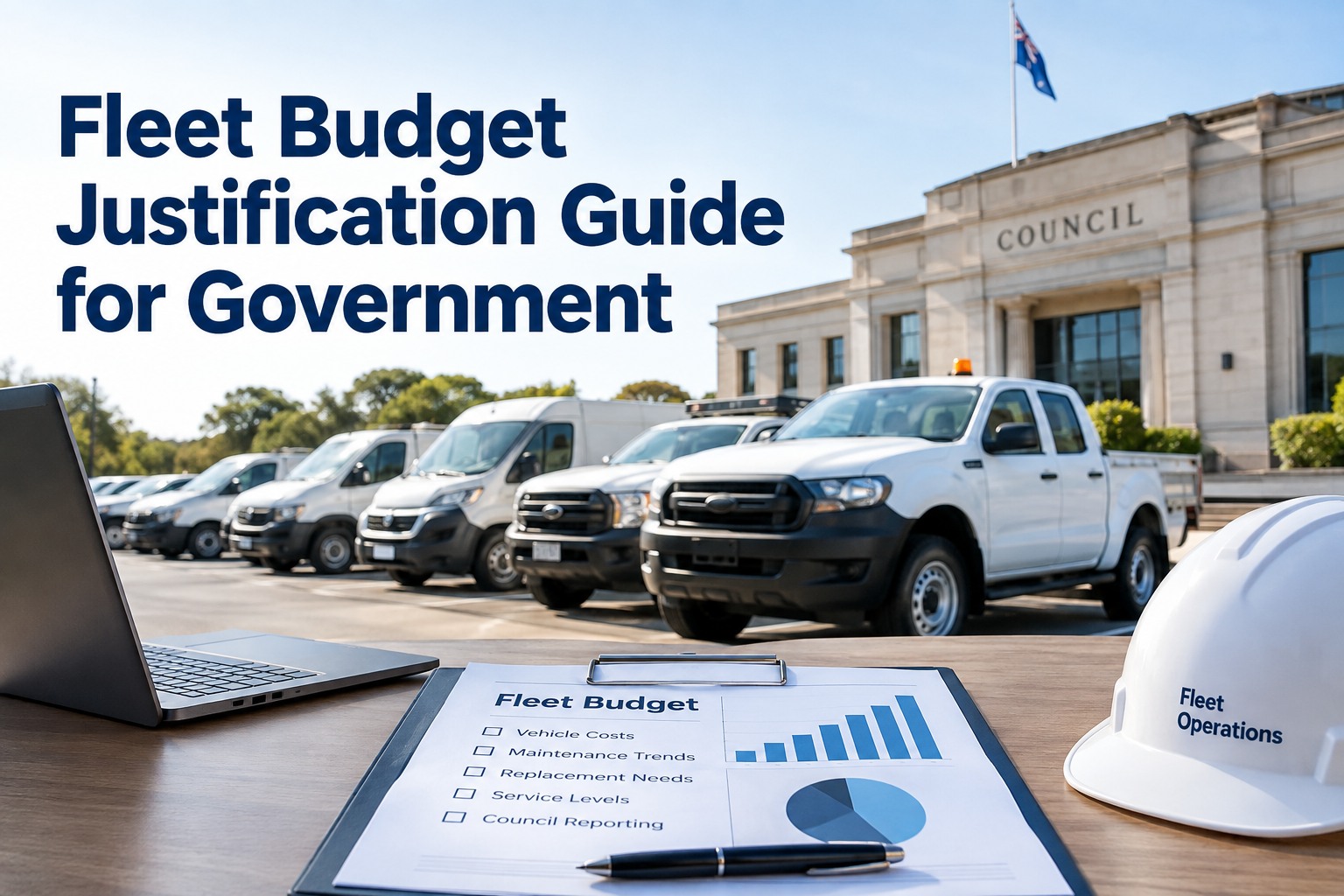
A fleet director asks council for four replacement trucks and gets approved for one. Not because the need wasn't real — because the request was a paragraph of frustration instead of a page of numbers. Fleet budget justification isn't about making the case sound urgent. It's about making the case impossible to argue with.
What a Defensible Budget Justification Is Built From
This guide walks through what council members and finance officers actually want to see, the six-part structure that turns raw fleet data into a request that's hard to say no to, a side-by-side look at what changes when data replaces anecdote, and the preparation timeline that makes next year's budget season far less painful than this one. None of it requires a finance background — it requires the same records most fleets are already keeping, organized in a way that answers the questions council is actually going to ask.
What Council and Finance Teams Want in a Fleet Budget Justificationnot more detail — the right six numbers, every time
Even the federal government, running a fleet in the hundreds of thousands of vehicles, doesn't get to submit a budget request on vibes — every agency reports vehicle-level inventory, cost, mileage, and fuel data annually through the Federal Automotive Statistical Tool. A municipal or county fleet answering to a much smaller council has exactly the same obligation in spirit: show the numbers at the level council can actually evaluate them. None of these six data points require exotic reporting — most fleets already generate the underlying records through routine inspections and work orders. The gap is usually in pulling that data into a form council can actually read in a five-minute agenda slot, not in collecting it in the first place.
Cost per vehicle
A fleet-wide total hides the one unit quietly costing three times what the rest of its class does — cost has to be visible per asset, not just per fleet.
Cost per department
Public works, parks, and police rarely compete for the same dollars — a department-level breakdown lets council weigh requests against each other fairly.
Preventive vs. reactive spend
A rising reactive-repair share is the clearest sign a fleet is behind on maintenance — and one of the fastest data points to explain a budget increase.
Fleet age & replacement need
Age alone isn't the argument — age paired with rising annual maintenance cost against replacement value is what makes a capital request self-evident.
Utilization
A vehicle sitting idle most of the year undercuts every other request in the same budget package — utilization data protects the requests that are genuine.
Downtime & availability
Downtime translates directly into service impact — a snowplow or patrol car off the road isn't an abstraction, it's a missed route or a delayed response.
Book a demo to see these six data points generated automatically from your existing inspection and maintenance records.
The 6-Part Fleet Budget Justification Structure, Expandedthe same six blocks from the top of this page, one layer deeper
Current fleet condition
Age, mileage or hours, and condition by department — the starting snapshot everything else builds on.
Historical costs
Year-over-year maintenance, fuel, and repair spend by vehicle and department, showing the trend, not just this year's number.
Operational impact
What downtime or deferred replacement actually costs in service delivery — missed routes, delayed response, reduced coverage.
Requested funding
A specific number tied to specific units or line items — never a round figure with no asset-level backing.
Expected outcome
What changes if funded — lower reactive spend, restored availability, avoided downtime — stated in terms council can track next year.
Supporting evidence
The tables, trend charts, and per-vehicle records behind every claim above — available on request, not assembled after the fact.
Each of these six blocks earns its place because it answers a specific question council or finance will ask — not because a longer document looks more thorough. Book a demo to see this structure pre-filled from your fleet's own inspection and cost records.
Weak Ask vs. Strong Asksame request, different odds of approval
- "This truck keeps breaking down, we need a new one"
- No specific dollar figure tied to the claim
- One anecdote standing in for a trend
- Data promised "available on request" but not on hand
- "Unit 7 cost $6,100 in repairs this year — 30% of its $20,000 replacement value"
- Requested funding tied to a specific replacement line item
- Three-year cost trend shown alongside the current-year spike
- Full maintenance and cost history attached, not referenced
Both statements can describe the exact same vehicle. Only one of them survives a follow-up question from a skeptical council member. The difference isn't better writing — it's whether the underlying records were being kept in a form that could produce that second sentence on short notice. Sign up free to see what your own weakest-looking budget line turns into once the cost history behind it is actually visible.
Build the Case Year-Round, Not the Week Beforethe evidence has to already exist by the time the hearing is scheduled
The single biggest reason budget requests get picked apart isn't a weak case — it's a rushed one, assembled from memory and spreadsheets in the two weeks before the hearing. The fix is treating documentation as a year-round habit tied to the fiscal calendar, not a scramble. Book a demo to see how this rhythm runs automatically once inspections and work orders are logged in one system instead of several.
From a fleet director who changed how the budget conversation went
The first year I asked for replacement funding with a one-page memo, and it got tabled for more information we didn't have ready. The second year I brought a cost-per-vehicle table, a three-year trend line, and a one-page summary of what deferred replacement was already costing us in overtime repairs. Same fleet, same actual need — completely different meeting. Council didn't approve it because the story was more compelling. They approved it because they couldn't find a hole in the numbers.
How HVI Builds Your Council-Ready Report Automatically
HVI tracks maintenance, fuel, and repair cost per vehicle, rolls it up per department, and organizes it by fiscal year automatically — the exact three cuts of data a budget justification needs, without a manual spreadsheet exercise every year. Sign up free to see your own fleet's cost-per-vehicle and cost-per-department numbers generated from records you're likely already collecting.
Preventive-versus-reactive spend, utilization, and downtime are tracked continuously, so year-over-year trend charts are a report away rather than a reconstruction project. When budget season arrives, a council-ready report — tables, trend lines, and per-vehicle history included — is available in seconds rather than assembled department by department. Book a demo — Build Council-Ready Fleet Reports to see the six-part justification structure populated directly from your fleet's own data. This connects to the same reporting used across a broader government fleet management program, with analytics and reporting that stay audit-ready year-round, not just in the weeks before a hearing.
Frequently Asked Questions
What should a fleet budget justification include?
A defensible fleet budget justification typically covers six parts: current fleet condition, historical costs, operational impact, requested funding, expected outcome, and supporting evidence. Each part should be backed by specific data — cost per vehicle, cost per department, maintenance trends, utilization, and downtime — rather than general statements about need.
What data do city councils and finance officers actually look for?
Council members and finance officers typically want cost per vehicle (not just a fleet-wide total), cost per department, the split between preventive and reactive maintenance spend, fleet age against replacement value, utilization, and downtime or availability. These six data points let them evaluate a request on its own merits rather than take a fleet director's word for the need.
How far in advance should budget documentation be prepared?
Documentation should be built continuously throughout the fiscal year, not assembled in the weeks before a hearing. A practical rhythm is confirming baseline data early in the year, logging every inspection and repair as it happens, reviewing trends mid-year to flag units approaching a replacement threshold, and assembling the final justification package well ahead of the scheduled hearing date.
How does deferred replacement affect future budget requests?
Deferring a vehicle replacement typically increases reactive maintenance spend on that unit in subsequent years, which shows up as a rising cost trend rather than a one-time expense. Documenting that trend year over year is what makes a later replacement request easier to justify — it shows the cost of waiting, not just the cost of replacing.
What's the difference between a weak and a strong budget request?
A weak request describes a problem in general terms — "this vehicle keeps breaking down" — without a specific cost figure or trend attached. A strong request ties a specific dollar amount to a specific unit or line item, shows a multi-year cost trend rather than a single data point, and comes with full supporting records attached rather than promised "on request." The underlying need can be identical; the odds of approval usually aren't.
The Takeaway
Fleet budget justification isn't won with urgency — it's won with a structure council can follow and evidence they can't easily dispute. The six parts are consistent regardless of fleet size: current condition, historical costs, operational impact, requested funding, expected outcome, and the supporting evidence tying it all together. None of these six parts require new software concepts or a finance degree to produce — they require the same inspection, maintenance, and cost records most fleets are already generating, organized consistently enough to hand to council without a scramble. Build the records that back each part throughout the fiscal year instead of in the two weeks before the hearing, and next year's budget conversation stops being an argument and starts being a review of numbers everyone already trusts.
Walk into budget season with the report already built
HVI tracks cost per vehicle, per department, and per fiscal year automatically, so your council-ready justification is a report away, not a two-week project.