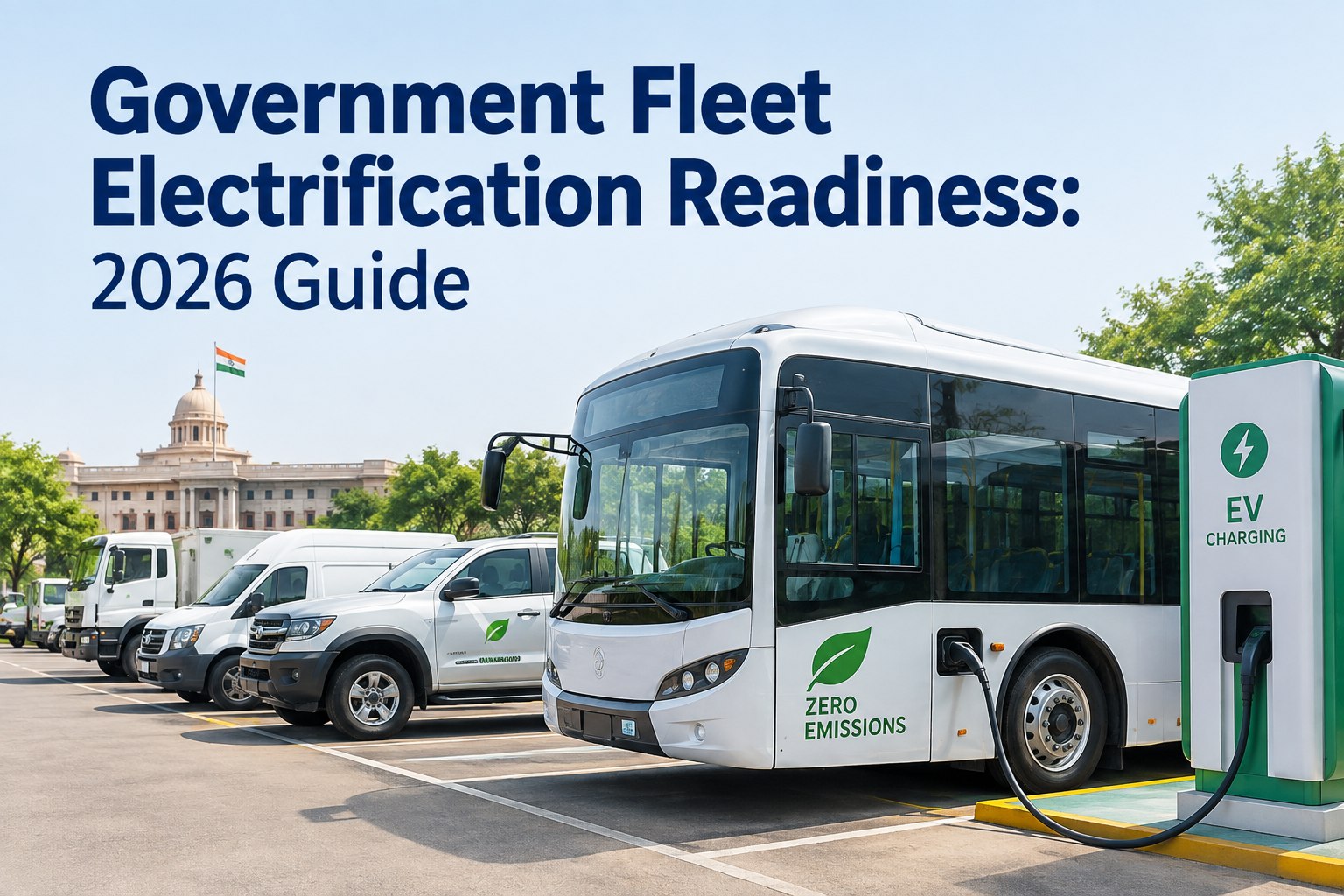
The mandate says electrify. Your fleet says "not all of us are ready." Both are right — and that gap is exactly what a government fleet electrification readiness assessment exists to close. Mandates move faster than charging infrastructure, technician capability, and vehicle suitability, so the honest first question isn't "how fast can we go all-electric?" It's "which vehicles can transition now, which need investment first, and which need more time?" Answer that before you procure a single truck, and the whole transition gets cheaper, safer, and defensible. See the utilisation data a readiness assessment runs on
The Mandate Is One Date. Readiness Has Five Dimensions.
Tap each one. A vehicle isn't ready to electrify because the policy says so — it's ready when all five line up, and they rarely move at the same speed.
Does the vehicle's real work suit an EV? Short, predictable, depot-return routes are ready today; long-range, high-mileage, or unpredictable duty is not — and you only know from real utilisation data, not vehicle type.
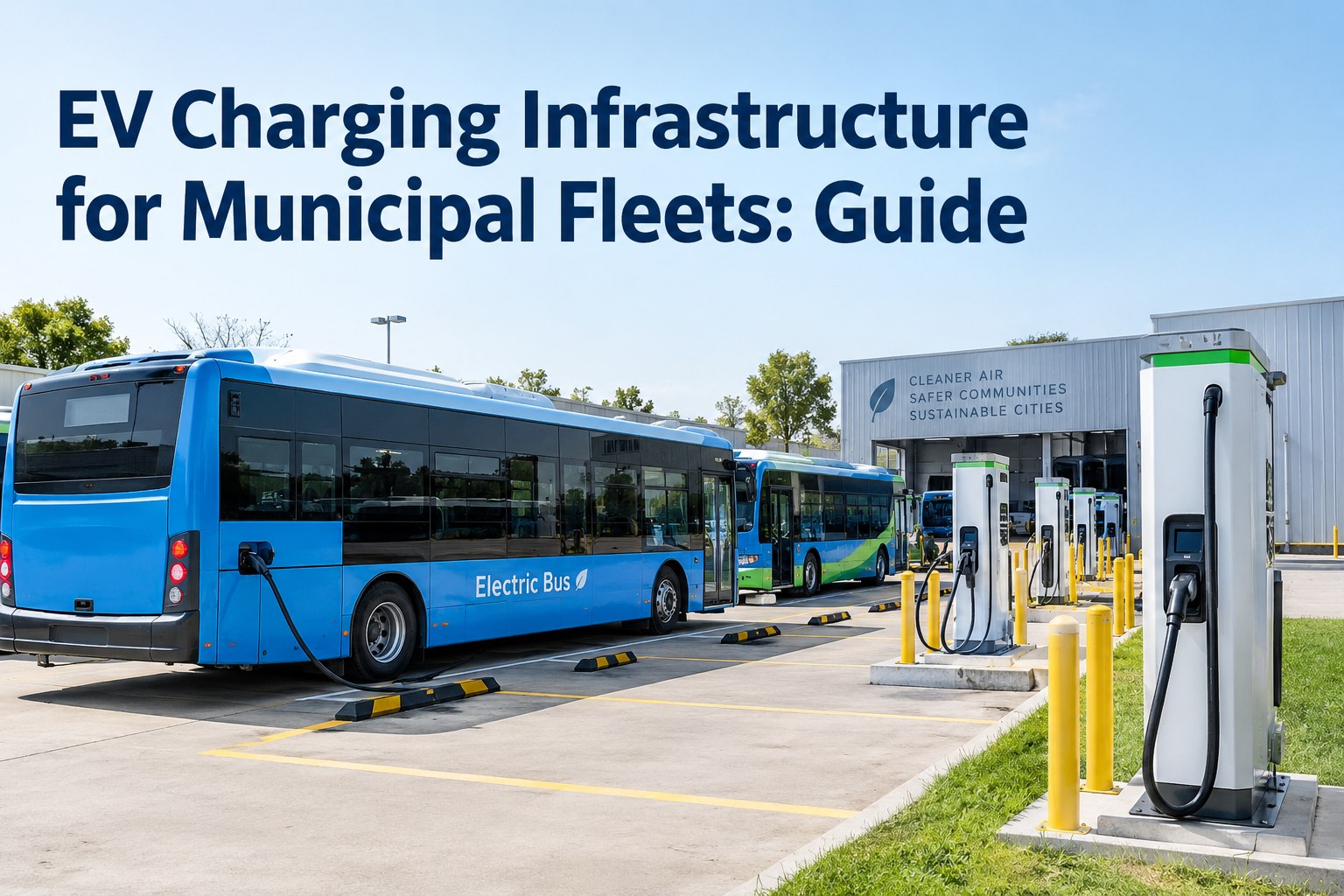
Can the depot actually charge it? Charging capacity, electrical service upgrades, and depot layout are the long pole — utility work can take a year or more, which is why it's assessed before the vehicle is ordered.
EVs carry lethal high voltage, so someone qualified has to maintain them. Readiness here is a safety gate: how many techs are HV-certified today, and how fast can you train more?
Does the TCO justify replacing this unit now? Electrify where the numbers work — and match the switch to when the vehicle is due for renewal, rather than scrapping a serviceable truck early.
What does your jurisdiction actually require — and allow? The timeline differs by region, and the exemption process for units with no suitable EV model is part of the rule, not a loophole.
The federal ZEV-Ready process and state programs all start the same way: assess what your current fleet can achieve before setting acquisition targets. Below is that assessment — the five dimensions, how to sort your fleet into what moves now versus later, and where exemptions fit — done the way a fleet director has to defend it to a city council.
Start with duty cycle: not every vehicle is a candidate
The single biggest readiness factor is whether a vehicle's actual work suits an EV — and you can't know that from the vehicle type, only from what it really does. The government agencies that electrified successfully assessed their fleet profile first, then set targets, not the other way round.
Short, predictable, depot-return
Admin cars, inspector vehicles, parks and public-works units, refuse and street-sweeping on fixed urban routes — predictable daily mileage, back to base each night to charge. These are where electrification works today.
Long-range, high-duty, specialized
Long-haul, high-mileage, emergency response with unpredictable duration, or specialized equipment with no suitable electric model yet. Force these early and you strand a vehicle that can't do its job — this is where exemptions apply.
The dividing line is data, not opinion: real utilisation — miles per shift, route patterns, dwell time at the depot — tells you which units are genuine candidates. That's the foundation the whole assessment stands on. Book a demo to see utilisation and duty-cycle data per vehicle.
The dependencies that gate the timeline
Even a perfect duty-cycle candidate can't electrify if the depot can't charge it or the shop can't service it. These two dependencies have their own timelines — and both are longer than the vehicle order, which is why they're assessed before procurement, not after.
Charging & electrical capacity
Charging capacity, electrical service upgrades, and depot layout are the long pole — utility service can take a year or more. Assess whether the site can power the EVs before you commit to them, or the trucks arrive and sit.
Technician capability
EVs carry lethal high voltage, so someone qualified has to maintain them. Assess how many techs are HV-certified today and how fast you can train more — readiness here is a safety gate, not a nice-to-have.
Neither dependency shows up on a vehicle spec sheet, and both are easy to skip in a rush to hit a mandate date — which is exactly how a readiness assessment saves a project from stalling. Book a demo to track technician HV qualifications from day one.
The output: sort the fleet into three buckets
A readiness assessment doesn't give you a yes or a no — it gives you a sorted list. Run every vehicle against the five dimensions and each one lands in one of three buckets. That sorted list is your phased transition plan.
Electrify now
Suitable duty cycle, infrastructure available or close, TCO favourable. These lead the first phase — the wins that build momentum and satisfy the near-term mandate.
Needs investment
Good candidate, but blocked by a dependency — charging capacity, a trained tech, or replacement timing. Fixable, and these define what to invest in next.
Not yet / exempt
No suitable electric model, or a duty cycle EVs can't meet today. These wait — and where the mandate allows, this is where the exemption or exception process applies.
Match vehicle replacement timing to the buckets — electrify units as they come up for renewal rather than scrapping serviceable trucks early — and the phased plan almost writes itself. Document the sort and you've got the compliance and exemption paper trail too. Book a demo to see cost-per-vehicle comparisons for the bucket sort.
Know your jurisdiction — the date isn't the same everywhere
"The mandate" isn't one rule. Government fleets face different timelines depending on where they operate, and readiness planning has to be pinned to the specific requirement that applies to you — including the exemption process, which is part of the rule, not a loophole.
Mandates and timelines shift with each policy cycle, so confirm the current requirement for your jurisdiction with your state or national authority. The constant is the approach: assess readiness against your actual date, transition what's ready, and document the exemptions for what isn't. Start free and keep the records your compliance reporting needs.
The government fleet electrification readiness checklist
Run this before setting a single acquisition target — it turns a mandate deadline into a defensible, phased plan instead of a scramble. Use this readiness checklist online free, backed by your own utilisation, cost, and qualification data.
From a sustainability officer who assessed before she bought
The council wanted a headline — "the city fleet is going electric." My job was to turn that into a plan that wouldn't blow up. So before we ordered anything, we scored every vehicle against duty cycle, charging, tech skills, cost, and the actual mandate. Turned out about a third were ready now, a third needed a charger or a trained tech first, and a third had no suitable electric option yet.
That sorted list became the whole roadmap. We electrified the ready third, filed exemptions for the units that genuinely couldn't transition, and invested in the middle group on purpose. Because it was our own utilisation and cost data, not a vendor's pitch, it held up in front of the council — and we didn't strand a single truck.
Frequently asked questions
What is a government fleet electrification readiness assessment?
It's a structured evaluation of what your fleet can realistically electrify now versus later, run before you set targets or buy vehicles. It scores each vehicle against five dimensions — duty-cycle suitability, charging and electrical infrastructure, technician high-voltage capability, total cost of ownership, and the applicable mandate and exemptions — then sorts the fleet into what transitions now, what needs investment, and what isn't ready. It's the same "assess before procuring" approach the federal ZEV-Ready process uses.
Which government vehicles are best suited to electrify first?
Vehicles with short, predictable, depot-return duty cycles: admin and inspector cars, parks and public-works units, and refuse or street-sweeping vehicles on fixed urban routes. They have predictable daily mileage and return to base to charge overnight, so today's EVs meet their needs. Long-haul, high-mileage, unpredictable emergency-response, or specialized units are the "not yet" group — and you identify which is which from real utilisation data, not from the vehicle type on paper.
Why assess readiness before procuring EVs?
Because mandates move faster than the things that make electrification actually work — charging infrastructure, technician capability, and vehicle suitability each have their own timelines, and some run longer than the vehicle order itself. Buy first and you risk stranded trucks that can't charge, can't be serviced safely, or can't do the job. Assessing first turns a deadline into a phased plan, tells you exactly what to invest in, and produces the documentation that supports compliance and exemption requests.
What if a vehicle can't be electrified by the mandate deadline?
Most mandates include an exemption process for exactly this — typically where no suitable zero-emission model exists for the vehicle's role or duty cycle. That's part of the rule, not a loophole. The readiness assessment identifies these units up front, so you can file the exemption with evidence and keep them in service until a viable option arrives, rather than stranding a vehicle. Confirm the specific process with the authority for your jurisdiction.
How does fleet data support an electrification assessment?
Every dimension of the assessment runs on data. Duty-cycle suitability comes from utilisation — miles per shift, routes, dwell time. Prioritisation comes from cost-per-vehicle comparisons. Technician readiness comes from qualification tracking. And once you begin, propulsion-specific PM templates keep the mixed diesel-and-electric fleet maintained through the transition. Without that data captured per vehicle, the assessment becomes guesswork; with it, the readiness sort is defensible in front of a council or auditor.
Turn the mandate into a plan you can defend
HVI holds the utilisation and cost-per-vehicle data that decides which units are ready, tracks technician high-voltage qualifications, and carries propulsion-specific PM templates for the mixed fleet you'll run through the transition. So your readiness assessment is built on your own operating data — the kind that holds up in front of a city council, an auditor, and the mandate itself.
No credit card · Utilisation & cost per vehicle · Qualification tracking & per-propulsion PM