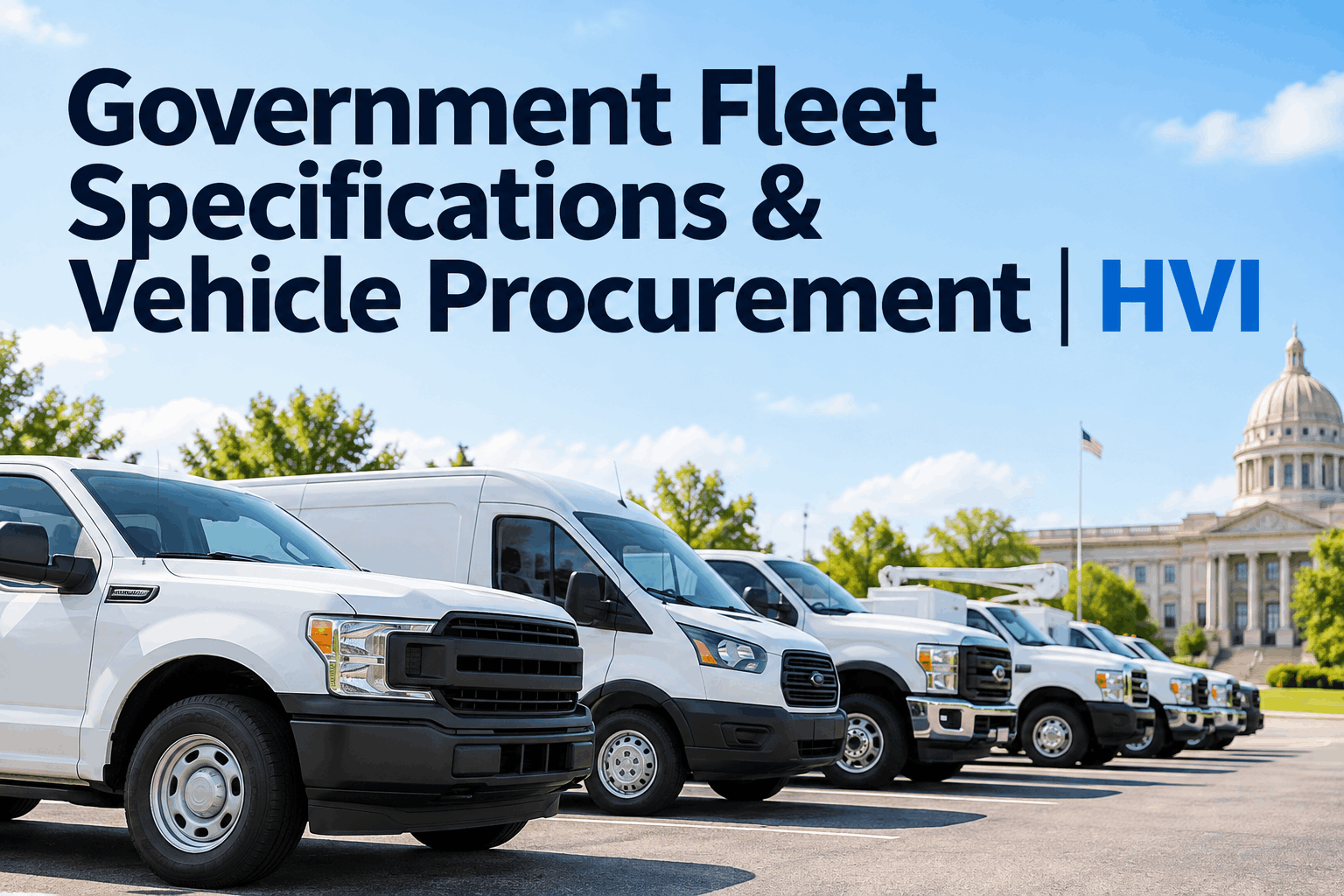
Government fleet specifications should describe what a vehicle must accomplish in public service—not simply repeat the configuration purchased last time. Maintenance history, duty cycle, payload, utilization, downtime and lifecycle cost can help fleet and procurement teams turn real operating experience into clearer vehicle requirements and better-informed procurement decisions.
Write the Next Vehicle Specification From Fleet Evidence
Connect maintenance history, field requirements and lifecycle cost before requirements become a bid document. The result is a specification built around the job the vehicle actually needs to perform.
A good specification is a translation exercise. Fleet operations knows what failed, technicians know what is difficult to maintain, users know what the vehicle must carry and accomplish, finance sees lifecycle cost, and procurement needs requirements that can be evaluated. The specification brings those perspectives into one defensible vehicle requirement.
Government Fleet Specifications Should Start Before the Bid Document
Copying the previous specification is fast, but it can preserve old assumptions along with useful requirements. Before drafting the next solicitation, review what the current asset actually experienced in service: repair frequency, recurring component failures, downtime, utilization, operating environment, payload needs and changes in departmental work.
- Old payload assumptions remain
- Recurring failures may be ignored
- Options can survive without a current need
TO EVIDENCE
MaintenanceWhat repeatedly failed or consumed labor?
UtilizationHow much and where was the vehicle used?
Duty CycleWhat loads, routes and work did it perform?
CostWhat did ownership require over its service life?
Do not ask only, “What did we buy?” Ask, “What did the vehicle need to do, where did the previous configuration struggle, and which requirements materially affect the next asset's job?”
Centralized vehicle maintenance history gives the specification team a more useful starting point than scattered invoices and technician memory. See how HVI keeps vehicle service history available for replacement and specification decisions.
Turn Maintenance History Into Vehicle Procurement Requirements
Maintenance data becomes valuable to procurement when it changes a requirement. A repeated suspension problem, overloaded configuration, difficult service point or recurring electrical issue should trigger investigation—not automatically become a brand or component mandate.
Separate the observed problem from its verified cause before converting it into specification language.
This keeps fleet specification writing focused on the mission rather than on prescribing a solution too early. For U.S. federal acquisitions, applicable FAR rules and agency procedures should always be reviewed by the procurement team; performance-oriented requirements can also help preserve competition where appropriate.
Build Government Vehicle Specifications Around the Work
A vehicle specification becomes easier to defend when every important requirement can be traced to a real service need. Instead of producing a long feature list, build a requirement architecture around mission, capacity, operating environment, maintainability, safety, upfit needs and expected service life.
Urban stops, highway travel, idling, off-road work, seasonal operation and route profile.
Payload, towing, body, tools, materials, occupants and auxiliary equipment.
Temperature, road conditions, corrosion exposure, grades, confined areas and jobsite access.
Parts support, service access, technician capability, diagnostic needs and repair facilities.
Lighting, controls, storage, hydraulics, electrical demand, visibility and defined work equipment.
Expected use, replacement horizon, fuel or energy, maintenance, downtime and residual considerations.
When the requirement is based on operating evidence, fleet managers can explain why a capacity, feature or performance characteristic exists. See how HVI can bring maintenance and inspection records into your vehicle specification review.
Connect Government Fleet Specifications With Lifecycle Cost
The lowest acquisition price does not describe the full financial effect of a vehicle choice. Depending on agency policy and procurement method, decision-makers may also need to understand expected fuel or energy use, scheduled and unscheduled maintenance, downtime, parts support, replacement timing and residual value.
Compare feasible configurations using the cost factors relevant to the agency and mission.
Accurate asset-level records make lifecycle analysis more useful because the team can work from actual fleet history rather than generic assumptions. Fleet analytics and reporting can help organize that operating evidence, while an HVI demo can show how maintenance history supports lifecycle and replacement reviews.
Carry the Specification Through Bid Review and Vehicle Acceptance
The specification should remain useful after the solicitation is issued. During evaluation it provides the baseline for comparing offered configurations, and at delivery it gives the fleet a practical reference for verifying that the vehicle and upfit match the approved requirement.
Maintenance, inspections, utilization and operating needs.
Separate essential needs from preferences and inherited language.
Procurement aligns final requirements with applicable rules.
Verify vehicle, body, upfit and specified equipment.
Use a structured delivery inspection to confirm the vehicle received matches the approved configuration before it disappears into daily service.
A standardized digital vehicle inspection can also support the handoff from procurement into fleet operations by preserving initial condition and delivery findings with the asset record.
Government Fleet Specifications: Frequently Asked Questions
What should government fleet specifications include?
The exact content depends on the agency, vehicle and procurement rules, but a strong specification generally begins with the mission and defines the material requirements needed to perform it. That can include capacity, payload, duty cycle, operating environment, body or upfit needs, safety requirements, serviceability, electrical demand and other physical, functional or performance characteristics relevant to the intended use.
How can maintenance history improve fleet specification writing?
Maintenance history can reveal recurring failures, downtime, component issues and serviceability problems in the outgoing asset or vehicle class. Fleet teams can investigate those patterns, determine the underlying operational or mechanical cause, and decide whether a future specification requirement should change.
Should a public fleet specification name a specific vehicle brand?
Applicable procurement law and agency policy control how requirements should be written. For U.S. federal acquisitions, the FAR generally prefers performance specifications where appropriate, and special rules apply when brand-name or brand-name-or-equal descriptions are used. State, municipal and Canadian public agencies should follow their own governing procurement requirements rather than assuming federal rules apply to them.
Why should lifecycle cost be considered during vehicle procurement?
Purchase price is only one cost associated with a fleet asset. Fuel or energy, maintenance, parts, downtime, expected utilization, replacement timing and residual value can affect the financial outcome over the vehicle's service life. The factors and evaluation method should follow the agency's procurement and financial policies.
How can fleet software support government vehicle procurement?
Fleet software can preserve the operating evidence used before procurement begins, including maintenance history, inspections, defects, work orders and cost records. That information can help fleet managers identify recurring issues, support replacement analysis and provide operational context while specifications are being developed. Procurement decisions and compliance obligations remain with the responsible agency personnel.
Give Procurement Better Evidence Before the Next Vehicle Is Ordered
HVI keeps inspections, repairs, defects and maintenance history connected to the asset so fleet teams can bring real operating experience into replacement planning and government fleet specifications.