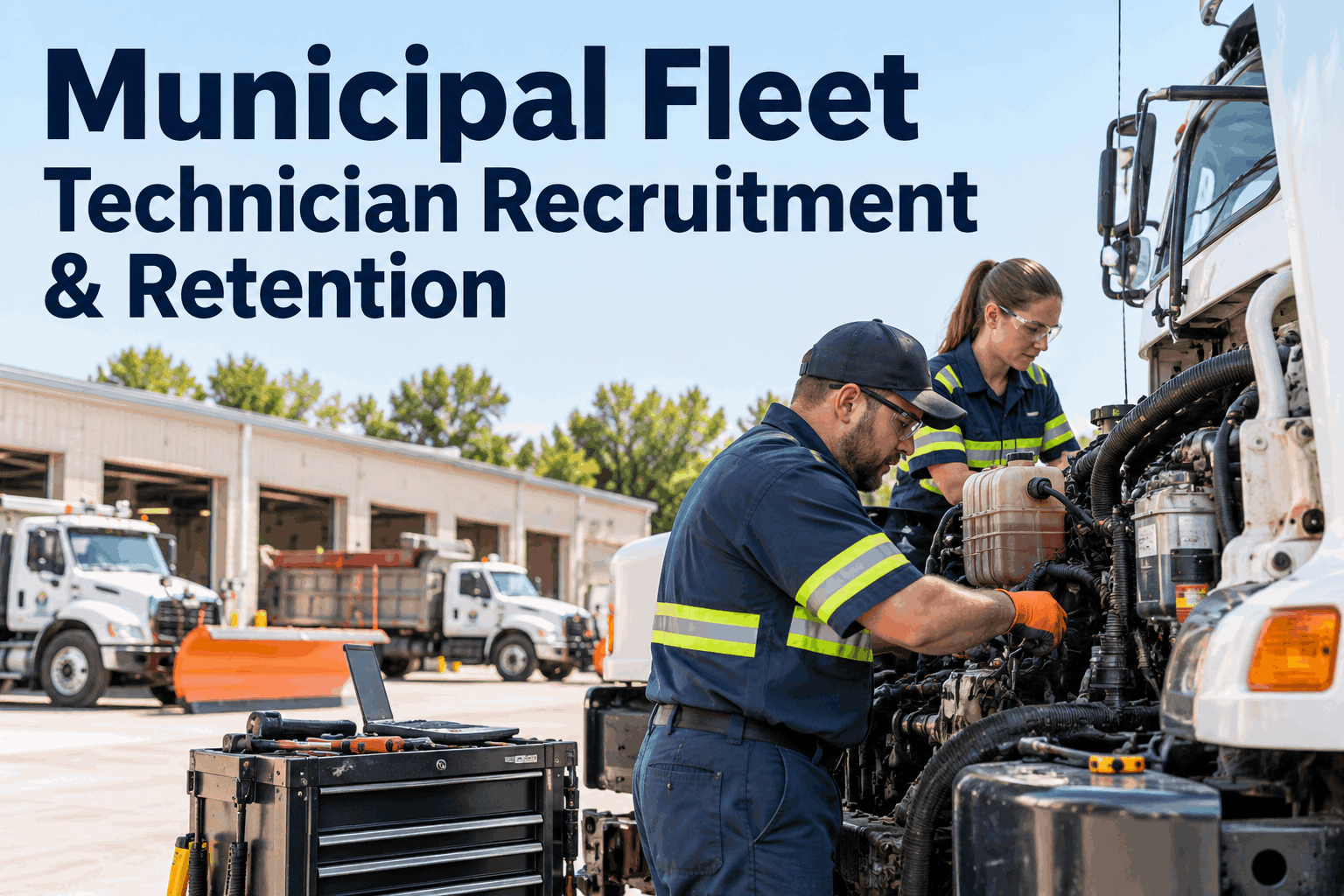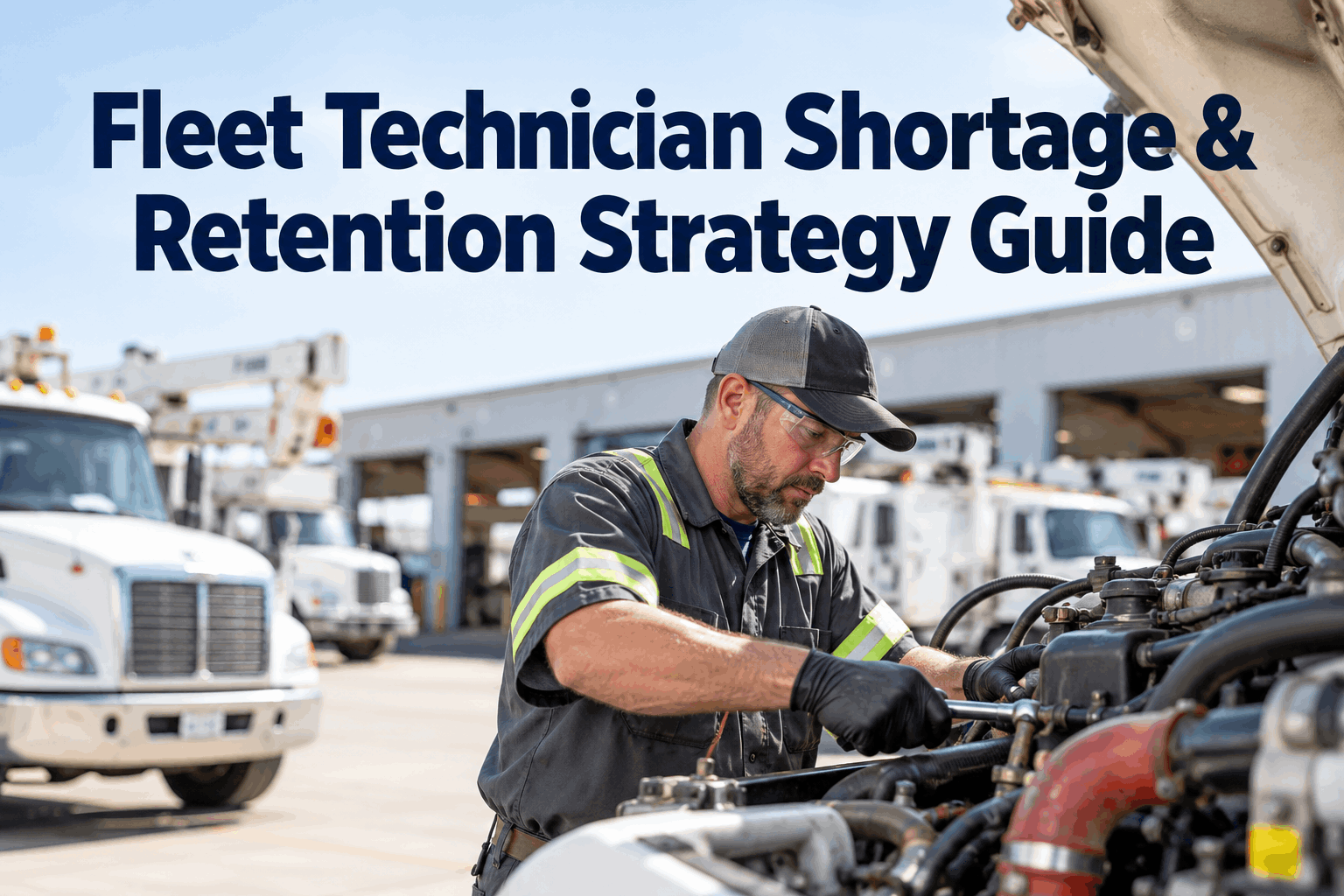
The fleet technician shortage isn't coming — it's here, and it's structural. For every two diesel-tech jobs opening up, barely one new technician finishes training to fill them, and the techs already in your shop are being courted by dealers who out-pay a public pay scale. You can't recruit your way out of a gap that size. What you can control is whether the good techs you have want to stay — and a lot of that comes down to how much avoidable friction you make them fight. Here's the real picture — see how HVI supports maintenance teams as you read.
You can't out-hire the shortage. You can stop the leak.
Recruiting is slow and the pipeline is thin — so the technicians you keep matter more than the ones you chase. A big part of staying or leaving is how much avoidable friction a shop puts between a tech and the work they trained to do.
Walk into almost any public fleet shop and you'll hear the same thing: they're short-handed, the postings sit open for months, and the senior techs are a few years from retirement with no obvious successors. This isn't a local hiring problem or a bad recruiting season — it's a nationwide, structural gap between how many technicians the economy needs and how many are entering the trade. Understanding why it's structural matters, because it changes the strategy. If you can't fix the supply, you stop treating recruiting as the whole answer and start protecting the asset you already have: the skilled people in your shop today. Here's the shape of the problem, and the levers a public shop can actually pull.
Why the fleet technician shortage is structuralthe numbers behind the mechanic shortage
The gap isn't a feeling — it's measurable, and it's widening. The supply of new technicians simply isn't keeping pace with demand, and public shops feel it worst because they compete for talent with deeper-pocketed private employers.
Layer on an aging workforce heading for retirement and fewer young people entering the trades, and the math doesn't close through hiring alone — especially in the public sector, where rigid pay scales and slow hiring cycles put government shops at a disadvantage against dealers and private fleets. The shortage is the environment you operate in, not a problem you'll recruit your way past.
You can't hire your way outwhy retention is the lever you actually control
Here's the reframe that changes everything: in a market this tight, every technician who walks out the door is far harder and slower to replace than they were to keep. Recruiting is a bucket with a thin inflow; if the bottom is leaking, you never get ahead no matter how hard you pour.
- Postings sit open for months in a thin market
- Every departure restarts a long, costly search
- Remaining techs absorb the overload and burn out
- You compete on pay you can't always win
- Keep hard-won skills and institutional knowledge
- Avoid the cost and gap of every replacement
- A stable shop is easier to recruit into, too
- You compete on things pay isn't the only answer to
Retention isn't a consolation prize for failing to hire — it's the higher-leverage move. And the good news for a public shop is that a lot of what makes techs stay or go has nothing to do with the pay scale you can't change, and everything to do with the daily experience of the job you can.
Why good technicians leavethe real drivers of fleet technician turnover
Pay matters, but exit interviews rarely stop there — and several of the top reasons techs leave are things a shop controls directly, no budget increase required.
Pay & benefits
Real, and hardest for public shops to match — but rarely the only reason, and often not the deciding one when the rest is right.
No path to grow
A tech who sees no route to lead, specialize or advance will take the ladder a competitor offers, even at similar pay.
No respect or recognition
Skilled work that goes unseen and unacknowledged wears people down. Recognition costs nothing and retains quietly.
Poor tools & equipment
Asking a skilled tech to work with bad tools and dated systems signals the shop doesn't value doing the job well.
Daily friction
The one shops overlook: hours lost to paperwork, parts-hunting and redone work instead of fixing trucks. The quiet morale killer.
Rigid, thankless scheduling
No flexibility, constant overtime to cover the shortage, and little say over their day pushes good people toward the exit.
Notice how many of these cost little or nothing to fix — growth, recognition, tools, friction and flexibility are shop-culture levers, not budget-line ones. The one that's most invisible, and most fixable, is the friction a tech fights every shift.
The friction tax on your best technicianshow avoidable shop friction quietly pushes techs out
A technician trained for years to diagnose and repair complex machines doesn't leave because the work is too hard — they leave because they spend half the day not doing it. That's the friction tax, and it falls heaviest on your best people, who feel the waste most acutely.
Paperwork over wrench time
Handwriting work orders, hunting for the last repair, re-entering the same information — time a skilled tech resents spending on admin instead of the job.
Parts-hunting & waiting
A machine sits and a tech stands idle because nobody knows if the part's in stock or on order. Few things frustrate a good mechanic more.
Redoing lost work
No history of what was done last time means re-diagnosing a problem someone already solved — wasted effort that reads as disrespect.
This is the honest, narrow place a platform helps: HVI keeps work orders and service history organized and parts information visible, so a tech spends the shift on repairs rather than chasing the system. It doesn't create technicians — but it makes the ones you have less likely to leave over daily frustration. See how the workflow removes that friction →
A retention strategy for public shopsthe levers a government fleet can actually pull
You can't change the national pipeline or always the pay scale, but a public shop has more control over retention than it often realizes. These are the moves that work, grouped by what they take.
- Fund training & ASE certifications
- Build a clear path to lead or specialize
- Run an apprenticeship to grow your own
- Partner with local trade schools
- Recognize good work visibly & often
- Give techs a voice in how the shop runs
- Offer flexibility where the work allows
- Share the overtime fairly, not always to the same few
- Give them good tools & a clean workflow
- Organized work orders, not paperwork piles
- Service history & parts info at hand
- Let techs spend the day on repairs
None of this replaces fair pay, and none of it manufactures new technicians — but together these levers make a shop a place people don't want to leave, which in a shortage is worth as much as a raise you may not be able to give. The friction column is where a tool like HVI quietly earns its keep. Explore the maintenance workflow free →
From a public fleet shop foreman
We lost two good techs in a year, and in both exit conversations pay wasn't the headline — it was "I'm tired of fighting to do my job." Chasing paper work orders, standing around waiting to find out if a part was ordered, re-diagnosing stuff we'd already fixed because nobody could find the history. These are people who want to turn wrenches, and we had them doing everything but.
We can't out-pay the dealers down the road, so we focused on the things we could change. Getting the work orders, history and parts organized so a tech can actually work has done more for keeping people than any recruiting push. Turns out respecting someone's time is a retention strategy.
Fleet technician shortage — FAQs
How bad is the fleet technician shortage?
Significant and structural. The TechForce Foundation reports roughly 242,000 annual technician job openings against only about 102,000 new graduates — barely enough to fill half — with diesel technicians facing around 52% unmet demand and the sector needing an estimated 1.2 million new technicians by 2029. Public shops feel it hardest because they compete for talent with higher-paying private employers.
Why is retention more important than recruiting right now?
Because in a market with far more openings than new technicians, anyone who leaves is slow and costly to replace, and the vacancy loads the remaining team. Recruiting is a thin inflow; if turnover is leaking out the bottom, you never get ahead. Keeping your skilled techs protects institutional knowledge and is a lever a shop controls directly — unlike the national pipeline.
What makes fleet technicians leave besides pay?
Common reasons include no path to grow or advance, lack of respect and recognition, poor tools and dated systems, rigid or thankless scheduling, and — often overlooked — daily friction: time lost to paperwork, parts-hunting and redoing work instead of repairing vehicles. Several of these cost little to fix and are entirely within a shop's control.
Can software solve the technician shortage?
No — and any tool that claims to is overselling. The shortage is a workforce-supply problem that takes training pipelines, apprenticeships and policy to address. What software can do is narrower and real: reduce the avoidable shop friction that frustrates good technicians, so the people you have are less likely to leave over daily aggravation. It helps retention, not supply.
How does HVI support maintenance teams?
HVI organizes the parts of a tech's day that usually create friction: clear digital work orders instead of paper, full service history at hand so nothing is re-diagnosed, parts information visible so machines don't sit waiting, and a workflow that supports the work rather than fighting it. The result is a shop where skilled people spend their time on repairs — a meaningful piece of a retention strategy, not a fix for the shortage.
Keep the techs you have by respecting their time
The shortage is bigger than any one shop can fix — but the daily experience of your shop isn't. HVI cuts the avoidable friction that drives good technicians out: organized work orders, service history and parts at hand, and a workflow that lets them spend the day fixing trucks. A better place to work is a retention strategy you control.
See it in your own shop · Less friction, more wrench time · Set up in under two weeks