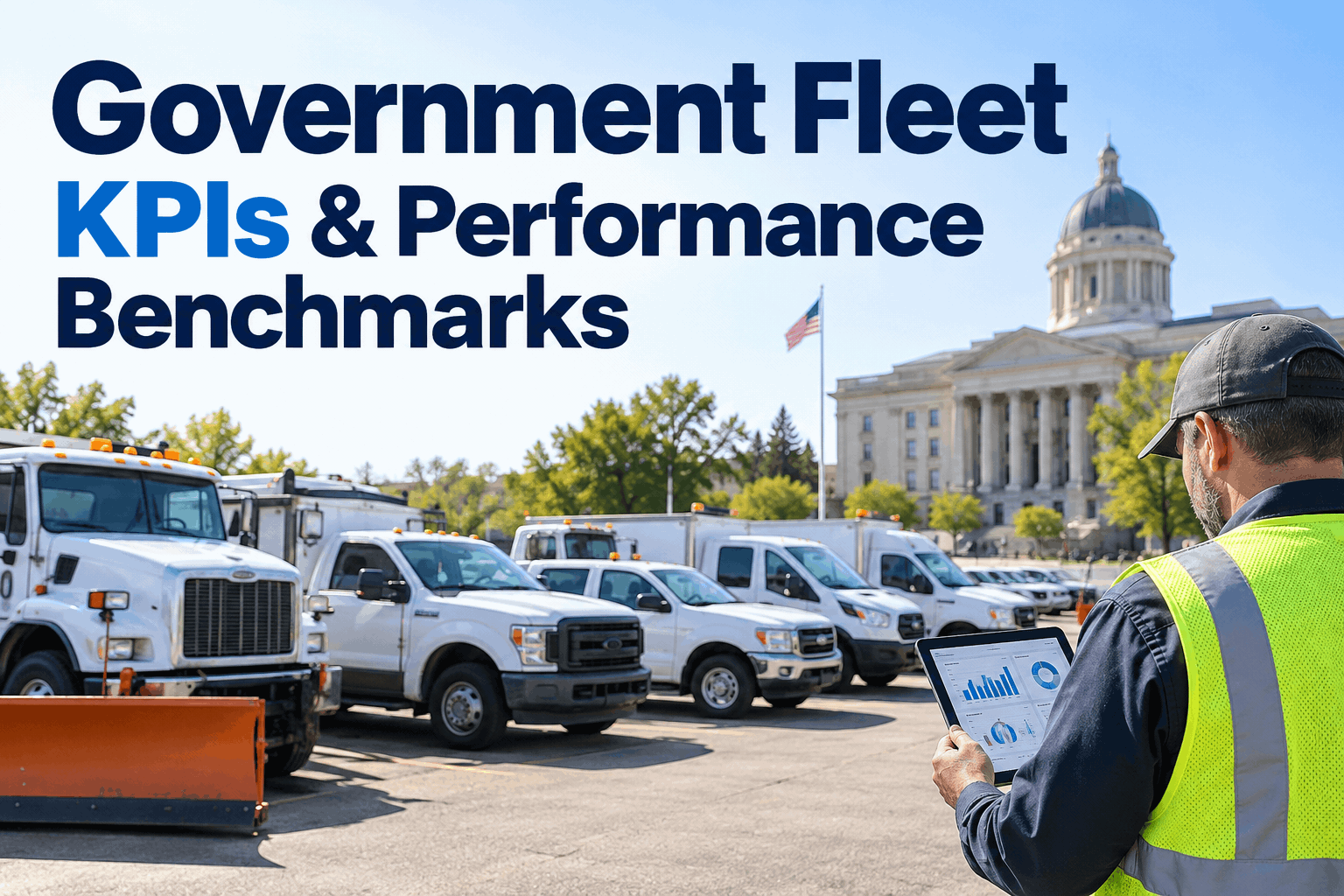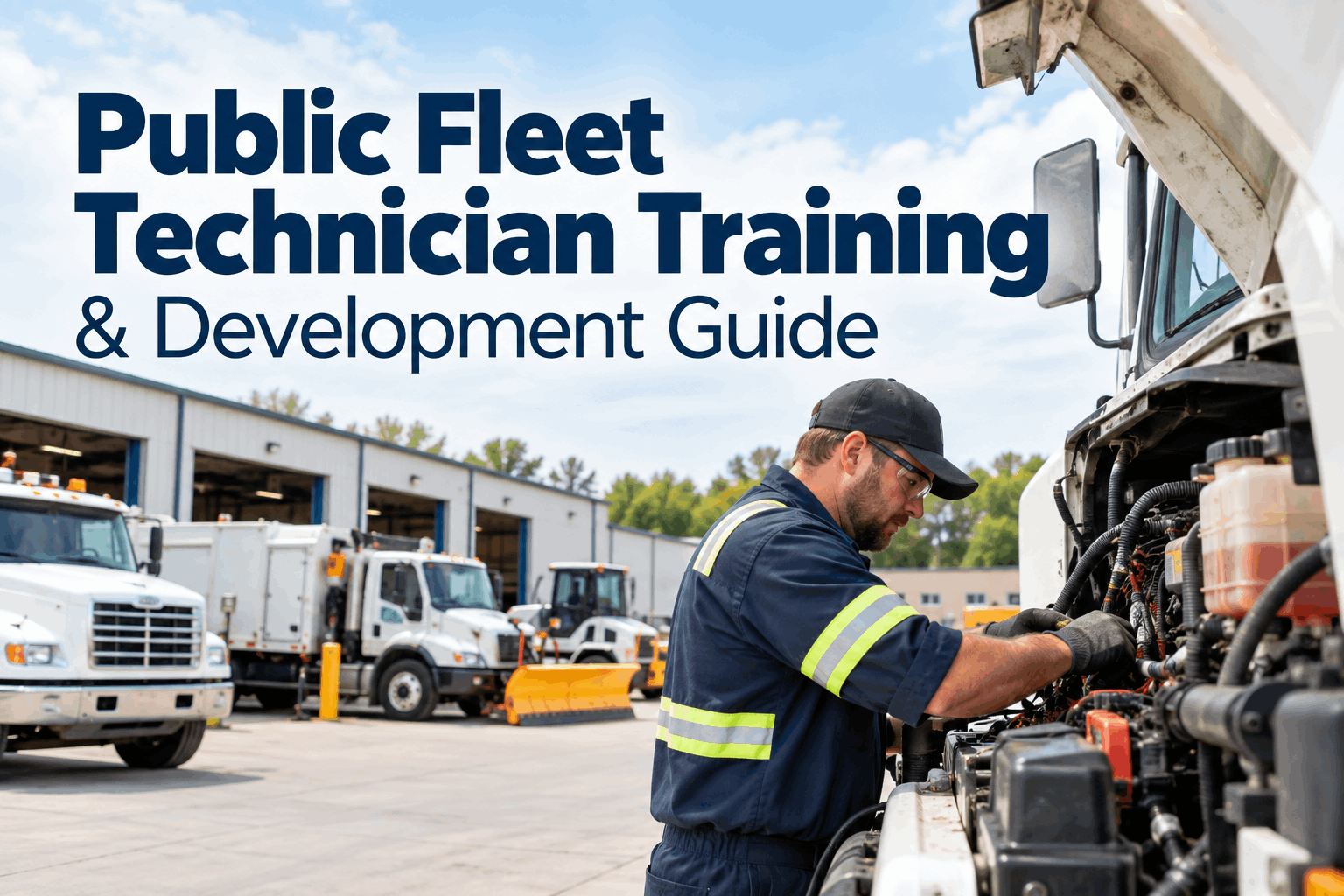
Fleet management is one of the few fields where you can start by turning wrenches and end up running a multi-million-dollar operation with a seat alongside department heads. But the public-sector fleet manager career path isn't automatic — the people who climb it deliberately build a specific mix of skills, from reading a budget to reading a dashboard. This guide maps the path from technician to fleet director: what each rung demands, the skills that get you promoted, and the certifications that mark you as serious — and how modern fleet leaders use data to climb it. See how HVI supports fleet teams as you read.
From the shop floor to the director's chair.
Every public fleet leader started somewhere lower on the ladder. What separates the ones who climb is a deliberate mix of technical, financial and people skills — and increasingly, fluency with the data that runs a modern fleet. Here's the whole path.
A public-sector fleet manager sits at an unusual crossroads. On one side is heavy equipment, mechanics and the daily reality of keeping vehicles on the road; on the other is budgeting, procurement, compliance and answering to elected officials and taxpayers. That mix is what makes the role hard to fill and well worth building toward — it rewards people who can speak both languages, the shop and the boardroom. The career path that gets you there is well-worn but not effortless: each step up trades some hands-on work for more responsibility, more money, and a steeper demand for skills you can't pick up with a torque wrench. This guide lays out the whole climb.
What a public sector fleet manager actually doesthe scope behind the title
Before the career path, it helps to see the breadth of the job — because the skills you need to advance map directly onto these responsibilities. A government fleet manager owns far more than the garage.
Fleet operations
Keeping every vehicle available and safe — from police cruisers to snow plows — across departments with competing needs.
Maintenance & reliability
Running the PM program, the shop and the technicians, and deciding what gets repaired, replaced or retired.
Budget & cost control
Owning a capital and operating budget, justifying spend to leadership, and defending it to the public.
Compliance & records
Meeting inspection, safety and public-records obligations — and being able to prove it on demand.
Procurement & contracts
Specifying and buying vehicles, parts and services through public procurement rules and vendor contracts.
People & leadership
Hiring, developing and retaining technicians and supervisors — often the hardest and most career-defining part.
Notice how few of these are purely mechanical. The job is a management role that happens to be about vehicles, which is exactly why the path up rewards breadth. Each rung below builds more of these muscles.
The fleet manager career path, step by stephow the climb from technician to director actually works
There's no single route, but the public-sector ladder tends to follow a recognizable shape. Here's each rung, what it demands, and what moves you to the next.
Technician
The foundation. You learn the equipment, the failure modes and the shop. ASE certifications and a reputation for solid, documented work set you apart early.
Lead tech / shop foreman
First taste of responsibility for others' work. You start scheduling, mentoring and owning quality — the first real test of whether you can lead, not just fix.
Fleet supervisor
Now you own a shift or a function — PM compliance, a group of vehicles, a team. Budgets and reporting enter the picture, and so does managing up.
Fleet manager
The pivot point. You own the whole operation — budget, maintenance, compliance, procurement and people — and you're measured on uptime, cost and safety across the fleet.
Fleet director / superintendent
Strategy and politics. You set policy, defend budgets to councils, drive electrification and capital planning, and sometimes step into broader public-works leadership.
The higher you go, the less the job is about vehicles and the more it's about money, people and persuasion. That's the reason a technician who only ever sharpens technical skills tends to stall at foreman — the climb is built on the skills in the next section.
Six skills that move you upthe fleet manager skills that actually earn promotions
Technical knowledge gets you in the door; these six skills get you up the ladder. The people who make fleet director are rarely the best mechanics — they're the ones who built this mix.
Three of these — budgeting, analytics and communication — all rest on the same thing: having reliable fleet data and being able to turn it into a clear case. That's the skill the next section is really about, and it's reshaping what the top of this career looks like.
From the shop floor to the datawhy modern fleet leadership runs on information
A generation ago, the fleet manager who got promoted was the one who knew the machines best. Today that's table stakes — the ones who advance are the ones who can walk into a budget meeting with numbers that make their case, because the decisions that matter at the top are made in data, not in the shop.
- Decisions on experience and gut feel
- Cost and uptime known roughly, after the fact
- Budget asks defended with anecdotes
- Records in binders, hard to turn into insight
- Decisions backed by maintenance & cost data
- Uptime, cost-per-mile and PM compliance live
- Budget cases built on trend lines, not stories
- Records that become dashboards and reports
This is where a platform like HVI fits into a career, not just an operation: it's the analytics and reporting layer that turns a fleet's maintenance and asset data into the numbers a rising leader uses to make decisions and win budgets. Fluency with that kind of tool is quietly becoming a career skill in itself. See what that data looks like in HVI →
Qualifications, certifications & trainingthe credentials that mark a serious fleet professional
You don't strictly need a specific degree to run a public fleet, but the right certifications signal commitment and fill the gaps between the shop and the office. These are the ones that carry weight.
CAFM & CAFS
NAFA's Certified Automotive Fleet Manager is the flagship credential, covering the full breadth of fleet management; CAFS (Specialist) is the stepping-stone. Increasingly common among public-sector leaders.
Certified Public Fleet Professional
The American Public Works Association's CPFP is built specifically for public-sector fleet management — the credential that speaks directly to a government career.
Technical certifications
ASE certifications prove technical depth and are how most people build credibility on the way up through the shop — still valuable long after you leave the bay.
Business & public admin
A degree in business, public administration or logistics helps at the director level, where budgeting, policy and politics dominate the work.
The pattern that works: build technical credibility early (ASE), add a fleet-specific credential as you move into management (CAFM or CPFP), and layer on business or public-administration education as you aim for director. Each one widens the kind of role you can credibly apply for. Explore the tools modern fleet pros use free →
How to stand out as you climbpractical moves that accelerate a fleet management career
Beyond titles and certs, a handful of deliberate habits separate the people who advance quickly from the ones who wait to be noticed.
- Document your work so results are provable
- Earn a certification before you're asked to
- Volunteer for the cross-department problems
- Learn the budget cycle, not just the shop
- Know your uptime, cost-per-asset & PM rate
- Bring numbers, not anecdotes, to budget asks
- Get comfortable with fleet software & reporting
- Turn data into a one-page story leadership reads
- Join NAFA, APWA or a state fleet association
- Find a mentor already in the chair you want
- Present at a conference or write up a win
- Mentor the techs coming up behind you
The through-line is visibility: do provable work, speak the language of money and data, and make sure the people who promote can see it. That's how a technician becomes a director in a decade instead of a career. See how fleet leaders surface those numbers in HVI →
From a public works fleet director
I started as a diesel tech twenty years ago and genuinely thought the best mechanic got the top job. He doesn't. The person who gets it is the one who can stand in front of the council with a clear number — what the fleet costs, why that truck needs replacing, what the plan saves — and make them believe it.
The young techs who are moving up fastest now are the ones who got comfortable with the data early. They can pull up uptime and cost trends and build the case in an afternoon. That skill wasn't on anyone's radar when I started, and today it's the difference between staying in the shop and running the department.
Fleet manager career path — FAQs
How do you become a public sector fleet manager?
Most people come up through the shop — technician, lead tech or foreman, then supervisor — building technical credibility and ASE certifications along the way, before moving into management. Along the climb they add budgeting, data and leadership skills and often a fleet-specific credential like NAFA's CAFM or APWA's CPFP. A business or public-administration background helps at the director level.
What skills does a fleet manager need?
Six stand out: leadership and people management, budgeting and financial literacy, data and analytics, maintenance and technical depth, procurement and contracts, and communication and influence. Technical knowledge gets you in the door, but the financial, data and people skills are what earn promotions into management and beyond.
What certifications help a fleet management career?
NAFA's Certified Automotive Fleet Manager (CAFM) is the flagship, with CAFS as a stepping-stone; the American Public Works Association offers the Certified Public Fleet Professional (CPFP) built specifically for government fleets; and ASE certifications prove technical depth on the way up. Each signals commitment and widens the roles you can credibly pursue.
Why is data analysis becoming important for fleet managers?
Because the decisions that matter at the top — budget justification, replacement planning, performance — are increasingly made with data, not gut feel. A rising fleet leader who can turn maintenance, cost and utilization data into a clear case wins budgets and credibility. Fluency with fleet software and reporting has quietly become a career skill in its own right.
How does HVI fit into a fleet management career?
HVI is the kind of platform modern fleet leaders rely on — it keeps maintenance, inspection and asset records and turns them into analytics and reports. For someone building a fleet career, that means the uptime, cost and compliance numbers needed to make decisions and win budget cases are in one place, ready to turn into the story leadership wants to see.
Climb the ladder with the numbers on your side
Wherever you are on the fleet management career path, the leaders who advance are the ones who bring data to the table. HVI keeps a fleet's maintenance, inspection and asset history in one place and turns it into the analytics and reports that make a rising professional's case. See what modern fleet leadership runs on.
See it on your own fleet · Analytics & reporting built in · Records ready from day one