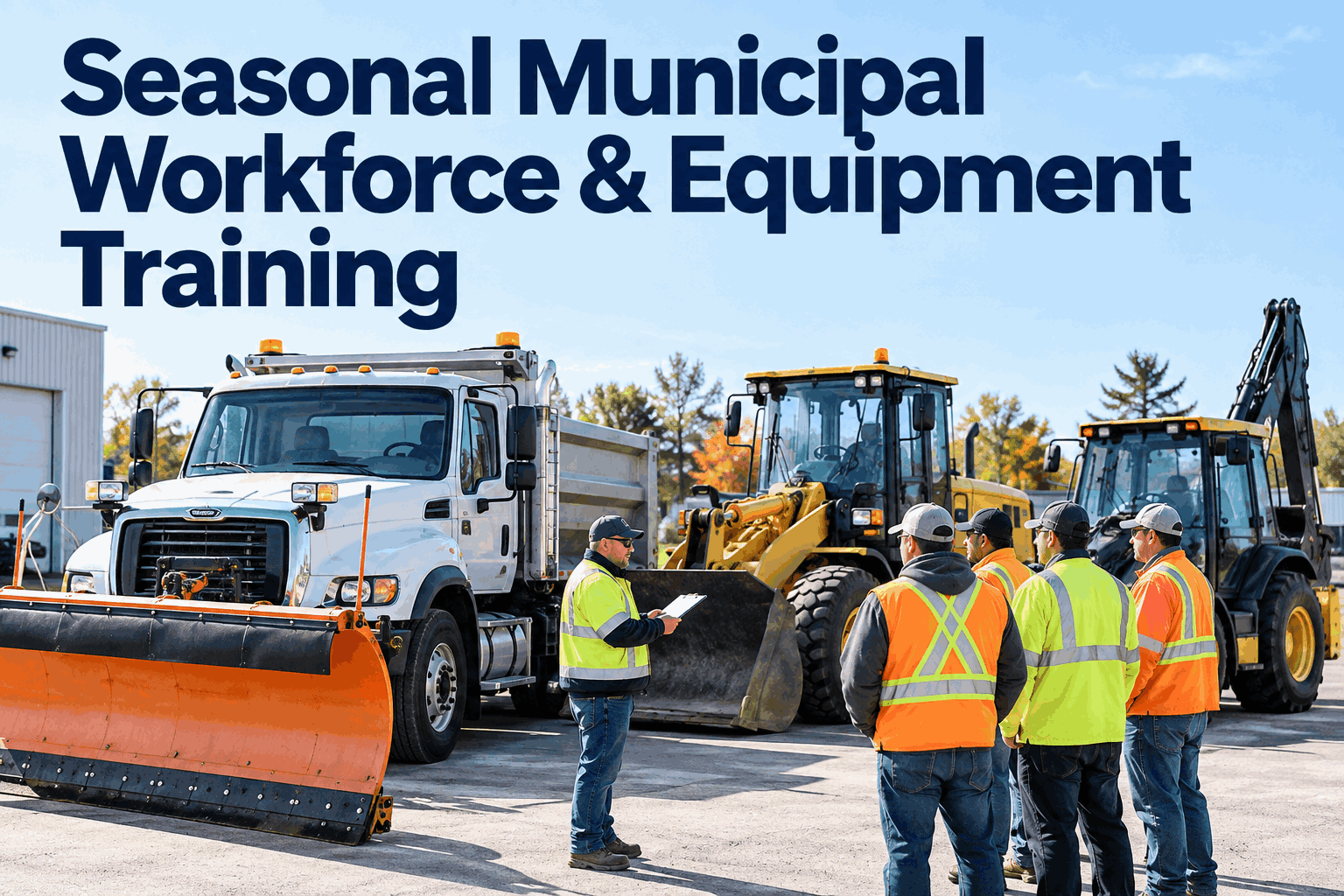
Seasonal workforce training can become difficult when municipalities need to bring temporary and returning employees into active operations quickly. A practical program should make it clear what each worker has learned, which equipment they are prepared to operate, what still needs review, and whether required procedures and inspections are being followed before independent work begins.
Build a Seasonal Workforce That's Ready Before the Busy Season Starts
Seasonal employees can arrive in weeks while equipment knowledge, safety procedures and operating experience take time to develop. A structured readiness process helps municipal teams move from fast onboarding to documented, equipment-specific preparation.
The workforce grows faster than the readiness picture
Public works, parks, road crews and winter operations may add people rapidly as workload changes. The problem appears when supervisors cannot quickly connect each employee with the training, procedures and equipment relevant to the work they are about to perform.
Summer programs, winter weather or project work creates a short-term staffing need.
New, temporary and returning employees enter operations within a compressed window.
Supervisors must decide which workers can safely perform which tasks.
Scattered records make assignment decisions harder to verify consistently.
A useful seasonal workforce training process should help answer what the employee learned, whether equipment-specific requirements apply, what practical ability has been demonstrated and what still needs attention before independent work.
Move every seasonal operator through the same decision path
Instead of treating onboarding as a stack of forms, use four clear gates that connect the employee directly to the work and equipment being assigned.
Identify the vehicle, machine, attachment or task the employee may perform.
Confirm applicable orientation, instruction and prior qualification information.
Complete practical evaluation or additional instruction where applicable.
Give supervisors a clear record supporting the equipment assignment.
One employee can have several different readiness levels
A seasonal worker may be comfortable with a pickup truck but unfamiliar with a loader, mower, forklift or snow-removal attachment. That is why municipal equipment training works better when qualification information is connected to specific equipment or operating responsibilities.
Has the employee completed applicable workplace orientation?
ConfirmedDoes the training cover the machine or vehicle being assigned?
ConfirmedHas the worker been prepared for the conditions and hazards of this assignment?
ReviewWhere applicable, has operating ability been demonstrated and evaluated?
EvaluateDoes the available information support the intended equipment assignment?
DecideTemporary work does not remove equipment training responsibilities
Training requirements depend on the work and equipment involved. For powered industrial trucks, OSHA requires operator training to include formal instruction, practical training and evaluation of the operator's performance in the workplace.
Relevant operating principles, hazards and required knowledge are addressed.
The operator receives demonstrations and performs practical exercises.
Operator performance is evaluated in the workplace as required by the standard.
The employer certifies required training and evaluation information.
Previous experience should make onboarding smarter, not automatic
Returning employees may already understand the department, but managers still need to determine whether the previous training and experience remain relevant to the current assignment. Equipment, procedures, attachments and workplace conditions may have changed between seasons.
Check whether previous training and evaluations remain relevant and current.
Address different controls, attachments, operating characteristics or limitations.
Review changed routes, traffic patterns, procedures or other operating conditions.
Make seasonal readiness easier to see before the shift starts
HVI gives fleet and equipment teams a structured digital environment for inspections, maintenance workflows, procedures and operational records — helping supervisors find important information without rebuilding the picture from paper, spreadsheets and disconnected files.
A trained operator still needs equipment that's ready to work
Workforce readiness and equipment readiness should meet before the job begins. A simple first-shift process connects the employee's preparation with a pre-use equipment check and a clear path for defects that need attention.
Relevant instruction and records checked.
Required practical readiness confirmed.
Appropriate for the intended assignment.
Condition documented before operation.
Issues are documented and routed appropriately.
Available for appropriate assignment.
The appropriate worker and equipment begin from a documented starting point.
Different seasons create different equipment-training priorities
Seasonal workforce planning becomes more useful when training is based on the work that is actually approaching rather than using one generic onboarding package for every employee.
Parks, grounds, road repair and project work can introduce mowers, utility vehicles, loaders, compact equipment and attachments.
- Match training to expected equipment
- Review attachments and operating limits
- Standardize pre-use inspections
Snow and ice response can involve plows, spreaders, loaders, attachments and demanding operating conditions.
- Review equipment-specific controls
- Prepare workers for changed conditions
- Confirm readiness before storm response
Preserve this season's work so next season starts further ahead
Seasonal programs become easier to manage when the organization keeps useful records between seasons. Instead of reconstructing training history months later, managers can review what was completed, what changed and what should be refreshed before returning employees are reassigned.
Keep relevant training, evaluation and operating information organized.
Identify gaps, changed duties and lessons from the completed season.
Maintain useful records and current procedures for returning workers.
Begin the next season with a readiness review instead of a paperwork hunt.
Seasonal workforce training FAQs
What should seasonal workforce training include?
Seasonal workforce training should reflect the employee's actual duties. Depending on the assignment, that may include workplace orientation, hazard awareness, procedures, equipment-specific instruction, practical exercises, required evaluations and pre-use inspection expectations.
Do returning seasonal employees need training again?
Previous training can remain relevant, but the municipality should determine whether equipment, duties, procedures or workplace conditions have changed and whether applicable requirements call for additional training, refresher training or evaluation.
How should equipment operator qualifications be tracked?
Qualification information is most useful when supervisors can connect a worker with the equipment or work they may be assigned. Relevant training dates, evaluations, scope and other required records should be maintained according to applicable requirements and organizational policy.
Why are pre-use inspections important for seasonal equipment operators?
A consistent pre-use inspection gives the operator a structured way to examine equipment before work and document identified problems. For less-experienced seasonal operators, a standardized inspection can also reinforce what should be checked before the machine enters service.
How can HVI support seasonal municipal fleet operations?
HVI helps fleet and equipment teams organize digital inspections, maintenance workflows, standardized procedures and operational records. Keeping these workflows connected can make information easier for supervisors to find during fast seasonal ramp-ups and daily equipment operations.
Turn seasonal onboarding into a repeatable operating process
Give your team a clearer way to connect people, procedures, inspections and equipment workflows. HVI helps municipal operations move away from scattered information and toward a more consistent digital process.