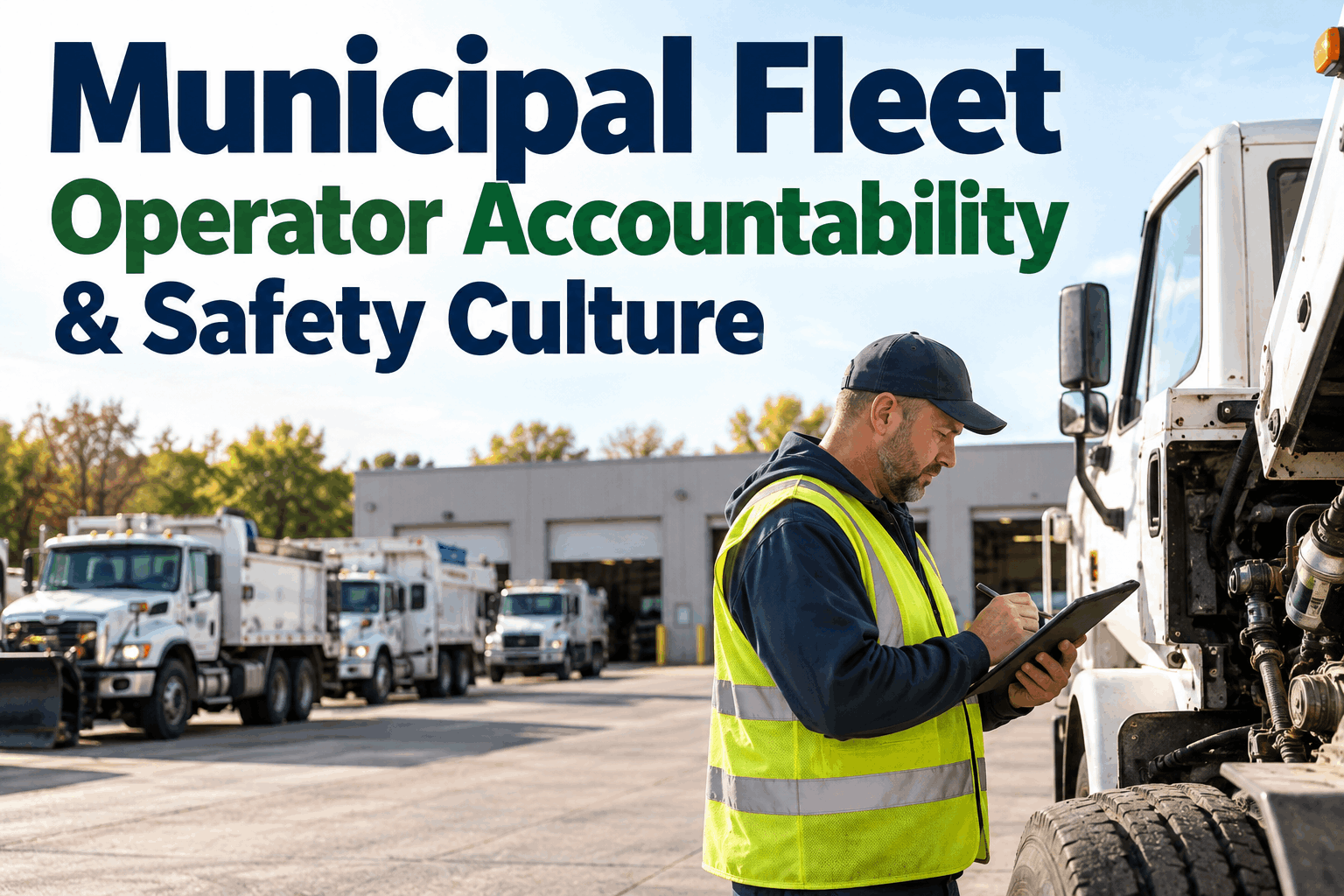
Municipal fleet operator accountability improves when every operator knows what to inspect, what to report and what happens after a defect is submitted. The strongest process connects practical inspections with visible maintenance follow-up, giving operators, supervisors and shop teams one documented view of equipment condition.
Build Operator Accountability Without Creating a Blame Culture
Turn inspections and defect reports into a visible operating loop where responsibilities are clear, maintenance receives useful information and operators can see that reported problems are being addressed.
Accountability Means Owning the Required Action
Municipal fleet operator accountability should focus on actions an operator can control: completing required inspections, accurately documenting observed conditions, reporting defects promptly and following the fleet's escalation procedures.
It should not automatically make an operator responsible for normal wear, hidden mechanical failures or maintenance decisions outside the operator's role. Keeping that boundary clear supports both accountability and operator engagement.
See how HVI documents inspection responsibilities →Complete checks, document condition and report what is observed.
Evaluate the condition, determine action and document the outcome.
Close the Loop From Inspection to Maintenance
A strong defect reporting culture is built when operators see that reporting leads somewhere. Keep the workflow short enough to use every day and visible enough that each team understands the next step.
Complete the required pre-use, pre-trip or equipment check.
Document the observed condition against the correct asset.
Assess, schedule, escalate or resolve through the maintenance workflow.
Keep the maintenance decision and resolution visible in the record.
The operator does not need to control the repair decision. They do need confidence that a properly submitted condition entered a defined process.
Known asset condition documented before operation.
Observed problem added to the asset record during use.
Open condition is visible before the asset changes hands.
Make Asset Condition Clear Between Operators and Shifts
Municipal vehicles and equipment can move between crews, operators and work locations. Without a consistent record, the next operator may not know whether a condition is new, previously reported or already awaiting maintenance.
Use inspections to create a practical condition record at the points that matter. A pre-use check establishes starting condition. New defects are reported during operation. A post-use or handover record keeps unresolved conditions visible for the next operator and supervisor.
Five Behaviors That Strengthen Fleet Safety Culture
Digital tools provide the record, but supervisors determine whether the process feels useful and consistent. Focus on a few repeatable behaviors rather than adding unnecessary reporting steps.
Use checks that match the asset and the operator's real responsibilities instead of one oversized generic form.
Operators should know what requires immediate attention and where the report should go.
Visible review tells operators that reporting is part of the maintenance process rather than a dead end.
Apply the defined inspection and defect process consistently across applicable crews and departments.
Use inspection and defect history for constructive feedback instead of relying on incomplete verbal accounts.
Don't Judge Accountability From Completion Rate Alone
Fleet inspection compliance is useful, but a completion percentage only tells part of the story. Pair participation measures with defect and maintenance measures to understand whether the process is functioning after the form is submitted.
Missed inspections can reveal participation gaps. Unresolved defects can expose follow-up problems. Repeat defects can highlight recurring equipment issues, while time to acknowledgement can show whether the reporting loop responds quickly enough.
Use HVI to build a documented inspection and defect history →Are required checks being submitted?
Where does participation break down?
What reported conditions still need action?
Which conditions continue to return?
How quickly does a reported condition enter a visible review process?
One Record From Inspection to Resolution
HVI can connect the operational events behind fleet operator accountability without replacing municipal policies, supervisor judgment or maintenance decisions.
Keep the submitted check connected to the asset.
Track the reported problem against the correct equipment.
Carry the issue into maintenance review and action.
Keep the resulting action in the asset's history.
Is Your Accountability Process Actually Closed?
A practical operator accountability process should answer these questions without requiring supervisors to reconstruct events from paper, calls and separate spreadsheets.
Start free with a small asset group →Build Accountability Around a Process People Can See
A stronger municipal fleet safety culture does not come from simply demanding more inspections. Operators need clear responsibilities and a practical way to report equipment condition, while supervisors and maintenance teams need a consistent process for reviewing and resolving those reports.
When inspections, operator defect reporting, maintenance action and resolution remain connected to the asset, accountability can be based on documented events instead of incomplete verbal information. That creates better visibility for operators, supervisors and the shop.
Common Municipal Fleet Questions
01What is municipal fleet operator accountability?
Municipal fleet operator accountability means establishing clear responsibilities for required inspections, accurate condition reporting, prompt defect submission and compliance with established operating and escalation procedures.
02How can a municipal fleet improve defect reporting culture?
Keep reporting practical, define responsibilities clearly and make follow-up visible. Operators should be able to see that reported conditions are acknowledged and moved into an appropriate maintenance process.
03What should operators report during vehicle inspections?
Operators should follow their agency's inspection procedures and document observable defects, damage or equipment conditions covered by those procedures. The required checks should reflect the asset type and the operator's responsibilities.
04Which metrics help measure fleet inspection accountability?
Useful operational measures can include inspection completion, missed inspections, reported defects, unresolved defects, recurring defects and time from defect submission to acknowledgement. These measures should be reviewed together and in context.
05How does HVI support fleet operator accountability?
HVI supports digital inspections, defect reporting, asset-level inspection records, defect tracking, maintenance workflows and inspection history so the events from inspection through maintenance follow-up can remain connected.
Give Operators and Maintenance Teams One Clear Record
See how HVI connects inspections, reported defects, maintenance follow-up and asset history for municipal fleet operations.