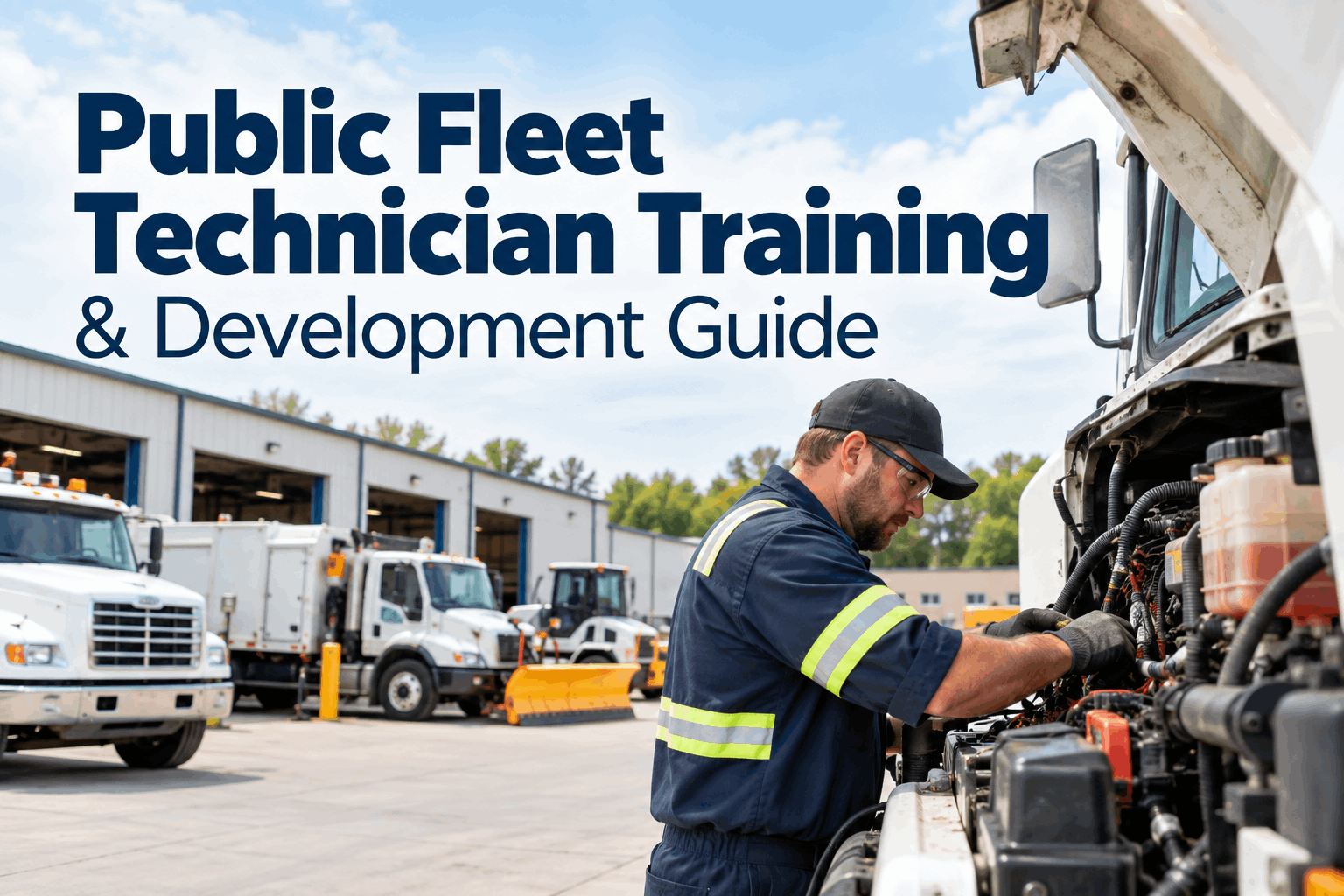
Public fleet technician training works best when it follows the fleet—not a generic course calendar. As municipal shops add advanced diagnostics, electronic controls, hybrid and electric vehicles, ADAS and new equipment, managers need a clear view of which skills each technician has today, which jobs they are ready to perform and where the next capability gap is developing.
Build Technician Skills Around the Fleet You Actually Maintain
Training every technician on everything is expensive and rarely practical. A stronger development program maps people to real maintenance responsibilities, identifies gaps by technology and risk, and creates a visible path from foundational skills to advanced qualification.
Next development priority: EV safety and high-voltage systems
What work does your fleet need technicians to perform?
A public fleet technician training program should begin with the assets and maintenance responsibilities inside the shop. A fleet maintaining diesel dump trucks, police vehicles, refuse equipment, hybrids and battery-electric units has a different skills requirement from a light-duty administrative fleet.
Brakes, steering, suspension, engines, drivetrains and preventive maintenance.
Scan tools, fault codes, sensors, networked controls and electrical troubleshooting.
Refuse bodies, hydraulics, snow equipment, aerial systems and specialized attachments.
Hybrid systems, EVs, high-voltage hazards, ADAS and increasingly software-driven systems.
Training demand should follow maintenance demand. Before approving another class, ask which fleet asset, repair category, technology or future acquisition creates the need for that capability.
Make technician skill gaps visible before they become shop bottlenecks
A technician competency matrix turns scattered knowledge about employee capabilities into a practical workforce planning tool. Instead of relying on memory, supervisors can compare technicians against the skills required by the fleet and see where coverage is strong, thin or missing.
If only one technician can diagnose a system or maintain a specialized asset, absence or turnover can quickly create a service bottleneck.
Attending a class does not automatically mean someone is ready for every related task. Define how your fleet confirms readiness.
Include vehicles and technologies already approved for acquisition so training can happen before the new equipment becomes a maintenance problem.
Not every skills gap deserves the same urgency
Prioritize development by combining operational demand, safety exposure and how many qualified people can currently perform the work.
Safety-critical systems, high-voltage exposure or high-frequency work with limited qualified coverage.
Specialized work that may be infrequent but requires specific knowledge, procedures or qualification.
Common maintenance where cross-training can reduce single-person dependencies and improve scheduling flexibility.
Develop capability when fleet plans, staffing changes or workload forecasts justify it.
Turn training into progression—not a folder of certificates
Municipal technician development becomes more useful when employees can see how new skills connect to greater maintenance responsibility. A structured path also helps supervisors decide what should happen after a course: observation, supervised practice, competency verification or independent assignment.
- Preventive maintenance
- Inspection procedures
- Basic electrical systems
- Safe tool and shop practices
- Brakes and chassis
- Electrical diagnostics
- Hydraulic systems
- Scan-tool workflows
- Network diagnostics
- Recurring fault analysis
- Advanced electrical work
- Specialized equipment
- Hybrid / EV systems
- High-voltage safety
- ADAS technologies
- OEM-specific systems
Career paths do not need to force every employee toward management. Public fleets can create technical progression for employees who want to deepen diagnostic, electrical, heavy-equipment or emerging-technology expertise while remaining hands-on technicians.
“We bought an EV” should not be the start of the training plan
Electric and hybrid vehicles introduce electrical hazards and service boundaries that should be considered before technicians are assigned relevant work. The right level of training depends on the employee's actual tasks and exposure.
VOLTAGE
Recognize hazards, understand boundaries and know when work must stop and be referred.
WHO? Personnel working around relevant vehiclesDevelop the knowledge and procedures required for assigned maintenance around electrical systems.
WHO? Technicians with applicable service dutiesMatch specialized electrical work to the training, skills and safe work practices required for the task.
WHO? Appropriately trained qualified personnelSafety note: OSHA 29 CFR 1910.332 requires training for employees who face electrical-shock risk covered by the standard, with training tied to job assignments and the employee's level of qualification. Fleet managers should determine applicable federal, state, local, manufacturer and workplace requirements for the work their technicians actually perform.
Can your supervisor see who is ready for the work?
Training records become operationally useful when managers can connect the technician, qualification, relevant procedure and maintenance responsibility instead of searching through separate spreadsheets and folders.
Use certifications as evidence—not as your only definition of competency
Industry credentials such as ASE certification can provide a structured way to validate technical knowledge, but a public fleet may still need internal procedures, equipment-specific familiarization, manufacturer training and practical competency checks based on the work performed in its own shop.
External credentials can demonstrate knowledge in defined technical areas and create recognizable development milestones.
Useful when the fleet introduces manufacturer-specific systems, diagnostic platforms, equipment or service procedures.
Defines how the municipality expects recurring work, inspections, documentation and escalation to happen locally.
Shows whether the employee can apply required knowledge and procedures to assigned work under appropriate conditions.
Track renewal dates where applicable. ASE states that its certification credentials are valid for five years. Fleets using ASE credentials as part of technician development should keep renewal status visible rather than discovering an expiration during an audit, promotion review or assignment decision.
A useful technician training record should answer five questions quickly
Storing a certificate proves that a document exists. A stronger qualification record helps a supervisor understand what the record means operationally.
QUALIFICATION
RECORD
Which technician?Employee and role
Which capability?Training, certification or qualification
What does it apply to?Equipment, system, procedure or work category
When completed?Completion, issue and renewal dates
Is it current?Active, due soon, expired or needs review
This is where digital qualification records become more valuable than a shared folder. Managers can use structured records to support technician training records, renewal planning, assignment decisions and development conversations while keeping supporting documentation accessible.
Connect the capital plan to the technician development plan
A common workforce mistake is waiting until new vehicles arrive before asking who can maintain them. Fleet acquisition planning should trigger a parallel skills review while there is still time to arrange OEM instruction, safety training, tooling, procedures and internal knowledge transfer.
Identify new systems, energy sources, diagnostic platforms and expected in-house maintenance.
Compare upcoming maintenance requirements against current technician capability and shop resources.
Schedule relevant technical, safety and manufacturer development before the asset enters normal service.
Use procedures, mentoring, maintenance history and real repair experience to deepen capability.
Turn experienced technicians into knowledge multipliers
Formal courses matter, but public fleet expertise is also built through years of diagnosing recurring failures, maintaining specialized equipment and learning what works in local operating conditions. Capture that experience before it leaves the shop.
HVI's technician workflow supports this operational knowledge layer by keeping service history, previous parts and technician notes accessible when future work is performed. That makes maintenance history part of technician development instead of leaving useful experience trapped in individual memory.
Close the gap between “training completed” and “ready for assignment”
A completion date is an administrative milestone. For higher-risk or technically complex work, fleets may also need to determine whether the technician can apply the training correctly under the conditions they will encounter in the shop.
Course, OEM instruction, certification preparation or internal training.
See the task performed correctly with the applicable procedure and controls.
Perform relevant work under the supervision appropriate to the task.
Confirm the fleet's defined competency or qualification requirement.
Match the technician to work within the capability the fleet has established.
The strongest training plan is not the one with the most classes. It is the one that lets a supervisor look at tomorrow's workload and know the shop has enough qualified people to handle the technologies, hazards and maintenance responsibilities coming through the door.
Keep technician qualifications close to the work they support
HVI helps fleet teams retain technician qualification information, maintenance history and standardized operational records so workforce capability remains visible as vehicles, technologies and responsibilities change.
Build the program without trying to solve every skill gap at once
A useful technician development program can begin with a focused inventory of the fleet, current employee capability and upcoming risks. Start with the highest-value gaps, establish a repeatable record structure and expand the matrix as the process matures.
- List major fleet technologies
- Identify critical maintenance tasks
- Inventory current technician skills
- Record existing certifications
- Find single-person dependencies
- Flag safety-sensitive gaps
- Review future acquisitions
- Choose development priorities
- Assign development actions
- Standardize qualification records
- Add renewal tracking
- Schedule periodic skills reviews
Public fleet technician training FAQs
What should a public fleet technician training program include?
A practical program should start with the maintenance capabilities required by the fleet, assess current technician competency, identify skill gaps and create development priorities. Depending on the fleet, the program may include preventive maintenance, diagnostics, electrical systems, brakes, hydraulics, specialized equipment, OEM training, industry certifications, hybrid and EV safety, high-voltage work practices, mentoring and fleet-specific procedures.
What is a technician competency matrix?
A technician competency matrix compares employees against the technical skills, qualifications or maintenance responsibilities required by the fleet. It can help managers identify coverage gaps, single-person dependencies, cross-training opportunities and areas where future vehicle acquisitions will require additional workforce development.
Do all municipal technicians need the same certifications?
No single certification plan fits every public fleet. Requirements depend on job duties, fleet technologies, applicable regulations, employer policies and the maintenance work performed in-house. Managers should map training and qualification requirements to actual assignments rather than automatically sending every technician through the same program.
How should fleets prepare technicians for electric and hybrid vehicles?
Start by identifying which employees will work around or directly service relevant electrical systems and what hazards their assignments create. Then determine the applicable safety training, manufacturer procedures, tools, personal protective equipment, work practices and qualification requirements. Training depth should match actual duties and exposure rather than treating all employees as if they perform the same high-voltage work.
How can HVI support technician development?
HVI supports the operational side of technician development by helping fleet teams retain qualification information and maintenance records while giving technicians access to service history and previous repair information. This helps managers keep workforce records closer to the maintenance operation they support.
Your fleet technology is changing. Make technician readiness visible too.
Effective public fleet technician training connects workforce development to actual vehicles, equipment and maintenance responsibilities. Map the skills you need, develop people deliberately, preserve qualification records and keep procedures and service knowledge accessible to the technicians doing the work.