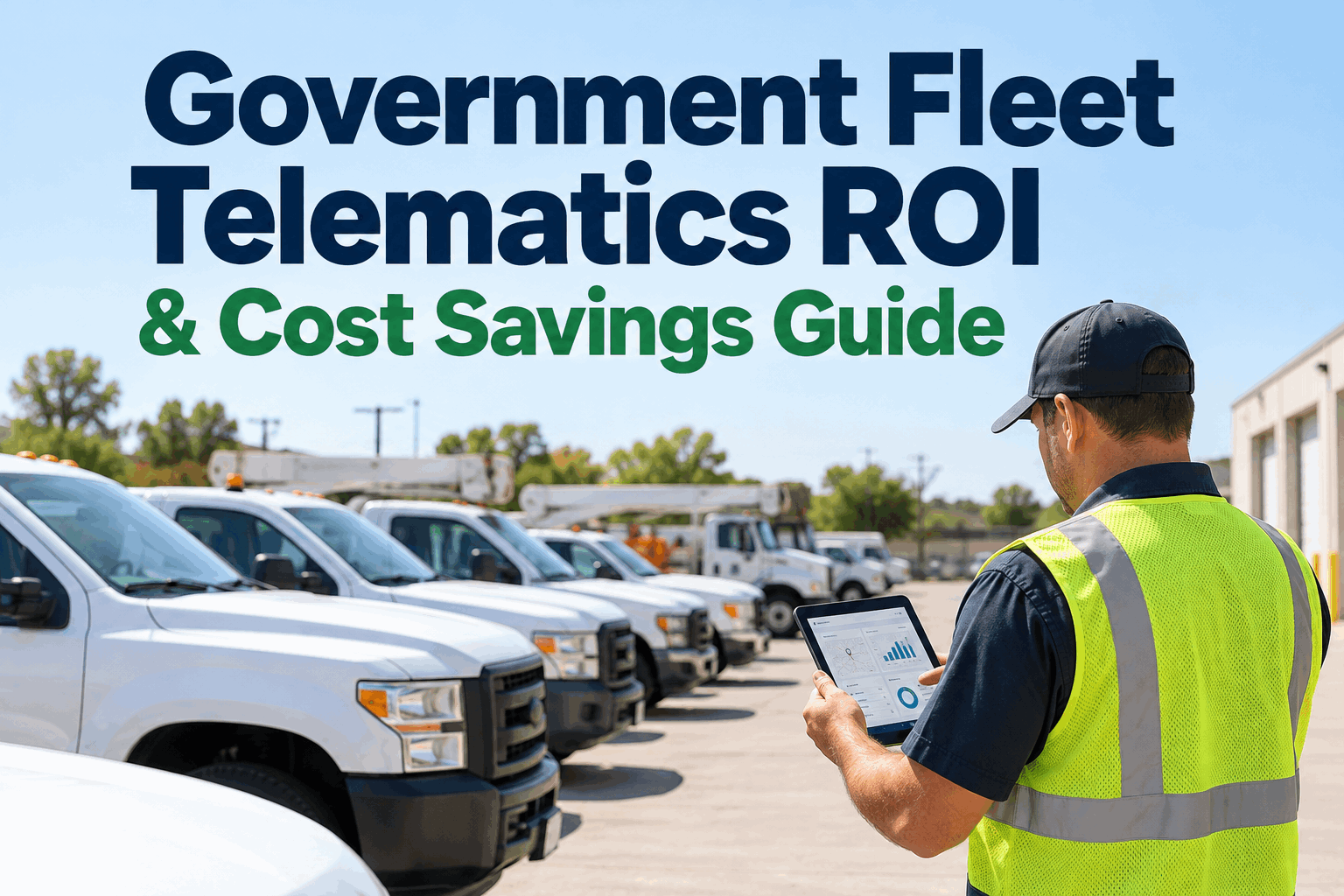
Government fleet telematics ROI is one of the most over-promised, under-captured numbers in public fleets. Most agencies buy telematics, watch the dots move, maybe recover a stolen truck — then wonder where the promised savings went. Here's the truth: the GPS dot is table stakes. The real, bankable ROI lives in what you do with the data after it arrives — in maintenance, utilization,and cost — and that only happens when telematics feeds a system built to act on it. Here's where the money is — see where the ROI actually comes from.
The ROI isn't in the GPS dot. It's in the data.
Turn the telematics you already run into real savings — preventive maintenance on actual usage, utilization you can right-size, and fleet costs your finance office can see. Integrated into one maintenance platform.
A quick, honest note first: HVI is not a telematics or GPS provider, and this isn't a pitch to rip out what you have. HVI is the maintenance side — it integrates the telematics you already run (GPS, OEM, or a mix) and turns that raw feed into action: preventive maintenance scheduled on real engine hours and mileage, utilization you can actually measure, and cost data your finance office can report on. That distinction is the whole point of telematics ROI. The device captures the data; the savings come from a system that acts on it. For a public fleet under budget scrutiny, that difference is the line between a line-item cost and a defensible return.
GPS is table stakes — the ROI lives beyond itwhy government fleet telematics ROI needs more than tracking
Raw GPS tracking is useful, but its savings cap out fast. The return that moves a budget comes from the operational data telematics also carries — once something turns it into decisions.
- Where each vehicle is, right now
- Route history and basic reports
- Theft recovery and geofencing
- Useful — but the savings plateau here
- PM scheduled on real hours & miles
- True utilization — what to right-size
- Fuel, idle and cost per asset
- Savings a finance office can book
The gap between the two columns is exactly the value most agencies leave on the table. Closing it is a software problem, not a hardware one — connect your telematics free and see the difference.
Where the ROI actually comes fromthe five sources of fleet telematics cost savings
Telematics ROI isn't one big number — it's five streams, and maintenance is usually the largest. Each one depends on turning a data signal into a maintenance or fleet decision.
Maintenance savings
PM triggered on real engine hours and mileage catches wear before failure — the single biggest, most reliable return.
Fuel & idle reduction
Idle-time and fuel data expose the quiet waste — engines running for hours doing nothing, on public fuel budgets.
Utilization & right-sizing
Real usage data reveals the trucks that barely move — the ones you can cut, share or defer replacing to shrink the fleet.
Downtime reduction
Fewer surprise breakdowns means fewer vehicles out of service — and fewer stopgap rentals and overtime to cover them.
Admin & compliance time
Automated records and reporting cut the staff hours spent rebuilding logs — and make audits and public records fast.
Notice the pattern: every one of these is a maintenance or fleet-management decision, not a tracking feature. That's why the ROI needs preventive maintenance and cost reporting on top of the signal. See maintenance savings from your telematics data.
How the data becomes dollarstelematics integration that drives preventive maintenance and reporting
The path from a GPS signal to a budget line is short, but every step has to connect. This is where integration earns its keep — the telematics you own feeds the maintenance system that acts on it.
HVI reads engine hours, mileage and usage straight from your telematics integration, so maintenance runs on reality instead of a guess — and the savings are traceable to data, not a vendor's brochure. See how telematics feeds PM in HVI.
Tie every saving to data — failures avoided, idle hours cut, underused units identified — so the business case for telematics holds up in a budget review.
Building the business case for public dollarsthe levers that turn telematics into a municipal fleet ROI
Public fleets answer to budgets, councils and taxpayers, so the ROI has to be shown, not asserted. Three levers do most of the work — and all three come from acting on telematics data.
Avoid the failures
Every unplanned breakdown you prevent with usage-based PM is a repair bill, a rental, and overtime you didn't spend. The most countable saving.
Cut the waste
Idle and fuel data turns vague "we should idle less" into a measured reduction against a real public fuel line.
Right-size the fleet
Utilization data identifies the vehicles you can retire, share or not replace — often the biggest multi-year capital saving of all.
Put those three on one dashboard — the same discipline HVI brings to the rest of a government fleet — and the telematics investment becomes a reported return, not a hopeful purchase. Build the ROI case, or start a free fleet list with your own numbers.
From a municipal fleet director
We'd had telematics for three years and council kept asking what we got for it. Honestly? Mostly dots on a screen and the odd recovered truck. The data was all there — engine hours, idle time, mileage — but it just sat in the telematics portal while our maintenance still ran off a calendar and a binder.
Connecting that feed into our maintenance system was the switch that flipped. PM now runs on actual hours, we found a dozen vehicles barely being used, and I can finally hand finance a number that ties to data. Same telematics we already paid for — we just started using what it was telling us.
Government fleet telematics ROI — FAQs
Is HVI a telematics or GPS provider?
No — and that's deliberate. HVI is a maintenance, inspection and fleet-management platform that integrates the telematics you already run, whether that's a GPS provider, OEM feeds, or a mix. It reads engine hours, mileage and usage data and turns it into preventive maintenance, utilization tracking and cost reporting. You keep your telematics; HVI is the layer that converts its data into savings.
Where does most telematics ROI actually come from?
For most government fleets, maintenance is the largest stream — scheduling PM on real engine hours and mileage prevents the expensive failures. After that come fuel and idle reduction, utilization and right-sizing, downtime reduction, and admin time saved. The common thread is that each is a maintenance or fleet decision made on telematics data, not a feature of the tracking device itself.
We already have GPS tracking — why isn't that enough?
GPS tracking delivers location, routes and theft recovery, and the savings from those plateau quickly. The larger, ongoing ROI comes from the operational data telematics also carries — hours, mileage, idle, fuel — which only becomes savings when a maintenance system acts on it. The gap between "we have GPS" and "we capture the ROI" is a software and integration gap, not a hardware one.
How does it help with right-sizing a public fleet?
Utilization data shows how much each vehicle is actually used, not how much it's assumed to be. That surfaces the underused units you can retire, redeploy, pool or simply not replace — frequently the biggest multi-year capital saving available to a public fleet, and one you can defend with data in a budget review.
How do we prove the ROI to finance and council?
By tying each saving to data on one dashboard: failures avoided through usage-based PM, measured idle and fuel reductions, and utilization-driven fleet decisions. Because the numbers trace to telematics and maintenance records rather than estimates, the business case holds up under the scrutiny public spending gets. That reporting is exactly what HVI is built to produce.
Finally capture the ROI your telematics was supposed to deliver
Keep the telematics you have. Connect it to a maintenance platform that schedules PM on real usage, measures utilization you can right-size, and reports fleet cost your finance office can stand behind. That's where government fleet telematics ROI actually lives. See it on your own fleet in 30 minutes.
Integrates your telematics · PM on real usage · ROI you can report