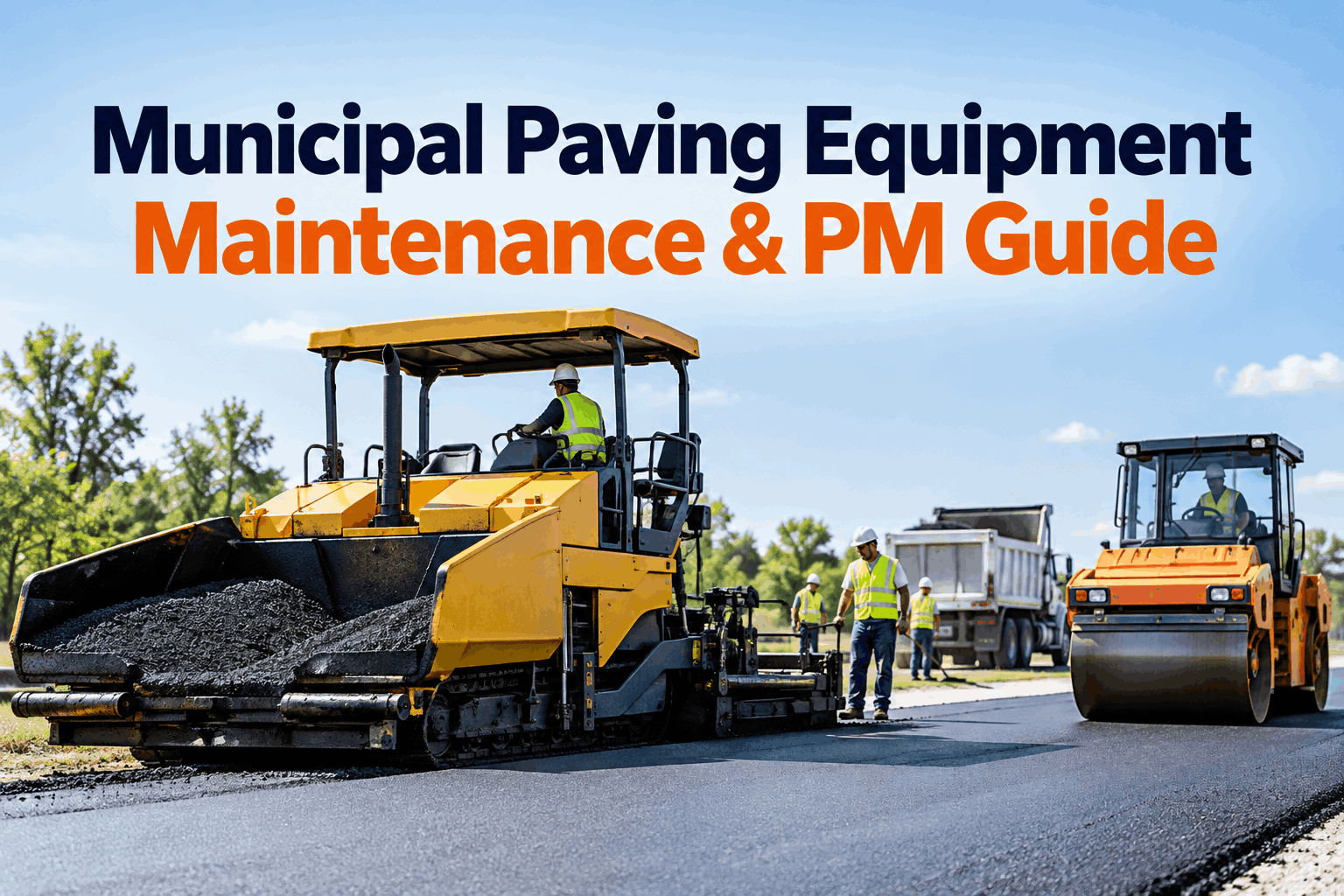
Municipal paving equipment maintenance has a clock on it that most fleets don't: the paving season. For a few warm months your pavers, rollers and patch trucks run flat out on street projects the public is watching — then they sit all winter. Get the maintenance rhythm wrong and you lose the worst way possible: a paver down mid-project, a roller that won't start on the one dry week in the forecast, a milling machine waiting on parts while a grant deadline slips. The fix is a real program — seasonal, hour-based, across the whole fleet. Here's what that looks like — see how a paving fleet stays season-ready.
Keep the whole paving fleet ready for the season.
Pavers, rollers, patch and tack trucks, milling machines — all on hour-based preventive maintenance, digital inspections and one asset record, so the fleet is ready when paving season opens and rebuilt before it starts.
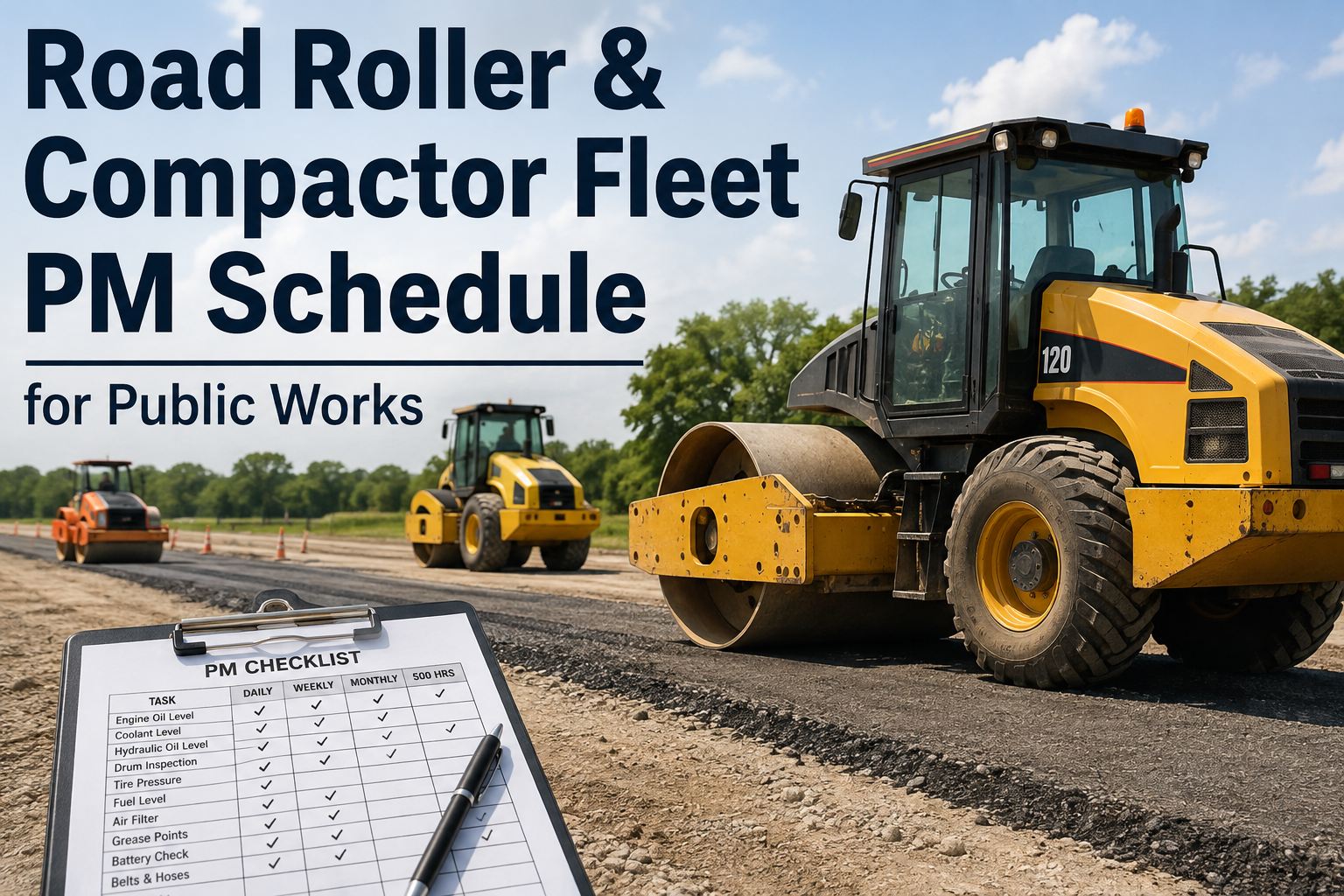
There's plenty of per-machine guidance out there — HVI itself publishes a detailed asphalt paver PM program for street departments, a road roller & compactor PM schedule, and a paver maintenance checklist. What a municipal street department actually needs is the layer above those: a way to run the whole paving fleet as one program, so the paver, the rollers, the patch trucks and the milling machine are all on schedule, all inspected the same way, and all ready at the same time. This guide is about that program — how the pieces fit, why it's seasonal and hour-based, and how the right system keeps it from living in a binder.
It's a paving train, not a pavermunicipal paving equipment maintenance across the whole fleet
A paving job is a chain of machines handing hot mix down the line. If any link is down, the whole train stops — and hot asphalt doesn't wait. Each machine has its own wear points and its own maintenance clock.
Patch & tack trucks
Spray bars, tanks and burners — the fleet's year-round workhorses.
Asphalt paver
Screed, augers, conveyors and burners — the highest-wear machine you own.
Breakdown & finish rollers
Drums, vibratory systems and water sprayers — timing and condition are everything.
Milling machines
Cutting drums, picks and conveyors — heavy consumable wear, big downtime cost.
Managing these as separate silos is how one forgotten roller strands a whole crew. On one system — the paver, the rollers and the trucks together — you see the whole train's status at a glance. See the whole paving fleet on one system.
The paving calendar runs your maintenanceseasonal paving equipment maintenance planning, done right
Unlike a year-round fleet, paving equipment lives in two very different worlds. A real program treats them as two jobs, not one — and the off-season is where the next season is won.
Run hard, can't break down. The focus shifts to fast daily checks and keeping machines running through the window.
- Daily pre-use inspections before every shift
- Service in evenings and rain days, not mid-job
- Defects flagged and fixed overnight
The real opportunity. Winter is when you rebuild screeds, replace drums and wear parts, and bring every unit back to season-ready.
- Plan major rebuilds from the season's defect log
- Order long-lead wear parts before spring demand
- Every unit certified season-ready before day one
The fleets that never scramble in April are the ones that used the winter deliberately — working off a documented list, not memory. Plan your off-season rebuilds in HVI from the season's own records.
Why paving equipment runs on hours, not dateshour-based preventive maintenance for the paving fleet
A calendar schedule is wrong for paving equipment two ways at once: in season a machine might run 200 hours in a month, and off-season it runs zero. Service has to follow the meter, not the month — so the units that worked hardest get attention first.
Screed plates, auger and conveyor wear track to operating hours and tonnage — not to a date on a wall.
Vibratory systems, bearings and the water spray system wear by run hours and cycles.
Picks and cutting drums are consumables measured in hours and material removed.
Across every machine, engine-hour service is the baseline that prevents the big failures.
Hour-based triggers mean the heavy-use paver gets serviced before it fails and the barely-touched spare doesn't get needless service — the core of preventive maintenance done right. See hour-based PM across the fleet.
Keep the program out of the binderthe paving equipment maintenance software that runs it
A seasonal, hour-based, whole-fleet program is exactly the kind of thing that dies on paper. Five capabilities keep it live and running from a phone on the jobsite.
Hour-based PM scheduling
Service triggers on each machine's meter, so the hardest-worked units come due first.
Digital inspection checklists
Pre-use and seasonal checks run the same way on every unit, with photos on defects.
Asset management
Every paver, roller and truck on one list with its hours, history and documents.
Defects to work orders
A flagged issue becomes a scheduled repair — the source for your off-season rebuild list.
Seasonal planning
Turn a season of records into a documented winter rebuild and spring readiness plan.
Run it through maintenance management and the whole program lives in one place — no binder, no guessing which roller is due. Start a free equipment list and put your paving fleet on it.
What a managed paving fleet gains
In-season downtime
Fewer breakdowns during the short window means more streets paved before the weather turns.
On day one
Off-season rebuilds done on a plan, so the fleet starts the season instead of starting in the shop.
Repair & parts cost
Catching wear on hours and ordering parts early beats emergency buys and rush downtime.
Budget & audit trail
A full record per machine for public-works budgets, grant reporting and asset decisions.
For a street department judged on roads paved and dollars spent, a ready fleet is the whole job. Add your paving fleet free and start the record this season.
From a street maintenance manager
Every spring it was the same fire drill — we'd go to start the season and find the paver's screed needed work we should've done over winter, or a roller that sat since October wouldn't run right. Our whole paving window is maybe five months, and we'd burn the first two weeks of it in the shop.
Putting the whole fleet on hour-based PM with a real inspection on every machine changed our winters and our springs. The defects we log all season become the rebuild list, we order parts before everyone else needs them, and we hit day one ready. We're paving more streets with the same equipment and the same budget.
Municipal paving equipment maintenance — FAQs
Does it cover the whole paving fleet, not just pavers?
Yes — that's the point of managing it as one program. Asphalt pavers, breakdown and finish rollers, patch and tack trucks, and milling machines each get their own asset profile, hour-based PM schedule and inspection checklist, all on one list. You see the status of the entire paving train at once, instead of tracking each machine type in a separate binder or spreadsheet.
Why hour-based maintenance instead of a calendar schedule?
Paving equipment runs in bursts — a machine might log 200 hours in a peak month and nothing all winter. A calendar schedule either over-services idle units or misses the hard-worked ones. Scheduling on each machine's operating hours means the paver that ran every day gets serviced before it fails, and the spare roller doesn't get needless work. It matches service to real use.
How does it help with off-season planning?
Every defect and deferred repair logged during the season builds a record. Come winter, that record becomes your rebuild list — screeds, drums, wear parts and the long-lead items you want to order before spring demand spikes. Instead of discovering problems when you try to start the season, you walk into day one with the fleet already rebuilt and certified ready.
We already use paper checklists — why add software?
Checklists tell a crew what to check; software makes sure it happens across the whole fleet and that the findings go somewhere. It tracks hours on every machine, triggers PM before it's due, turns a flagged defect into a scheduled repair, and keeps the history that feeds your off-season plan and your budget reporting. The checklists live inside it — HVI includes digital paver and roller checks — but the program is what keeps machines from slipping.
Is HVI specific to paving equipment?
No — HVI is a maintenance platform for any fleet, and paving equipment is one of many it handles well. That's an advantage for a public-works department: the same system manages your pavers and rollers alongside the rest of the municipal fleet — trucks, loaders, and other equipment — on one platform, with one way of working, instead of a separate tool for each category.
Make the season about paving, not about catching up
One program for the whole paving fleet — pavers, rollers, patch trucks and milling machines on hour-based PM, inspected the same way, rebuilt on a plan each winter, and ready the day the season opens. Fewer breakdowns, more streets paved, a record you can stand behind. See it on your own fleet in 30 minutes.
Whole fleet on one list · PM by the hour · Season-ready by plan