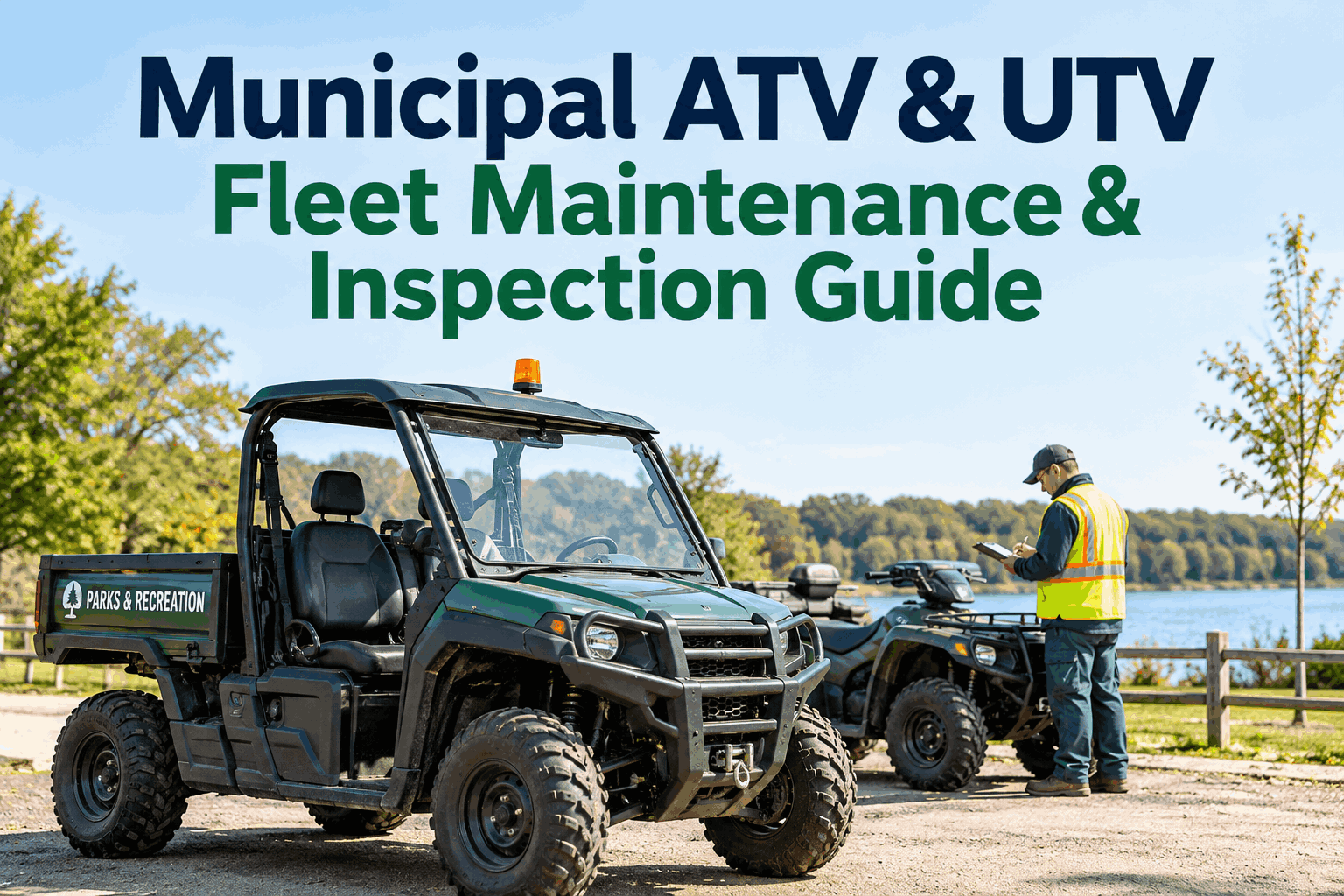
Municipal ATV and UTV maintenance is the job nobody owns. Your city's side-by-sides and four-wheelers are scattered across parks, public safety, utilities and beaches — small enough to get none of the attention the truck fleet gets, but critical the day a ranger has to reach a backcountry trailhead or an officer has to cross a packed festival ground. They run in mud, dust and water, rack up hours fast, and get serviced only when something breaks. Then one won't start during the exact event it was bought for. Here's how to run that off-road fleet like it matters — see how the whole off-road fleet gets tracked.
The off-road fleet nobody's tracking.
Your ATVs and UTVs are spread across departments and run on hour meters, not odometers. Put every unit on hour-based preventive maintenance, one inspection standard and a single asset list — so the small fleet stops being the one that fails when it's needed.
If you manage a municipal fleet, you know where every dump truck and plow is — and you'd have to make three phone calls to learn how many ATVs and UTVs the city actually owns, let alone when they were last serviced. That's the whole problem. These machines are cheap enough to buy out of a department budget and easy enough to forget, so they never make it onto the fleet's maintenance system. HVI already publishes a detailed ATV/UTV parks fleet inspection checklist; this guide is the layer above it — how to run the whole off-road fleet as a managed, hour-based program instead of a set of orphans spread across the org chart.
Why the off-road fleet slips through the cracksthe gaps that make municipal UTV fleet maintenance an afterthought
It's rarely one big failure — it's four quiet gaps that let small vehicles disappear from the maintenance picture until they strand someone.
Too small to notice
Next to a $200k truck, a UTV doesn't register — so it never gets a PM schedule or a spot on the board.
No single owner
Spread across parks, police and utilities, each unit is "someone else's" — so nobody runs the maintenance.
Many operators, no standard
A dozen seasonal and cross-trained staff drive them, each with their own idea of a pre-use check — or none.
Hours, not miles
They wear by engine hours, so a mileage-based fleet process misses them entirely — service just never comes due.
Close these four gaps and the fleet stops being invisible. The first step is simply getting every unit onto one list, wherever it lives. See every ATV and UTV on one list.
They work harder than their size suggestsATV and UTV wear points that drive preventive maintenance
A municipal side-by-side lives a brutal life — mud, water crossings, dust, towing, and stop-start duty on trails and turf. The small size hides real wear, and a handful of components cause most of the failures.
None of this is exotic — it's just relentless, and it compounds when nobody's watching the meter. Catching it on schedule with a standard inspection is the whole game. Start a free equipment list and add your units.
Small engines, serious hour-based servicehour-based preventive maintenance for ATVs and UTVs
The single most important shift is scheduling by the hour meter. A UTV that logged 120 hours hauling in a busy summer needs service long before the calendar says so — and the spare that sat in a shed doesn't. The meter tells the truth; the calendar lies.
The first service after initial hours is critical on a new unit — oil, belt check, fastener torque.
Oil and filter, air filter, belt, brakes and controls on each machine's hour interval.
Mud, water and dust shorten intervals — a configurable schedule accounts for real conditions.
Pre-season readiness and storage prep for units that run hard then sit.
Hour-based triggers are the core of real preventive maintenance — the hard-used unit comes due first, automatically, instead of slipping because it isn't on anyone's mileage report. See hour-based service for hard-used units.
Many operators, one standardconfigurable inspection checklists across every department
Because so many different people drive these machines, a consistent pre-use check matters more here than almost anywhere. The answer isn't one rigid form — it's a configurable checklist each department tailors to its units, run the same way by everyone.
Towing, turf and terrain checks — hitch, tires, belt, lights.
Readiness-focused — start, controls, lights, comms mounts.
Load and attachment checks for work duty and hauling.
The same safety and fluid basics underpin every one of them.
Configurable checklists mean a seasonal hire in parks and a utilities tech inspect to the same standard, and every finding lands in one place. Watch every department inspect the same way.
What changes when the small fleet is managed
Every unit, one list
You finally know what the city owns, where it is, and when each unit is due — across all departments.
Surprise failures
Hour-based PM catches belts, filters and fluids before a unit dies at a trailhead or an event.
Service life
On-schedule care stretches the life of units bought on tight public budgets.
Records & accountability
A history per unit for budgets, warranty, safety and the next funding request.
It runs from a phone in the field, so a ranger or an officer logs the check where the machine is. Add your ATVs and UTVs free and make the invisible fleet visible.
From a parks & recreation fleet supervisor
Honestly, our side-by-sides were a blind spot. Parks had some, the rangers had some, the beach crew had a couple — nobody could tell you the real count, and "maintenance" meant whoever noticed a belt was shot. We cooked two CVT belts in one summer and had a unit die during a festival detail. Not a good look when the public's watching.
Putting every one of them on hour-based service with a quick check the crews run from their phones fixed it. I can see the whole off-road fleet in one place now, service comes due on hours instead of never, and we go into event season actually ready. For machines this easy to ignore, that visibility is everything.
Municipal ATV & UTV maintenance — FAQs
Why track ATVs and UTVs separately from the main fleet?
You don't track them separately — you bring them onto the same system as everything else. The problem is that today they're usually off it entirely: too small to register, spread across departments, and scheduled by miles when they actually wear by hours. Getting them onto one asset list with hour-based PM is what stops them from being the forgotten corner of the fleet.
Why is hour-based maintenance right for UTVs?
ATVs and UTVs have hour meters, not odometers, and their wear is driven by engine hours and duty, not distance. A unit can log heavy hours crawling around a park at low speed while barely moving the odometer. Scheduling on hours means the hard-worked machine comes due before it fails, and an idle spare doesn't get needless service — service matches real use.
We have operators in different departments — how does that work?
That's exactly what configurable checklists are for. Each department tailors its pre-use inspection to its units and duty — parks, public safety, utilities — while sharing the same safety and fluid core. Everyone inspects from a phone, to the same standard, and every finding lands in one place regardless of which department the unit belongs to.
What are the most common UTV failures to watch?
The CVT drive belt is the number-one wear item — heat, mud and towing destroy belts fast. After that: air filter and intake (dust and water), oil and coolant under hot low-speed duty, brakes, and the bearings, seals and CV boots that water crossings and trail abuse chew up. All of them are predictable with hour-based service and a consistent inspection.
Is HVI specific to ATVs and UTVs?
No — HVI is a maintenance platform for any fleet, and ATVs and UTVs are simply assets it handles well. That's the advantage for a municipality: the same system that manages your trucks, loaders and paving equipment also manages the off-road fleet, on one platform with one way of working — so the small vehicles finally sit alongside everything else instead of in a blind spot.
Make the invisible fleet visible
Every ATV and UTV, across every department, on one system — hour-based preventive maintenance, a shared inspection standard, and a full history per unit. The small fleet stops slipping through the cracks and stops failing when it's needed most. See it on your own fleet in 30 minutes.
Every unit on one list · PM by the hour · One inspection standard