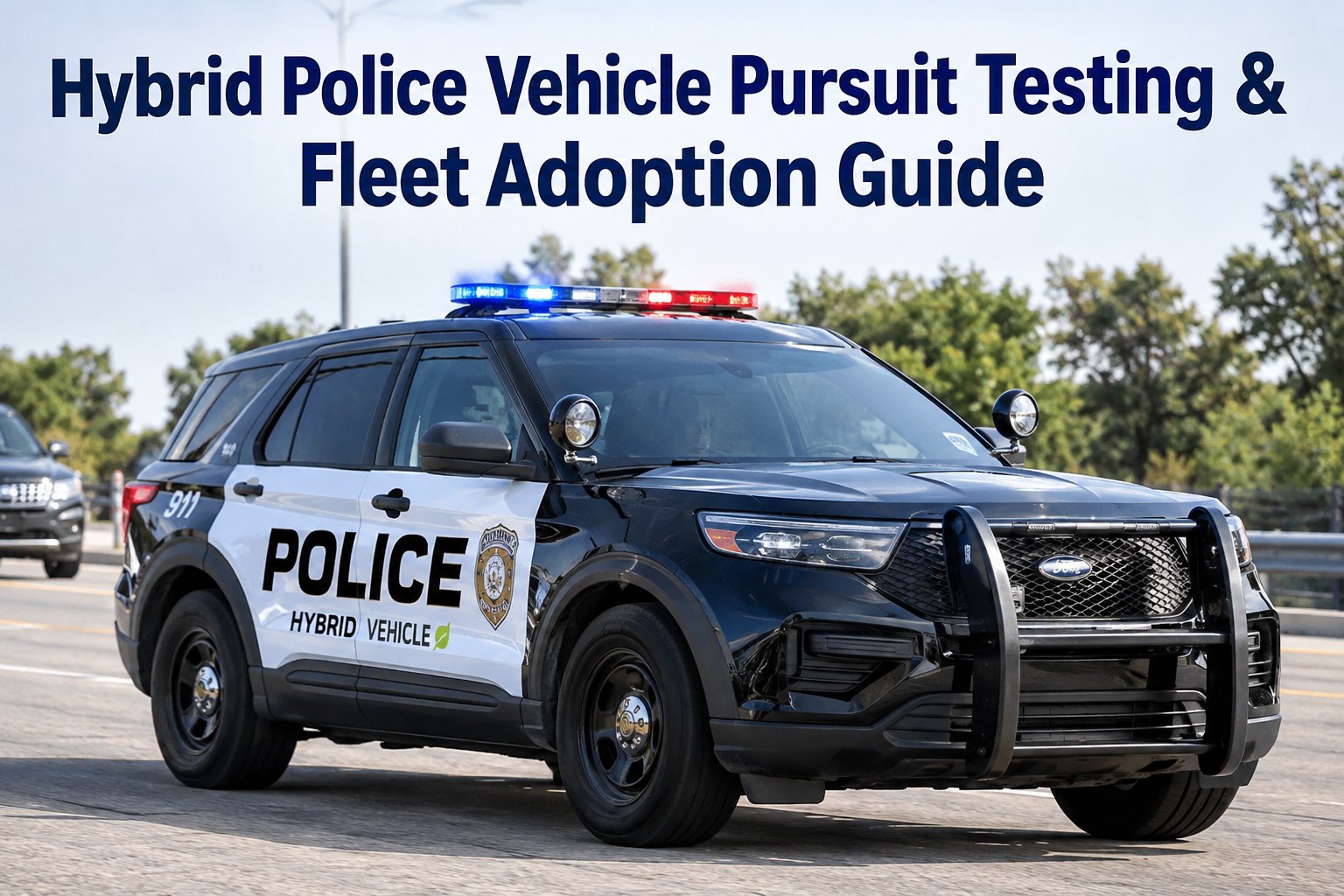
A patrol car pulls back into the yard with a perfect engine, fresh oil, brakes like new — and a mobile data terminal that won't boot. It's out of service. Not because of anything a mechanic touched, but because the upfit failed: the stack of radios, computers, cameras, light bars, and cage equipment bolted onto the vehicle is a second machine that can deadline the first. Police fleet maintenance software has to track both — the vehicle underneath and the equipment on top — because either one, on its own, takes the unit off the street. This guide covers that dual reality and the availability standard it demands. Book a demo to see the police fleet dashboard.
The vehicle and the upfit are two machines sharing one VIN
Engine, transmission, brakes, charging system — worn hard by a high-idle, high-hour patrol cycle that mileage alone never captures.
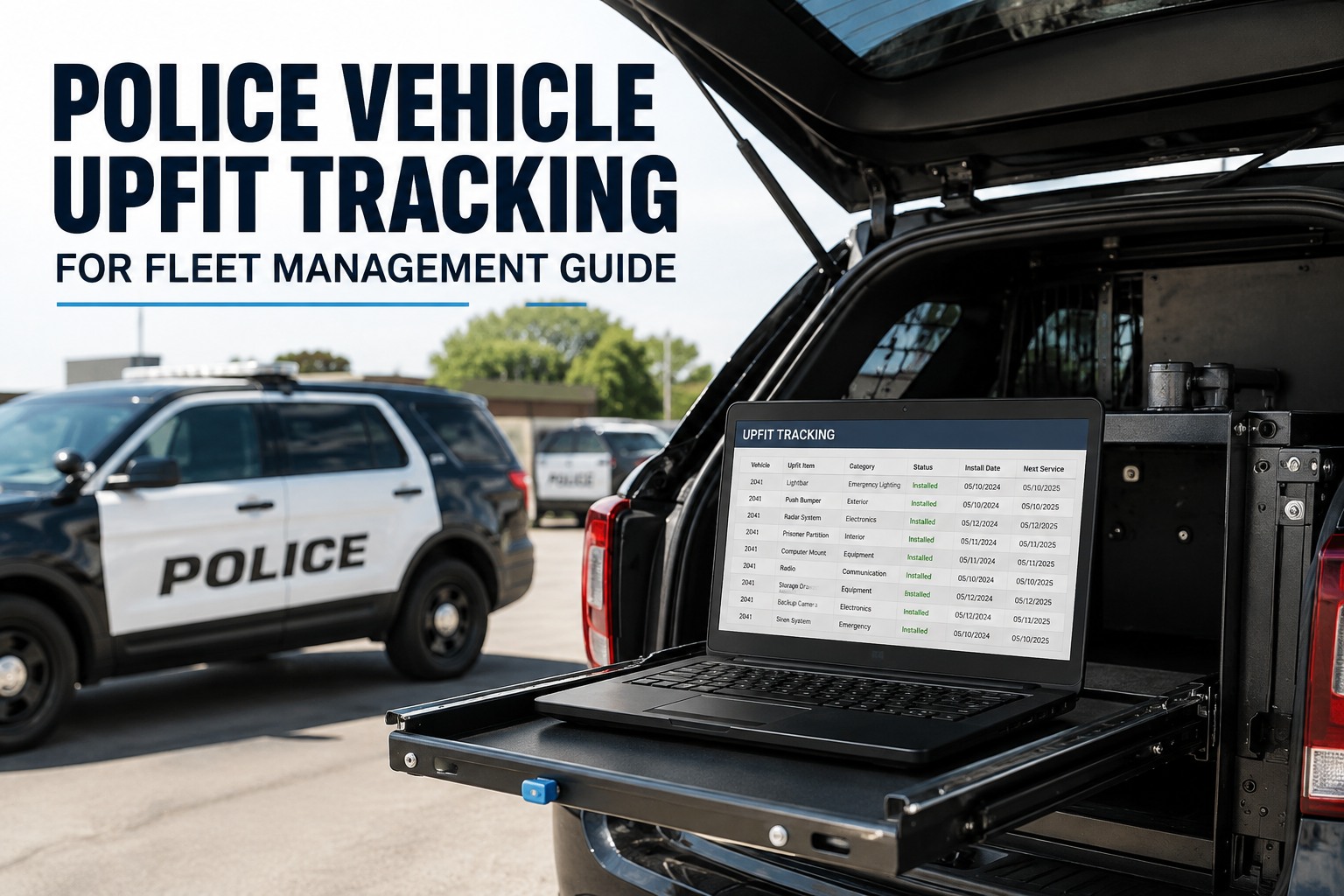
Light bar, siren, radio, MDT, cameras, cage, partition, weapon rack — each an installed system with its own inspection need that can deadline the car by itself.
That's the difference between police fleet management and running ordinary government cars: two independent failure paths on one asset, both feeding one number that actually matters — is this specific unit available right now. The rest of this guide follows both lanes down the page: how the vehicle wears, how the upfit fails, why readiness has to be measured per car, and how one dashboard holds it all.
Two lanes of maintenance, running in parallel
Read these as two tracks side by side, not a sequence — because on a patrol vehicle they run at the same time, on different clocks, and a program that watches one lane and not the other will keep putting "roadworthy" cars into service that can't actually do the job.
Idle is the hidden odometer
A cruiser idles for an hour powering lights at a scene, then sprints to the next call. Federal data pegs the wear from idling at roughly 29 to 33 "ghost miles" of engine wear per hour — wear the odometer never records. A low-mileage patrol car can be mechanically old.
The charging system takes the beating
Lights, radios, computers, and cameras draw continuously while the engine idles, punishing batteries, alternator, and cooling. A constantly dead battery from auxiliary draw is one of the most common reasons a cruiser ends up in the shop instead of on patrol.
Schedule on hours and calendar, not just miles
Running 100,000+ miles a year across three shifts, a patrol vehicle needs PM triggered by engine hours and calendar alongside mileage — serviced on whichever comes due first, so idle-driven wear gets caught on time.
Each device is its own failure point
Light bar, siren, radio, MDT, dash and body cameras, prisoner cage and partition, weapon rack — every one can fail independently of the vehicle, and several are safety-critical. A dark light bar or a dead radio isn't a nuisance; it's an out-of-service condition.
The power distribution is a system too
A professional upfit runs auxiliary batteries and power-distribution blocks so the gear doesn't kill the starting battery. That electrical architecture needs its own checks — an overloaded or failing aux system is how the radio dies mid-call for backup.
Upfit needs its own inspection template
The cage, partition, and mounts are structural safety items; the electronics are function checks. None of it fits a standard vehicle PM form — the upfit layer earns a configurable inspection template of its own, tied to the same asset.
Neither lane is optional, and neither substitutes for the other. The vehicle lane keeps the car moving; the upfit lane keeps it able to do police work. A real police fleet program runs both, on one asset record. Book a demo to see vehicle and upfit tracked on one asset
Why readiness has to be measured per car
Here's the reporting trap police fleets fall into: a fleet-wide "92% available" number that hides exactly the cars that matter. Availability isn't a fleet average — it's a per-unit fact, because a patrol vehicle out of service is a specific gap in specific coverage, not a rounding error. The question a watch commander actually asks is never "what's our fleet availability," it's "which cars can I put on the street tonight."
Notice units 126 and 140: both mechanically fine, both out of service — one on the vehicle's terms, one on the upfit's. A fleet-average number would count them as "8% down" and move on. A per-asset board tells the watch commander exactly which two cars can't roll and why, and shows whether the reason is the chassis or the gear. That's the difference between a statistic and an operational tool. Start free and see readiness per unit, not just fleet-wide
Shift checks and pursuit inspections
The per-car readiness board is only as honest as the checks feeding it — and police duty adds a check type most fleets don't have: the post-incident inspection. Two moments matter most.
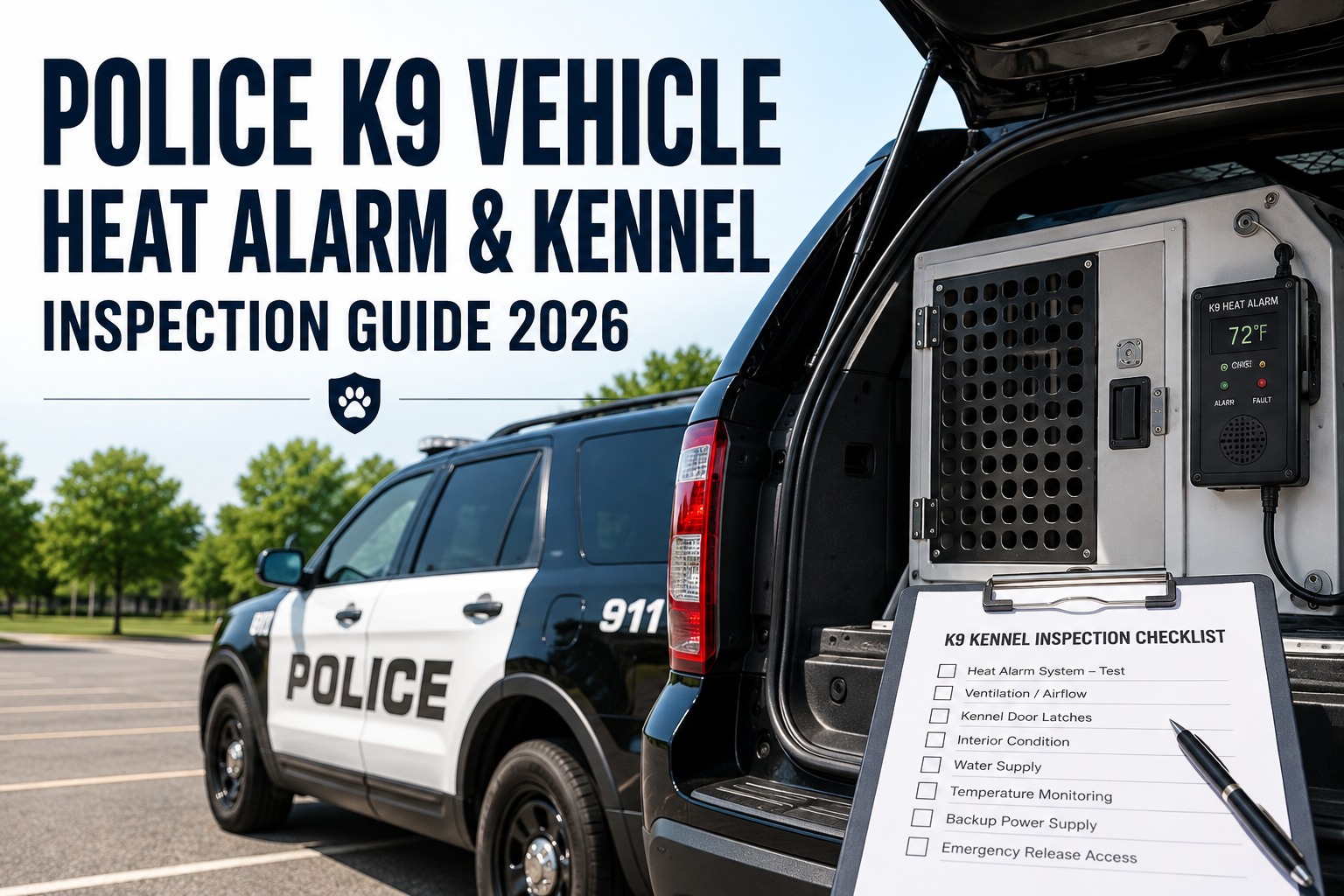
The officer taking the car documents its condition before the shift: vehicle walkaround, fluids and tires, brakes, then the upfit — emergency lights and siren, radio on primary and backup, MDT boots and connects, cameras charged and recording, cage and partition secure. A signed condition record at handover, so a defect is owned and dated, not inherited silently.
Hard acceleration, high-speed cornering, heavy braking, curb strikes — a pursuit stresses a vehicle in ways a normal shift doesn't, and damage isn't always obvious. A defined post-pursuit or post-incident inspection catches brake, tire, suspension, and driveline stress before the car goes back out, and documents the vehicle's condition after a use-of-force event that may later be reviewed.
Done as a guided mobile check, both flow the same way: each item confirmed in order, a signature at the end, and any failure routed straight to the shop as a work order with the unit ID attached — which is what keeps the readiness board reflecting reality instead of yesterday's paper. Book a demo to see signed shift and pursuit checks
One dashboard across every department
A police fleet rarely stands alone in a government's vehicle inventory — it shares a garage, and often a fleet office, with fire apparatus, ambulances, and public-works equipment. Each class needs its own templates and intervals, but leadership needs one place to see them all. That's the payoff of a single platform with configurable templates by vehicle type.
For a municipal operation running several asset classes at once, dashboard-per-class inside one platform is what turns a mixed fleet into a defensible operation — police included, not bolted on. Book a demo to see police alongside your whole government fleet
From a police fleet manager who stopped trusting the average
My report said 90% availability and my watch commanders were still short cars. That's when it clicked: the number was counting a cruiser with a dead MDT as "available" because the engine ran fine. Mechanically it was. Operationally it was useless — you can't run a patrol shift without the computer.
Once we tracked the upfit as its own inspection and the readiness board showed vehicle and equipment together, the real picture showed up. Turned out a chunk of our "downtime" was electrical — aux batteries cooked by idle draw, radios and computers dropping out. We'd been chasing engine problems that weren't there. Now I can look at the board and tell a commander exactly which units are street-ready and which are down for the gear, not the car.
Frequently asked questions
Why isn't mileage enough to schedule police vehicle maintenance?
Because a patrol vehicle does an enormous amount of its engine wear standing still, and mileage never sees it. A cruiser routinely idles for extended periods — powering lights at an accident scene, running electronics on standby, waiting on a call — while the engine, charging system, and cooling system work hard and the odometer doesn't move. Federal analysis estimates idling produces roughly 29 to 33 "ghost miles" of engine wear per hour, meaning an hour of idle can age the engine like driving 30 miles that never appear on the odometer. On top of that, the continuous electrical load from radios, computers, cameras, and light bars strains batteries and alternators heavily, and a dead battery from auxiliary draw is one of the most common reasons a patrol car ends up in the shop. A vehicle that runs 100,000-plus miles a year across three shifts, with hours of daily idle on top, simply can't be maintained safely on a mileage-only schedule. The fix is to schedule preventive maintenance on engine hours and calendar intervals alongside mileage, servicing on whichever trigger comes due first, so the idle-driven wear that mileage hides gets caught on time rather than after a failure.
What upfit equipment should a police fleet system track?
All of the installed equipment that can independently take a patrol vehicle out of service, because a mechanically perfect cruiser with failed gear still can't do police work. That upfit layer typically includes emergency light bars and grille or surface lights, the siren and audible warning system, the primary and backup radios, the mobile data terminal or in-car computer, dash and body cameras, the prisoner cage and partition, the weapon rack, and the auxiliary battery and power-distribution system that powers all of it. These break down into two kinds of checks: structural safety items like the cage, partition, and mounts, which are inspected for secure, undamaged condition; and functional electronics like radios, MDT, cameras, and lights, which are checked for correct operation. The auxiliary electrical architecture deserves particular attention, because a professional upfit isolates the gear on secondary batteries and distribution blocks specifically so the equipment load doesn't kill the starting battery — and when that system is overloaded or failing, it's what causes a radio to drop out during a call for backup. None of this fits a standard vehicle PM form, so the upfit should carry its own configurable inspection template tied to the same asset record as the vehicle, so a defect in either the car or its equipment shows up in one place and affects the unit's readiness.
Why should police fleet availability be measured per vehicle?
Because a patrol vehicle out of service is a specific gap in specific coverage, and a fleet-wide average hides exactly the units that matter. A report that says the fleet is "92% available" tells a watch commander nothing actionable — the real question is always which particular cars can be put on the street for a given shift, and that's a per-unit fact, not an average. Per-asset readiness matters even more for police because a vehicle can be down for two entirely different reasons: a mechanical problem with the vehicle itself, or a failure in the upfit equipment, such as a dead mobile data terminal or an inoperative light bar. Both make the car unavailable, but a fleet-average number treats them identically and obscures both. Measuring readiness per vehicle — and showing whether each unit is down for the chassis or the gear — turns availability from a statistic into an operational tool: the shift supervisor sees exactly which units are deployable, which are on the margin, and which are out and why. It also makes downtime analysis honest, because you can trend how much of your unavailability is mechanical versus upfit-related and target the actual problem, rather than assuming every out-of-service car is an engine issue.
What is a pursuit or post-incident vehicle inspection?
It's a defined inspection performed after a patrol vehicle has been through a pursuit or a significant incident, because that kind of operation stresses the vehicle far beyond a normal shift and can cause damage that isn't immediately visible. A pursuit involves hard acceleration, high-speed cornering, heavy and repeated braking, and sometimes curb strikes or contact, all of which can stress the brakes, tires, suspension, steering, and driveline. A post-pursuit or post-incident inspection has the vehicle checked over before it returns to service, catching mechanical stress or damage that could fail on the next call, and it documents the vehicle's condition after an event that may later be subject to administrative or legal review. Treating it as a distinct, documented inspection type — separate from the routine shift check — matters for two reasons: safety, since a vehicle pushed that hard may have developing problems a normal walkaround would miss, and accountability, since a signed, dated condition record after a use-of-force or high-speed event protects both the officer and the department. In a digital system, a pursuit inspection can be its own template that routes any finding straight to the shop and updates the vehicle's readiness status, so a car that needs a closer look after an incident isn't quietly put back on the road.
Can one system manage police vehicles alongside fire, EMS, and public works?
Yes, and for a government fleet that's a significant advantage rather than just convenience. A municipality's vehicles almost never sit in neat silos — police cruisers, fire apparatus, ambulances, snowplows, and administrative vehicles frequently share a garage and a fleet office, yet each class has its own inspection standards, maintenance intervals, and compliance requirements. Trying to manage each on its own spreadsheet or in a separate tool creates audit risk and hides fleet-wide readiness behind department boundaries. A single platform with configurable templates by vehicle type lets each class carry exactly what it needs: patrol cars get their vehicle-plus-upfit tracks and engine-hour PM, fire apparatus get their NFPA pump and aerial test dates, ambulances get their patient-module and medical-equipment records, and public-works equipment gets its engine-hour and seasonal checks. The benefit for leadership is one readiness view across every department, with every defect flowing through the same defect-to-work-order-to-readiness loop regardless of which department owns the vehicle, and consistent, audit-ready records for the entire fleet. For a municipal fleet manager juggling several asset classes at once, having police be one coherent, well-templated class within a single system — rather than a separate island — is what makes the whole operation defensible and far easier to run.
See the police fleet dashboard in HVI
HVI tracks the patrol vehicle and its upfit as one asset — mileage, engine-hour, and calendar PM for the chassis, a configurable upfit inspection template for the equipment, signed shift and pursuit condition records, defect-to-work-order routing, and readiness measured per unit so a watch commander knows exactly which cars can roll. One dashboard across police, fire, EMS, and public works, keeping every unit accounted for. Live for your department in days.
No credit card · Configurable templates by vehicle type · Onboard in days