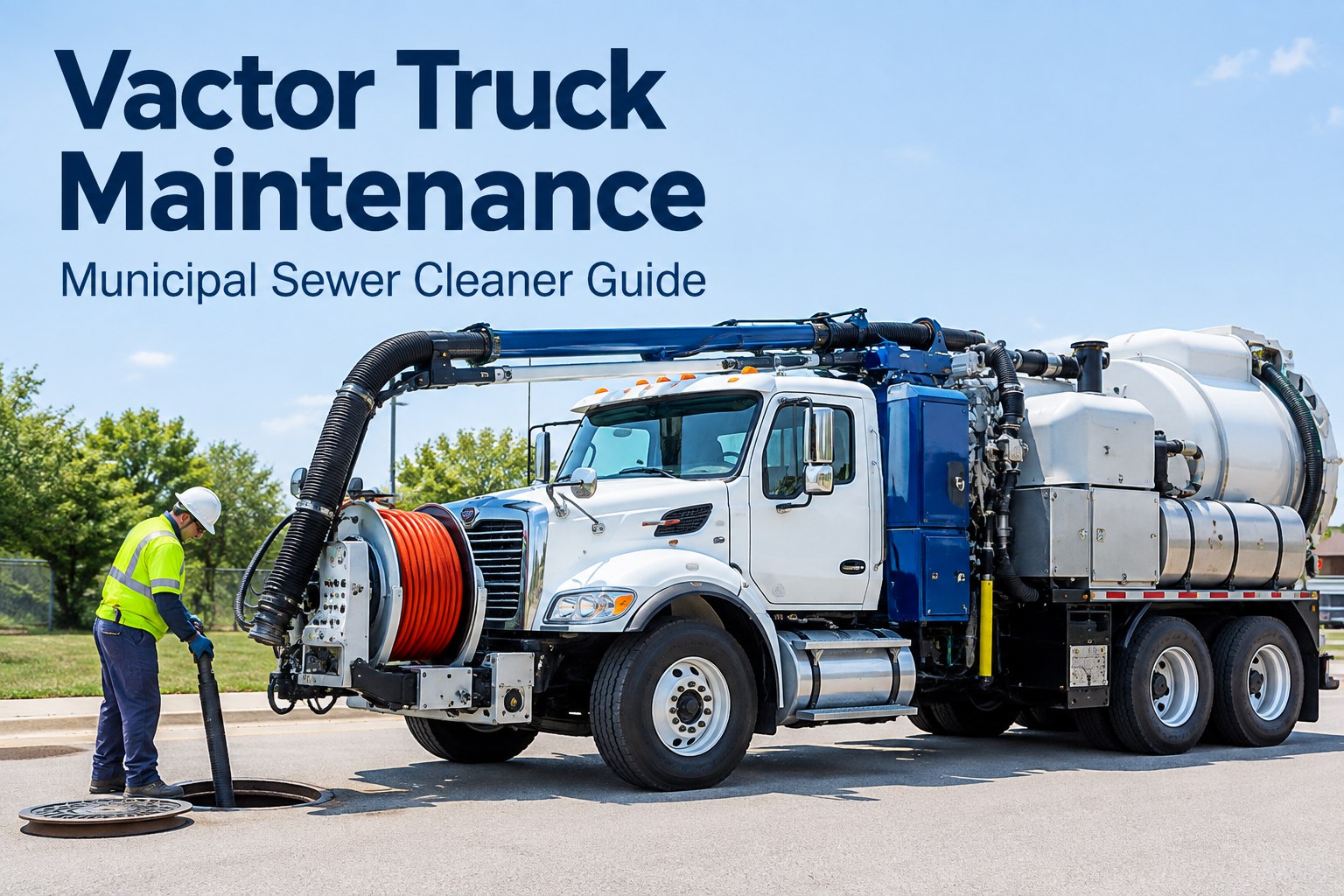
Vactor truck maintenance is really four maintenance programs pretending to be one. A combination sewer cleaner isn't a truck with an attachment — it's a chassis, a high-pressure water pump, a vacuum blower and a hydraulic system, each doing different work, each wearing at its own rate. The blower might rack up hours on a big catch-basin job while the water pump barely runs; the next week it flips. Track the whole rig on one meter and you'll over-service one system while another quietly fails mid-job. This guide breaks the combo unit into its real systems and shows how to keep each one on its own schedule. Book a demo to see it tracked per system.
A Combination Sewer Cleaner Is Four Machines on One Frame
The chassis runs on miles. The pump, the blower, and the hydraulics each run on their own hours. Service them all off the odometer and three of the four fall behind.
A combo unit spends most of its working life stationary with the engine driving the pump or the blower, not the wheels. So the odometer — the one number most fleets schedule maintenance from — is measuring the system that wears the slowest. Below is how each of the four systems actually ages, the failures that put a truck out of service, and the seasonal step that saves you a five-figure spring repair.
Why one hour meter can't run vactor truck maintenance
Two combo units in the same yard can show identical odometer readings and be in completely different states of wear. One spent the quarter jetting long sanitary lines — water pump hammering, blower idle. The other worked catch basins and hydro excavation all quarter — blower screaming, pump barely wet. If you service both on the same mileage or single-hour trigger, you under-service the pump on one truck and the blower on the other, and both surprises show up mid-job.
That's why real vacuum system truck maintenance runs on separate meters. The engine hours tell you the chassis-plus-general story. The water pump and the blower each need their own running-hour count, because a positive-displacement blower under continuous load and a jetter pump running dry two towns over do not age together. Tracking multiple hour meters on one asset is the difference between a PM program that fits a combo unit and one that just hopes.
Identical mileage. One meter can't tell these two apart — and the system you can't see is the one that strands a crew.
The four systems and what each one needs
Break the combo unit down and the maintenance stops being overwhelming. Each system has a small, specific set of things that keep it alive — and a specific way it fails when they're skipped. Here's the working breakdown a shop foreman actually runs on.
The high-pressure heart of the unit — up to 3,000 PSI to scour a line. Watch pump-hour intervals for seals and packing, keep the water filtered so grit doesn't chew the nozzles and pump internals, and inspect the jetter hose for wear along its whole length. A worn nozzle or a grit-scored pump quietly drops your cleaning pressure long before it fails outright.
Fan or positive-displacement, this is what pulls debris into the body. It's the system most sensitive to abuse: a blower that ingests water or debris past a failed float or clogged filter is a fast, expensive death. Service on blower hours, keep the inlet screens and filters clean, and check the final filter before every shift on heavy debris work.
The boom, the rotating hose reel, and the debris-body lift all run off hydraulics, and they work on nearly every job. Read the fluid and check hoses for chafe and weep, grease the boom and reel pivots on schedule, and inspect the debris-body lift cylinders and safety prop — the same raised-body crush hazard as any dump applies when the debris tank is up.
The debris tank sees wet, abrasive, sometimes corrosive spoil. Rinse it out so material doesn't cake and rot the floor, check the tailgate and door seals so vacuum holds, and inspect the water tank and plumbing for leaks and corrosion. A tank that won't seal kills your vacuum lift no matter how healthy the blower is.
None of these four share a service interval, which is exactly why a configurable template that inspects each system on its own schedule beats one generic truck PM every time. Book a demo to see the four laid out as separate, tracked services.
Winterisation: the one skipped step that costs the most
Everything on a combo unit that makes it useful also holds water — the tank, the pump, the jetter hose, the plumbing, the recycler if it has one. Leave any of it full when the temperature drops below freezing and the water expands, and it cracks a pump housing, splits a line, or ruptures a fitting. This is the single most expensive avoidable failure on a sewer cleaner, and it happens every year to fleets that treated winterisation as a suggestion instead of a scheduled job.
Making winterisation a tracked task per asset — not a memory on one veteran mechanic's mental list — is how a fleet stops losing a truck or two to a cracked pump every February. Scheduling winterisation and de-winterisation as asset tasks means the job gets done on every unit, and you have the record to prove it if a warranty question comes up.
Readiness, records, and the public-works reality
A municipal combo unit that's down isn't just a maintenance line item — it's a backed-up sewer main or a flooded catch basin waiting on the one truck that can clear it. Readiness is the whole game. And because these are public assets, the maintenance and inspection history matters when an auditor, an insurer, or a warranty claim comes knocking. Paper logs that live in a cab don't survive that.
The practical fix is a digital record that captures each system's inspection, every defect, and each service by asset the moment it happens — signed and searchable — so a truck's full history is a two-minute export instead of a filing-cabinet dig. Keeping system-level service history per unit also builds the data case for when a pump or blower is genuinely due for rebuild versus replacement.
We ran our two combo units off engine hours like every other truck in the yard. Looked fine on paper. Then one blower packed up in the middle of a catch-basin route because it had way more running hours on it than the engine suggested — that truck did nothing but vacuum work.
Once we started counting pump hours and blower hours separately, the whole thing made sense. We service the system that's actually working, not the average. And the winterisation checklist alone paid for itself — we haven't cracked a pump since we made it a signed task instead of a sticky note.
Frequently asked questions
Why can't a combination sewer cleaner be serviced on one meter?
Because a combo unit has separate systems that wear at completely different rates depending on the work. The chassis wears with road miles, but the truck spends most of its life stationary with the engine driving either the water pump or the vacuum blower. A truck doing line-jetting runs its water pump hard while the blower sits idle; a truck doing catch-basin and hydro-excavation work runs the blower hard while the pump barely runs. Two units with identical odometer readings can be in totally different states of wear. That's why vactor truck maintenance needs multiple hour meters — engine hours plus separate running-hour counts for the pump and blower — so each system is serviced on the clock it actually runs on.
What are the main systems on a combination sewer cleaner that need maintenance?
Four, plus the chassis. First, the high-pressure water/jetter pump (seals, packing, water filtration, and jetter-hose wear). Second, the vacuum blower, either a centrifugal fan or a positive-displacement blower (inlet screens, filters, and protecting it from ingesting water or debris). Third, the hydraulics that run the boom, rotating hose reel, and debris-body lift (fluid, hoses, pivot greasing, and the lift cylinders and safety prop). Fourth, the debris body and water tank (rinsing out spoil, door and tailgate seals so vacuum holds, and checking for leaks and corrosion). The truck chassis itself — brakes, tires, driveline — is the fifth, and it's the only one the odometer tracks. Each has its own service interval, so a system-specific inspection template fits far better than one generic truck PM.
How do you maintain the vacuum blower on a vactor truck?
Service the blower on its own running hours, not the engine's, since it may run far more or far less than overall engine time. Keep the inlet screens and filters clean, and check the final filter before every shift on heavy debris work — the most common way a blower dies is ingesting water or debris past a failed float or a clogged filter, which is fast and expensive damage. Follow the OEM interval for lubrication and inspection, listen and watch for any change in sound or vacuum performance, and address it immediately rather than finishing the route. A positive-displacement blower under continuous heavy load ages faster than a fan unit doing intermittent work, which is another reason to track its hours separately.
Why is winterisation so important for sewer cleaner trucks?
Because nearly every functional part of a combo unit holds water — the tank, the pump, the jetter hose, the plumbing, and any recycler system. If that water is left in place when the temperature drops below freezing, it expands and cracks pump housings, splits lines, and ruptures fittings. This is the single most expensive avoidable failure on a sewer cleaner. Proper winterisation means draining every water-holding component, blowing out residual water and adding antifreeze where the OEM specifies, verifying freeze protection on trucks that must run in the cold, and logging the job against the asset. Making it a scheduled, signed task per unit — rather than something one mechanic remembers — is how fleets stop losing trucks to cracked pumps every winter.
How does software help manage combination sewer cleaner maintenance?
A combo unit is genuinely hard to schedule by hand because its systems run on different clocks and its maintenance includes seasonal steps like winterisation. Software built for it tracks multiple hour meters on the same asset, so the pump, blower, and engine each trigger their own service; holds configurable inspection templates so each system is checked on its own schedule rather than lumped into one truck PM; and logs every defect, service, and winterisation event by unit with a signed, searchable record for audits, insurers, and warranty claims. Offline capability matters too, since crews often work down a manhole or in areas with no signal. The result is that the system you can't see — the one that strands a crew mid-job — stops being invisible.
Stop servicing your combo units on the average and start servicing the system that's running
HVI tracks the water pump, vacuum blower, hydraulics, and chassis on separate meters, runs system-specific inspections, schedules winterisation and PM by asset, and keeps a signed, audit-ready history for every unit — even when the operator is offline in the field. See your own combo fleet in it before the next freeze.
No credit card · Works offline · Configurable multi-system templates