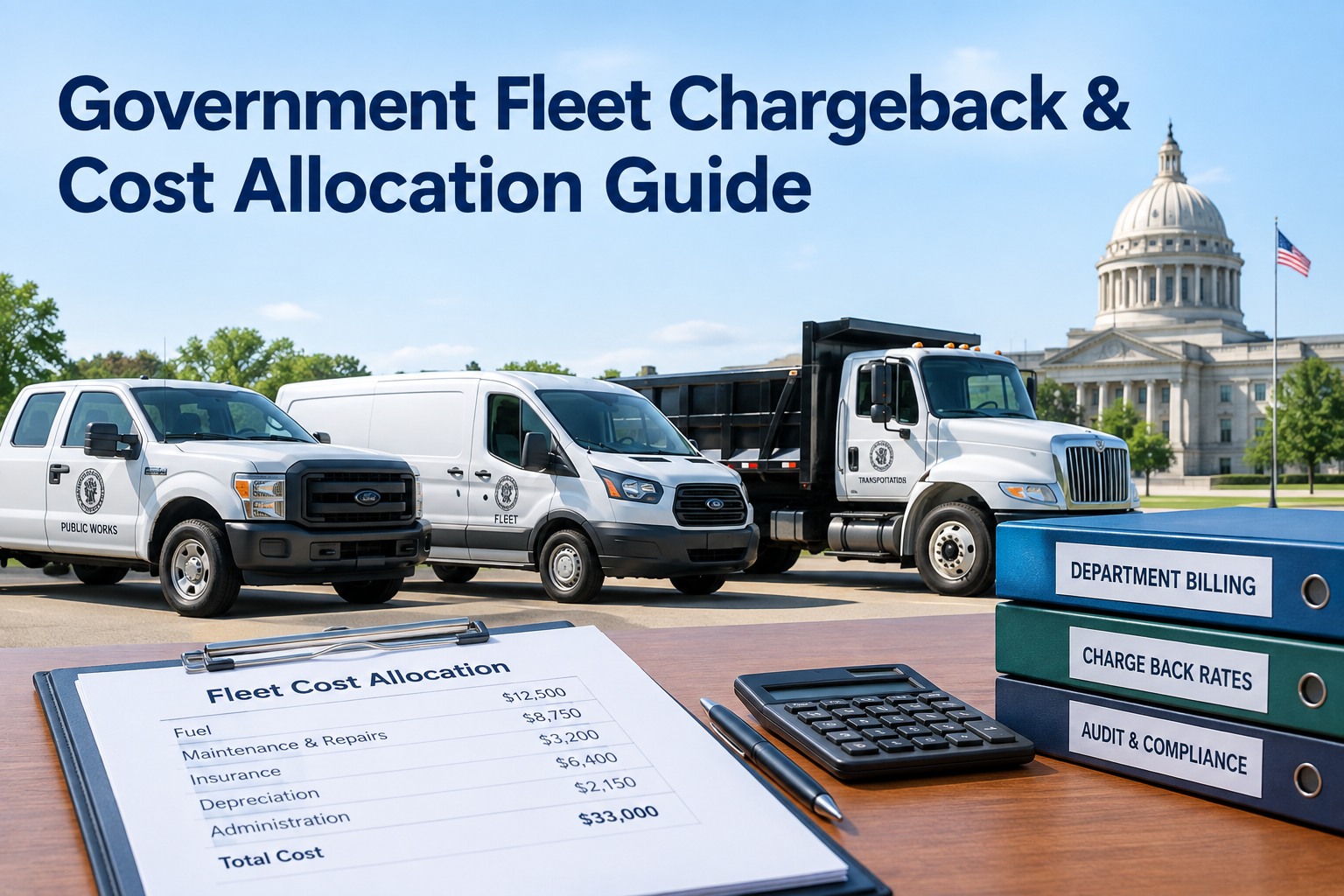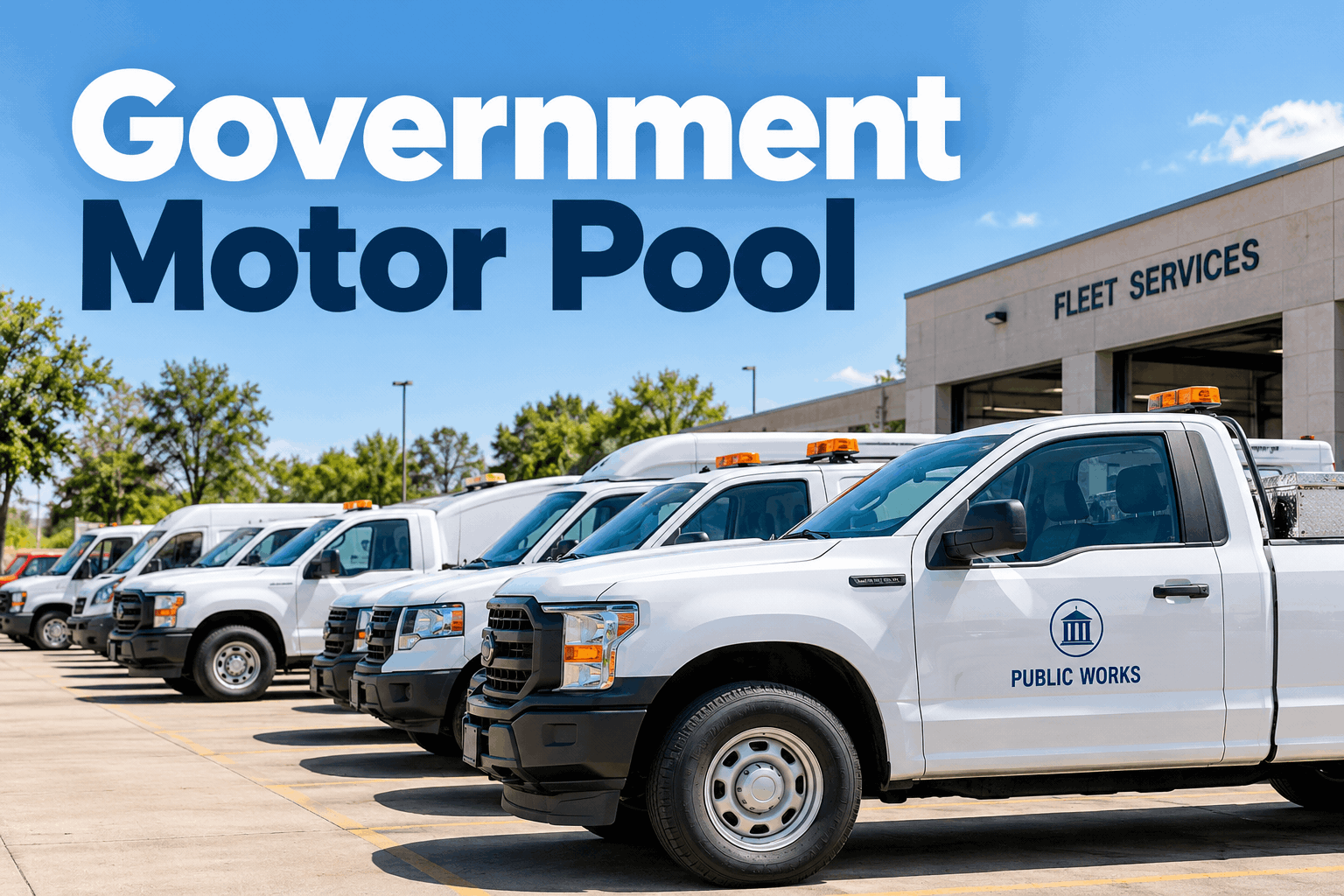
A government motor pool is a shared fleet of vehicles that eligible departments or employees use when needed, rather than assigning a dedicated vehicle to every driver. For municipal fleet directors, the value is practical: fewer underused vehicles, clearer allocation rules and better visibility into maintenance spending. This guide explains how motor pools work, how to measure their benefits and where fleet maintenance software fits.
Government Motor Pools: Make Every Shared Vehicle Count
Understand the benefits, utilization measures and operating controls behind a reliable public-sector vehicle pool—without confusing vehicle reservations with fleet maintenance.
Illustrative operational statuses—not a screenshot of the HVI product.
What Is a Government Motor Pool?
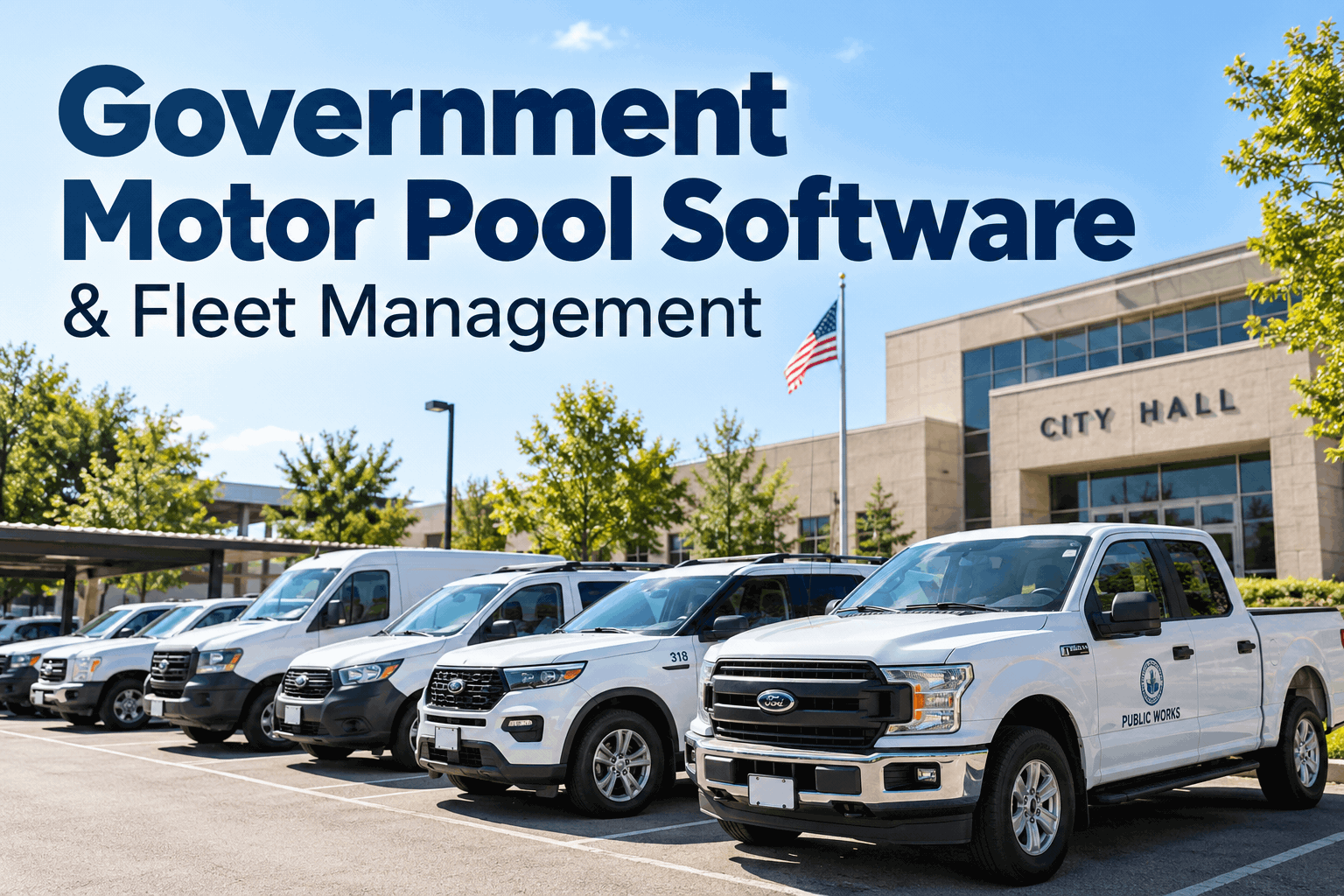
A government motor pool is a centralized collection of vehicles shared across departments, locations or authorized employees. The pool may be managed through a dispatch desk, reservation process or a combination of local rules and software.
Dedicated vehicles versus shared vehicles
In a dedicated model, a department retains a vehicle even when it is idle for much of the week. In a shared model, qualified users request an appropriate vehicle for a defined trip or duty period, then return it for the next assignment.
Motor pools can serve administrative trips, inspections, field visits and light-duty public works. Emergency response and specialized mission-critical equipment may still require dedicated assignments.
To work well, a shared fleet needs clear reservation rules, driver eligibility, return procedures, vehicle condition checks and service availability. Book a Demo of HVI vehicle maintenance records to see how the maintenance side can be organized.
Four Benefits of a Well-Run Municipal Motor Pool
The strongest business case comes from measured utilization and controlled service costs—not an assumed fleet reduction target.
Higher vehicle utilization
Assign a suitable available vehicle to each request instead of allowing similar units to sit unused in separate departments.
Clearer replacement decisions
Identify persistently low-use units and compare their mission need, condition and total cost before replacing them.
More transparent costs
Combine acquisition, maintenance, fuel, insurance and administrative costs to evaluate the cost of providing shared mobility.
Consistent service readiness
Use inspection and maintenance records to prevent a vehicle with an unresolved defect from being treated as ready for assignment.
Motor Pool Utilization: Benchmarks That Actually Help
There is no universal utilization percentage that suits every government motor pool. Local service hours, trip length, geography, seasonal demand and mission requirements change the answer.
Example only: one vehicle used 96 hours out of 160 eligible service hours in a four-week period. This is not a recommended target or an industry benchmark.
Track measures together
A high utilization rate can signal efficiency, but it can also leave no capacity for peak demand or maintenance. Evaluate request denials, replacement costs and service availability alongside utilization.
How to Run a Government Motor Pool Without Losing Control
A shared fleet needs a dependable handoff between reservations, vehicle condition and maintenance. Use this five-step process as an operational starting point.
Approve the request
Confirm authorized driver, mission, vehicle class and dates.
Check availability
Match the request to a unit that is not reserved or held for repair.
Inspect at handoff
Record condition, mileage and any new safety-related defects.
Return and reconcile
Capture actual usage, damage reports and vehicle status.
Service before release
Create follow-up work orders and verify required repairs before reuse.
Vehicle booking and key control may be handled by a separate reservation process. HVI's role is in the supporting asset, inspection and maintenance records—not a claim that HVI provides a dedicated motor pool booking system.
Build a Maintenance Gate Into Every Vehicle Handoff
A vehicle is not available simply because no one has booked it. Maintenance managers need a separate readiness decision informed by inspections and unresolved repairs.
Example vehicle readiness board
Illustrative records. Site safety policy and qualified personnel determine whether a vehicle may return to service.
What HVI can support
- Asset records: Maintain a consistent history for each pooled vehicle.
- Digital inspections: Capture defects during issue and return checks.
- Preventive maintenance: Plan service using the fleet's applicable intervals.
- Work orders: Track corrective action and completion evidence.
- Maintenance costs: Review spending before fleet right-sizing decisions.
Book a Demo of HVI inspections and work orders to explore these workflows.
Measure Cost Per Trip Without Overlooking Maintenance
Motor pool cost savings are not automatic. Estimate the fully loaded cost of the pool and compare it with the dedicated-vehicle model while protecting required capacity.
Illustrative calculation only. Include depreciation or lease cost, fuel, maintenance, insurance, administrative overhead and any reservation platform expense as appropriate.
Questions to ask before reducing fleet size
- Which units are consistently underused across a full operating cycle?
- How often are valid requests denied during peak periods?
- What is the cost of a vehicle unavailable for maintenance?
- Would a different vehicle class meet more trips at lower cost?
- Which departments need guaranteed emergency access?
A Practical 30-Day Motor Pool Review
Start with an audit and a small pilot instead of making immediate fleet-wide reductions.
Inventory and mission
List vehicles, assigned departments, vehicle classes, mission constraints and maintenance condition.
Baseline demand
Collect trips, mileage, reservation conflicts, idle periods and maintenance unavailability.
Pilot shared use
Define eligibility, handoff checks, return rules and escalation for vehicle defects.
Review and refine
Compare request fulfillment, utilization, cost and service readiness before expanding.
For public-sector reporting, preserve an audit trail showing why vehicles were reassigned, retained or replaced. The best policy is one that improves access and accountability without compromising readiness.
See how HVI supports a better-managed government motor pool
Track the condition, maintenance history and repair costs of shared vehicles in one fleet maintenance workflow. Keep reservation decisions informed by real service records.
Government Motor Pool FAQs
What is a government motor pool?
A government motor pool is a shared group of vehicles managed centrally or across participating departments. Authorized employees use vehicles for approved work trips instead of keeping a dedicated unit for every assignment.
What are the main benefits of a municipal motor pool?
Potential benefits include better utilization, clearer allocation rules, reduced duplication of low-use vehicles and more transparent costs. Results depend on actual demand, vehicle mix and how well the pool is managed.
What is a good motor pool utilization benchmark?
There is no single reliable target for every agency. Track time or mileage utilization together with fulfilled requests, peak-demand shortages and maintenance availability. Compare similar vehicles serving similar missions.
How can a government agency reduce motor pool costs?
Review underused units, vehicle classes, trip demand and fully loaded operating costs before making right-sizing decisions. Consistent preventive maintenance and defect tracking can also help avoid preventable downtime and repeat repairs.
Does HVI provide government motor pool reservation software?
HVI is positioned here as a fleet inspection, asset and maintenance management solution—not as a dedicated reservation or key-dispensing system. It can support motor pool operations by organizing vehicle condition, preventive maintenance, work orders and service costs.