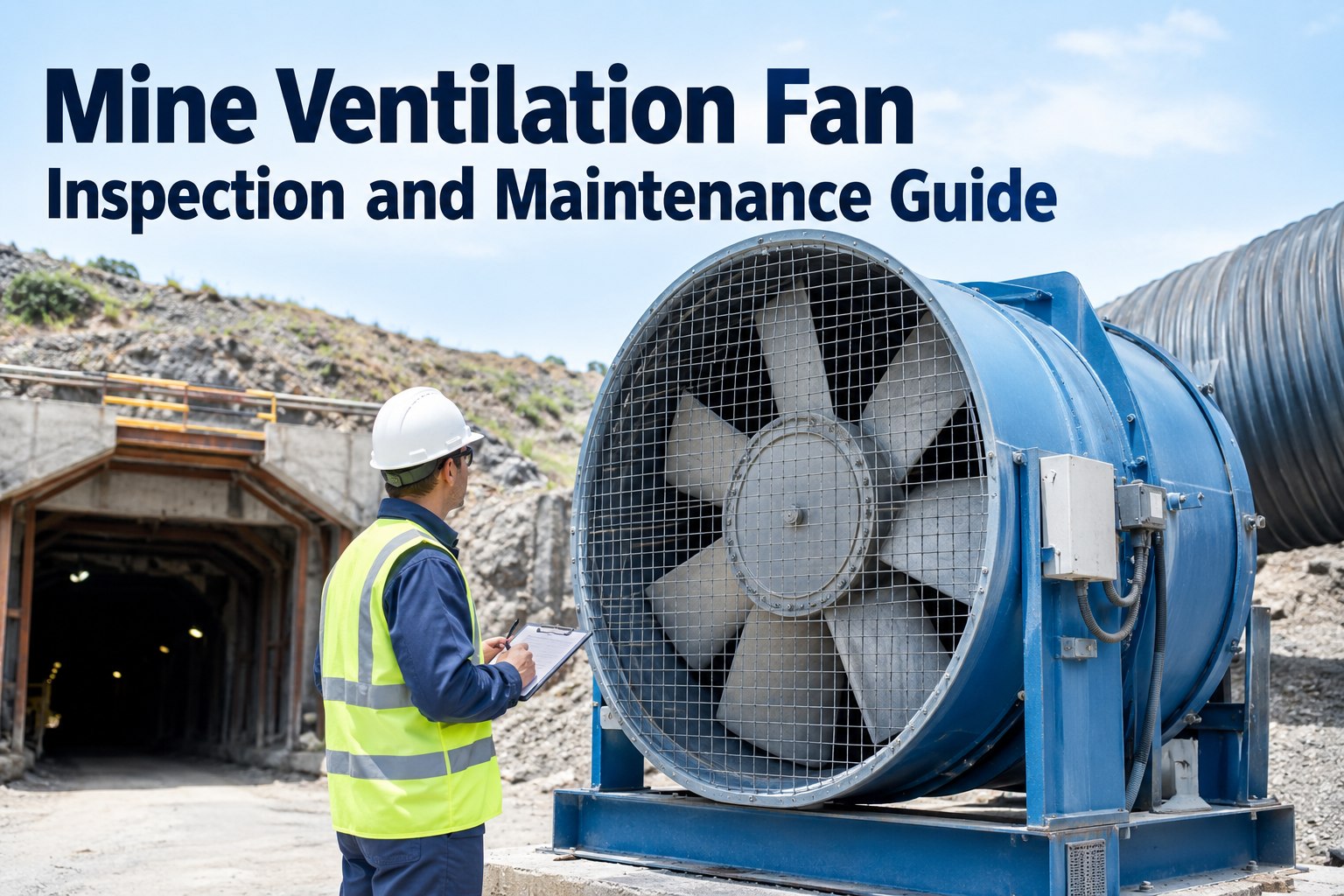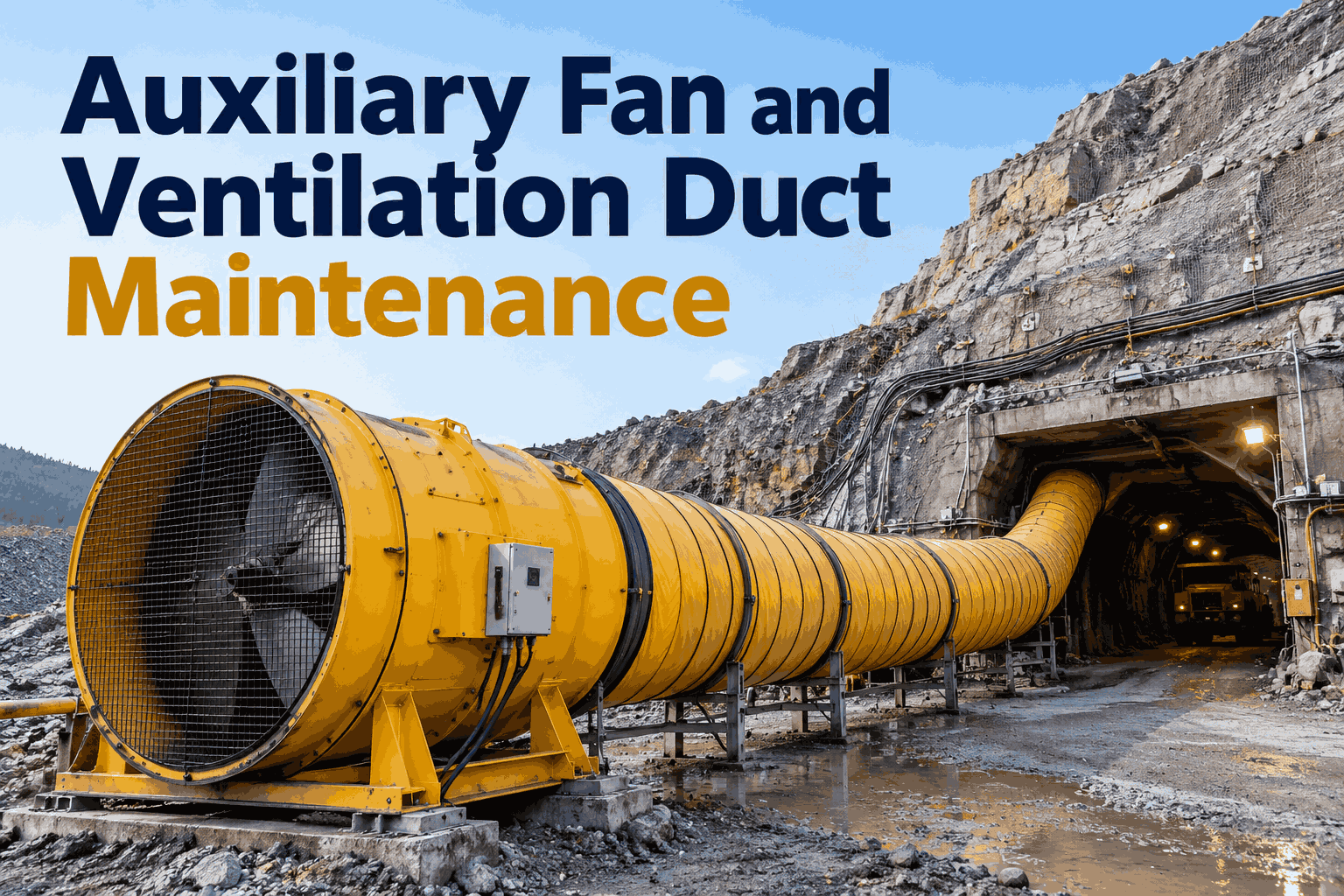
Auxiliary fan maintenance is the one job in an underground mine where "the machine is running" doesn't mean the job is done. A fan can spin perfectly at the portal while the working face gasps for air — because the duct between them is leaking most of the airflow away through torn seams and bad couplings. Bad air isn't downtime; it's a life-safety and compliance event. Book a demo to see fan and duct checks tracked as one program.
Auxiliary fan maintenance is really about the air that reaches the face
The fan is only half the system. What matters is how much of its airflow survives the duct run to the workplace — and a poorly maintained duct can steal 40% of it before it ever arrives.
In most underground equipment, maintenance protects the machine. With auxiliary ventilation, maintenance protects the people working at the end of the duct. A worn fan bearing, a torn length of flexible tubing, a badly clipped coupling — each one quietly cuts the air reaching the face, where diesel particulate, carbon monoxide, silica dust, and heat are waiting. This guide covers the whole system: the fan, the duct that carries its air, and the inspection rhythm that keeps the workplace breathable and compliant.
Why this isn't ordinary equipment maintenancea failed fan is a regulated, life-safety event
Before the checklist, the stakes. When a haul truck goes down you lose production. When auxiliary ventilation goes down, the air itself goes bad — and that changes what "maintenance" means here.
The air goes bad fast
Without steady airflow, diesel particulate, CO, NOx, and silica dust build at the face — all classed as lung carcinogens — and heat stress climbs.
It's regulated ground
Underground ventilation is examined and recorded under mine safety law. A gap in fan upkeep or airflow isn't just risk — it's a finding waiting for an inspector.
It can stop the workplace
Lose adequate ventilation and the face has to stand down until air is restored. The fan is small, but it gates the whole heading.
So auxiliary fan maintenance carries a weight most equipment PM doesn't — and it's exactly why the record matters as much as the wrench. Book a demo to see ventilation checks logged as compliance evidence.
The six things to keep soundfan, duct, and the air in between
Split the system into six and auxiliary fan maintenance stops being vague. Three are the fan itself, three are how its air gets delivered — and the delivery half is where most of the airflow is quietly lost.
Fan bearings
The first thing to fail and the easiest to catch early. Listen and feel for noise, heat, and vibration; grease on schedule. A dry bearing seizes and takes the fan — and the airflow — with it.
Check: daily noise/heat · grease per OEMBlades & impeller
Bent, cracked, or dust-caked blades throw the fan out of balance and cut its output. Inspect for damage and buildup, and keep them clean — an unbalanced impeller hammers the bearings it rides on.
Check: weekly damage & balanceMotor & drive
The motor, coupling, and any belt drive turn power into airflow. Watch running temperature and current draw, check alignment and belt tension, and keep the motor's cooling path clear of dust.
Check: weekly temp & driveDuct integrity
The single biggest airflow thief. Holes, tears, and gaps at couplings all leak air, and many small holes together lose as much as one big one. Inspect the full run, patch or replace damaged tubing, keep couplings tight.
Check: daily walk the runHangers & routing
Slack tubing, sagging messenger cable, and a 90-degree bend all choke airflow — one sharp bend alone can lose about 30%. Hang the duct tight and high to the back, straight, and clear of mobile equipment.
Check: weekly hang & routingElectrical & controls
Starters, cables, monitoring, and any airflow or gas interlocks are what keep the fan running safely and prove it's running. Check connections, protection, and that a fan stoppage actually raises the alarm it should.
Check: weekly · test interlocksFive of the six are shared with any industrial fan; duct integrity and routing are the underground-specific pair that decide whether the air arrives. Start free and put the daily fan-and-duct walk on every heading.
The duct steals the air the fan makeswhy the portal reading lies about the face
This is the insight that separates real ventilation maintenance from box-ticking. A fan can test perfectly where it sits and still leave the face short, because everything between the two is a chance to lose air. Published field guidance puts real numbers on it.
That's why a fan-only check is a false comfort: the gauge at the fan can read fine while the workplace is starved. The only honest measure is air at the face, and the way to protect it is to maintain the duct as seriously as the fan. Book a demo to see duct condition and face airflow tracked together.
The auxiliary fan maintenance schedulefrom the shift examination to periodic service
Ventilation runs on layered checks, and the shortest layer is a legal one. Treat this as a working frame — your mine's ventilation plan and local regulator set the exact examination requirements and intervals.
| When | What to check | Why it matters |
|---|---|---|
| Every shift | Fan running, airflow at the face, obvious duct damage | The examined, recorded safety check |
| Daily | Fan bearing noise/heat, walk the duct run for tears | Catches leaks and bearings early |
| Weekly | Blade/impeller condition, motor temp, hangers, couplings | Keeps output and delivery up |
| Weekly | Electrical connections, controls, test interlocks/alarms | Proves a stoppage gets flagged |
| Periodic (by hours) | Bearing regrease, drive service, vibration analysis | Finds wear before a seizure |
| As needed | Patch or replace damaged duct lengths | Restores air quantity to the face |
The shift examination is non-negotiable and recorded; the rest keeps that examination from becoming a bad-news event. The challenge is doing every layer, on every fan, across a mine that changes shape as it advances. Start free and load the examination and PM schedule onto every auxiliary fan.
How HVI keeps ventilation on schedule and on record
The gap in auxiliary fan maintenance is rarely knowing what to check — it's turning a shift examination into a closed repair and a record an inspector will accept. HVI links inspection, preventive maintenance, and compliance tracking so nothing found underground gets lost above it.
Examine on a phone
Crews run the shift and daily fan-and-duct check on a mobile device — bearing, blades, the full duct run, airflow at the face — flagging a tear or hot bearing with a photo, offline underground.
Flag & schedule
A defect becomes a tracked work order on the spot, and bearing, drive, and duct intervals fire on their own clock — so a leaking coupling is fixed, not carried to the next shift.
Prove compliance
Every examination, airflow reading, and repair is stored and exported on demand — the ventilation record ready for an inspector instead of reconstructed from paper after the fact.
It's the same discipline behind our longwall equipment inspection guide and 30 CFR 57.14100 pre-shift inspection workflow — applied to the ventilation that keeps a heading workable. It runs on HVI's preventive maintenance scheduling and mining inspection software, with examinations kept as compliance evidence.
We chased a heat-and-fumes complaint at a face for a week. The fan checked out fine every time — right speed, right amps. Turned out three lengths of flex duct back near the bend were torn along the seam, and a couple of couplings had worked loose. We were losing close to half the air before it ever got up to the crew.
Now the duct walk is part of the shift exam on the tablet, and a torn length turns into a work order before the operator leaves the heading. The airflow readings live with the exam, so when the inspector asks, I pull the record in a minute instead of digging through a binder.
Auxiliary fan maintenance FAQsthe questions vent crews ask most
What does auxiliary fan maintenance involve?
Servicing both the fan and the duct that delivers its air: fan bearings, blades and impeller, motor and drive, plus duct integrity, hangers and routing, airflow at the face, and electrical controls. It runs on a shift-to-periodic cadence, with examinations recorded for compliance.
Why does ventilation duct maintenance matter as much as the fan?
Because the duct is where the air is lost. Field guidance shows poor duct installation can cut airflow to the face by up to 40%, and a single 90-degree bend by around 30%. A perfect fan means nothing if the duct leaks its output before it reaches the crew.
How often should an underground auxiliary fan be inspected?
Every shift for fan operation, face airflow, and obvious duct damage — this is the recorded safety examination — plus daily bearing and duct-run checks, weekly blade, motor, hanger, and electrical checks, and periodic bearing and drive service. Confirm exact requirements against your ventilation plan and regulator.
What is the most common auxiliary ventilation failure?
Duct leakage. Holes, tears, and loose couplings along the run bleed air away, and many small holes together lose as much as one large one. The fan often looks healthy while the face is starved — which is why the duct walk matters as much as the fan check.
Can software track fan maintenance and ventilation compliance?
Yes. HVI logs the shift and daily fan-and-duct examination, flags defects into repair work orders, schedules bearing and drive intervals, and stores airflow readings — so a torn duct becomes a tracked, closed repair with an examination record ready for an inspector.
Keep the air at the face — and prove it
Examine the fan and walk the duct on a phone, turn every tear and hot bearing into a tracked repair, schedule the service that prevents a seizure, and keep the airflow record an inspector will accept. HVI makes auxiliary fan maintenance a program, not a paper trail. Live for your mine in days.
No credit card · load your first fan's schedule on day one