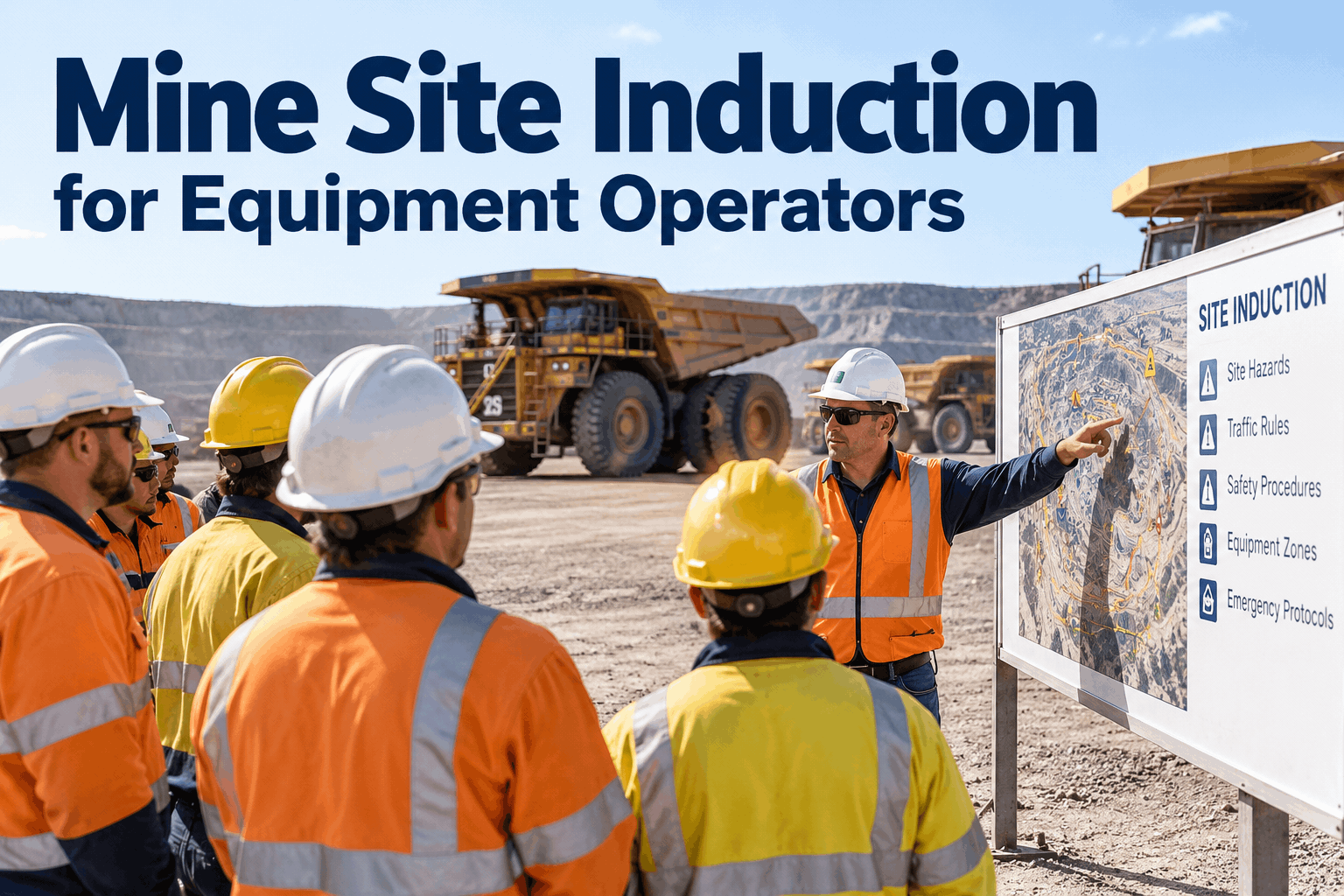
A mine site induction is the gate before the gate — the day-one orientation every equipment operator has to pass before they're allowed near a haul truck or a loading face. New starter, seasoned operator from another site, or a contractor for a week: none of them knows this site's haul roads, blind spots, or emergency muster points yet. Skip or fake the induction and the first shift is where it shows. Book a mine-site-induction demo to see it tracked per operator.
Mine Site Induction for Equipment Operators: No Sign-Off, No Seat
Every operator earns site access by being shown this site's hazards, traffic rules, and emergency plan first — and the proof they were is the record that protects everyone.
- Site hazards & layout tour
- Haul-road & traffic rules
- Emergency & muster points
- Machine familiarization sign-off
An induction isn't a form and a hi-vis vest. It's the structured handover of everything a person needs to survive their first shift on ground they've never worked: where the haul trucks run, which way the one-way ramps go, what the siren means, where to muster, who to report a hazard to. MSHA builds this into new-miner training for a reason — the highest-risk window is the shift before someone knows the site. Below is the journey an induction walks an operator through, what it legally has to cover, when it has to happen, and how to prove it did.
The induction journeyfrom the front gate to the operator's seat
A good induction isn't a slideshow in a donga — it's a path across the actual site, pausing at each place the operator will be exposed to a hazard. Here's that walk, and what gets covered at every stop before they're cleared to climb in.
- 1–2Access, PPE issue, paperwork and site rules at the gate and office
- 3Walk-around tour — the mining method and layout seen, not just described
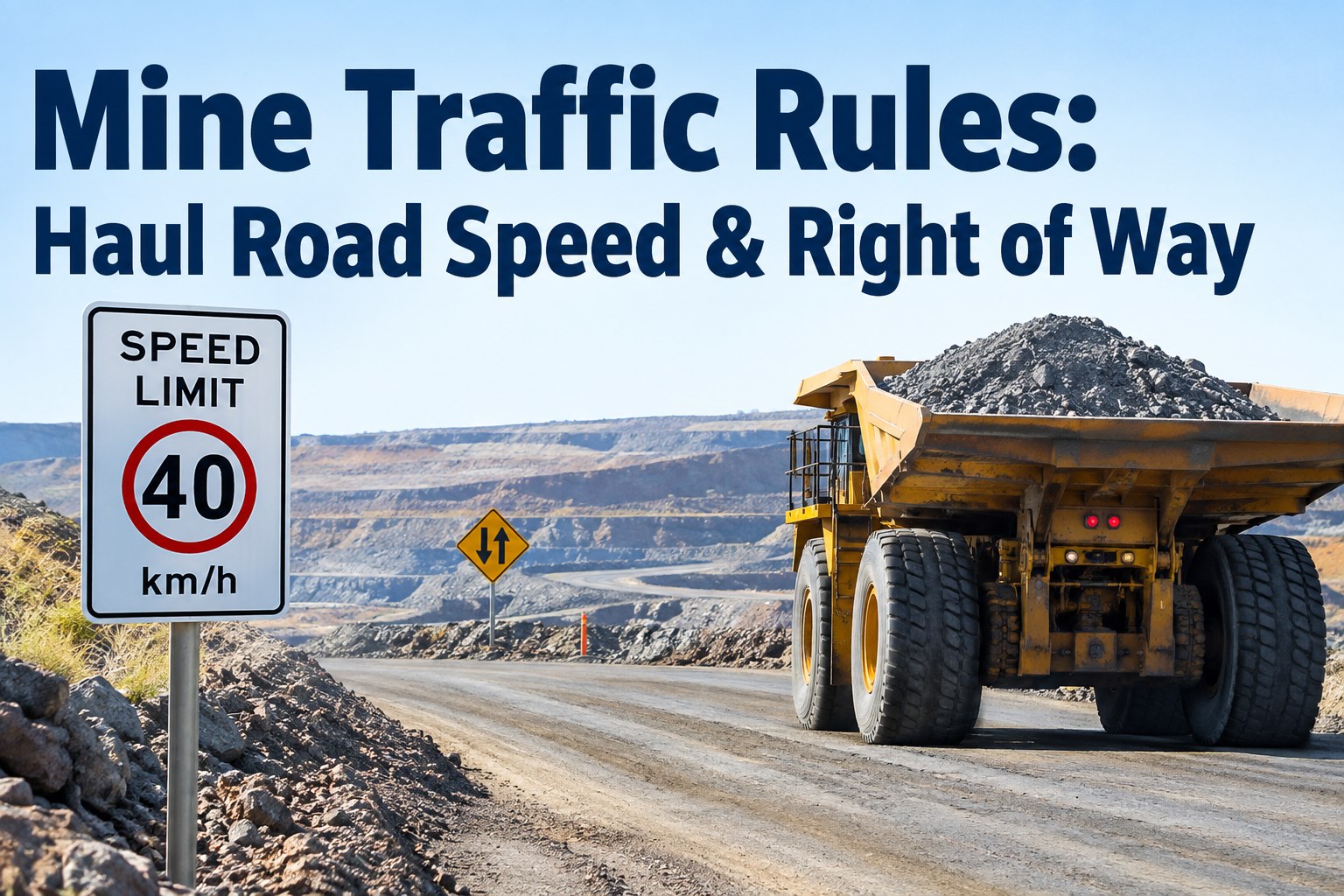
- 4Haul-road traffic rules, one-way ramps, right-of-way, blind spots
- 5Loading-face spotting, exclusion zones, positive communication
- 6Isolation, parking, and workshop interaction rules
- ✓Machine familiarization signed — only now is the seat cleared
The amber stops are where the real exposure lives — the haul road alone is behind a large share of mine mobile-equipment incidents, and it's the one thing a new operator can't learn anywhere but on this site. Logging each stop as it's completed, in HVI's safety management, turns the induction from a signed sheet into a stop-by-stop record. Book a demo of induction tracking to see the full path logged.
What it has to coverthe seven subjects a mine site induction can't skip
Under MSHA Part 46, new-miner training has to address seven subjects before a person starts work — and a site induction is where most of them land. This is the minimum spine, whatever your site adds on top.
- 1Work environment — a real walk-around tour of the mine and its method
- 2Hazard recognition — traffic, mobile equipment, electrical, unstable ground
- 3Emergencies — evacuation, muster, fire signals and firefighting
- 4Assigned tasks — the health and safety aspects of the operator's own job
- 5Miners' rights under the Act
- 6Line of authority — who supervises, who represents
- 7Hazard reporting — the site's rules for raising a hazard
Miss one subject and the induction isn't just thin — it's non-compliant, and that's the first thing an inspector checks after an incident involving a recent starter. A trial of HVI's team management, free to start, lets you build the subject list into a template so no module gets skipped.
When it has to happenthe induction and training clock for a new operator
Induction timing isn't a suggestion. The core hazard training lands before the first shift, with the rest of new-miner training following on a fixed clock. Here's the sequence an operator moves through.
That "before work" block is the one that bites: when a start is rushed to fill a seat, the 4-hour induction is what gets trimmed, and it's exactly what an auditor pulls. HVI's digital checklists date-stamp each stage, so the clock is visible and a due refresher surfaces before it lapses. Book a demo of the training clock to see expiries flagged ahead.
Mine site induction checklist
Before an operator is cleared for site access, every item below should be covered and signed off. Group it the way the induction runs — orientation, then hazards, then the operator's own readiness.
- Site rules, map, and mining method explained and toured
- PPE issued and fit confirmed for site conditions
- Line of authority and who to report to made clear
- Hazard-reporting procedure shown and understood
- Haul-road rules, one-way ramps, and right-of-way covered
- Mobile-equipment blind spots and exclusion zones shown
- Electrical, powered-haulage, and unstable-ground hazards
- Emergency signals, evacuation routes, and muster points
- Licences and tickets for the machine verified and on file
- Machine familiarization completed with a competent person
- Task-specific hazard training given before first operation
- Induction signed by operator and supervisor, dated
On paper this is a sheet that lives in a drawer until an audit; in HVI it's a template every new operator runs through, each box a timestamped record tied to that person. The day an inspector or client asks "prove this operator was inducted," it's a search, not a scramble. Book a demo of the digital induction checklist to walk one through.
From a mine safety manager who rebuilt the induction
We had a strong induction on paper and no idea who'd actually done it. A contractor crew turned up for a shutdown, someone waved them through on a promise their office had inducted them, and one of them drove a light vehicle up a haul ramp the wrong way. Nobody hurt — that time. Now no gate pass issues until the induction modules are signed in the system, and I can pull up any operator and see exactly what they were shown and when. The induction content didn't change. The fact that I can prove it — and that nobody gets a seat without it — did.
Mine site induction — common questions
What is a mine site induction?
It's the site-specific orientation every person completes before working on a mine — the layout tour, site hazards, haul-road and traffic rules, emergency and muster procedures, and reporting lines. For equipment operators it's the gate to site access: no induction sign-off, no seat. It's distinct from ongoing competency training, which continues through an operator's career.
What should a mine site induction cover?
At minimum the seven MSHA Part 46 subjects: work environment and site tour, hazard recognition (traffic, mobile equipment, electrical, ground), emergencies, the health and safety aspects of assigned tasks, miners' rights, line of authority, and hazard reporting. Most sites add haul-road traffic management, machine familiarization, and site-specific exclusion zones.
When does induction training have to happen?
The core site-specific hazard training — at least four hours — has to be completed before the operator starts work. Task-specific hazard training comes before they perform the task, and the rest of the 24-hour new-miner training follows within 90 days, with a self-rescue and first-aid review by 60 days.
Do contractors and visiting operators need inducting too?
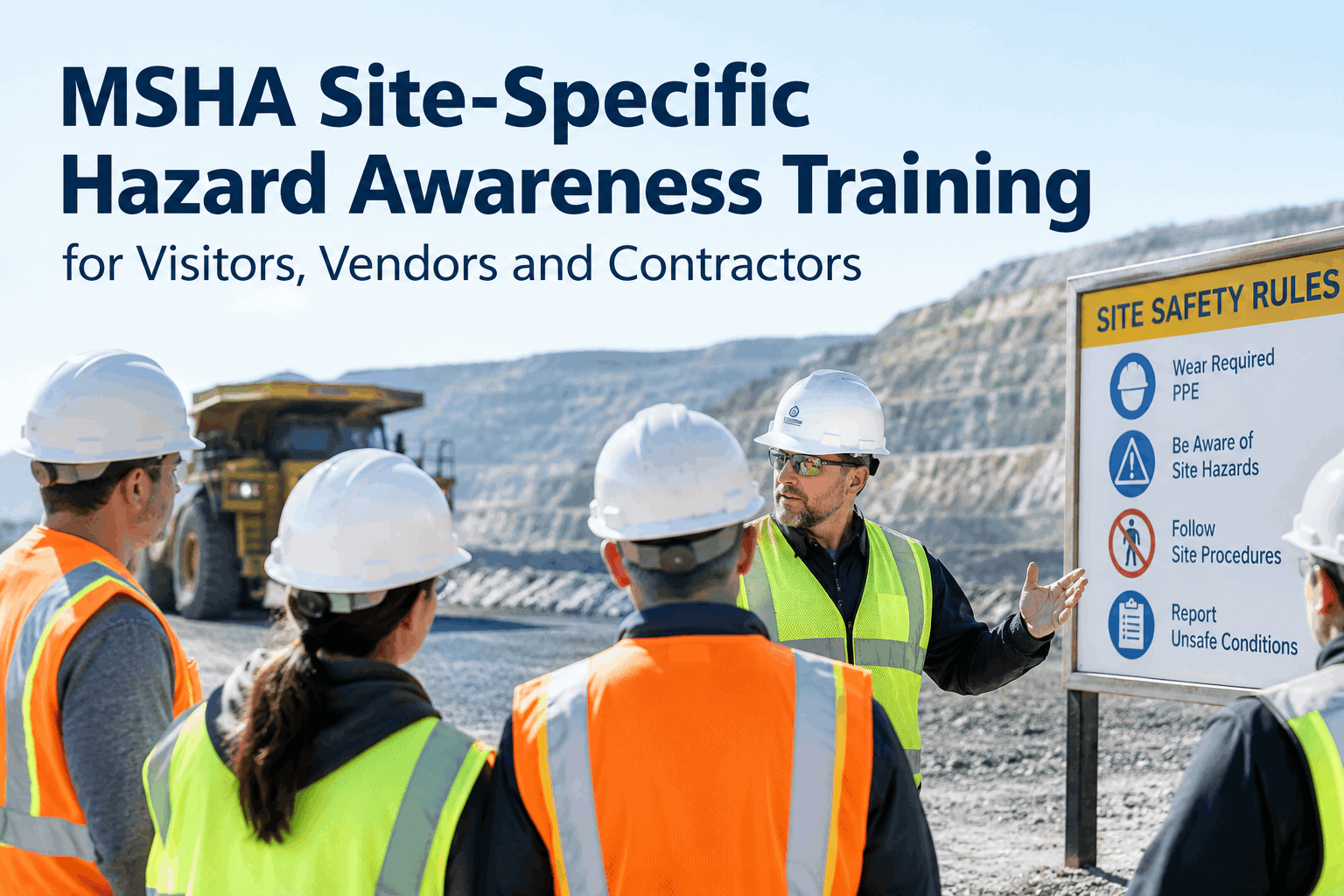
Yes. Contractors' employees exposed to mine hazards need site-specific hazard awareness training applicable to their exposure, in place when they arrive — covering site risks, powered-haulage and traffic, restricted areas, and emergency signals. A visiting operator from another site doesn't know this site's roads, so they're inducted like any new starter.
How does HVI help with site induction?
HVI runs the induction as a tracked template tied to each operator — every subject and sign-off date-stamped, so "inducted" is a verifiable status, not a filing-cabinet assumption. It flags who's pending, who's expiring, and keeps the records audit-ready. It supports your induction program; it doesn't replace your written training plan or MSHA obligations.
Run mine site induction as the gate to the seat — and keep the proof
The content of a good induction is known. What fails is the record — who did it, what they were shown, whether it's current. HVI makes induction a tracked status that gates site access and surfaces expiries before they lapse, so the safe start is also the provable one.
Induction templates · Per-operator records · Expiry flags & audit-ready exports