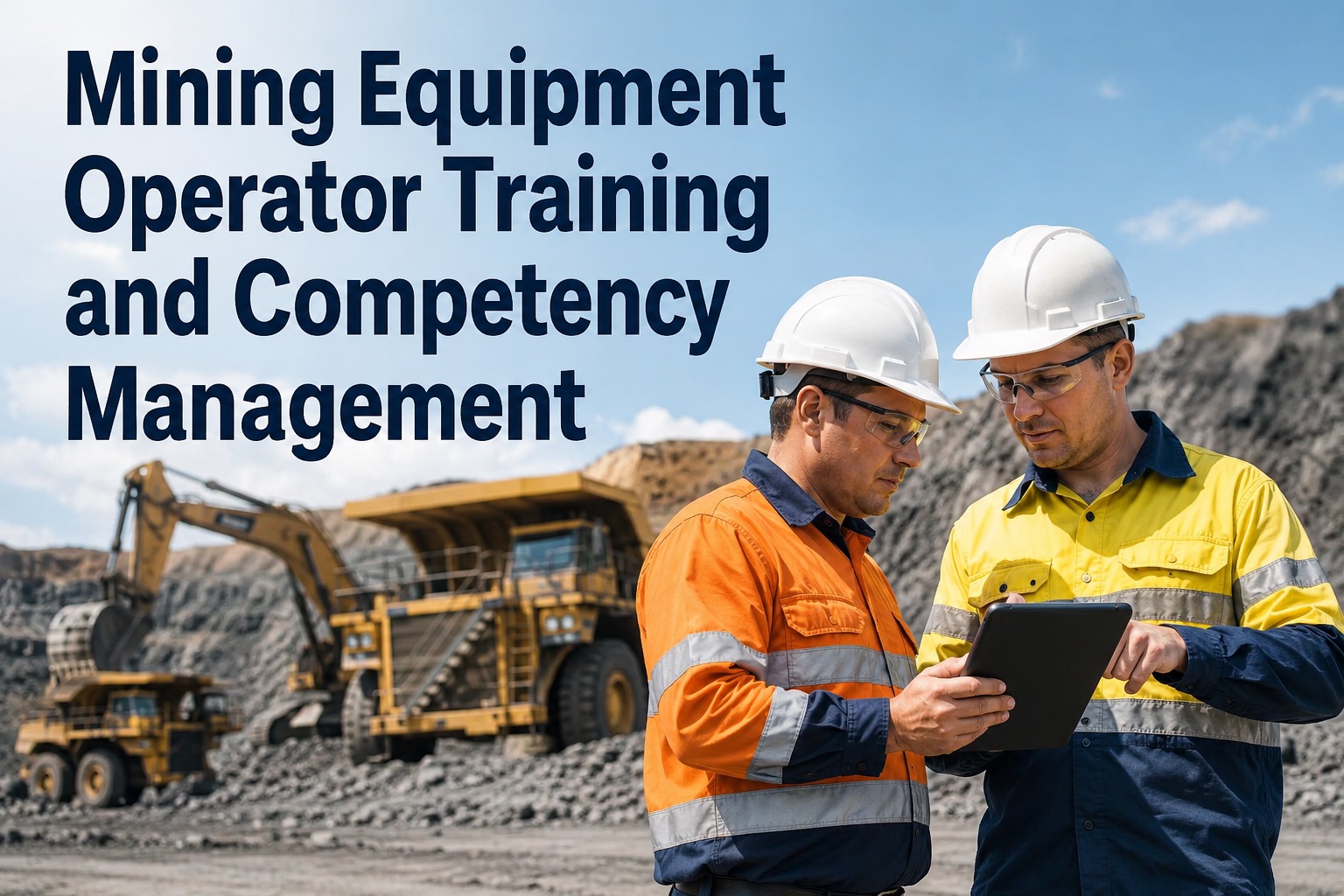
A haul truck operator may have years of experience and still be unfamiliar with your site's haul roads, dispatch rules, or emergency procedures. Verification of competency (VOC) helps mining supervisors check whether an operator can perform a specific task safely, on the equipment and in the conditions that matter. The goal is not another certificate for the filing cabinet: it is a defensible decision about who can operate what, under which restrictions, and when reassessment is needed.
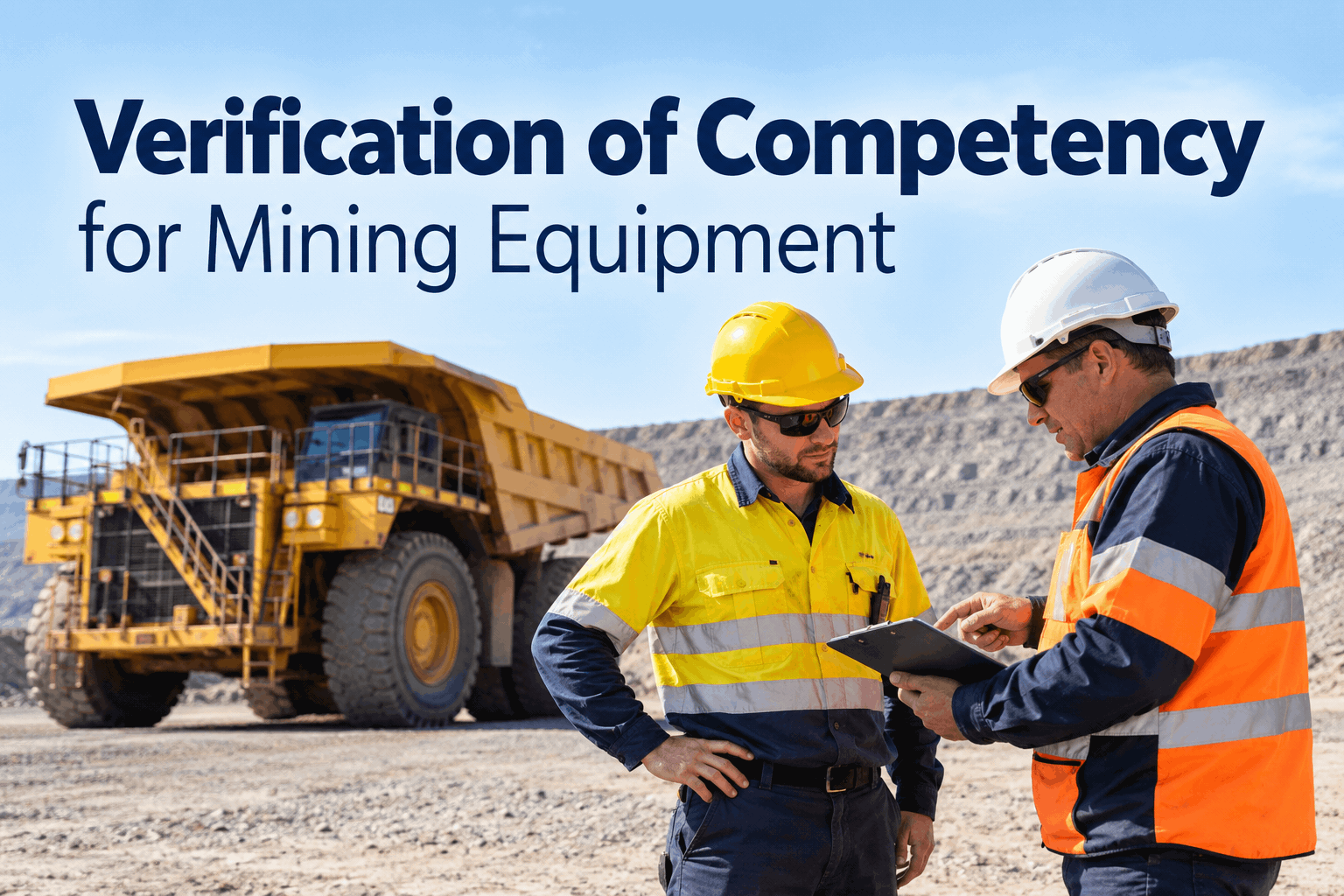
Verification of Competency for Mining Equipment
Build an assessment that connects operator knowledge, observed performance, equipment condition, and site authorization—without treating a training record as proof of current competence.
What verification of competency actually proves
A VOC is an assessment of demonstrated ability against defined task and site criteria. It is not necessarily a government-issued licence, and the term does not carry one universal legal meaning across mining jurisdictions.
Evidence to review
- Identity, relevant licences and prerequisite training where required
- Prior equipment experience and recent operating exposure
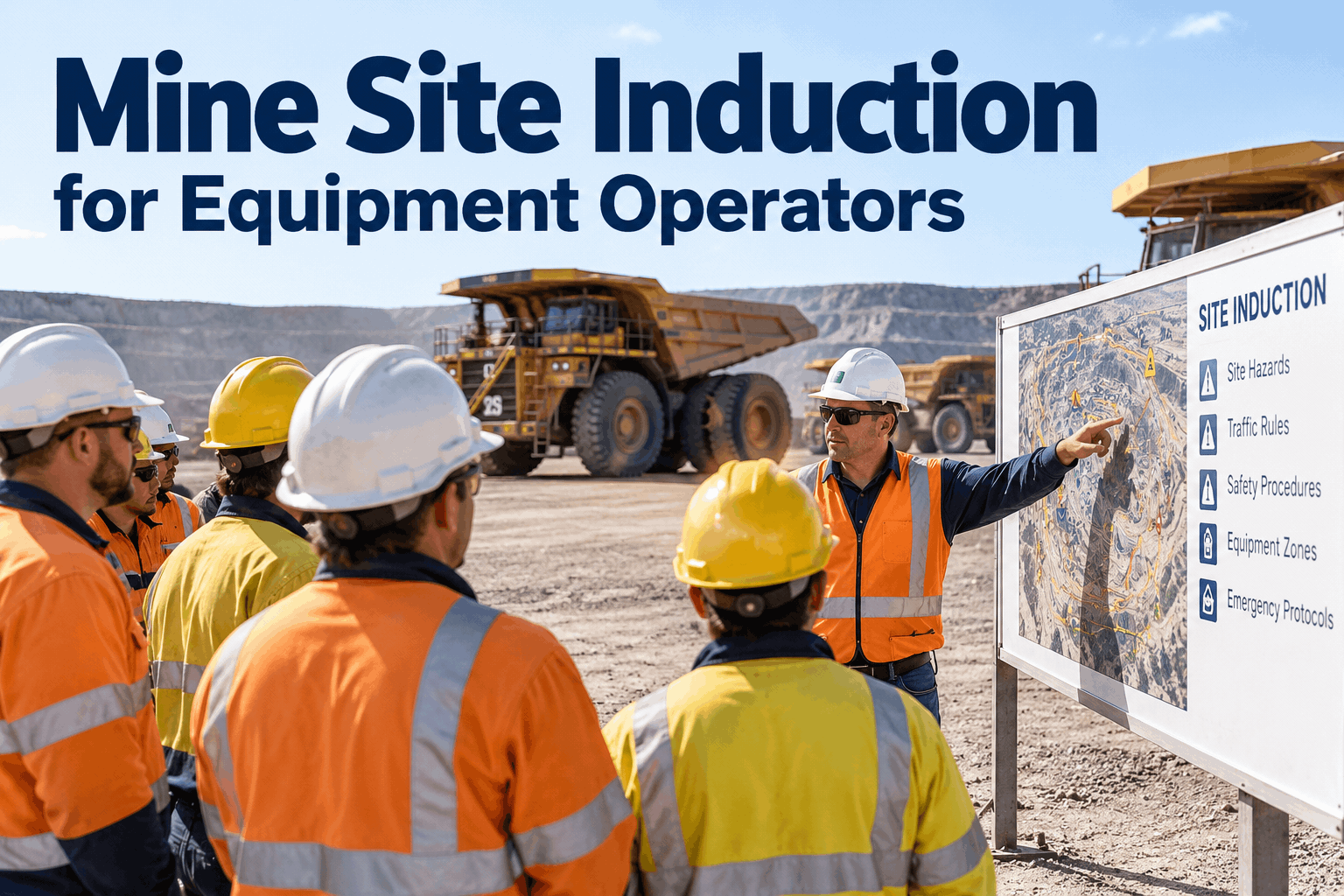
- Site induction, traffic rules and emergency procedures
- Equipment-specific controls, limitations and hazards
Performance to observe
- Pre-use inspection and defect escalation
- Safe start-up, communication and operating technique
- Hazard recognition and correct response to abnormal conditions
- Safe shutdown, parking and handover
A licence or training certificate may establish an entry requirement, but it does not by itself demonstrate that an operator is ready for a particular mine, machine configuration or task. Before creating a VOC, define the site's competency standard and the assessor's required qualifications. For a walkthrough of HVI's related inspection and team workflows, Book a demo to see mining equipment inspection records.
Five stages of a mining equipment VOC assessment
Use a consistent sequence so two assessors reviewing the same role are looking for comparable evidence. The process below is a practical framework, not a substitute for your site's approved assessment standard.
Confirm scope
Identify the operator, equipment type, task, work area and site-specific restrictions.
Check prerequisites
Review licences, induction, training and recent relevant experience.
Assess knowledge
Ask about critical controls, exclusion zones, emergencies and equipment limitations.
Observe safely
Watch approved tasks under controlled conditions, including a pre-use inspection.
Record decision
Document evidence, gaps, restrictions, reassessment and authorization separately.
Mining VOC assessment scorecard: what to observe
Adjust the assessment to the machine. A haul truck, excavator, loader and dozer do not share the same critical tasks, even if their operators have similar general experience.
| Assessment area | Example observable evidence | Decision |
|---|---|---|
| Pre-use checks | Identifies critical defects and follows reporting procedure | Pass / Gap / N/A |
| Machine controls | Uses controls correctly and explains operating limits | Pass / Gap / N/A |
| Travel and positioning | Manages visibility, gradients, clearances and exclusion zones | Pass / Gap / N/A |
| Communication | Follows site radio, spotter and right-of-way protocols | Pass / Gap / N/A |
| Task execution | Performs the approved loading, hauling or earthmoving task | Pass / Gap / N/A |
| Abnormal conditions | Explains safe stop, isolation and escalation requirements | Pass / Gap / N/A |
| Shutdown | Parks, secures and hands over equipment correctly | Pass / Gap / N/A |
Record the evidence, not just a tick. A note such as “recognized brake warning and stopped the assessment” is more useful than “safety: passed.” The assessor should record the machine ID, date, location, task conditions and any limitations. Where equipment inspection records are part of the evidence trail, Book a demo to explore HVI digital inspection documentation.
Make mining equipment readiness easier to review
See how HVI supports team coordination, equipment inspections and maintenance records alongside your established VOC process.
How to handle a VOC result without confusing assessment and authorization
A VOC result should drive a clear next action. An assessment may be successful while the operator still needs site-specific authorization, induction or supervision before independent work.
Complete authorization review
Verify prerequisites and site approvals; record the equipment and tasks the operator is permitted to perform.
Train, coach, reassess
Document the specific gap, provide targeted practice and reassess before removing restrictions.
Do not authorize task
Stop the relevant assessment or task, address the risk and follow the site's escalation process.
Set reassessment triggers based on your site rules: a new machine or attachment, long absence from the task, changed operating conditions, an incident, observed unsafe behavior, or a qualification expiry. Avoid assuming one fixed VOC validity period applies everywhere. For teams trying to connect equipment checks with operational follow-up, Book a demo to review HVI inspection and maintenance workflows.
Verification of competency checklist for mining supervisors
Use this checklist before confirming that an assessment package is complete. It is a management aid, not a substitute for an approved site VOC form.
Before assessment
- Define machine, task and operating environment
- Confirm assessor competency and independence requirements
- Verify identity, prerequisites and training records
- Review hazards and approved assessment conditions
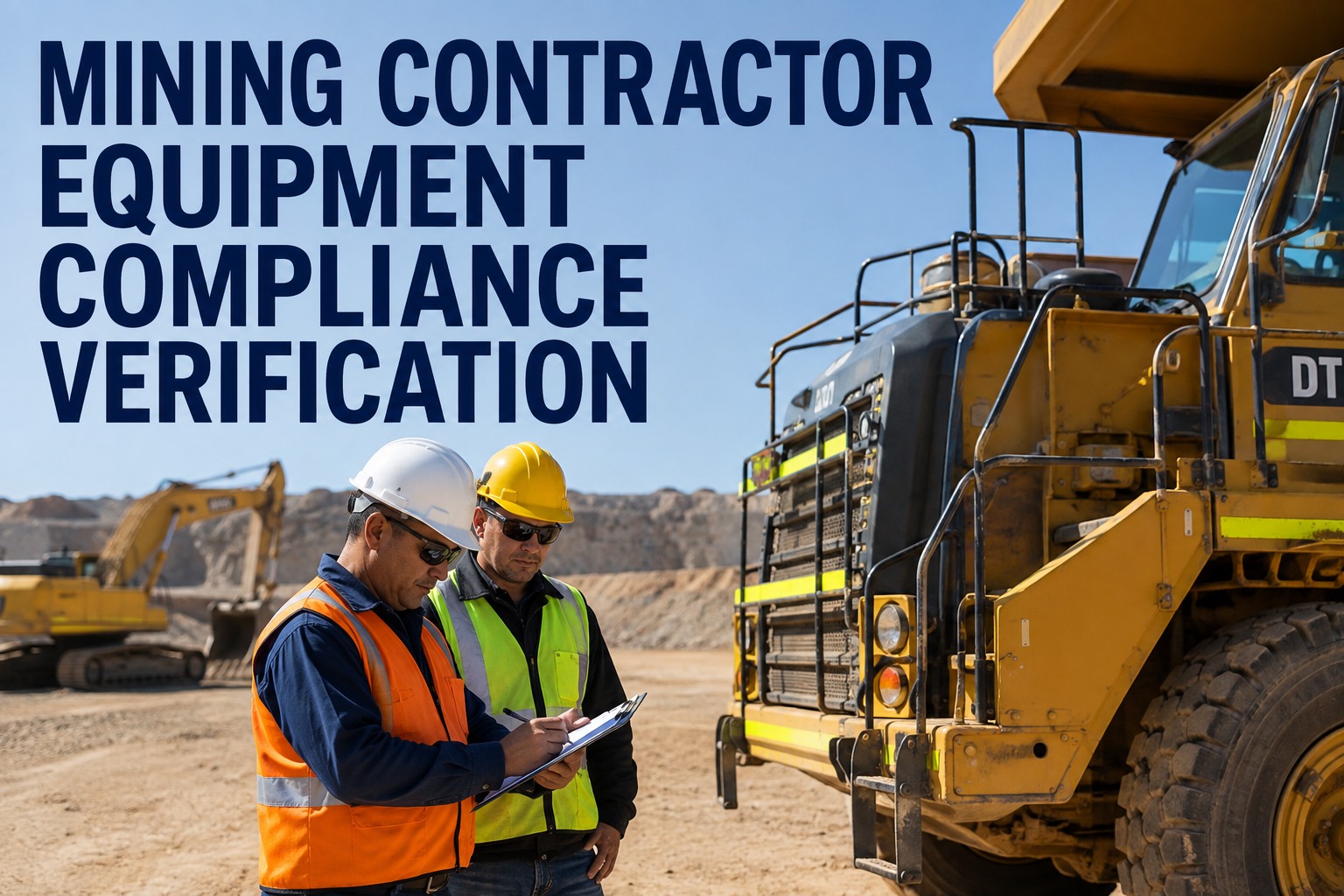
- Confirm machine is safe and available for assessment
- Agree on pass criteria and critical-failure conditions
After assessment
- Record knowledge questions and practical observations
- Document defects, unsafe acts and corrective actions
- Identify task limitations and required supervision
- Sign and date the assessment decision
- Complete separate site authorization where required
- Set reassessment and record-review triggers
Equipment condition is a key boundary: an operator should not be judged on the behavior of defective machinery, and a competent operator should not be assigned an unsafe machine. Sign up free to start documenting mining equipment inspections with HVI.
Where HVI supports the VOC process—and where it does not
A verification of competency program needs trained assessors, task-specific criteria, controlled practical evaluations and formal authorization. HVI does not replace those responsibilities. Its relevant value is in the surrounding equipment and team management workflow.
Team management
Organize team and role information used in day-to-day equipment operations; retain formal VOC decisions in your approved competency system.
Digital safety inspections
Document pre-use equipment checks and defects, helping supervisors distinguish operator readiness from machine readiness.
Maintenance history
Review equipment repair and service records when an assessment reveals a possible mechanical problem.
Preventive maintenance
Keep machine servicing visible so assessment planning and equipment availability are easier to coordinate.
HVI should be evaluated for the workflows it actually supports, rather than assumed to issue VOC certificates or enforce operator authorizations automatically. To review the product in your own mining context, Book a demo focused on mining teams and equipment inspections.
Build a repeatable verification of competency program
Start with the equipment and tasks that carry the highest consequence if performed incorrectly. Define clear assessment criteria and choose assessors who understand both the machine and the mine's operating rules. Pilot the process with a small group before applying it across shifts or contractor teams.
Define the standard
Identify high-risk tasks, prerequisites, machine types and approval responsibilities.
Pilot assessments
Test scorecards with assessors and operators; remove vague criteria.
Close gaps
Assign coaching, reassessment and restrictions where needed.
Review records
Check completeness, authorization decisions and upcoming reassessment triggers.
Illustrative rollout only: the four-week sequence is a planning example, not a guaranteed implementation timeline. Larger sites and regulated roles may require more time, additional review and formal consultation. If equipment inspection evidence is scattered across paper forms, Sign up free to organize equipment inspection records with HVI.
Support safer equipment handovers with clearer inspection records
Explore HVI for the digital equipment checks, maintenance follow-up and team visibility that complement your mine's formal VOC program.
Make verification of competency a field decision, not a paperwork exercise
A useful verification of competency process establishes what an operator can safely do, on which machine, under which site conditions. It combines prerequisites, practical observation, documented gaps and a separate authorization decision. Consistent records help supervisors act when circumstances change, while reliable equipment inspections help keep the machine side of the assignment safe. If your mine needs stronger equipment inspection and maintenance coordination alongside VOC, Book a demo to explore HVI's mining fleet workflows.
Verification of competency FAQs
What is verification of competency in mining?
It is a structured assessment of whether an operator can demonstrate the knowledge and practical skills required for a defined mining equipment task. Site rules and local law determine the specific requirements.
Is VOC the same as an operator licence or training certificate?
No. A licence or training certificate may be a prerequisite, while VOC checks demonstrated ability for a defined task and context. Formal authorization to operate may be a separate decision.
How often should mining operators complete a VOC?
There is no single universal interval. Follow applicable laws, site standards and risk-based triggers such as equipment changes, extended time away, incidents or identified performance gaps.
What happens if an operator does not pass a VOC assessment?
Record the gaps, apply appropriate task restrictions, provide targeted training or coaching and reassess under approved conditions before authorizing the relevant work.
Can HVI conduct or certify mining VOC assessments?
HVI should not be treated as a VOC certification platform. Its relevant capabilities include team management, digital equipment inspections, maintenance records and preventive maintenance workflows that support the surrounding operation.