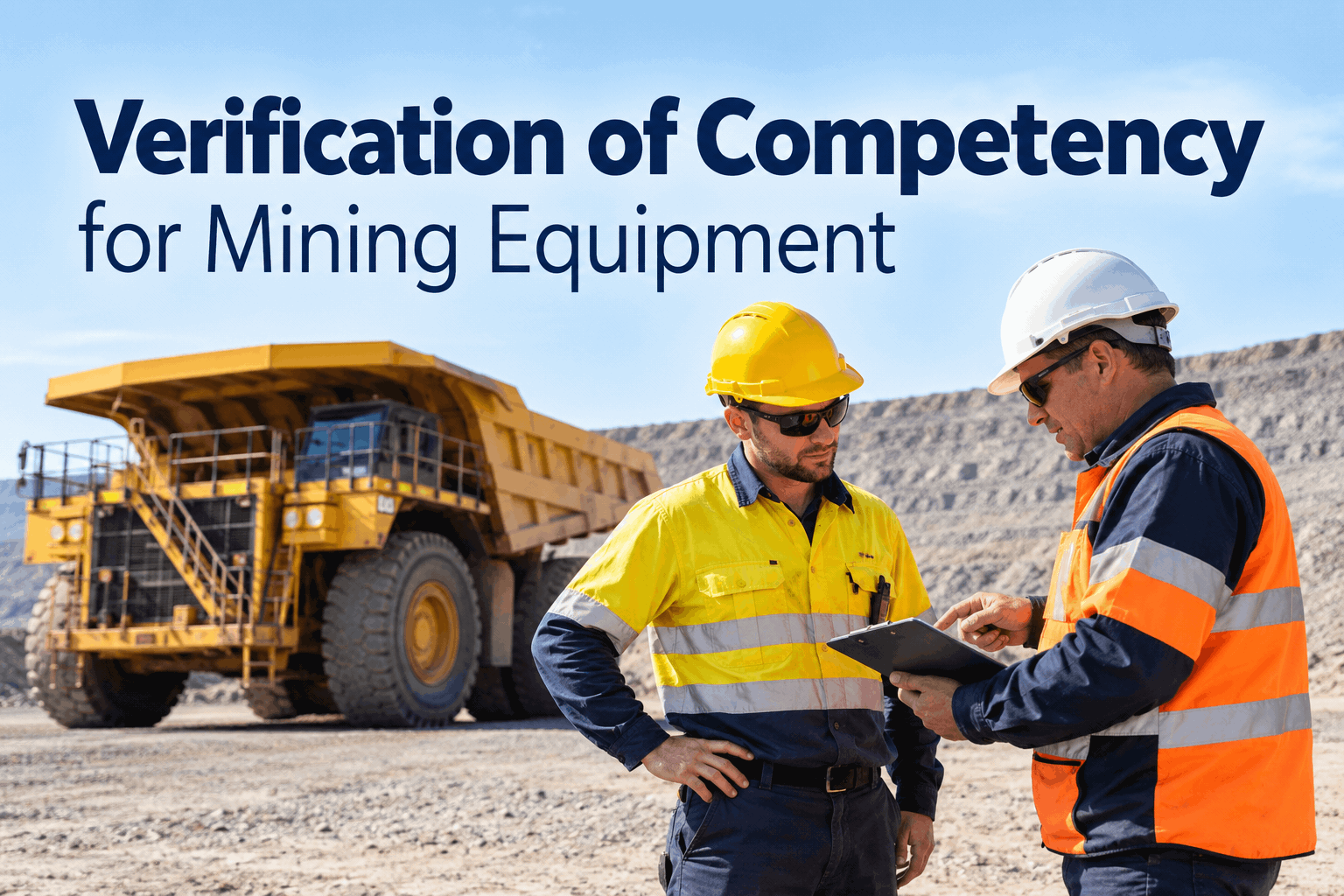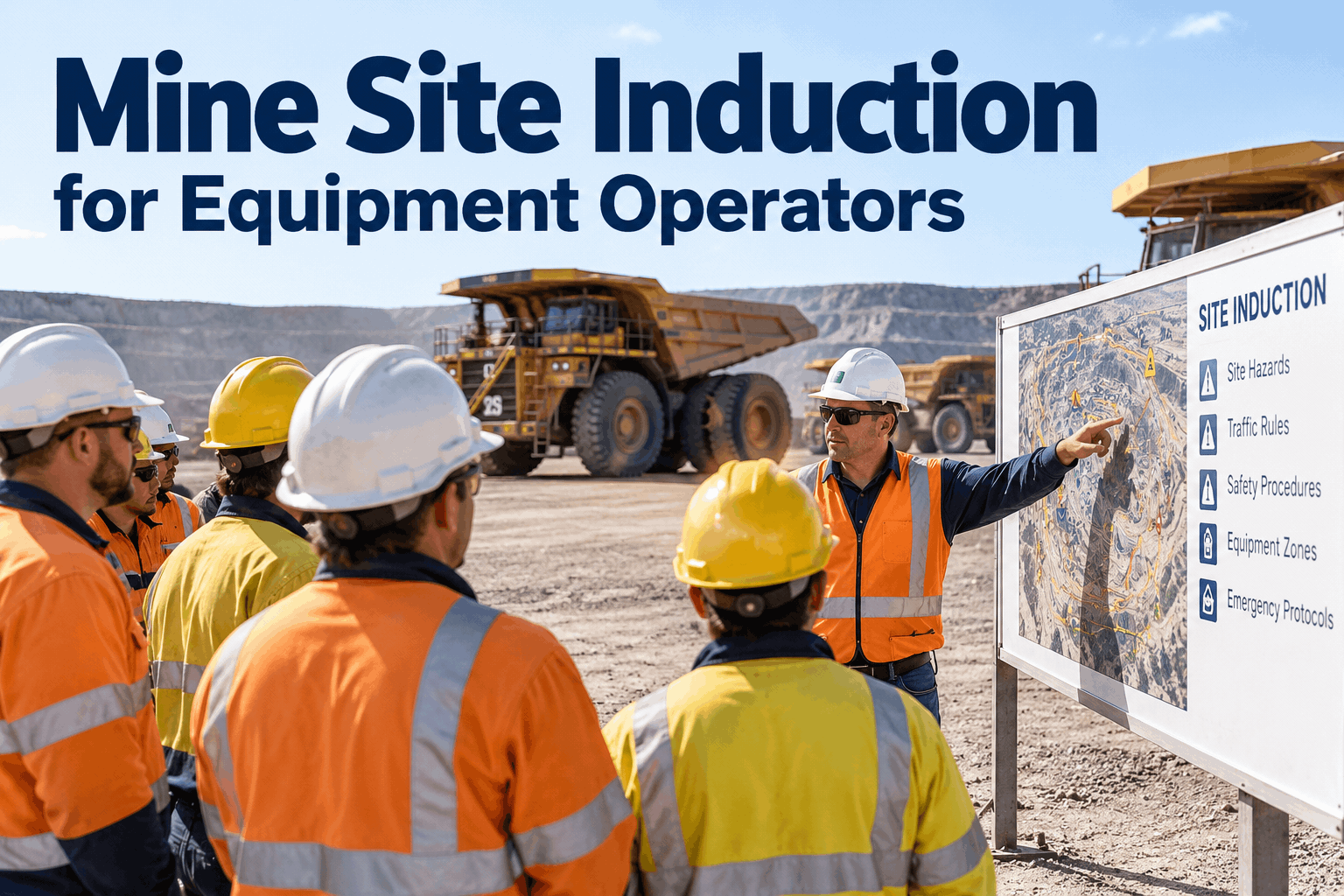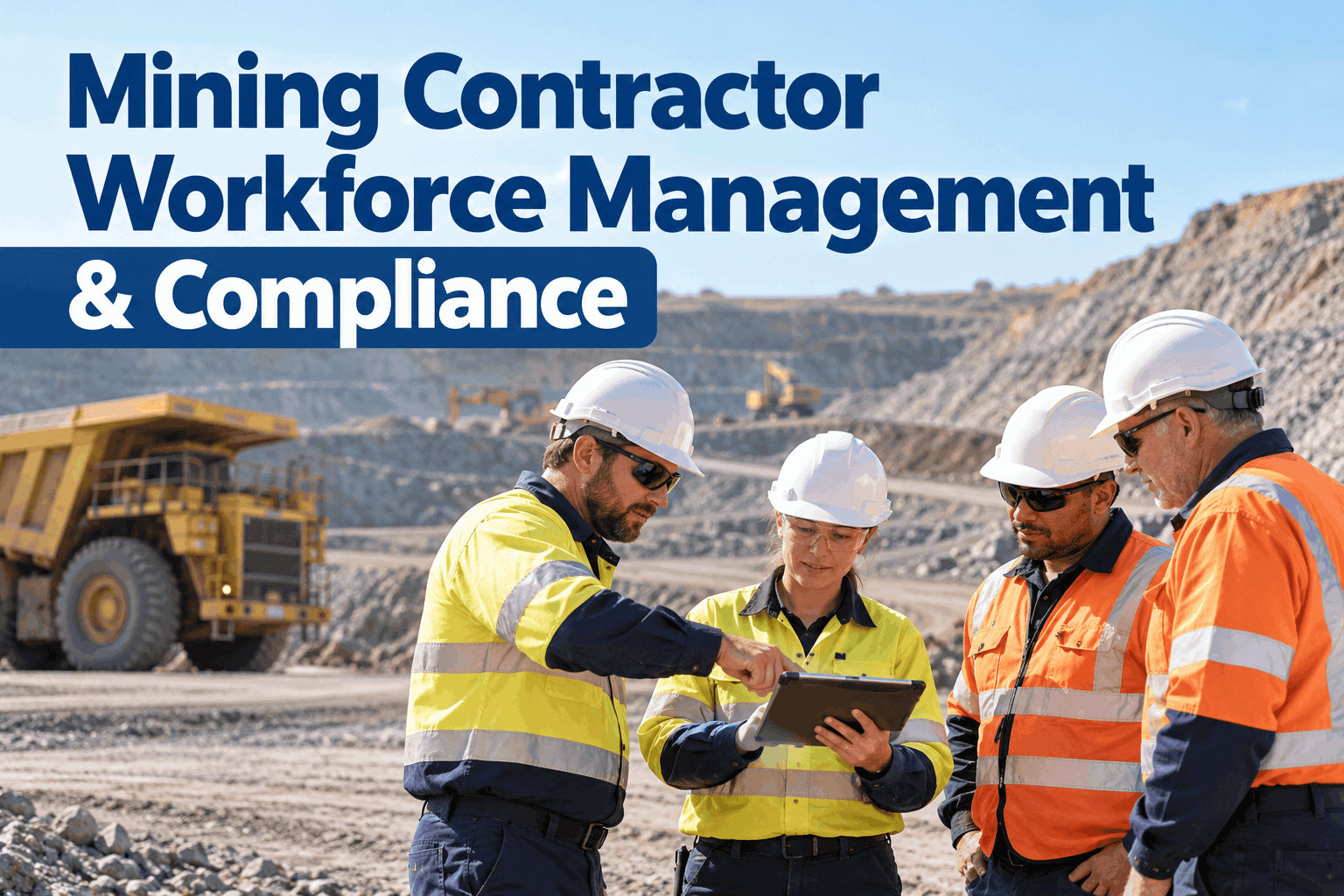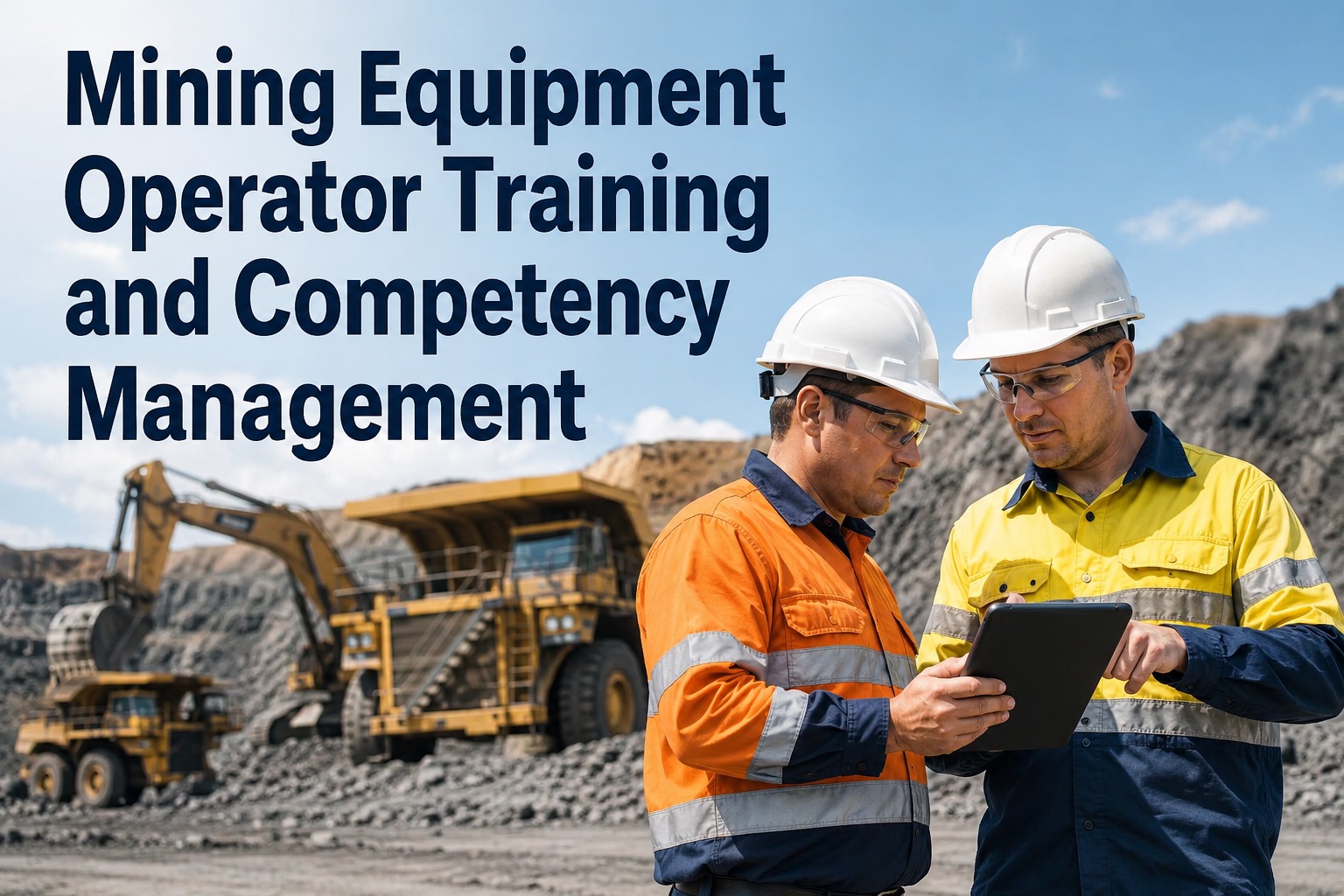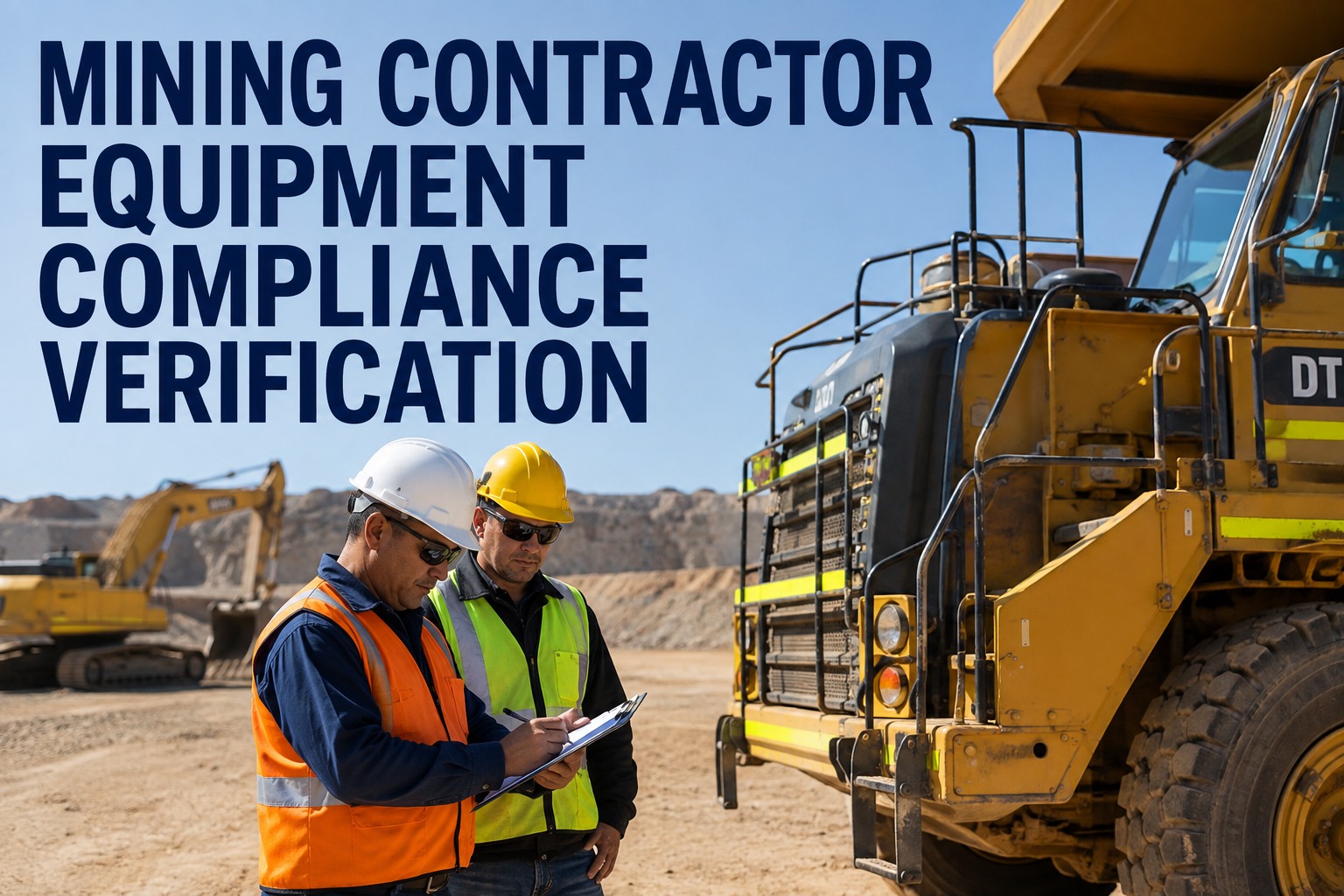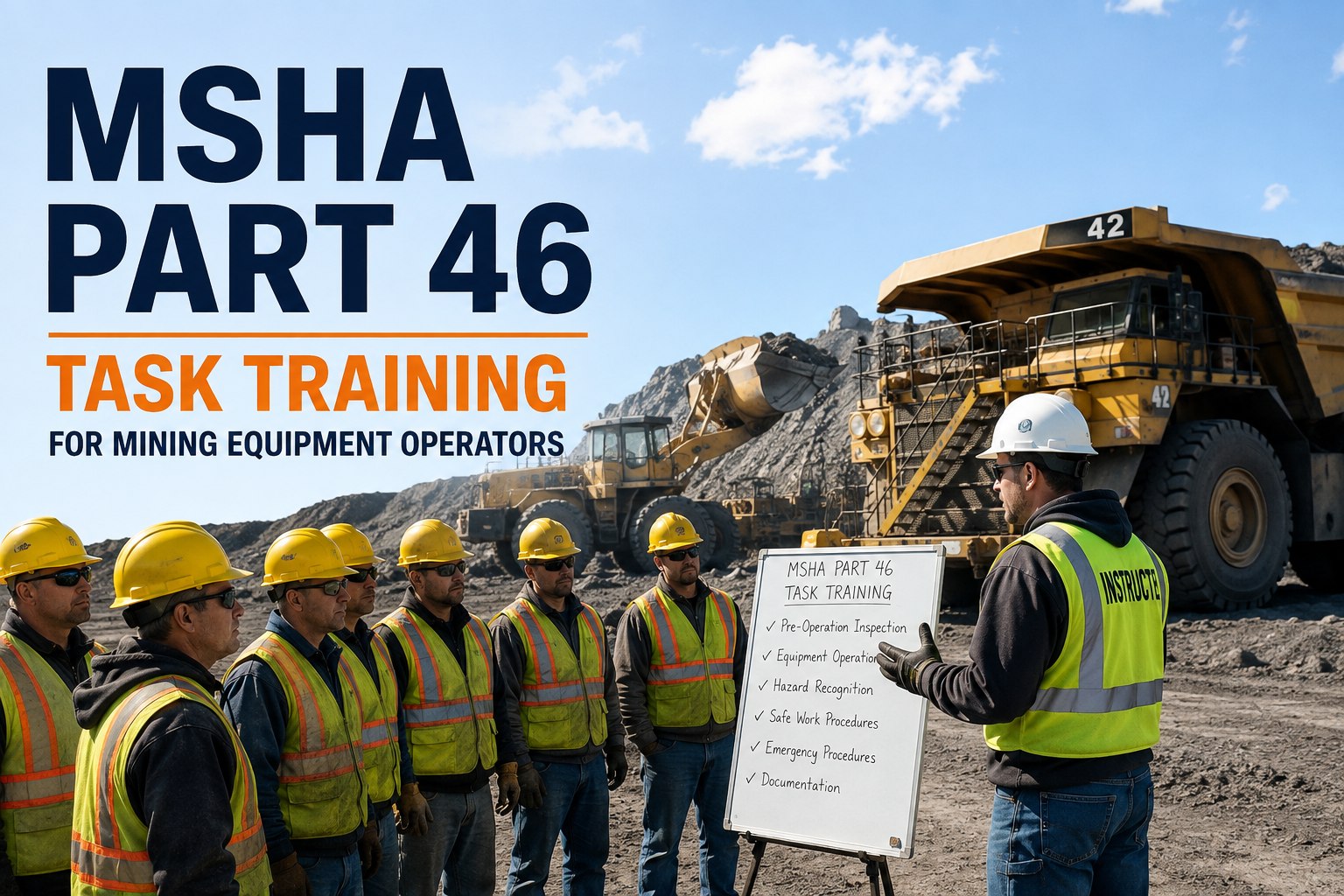
A haul truck is ready for the next shift, but is the replacement operator cleared to drive that model at this site? A competency assurance system helps mine supervisors answer that question before equipment moves. Instead of relying on a training certificate buried in an inbox, it connects role requirements, assessments, site authorizations and review dates to the actual work being assigned.
Know who is ready for the task—before the shift starts.
Build a clear line of sight from operator skills to authorized equipment assignments, with inspection and equipment records supporting safer handovers.
What a mining competency assurance system must prove
Completion of a course is useful evidence, but it does not automatically prove a person can perform a particular task safely on a particular machine.
Role requirement
Define the skills, experience, licenses and site rules required for each role, task and equipment class.
Evidence
Keep training records, practical assessment results, refresher history and relevant qualifications together.
Authorization
Record who approved the operator for the specific equipment and operating conditions, including restrictions.
Reverification
Set review points for expiring credentials, equipment changes, incidents or long periods away from a task.
A mine may maintain its competency matrix in a dedicated training system or controlled register. HVI complements that process with Book a Demo — Explore Team and Equipment Visibility to see how inspection and asset records can support shift-level coordination.
Design a mining skills matrix that supervisors can actually use
A useful matrix is more than a grid of green ticks. It must make restrictions and missing evidence visible without forcing supervisors to open a dozen documents.
Rows: people and roles
Include employees, contractors, crew, supervisor and work location. A contractor's qualification may be valid but still require local induction and authorization.
Columns: task-specific permissions
Separate haul trucks, excavators, dozers, lifting operations, isolations, working at heights and other high-risk activities. Where equipment models or attachments change the task, define those differences.
Each cell needs context
Show status, evidence reference, assessor, approval date, expiry or review date, and any restrictions. Avoid using a single “trained” label as proof of competence.
For mines managing multiple machines across crews, Book a Demo — Review HVI Equipment Records to explore how asset information and maintenance history can sit alongside your workforce assurance process.
Verification of competency: the assignment decision flow
Before work begins, supervisors should verify both the person and the machine. A valid operator authorization does not make defective equipment safe to use.
Define the task
Machine model, operating area, shift conditions and high-risk activities.
Check authorization
Match the worker to the competency register and site-specific restrictions.
Confirm readiness
Review the equipment's inspection status, open defects and service requirements.
Assign or escalate
Release only when conditions are met; otherwise reassign or resolve the gap.
HVI's digital inspection and maintenance workflows can help document the equipment side of that decision. Book a Demo — See Mining Inspection-to-Maintenance Workflows to explore that connection.
Keep mining equipment checks connected to your team.
See how HVI supports digital safety inspections, equipment records and maintenance follow-up while your site retains control of competency approvals.
Where mining competency tracking usually breaks down
Most failures begin at the handoff between training administration, shift scheduling and field supervision—not necessarily inside the training course itself.
| Warning sign | Why it matters | Better control |
|---|---|---|
| Course marked complete, no practical assessment | Knowledge does not confirm safe task performance. | Link assessment evidence and approval to the exact task. |
| Authorization copied across machine models | Controls, visibility and operating limits may differ. | Define model-specific requirements where risk assessment demands. |
| Contractor records not verified locally | External certificates may not cover site conditions. | Check site induction, scope and local authorization. |
| Expiry dates tracked in email | Supervisors may miss overdue refreshers. | Maintain a controlled review register and escalation owner. |
| Operator cleared, machine defect still open | Workforce readiness and equipment readiness diverge. | Check inspection and maintenance status before release. |
For the last gap, Book a Demo — See HVI Defect and Maintenance Records to understand how teams can follow up reported machine issues.
12-point mining competency assurance checklist
Use this during a monthly matrix review and adapt it to local regulations, mine standards and role-specific risk assessments.
Competency evidence
- Role requirements are documented.
- Equipment and task scope is explicit.
- Training records are accessible.
- Practical assessment evidence is current.
- Assessors and approvers are identified.
- Restrictions and supervision requirements are recorded.
Assignment readiness
- Contractor qualifications are verified.
- Site induction requirements are met.
- Expiry and review dates are checked.
- New equipment triggers reassessment where needed.
- Open equipment defects are reviewed.
- Supervisors know how to escalate gaps.
For maintenance managers who need stronger field documentation, Sign Up Free — Record Mining Equipment Inspections and begin organizing equipment condition records in HVI.
Track assurance quality—not just training completion
A high training-completion rate can hide gaps in authorization. Review measures that indicate whether your process is reliable during real shift changes.
Authorization coverage
Share of assigned high-risk tasks with current, verified authorization.
Expiring qualifications
Number due for review within the site's chosen look-ahead window.
Assessment backlog
Workers waiting for practical verification before independent assignment.
Equipment readiness gaps
Assignments delayed because inspection defects or maintenance work remain unresolved.
These measures should be defined and calculated by your organization's controlled competency process. HVI can contribute inspection and maintenance information; it should not be assumed to calculate or certify the workforce metrics automatically. To explore the relevant equipment workflows, Book a Demo — Review Mining Fleet Maintenance Visibility.
Start with one critical equipment group
Rather than launching a site-wide matrix with hundreds of columns, pilot the approach on a single high-risk equipment category. Define the competency standard with operations, safety and training personnel. Verify existing records against the standard, then ask supervisors to use the register during actual shift allocation.
Review exceptions after each shift for the first few weeks. Did someone lack a local authorization? Was a refresher overdue? Was the machine itself unavailable because of an unresolved defect? Those observations show where to improve the process before expanding to additional crews and assets.
Keep the governance clear: designated assessors verify competence, authorized managers approve assignments, and qualified maintenance personnel determine equipment serviceability. HVI's inspection and maintenance records can support the equipment side of this coordinated review, but do not replace formal workforce competency assurance.
Mining competency assurance FAQs
What is a competency assurance system in mining?
It is a controlled process for defining job and equipment competency requirements, assessing workers, recording evidence, authorizing tasks and periodically reviewing whether those authorizations remain valid.
How is a mining skills matrix different from a training register?
A training register records learning activities. A skills matrix maps people against role- and task-specific capabilities, evidence, authorization status, restrictions and review dates so supervisors can make assignment decisions.
Does a completed training course mean an operator is competent?
Not necessarily. A site may require practical verification, relevant experience, familiarization and formal authorization. The exact requirements depend on the equipment, task, risk and applicable rules.
Can HVI automatically certify mining operators?
No such capability is assumed here. HVI is positioned for team coordination, digital equipment inspections and maintenance records, while formal competency assessment and certification remain with the mine's authorized processes.
How often should competency records be reviewed?
Use the review intervals required by applicable rules and site procedures. Also review after material task or equipment changes, incidents, extended absence or evidence that skills need reassessment.
Connect mining inspections, defects and maintenance history.
Support your workforce assurance program with better visibility into the equipment your teams operate. Explore HVI with a product walkthrough.
A reliable competency assurance system gives supervisors a defensible answer to who can perform each mining task, under what conditions and with what evidence. Pair that discipline with equipment inspections and maintenance history so a qualified operator is not assigned to an unready machine. Start Free — Organize Mining Equipment Checks with HVI or book a tailored walkthrough to explore the inspection and maintenance side of the process.