A mine rescue team isn't something you stand up once and check off — it's a readiness state you have to hold month after month, whether or not an emergency ever comes. MSHA's mine rescue team requirements under 30 CFR Part 49 turn on recurring training hours, breathing apparatus kept ready, and records that prove all of it — and any one can quietly lapse. The teams that pass inspection cold treat readiness as an ongoing process. See mine rescue readiness tracked as recurring, provable items
A Mine Rescue Team Is Only "Ready" When All Four Pillars Are Current
Tap a pillar. Each is a recurring obligation with its own cadence — and readiness fails the moment any one falls behind.
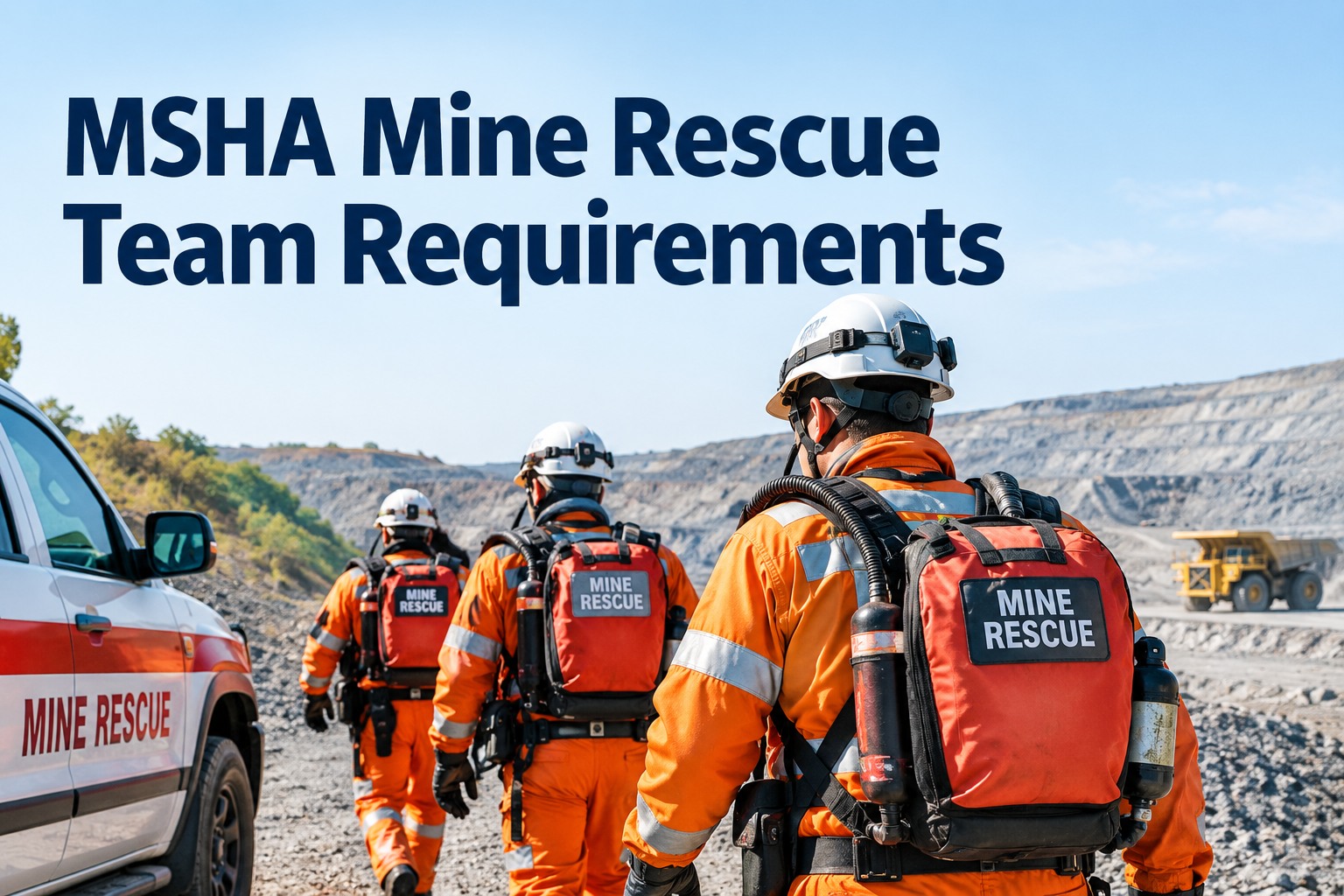
Every underground mine must have fully trained, equipped rescue teams available for an emergency — reachable within one hour of ground travel from the mine rescue station under normal driving conditions. Members must meet experience and eligibility requirements.
A 20-hour initial course before serving, then ongoing refresher training — at least 40 hours a year for metal/nonmetal teams, 96 hours for coal — delivered on a monthly or bi-monthly cadence, with apparatus worn under oxygen and underground sessions on schedule.
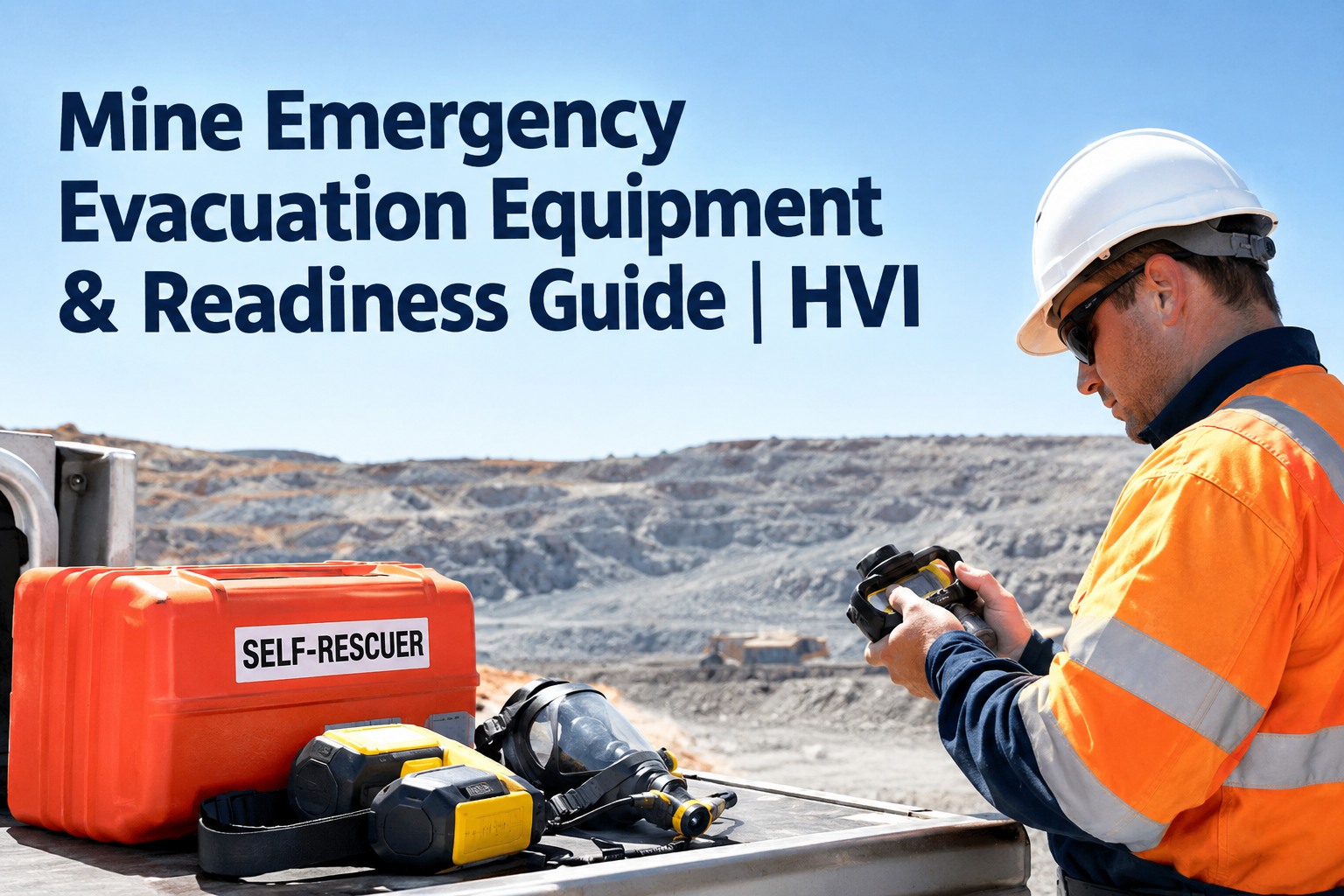
The mine rescue station must hold the required equipment ready for immediate use — including twelve self-contained breathing apparatus of at least four hours' capacity each, testing gear, oxygen supply, gas detection, and spare parts — stored to stay ready.
Every element above has to be documented — training hours per member, apparatus inspections, station readiness, member eligibility — and produced on demand. An inspector doesn't just want the team ready; they want the record that proves it stayed ready.
These aren't one-time hurdles — they're a standing readiness state built on recurring deadlines. Below is each pillar in detail, why the training cadence is where most programs slip, what the rescue station must hold, and how documented records turn a readiness inspection from a worry into a routine.
Team availability and eligibility
The foundation is having qualified teams that can actually reach the mine in an emergency. MSHA is specific about both the coverage and who's allowed on a team — and eligibility isn't permanent, it depends on keeping training current.
Coverage within one hour
Teams must be available and able to reach the mine within one hour of ground travel from the rescue station under normal driving conditions — availability isn't theoretical, it's measured in travel time.
Qualified, eligible members
Members must meet experience requirements and stay eligible — and a member who misses more than eight hours of training in a year becomes ineligible until the time is made up.
That eligibility rule is the quiet catch: a team can look fully staffed on paper while a member has slipped below the training threshold and is no longer eligible to serve. Tracking each member's hours against the requirement is the only way to know your team is actually ready, not just listed. Book a demo to see member eligibility tracked against training hours.
The training cadence — where readiness is won or lost
If one pillar breaks a mine rescue program, it's training, because it never stops. Beyond the initial course, refresher training runs on a strict recurring rhythm, and every session type has its own deadline. Miss the cadence and members drift toward ineligibility.
20-hour initial course
Use, care, and maintenance of the breathing apparatus the team will use — completed before a member serves.
Refresher sessions
At least 4 hours monthly or 8 hours every two months — the steady drumbeat that keeps skills current.
Apparatus under oxygen
Members wear and use the breathing apparatus for at least two hours while under oxygen — real practice in real gear.
Underground session
At least one training session underground every six months — readiness proven in the environment that matters.
The annual total — 40 hours for metal and nonmetal teams, 96 for coal — is only met if these recurring pieces all land on time. Because they're spread across the year with different intervals, a wall calendar and good intentions are exactly what fails. This is a scheduling problem before it's a compliance one. Book a demo to see the full training cadence tracked automatically.
Equipment and the rescue station
A trained team with unready equipment isn't a rescue team. MSHA requires a designated mine rescue station stocked with specific gear, stored so it's ready for immediate use — and subject to inspection at any time. The equipment is only compliant if it's maintained, not just present.
Twelve breathing apparatus
At least twelve self-contained breathing apparatus, each with a minimum four hours' capacity and MSHA/NIOSH approved, plus the gear to test them.
Oxygen & gas detection
A portable supply of oxygen or oxygen-generating chemicals, carbon-dioxide absorbent, and gas-detection instruments appropriate to the mine.
A station kept ready
Designated in advance, centrally stored, kept in a proper environment for immediate use — and open to MSHA inspection at any time.
"Ready for immediate use" is the phrase that matters: breathing apparatus and detection gear have to be inspected and maintained on a schedule, not discovered to be flat or out of calibration when the alarm sounds. Scheduled equipment checks, logged, are what keep the station genuinely ready. Start free and schedule rescue-equipment inspections with a record.
The records that prove readiness
Every pillar so far produces a paper trail, and that trail is what an MSHA inspection actually examines. You can have a genuinely ready team, but if you can't document the training hours, the apparatus checks, and the member eligibility, you can't prove compliance — and unprovable readiness is treated as no readiness.
An inspector doesn't just want a ready team — they want the record that proves it stayed ready. Training hours per member, apparatus inspections, station readiness, and eligibility, all documented and retrievable, are what turn "we're prepared" into demonstrated compliance.
This is where mine rescue readiness meets recordkeeping: the same recurring items that keep the team ready also generate the evidence, if they're captured as they happen. A program that logs each session and inspection against the member and the equipment can produce the whole picture on demand instead of reconstructing it under pressure. Book a demo to see readiness records assembled and retrieved in minutes.
The mine rescue readiness checklist
Use this to confirm every pillar of your mine rescue program is current and provable, not just in place. Use this mine rescue readiness checklist online free, with each recurring training and equipment item tracked and recorded automatically.
Confirm team coverage & access
Qualified teams available within one hour of ground travel from the rescue station.Track each member's training hours
Initial 20 hours plus annual refresher on cadence — and flag anyone nearing the eligibility limit.Hit every recurring session type
Monthly refresher, bi-monthly apparatus-under-oxygen, and six-month underground sessions all on schedule.Inspect and maintain the equipment
Breathing apparatus and detection gear checked, maintained, and logged — kept ready for immediate use.Keep the station designated & ready
Rescue station location on record, equipment stored for immediate use and open to inspection.Keep every record retrievable
Training, equipment, and eligibility records produced on demand for an inspection.
From a mine rescue coordinator who runs the schedule
People think mine rescue compliance is about the big things — the team, the apparatus. It's really about the calendar. Four hours here, two hours under oxygen there, an underground session before the six-month clock runs out, per member, all year. Miss a couple and a guy you're counting on isn't even eligible anymore, and you might not notice until you check.
We used to run it on a whiteboard and a lot of hoping. Now every session and every apparatus check is a scheduled item with the record attached, and I can see at a glance who's short and what's due. When MSHA came through, I pulled every member's hours and every equipment log without breaking a sweat. Readiness stopped being something I worried about and became something I could show.
Frequently asked questions
What are MSHA's mine rescue team requirements?
Under 30 CFR Part 49, every underground mine must have trained, equipped mine rescue teams available for emergencies, reachable within one hour of ground travel from a designated rescue station. Members complete a 20-hour initial breathing-apparatus course before serving, then ongoing refresher training. The rescue station must hold specified equipment ready for immediate use, including at least twelve self-contained breathing apparatus of four hours' capacity. Every element — training, equipment, eligibility — must be documented. Readiness is a continuing state maintained on recurring deadlines, not a one-time certification.
How much mine rescue training is required each year?
Before serving, each member completes a 20-hour initial course on the breathing apparatus. After that, refresher training is required annually — at least 40 hours for underground metal and nonmetal teams and 96 hours for coal teams — delivered at least 4 hours each month or 8 hours every two months. It must include wearing the apparatus under oxygen for at least two hours every two months and an underground session at least every six months. A member who misses more than eight hours in a year becomes ineligible until it's made up.
What equipment must a mine rescue station have?
A designated mine rescue station must hold at least twelve self-contained breathing apparatus, each with four hours' capacity and MSHA/NIOSH approved, plus equipment to test them. It also needs a portable oxygen supply or oxygen-generating chemicals, carbon-dioxide absorbent, gas-detection instruments appropriate to the mine, and spare parts and tools. The station must be designated in advance, stored to keep everything ready for immediate use, and open to MSHA inspection at any time. The gear must be maintained, not simply present.
What makes a mine rescue team member ineligible?
Eligibility depends on keeping training current. A team member becomes ineligible to serve if they miss more than eight hours of required training in one year, unless they receive additional training to make it up. Members must also meet the applicable experience requirements. This is why tracking each member's hours matters: a team can look fully staffed while a member has quietly dropped below the threshold and is no longer eligible, leaving the team short exactly when it's needed. Monitoring hours per member is the only reliable way to confirm eligibility.
How do you keep a mine rescue program audit-ready?
By treating readiness as a set of recurring, tracked items rather than an annual scramble. The training cadence, apparatus-under-oxygen sessions, underground drills, and equipment inspections each have their own deadlines, so they need scheduling with reminders before they lapse — and every completion needs a record attached to the member or the equipment. When training hours, eligibility, apparatus checks, and station readiness are all documented and retrievable on demand, an MSHA inspection becomes a matter of producing records rather than reconstructing them under pressure.
Keep every mine rescue deadline current — and provable on demand
HVI keeps the recurring mine-rescue obligations — training hours per member, apparatus-under-oxygen sessions, underground drills, equipment inspections — on a checklist that flags what's due before it lapses, tracks member eligibility, and holds every completion record retrievable. So your team stays genuinely ready, and a Part 49 inspection becomes a record you produce, not a scramble you survive.
No credit card · Recurring training & equipment tracking · Audit-ready readiness records