Powered haulage accounts for approximately 50% of all fatal surface mining accidents. A 400-ton haul truck traveling at 25 mph cannot stop quickly and its operator manages massive blind spots that easily conceal a standard pickup truck. Establishing strict mine traffic rules is the only way to prevent catastrophic collisions on active haul roads. Book a demo to see how digital DVIRs automate your site's traffic compliance
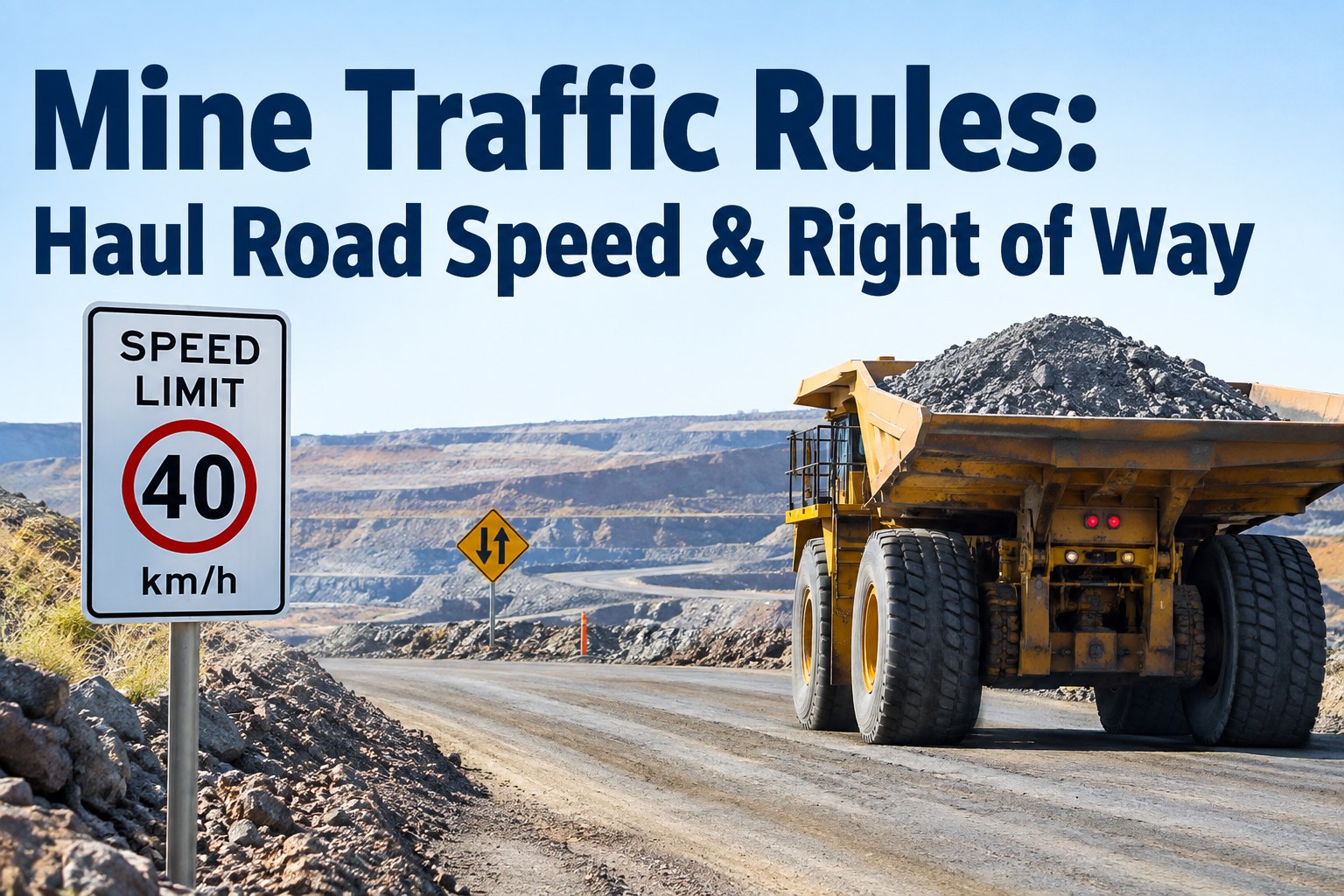
Mine Traffic Rules: Haul Road Speed & Right of Way
Standardize your site's Traffic Management Plan (TMP). Learn the universal right-of-way hierarchies, speed control variables, and how digital inspection tools keep your heavy vehicle operators compliant and collision-free.
The Universal Mine Site Right-of-Way Hierarchy
On a mine site, the rules of the public highway do not apply. Yielding is based on vehicle size, momentum, and load status. MSHA standard 30 CFR § 56.9100 dictates that traffic rules must be established and followed to ensure safe right-of-way. The following hierarchy is the industry standard for surface mining operations.
Loaded Haul Trucks & Emergency Vehicles
A fully loaded haul truck traveling uphill has the absolute right of way (alongside active emergency responders). They possess the highest momentum and the longest stopping distance. All other vehicles must yield, clear the haul road, and hold position until the loaded truck passes.
Empty Haul Trucks & Heavy Mobile Equipment
Empty haul trucks traveling downhill, as well as operating graders, dozers, and water trucks, hold the second tier of priority. Light vehicles must yield to this heavy iron at all intersections and blind corners.
Light Vehicles (Pickups & Supervisor Trucks)
Light vehicles (LVs) have the lowest priority on the mine site. LV drivers must utilize designated light-vehicle roads when possible, stay out of heavy equipment blind spots, and give way to all heavy machinery. Overtaking heavy equipment requires positive two-way radio contact.
Haul Road Speed Limits & Following Distances
MSHA 30 CFR § 56.9101 requires that operating speeds be consistent with the conditions of roadways, grades, clearance, and visibility. There is no single "correct" speed for a mine site; limits must be dynamically adjusted based on the daily Traffic Management Plan.
Dynamic Speed Control
Typical maximum speeds are 25-35 mph on straight, dry, well-maintained haul roads. This limit drops drastically (e.g., 10-15 mph) near active dump points, pit floors, processing crushers, or during heavy rain, snow, and dense fog.
The 3-Length Rule
Heavy vehicles must maintain safe following distances to avoid rear-end collisions if a lead truck brakes suddenly. The industry standard is maintaining at least three to four haul-truck lengths (approximately 150-200 feet) of separation under normal dry conditions.
Intersection Protocols
All intersections must be clearly marked with signage (stop or yield). Stop signs at mine intersections are absolute. Drivers must bring the vehicle to a complete halt, perform a visual sweep, and confirm clearance over the radio before proceeding.
Digital Enforcement of the Traffic Management Plan
A Traffic Management Plan (TMP) outlines the safe movement of vehicles and personnel on a site. However, an undocumented safety rule is impossible to enforce during an MSHA audit. Moving from paper-based sign-in sheets to a digital safety platform ensures that every operator is actively acknowledging site conditions before turning the key.
Paper-Based Traffic Enforcement
- Operators sign a static piece of paper during orientation and rarely review it again.
- Washed-out stop signs or degraded haul road berms go unreported for days.
- Supervisors lack real-time visibility into operator compliance or pre-trip brake tests.
- High risk of citations during MSHA spot inspections due to missing documentation.
HVI Digital Safety Platform
- Track and fix productivity issues with daily operator reporting on work hours, machine usages, and DVIR[cite: 1].
- If a driver reports a degraded road, managers can generate a one-click Work-Order from the inspection report to dispatch a grader[cite: 1].
- Reduce annual maintenance cost by 25% with well-planned PM schedules that keep truck brakes and steering systems in optimal condition[cite: 1].
- No paper printing reduces administration efforts, maintaining perfect compliance data for audits[cite: 1].
Overtaking and Passing on Haul Roads
Overtaking is one of the most hazardous maneuvers on a mine site. Because of the sheer size of heavy machinery, operators have extensive blind spots directly in front, to the right, and to the rear of the cab. To execute a safe pass, strict communication protocols must be followed.
- Positive Radio Contact: The overtaking vehicle must hail the lead vehicle via two-way VHF radio. State your vehicle ID, location, and intent to pass.
- Acknowledge and Clear: The lead vehicle must explicitly acknowledge the request and grant permission. The lead driver should decelerate slightly and maintain a steady line.
- Execute the Pass: Passes must only occur on straight stretches with clear visibility—never on corners, crests, or intersections.
- Safe Re-entry: The passing vehicle must ensure they are fully clear of the overtaken machine's forward blind spot before pulling back into the primary travel lane.