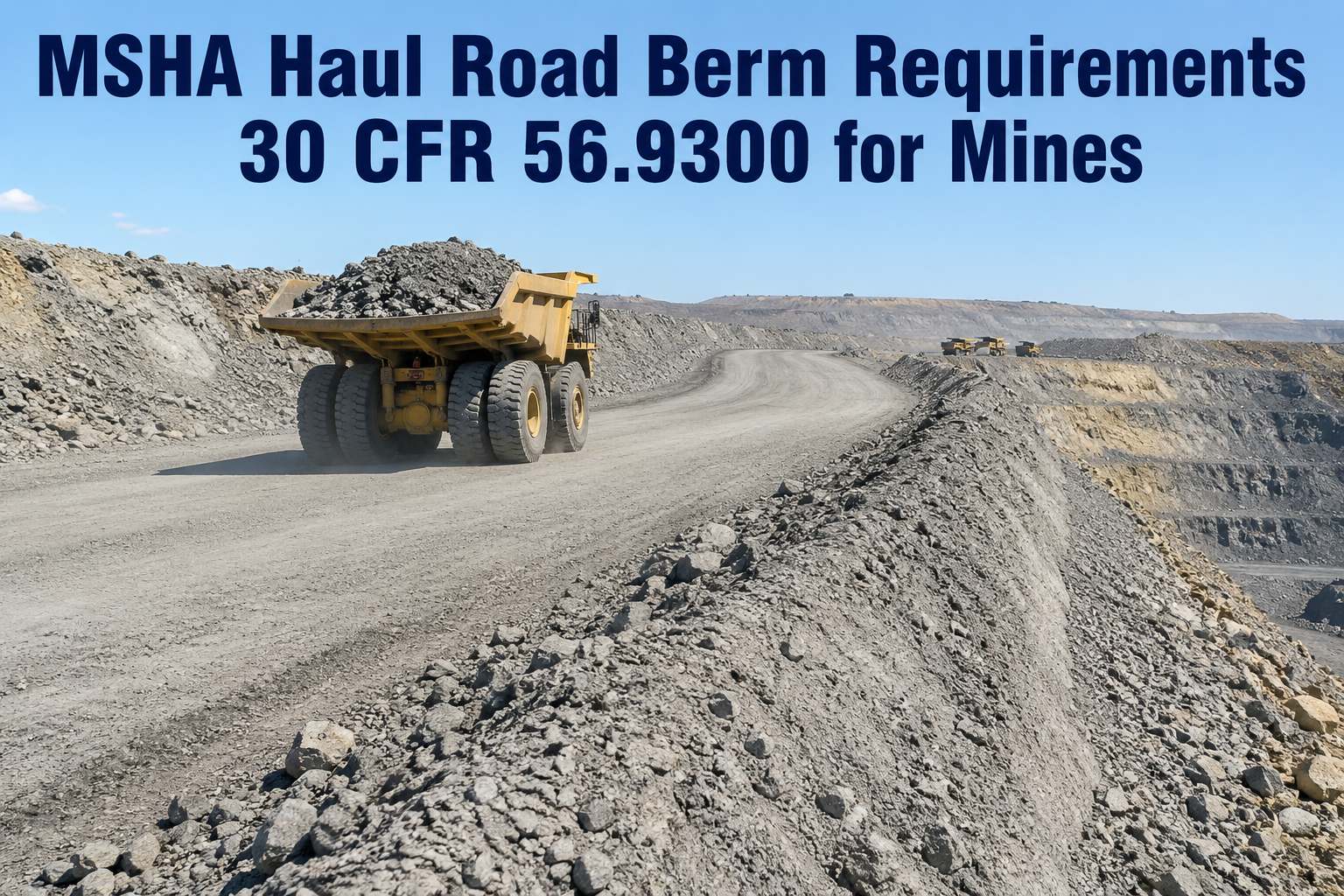
The shift supervisor at a limestone quarry watches a loaded 100-ton haul truck crest the ramp and disappear over the edge of a haul road where the berm has been pushed down by the last three passes. The driver walks away. The truck does not. Under 30 CFR 56.9300, MSHA requires berms or guardrails at least mid-axle height on any elevated roadway where a drop-off hazard exists, and that rule exists because haulage accidents remain one of the leading causes of fatal injuries at surface mines. But here is what most safety managers already know and few say out loud: the same road condition that determines berm compliance also determines whether your ultra-class tires last 6,000 hours or fail at 3,000. Berm height, road grading, drainage, and rock removal are not separate line items. They are one system, and the operations that treat them that way spend less on tires, avoid MSHA citations, and keep trucks moving. If you are managing this on paper checklists and radio calls, see how digital road inspections work on your own site before the next pre-shift.
MINE HAUL ROAD SAFETY & COMPLIANCE
What Does 30 CFR 56.9300 Actually Require on Your Haul Roads?
Berms or guardrails at mid-axle height wherever a drop-off exists. Pre-shift confirmation before dispatch. Documented defect reporting. And a direct line to your tire budget that most operations never connect.
THE COST OF GETTING THIS WRONG
Why Haul Road Condition Is Both a Safety Rule and a Tire Budget Problem
A single 63-inch radial for a 240-ton truck runs more than most pickup trucks. You carry six per unit.
That range assumes well-maintained roads, proper grading, and no rock cuts. Abuse cuts it in half.
Rock spillage, potholes, and washboarding turn a $300K annual tire budget into $600K without a single breakdown.
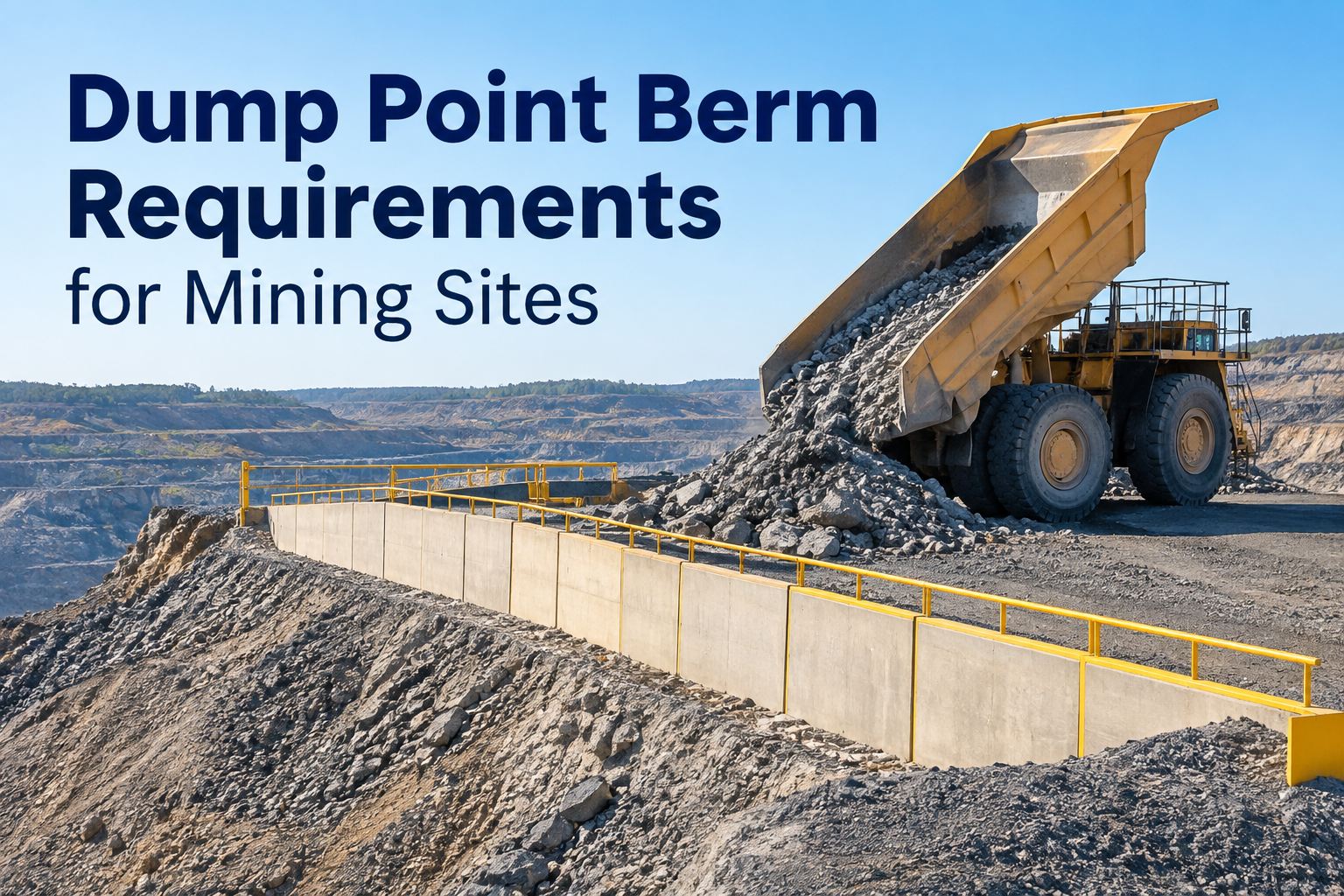
For a 100-ton truck, that is roughly 4 to 5 feet of compacted material along every elevated edge.
WHAT THE RULE SAYS
Breaking Down MSHA Berm Requirements Under 30 CFR 56.9300
The regulation is short but the application is site-specific. Here is what it means in practice for surface metal and nonmetal mines.
Berms or Guardrails Required
Wherever an elevated roadway presents a falling-off hazard, you must have a berm, guardrail, or similar barrier. This applies to ramps, fills, and any road edge with a drop.
Mid-Axle Height Minimum
The barrier must reach at least the mid-axle height of the largest vehicle using that road. For ultra-class trucks, that means berms 4 to 6 feet tall, compacted and maintained.
Pre-Shift Road Inspection
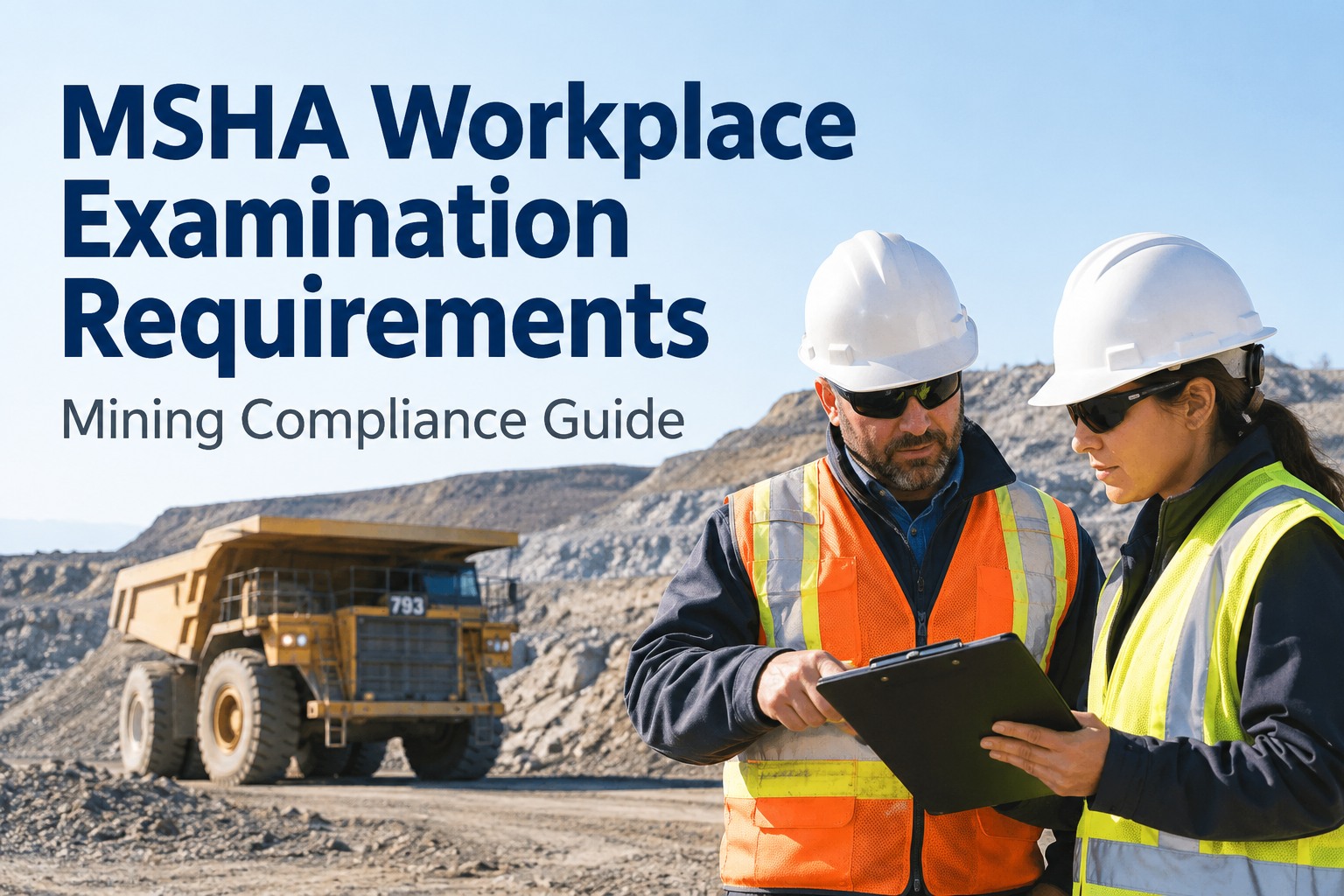
Operators must examine road conditions before dispatch. Berm erosion, soft spots, and new drop-offs get flagged and corrected before the first loaded pass.
Defect Reporting and Correction
Hazards found during inspection must be reported and corrected. MSHA inspectors will ask for records showing what was found, when, and what you did about it.
THE MAINTENANCE PRACTICES THAT MATTER
How Grading, Watering, Drainage, and Rock Removal Drive Both Safety and Tire Life
Every road maintenance task has a dual payoff: it keeps you compliant and it extends the life of your most expensive consumable.
| Maintenance Task | Safety Impact | Tire Cost Impact | Frequency |
|---|---|---|---|
| Grading and reshaping | Removes washboarding and potholes that cause loss of control | Eliminates impact breaks and sidewall cuts from sharp edges | Weekly to daily depending on traffic |
| Watering for dust control | Maintains visibility and prevents skidding on loose fines | Reduces abrasive wear from dust infiltration into tread | Multiple times per shift in dry climates |
| Drainage maintenance | Prevents soft spots and undercutting that collapse under load | Avoids hydroplaning and rim damage from hidden potholes | After every rain event |
| Rock and spillage removal | Clears debris that can puncture tires or destabilize steering | Prevents rock cuts, the leading cause of premature tire failure | Continuous during production |
| Berm rebuilding | Restores mid-axle height after erosion or truck contact | Indirect: prevents edge drop-offs that destroy tires and trucks | As needed, verified pre-shift |
Operations that schedule road maintenance through a CMMS catch berm erosion and drainage failures before they become citations or tire casualties.
THE OPERATOR'S ROLE
What Pre-Shift Haul Road Inspection Looks Like When It Actually Works
The regulation puts the burden on the operator to confirm road conditions before dispatch. Here is the workflow that satisfies MSHA and protects your fleet.
Walk or Drive the Route
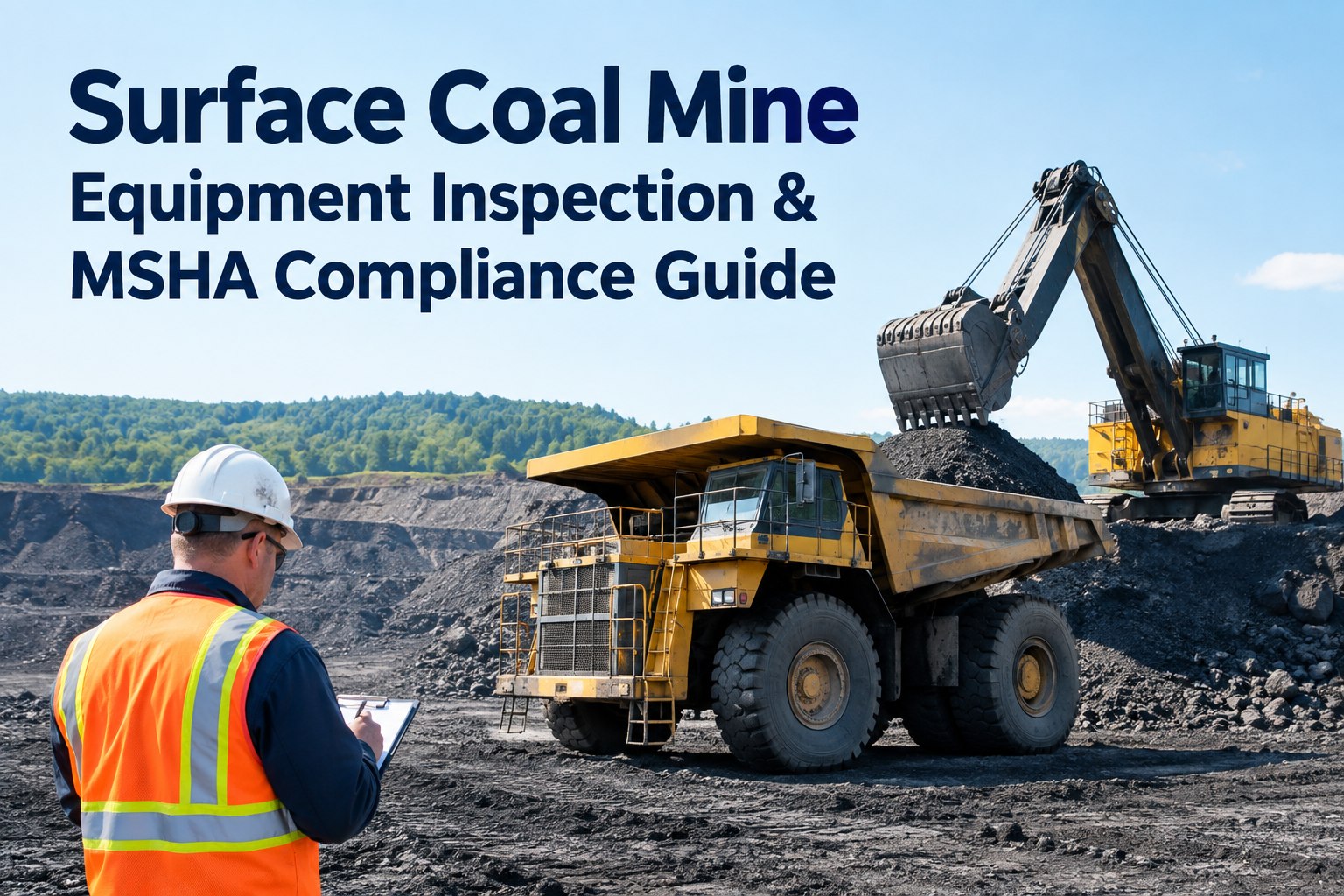
Operator or spotter checks the full haul route, not just the loading area. Look for berm height, new drop-offs, soft edges, rock spillage, and standing water.
Log Defects with Photo and GPS
Any hazard gets documented on the spot. A photo of a washed-out berm with GPS coordinates beats a radio call that gets forgotten by the next shift.
Route to Road Maintenance Crew
Defect becomes a work order assigned to the grader, water truck, or dozer operator. No dispatch until the hazard is corrected or the route is changed.
Confirm Correction Before Dispatch
Supervisor verifies the fix, closes the work order, and releases the route. The record shows what was found, when, who fixed it, and when trucks started rolling.
When this process lives in a mobile inspection app your operators already carry, pre-shift compliance stops being a paper exercise and starts being a real safety check.
THE TIRE COST CONNECTION
How Road Condition Drives Your Tire Budget More Than Any Other Single Factor
A worked example from a mid-size aggregates operation running six 100-ton haul trucks.
Poor Road Maintenance
- Tire life averages 2,800 hours due to rock cuts and impact breaks
- 36 tires replaced per year across the fleet
- Annual tire cost: $1.8M at $50K average per tire
- Two MSHA citations for berm deficiencies in 18 months
- One haul truck over the edge, driver uninjured, truck totaled
Systematic Road Maintenance
- Tire life averages 5,200 hours with consistent grading and rock removal
- 20 tires replaced per year across the fleet
- Annual tire cost: $1.0M, saving $800K
- Zero berm citations, zero road-related incidents
- Grader and water truck costs: $120K per year
Net annual benefit: $680,000 after accounting for the added road maintenance cost. That is the difference between treating haul roads as a compliance checkbox and treating them as a profit center.
See How Digital Road Inspections Work on Your Own Haul Routes
Book a 30-minute demo and we will walk through pre-shift road checks, defect capture, and work order routing using your actual site layout.
HOW HVI HELPS
Turning MSHA Haul Road Compliance Into a System, Not a Scramble
Road Condition Items in Pre-Shift Templates
Berm height, drainage, rock spillage, and surface condition are built into the digital pre-shift checklist. Operators cannot submit without checking each item, and every response is timestamped and GPS-tagged.
Defect Capture with Photo and GPS
A washed-out berm or a new drop-off gets photographed, pinned to a map, and logged in seconds. No radio calls, no paper notes, no "I thought someone else reported it."
Work Orders Routed to Road Crews
Defects become work orders assigned to the grader, dozer, or water truck operator. Dispatch holds until the work order closes, and the full audit trail shows MSHA exactly what you did and when.
Tire Life Tracked Against Road Condition
HVI tire management logs hours, condition, and failure mode for every tire. Over time, you see the direct correlation between road maintenance frequency and tire cost per hour, and you can prove it to ownership.
KEY TAKEAWAYS
What Every Mine Operator Should Remember About 30 CFR 56.9300
Berms or guardrails at mid-axle height are required on any elevated roadway with a drop-off hazard. For ultra-class trucks, that means 4 to 6 feet of compacted material.
Pre-shift road inspection is not optional. Operators must confirm conditions before dispatch, and hazards must be corrected or the route changed.
Road condition is the single largest controllable driver of tire cost. Poor maintenance can cut tire life in half, turning a $1M budget into $2M without a single breakdown.
Grading, watering, drainage, and rock removal are not separate tasks. They are one system that protects both safety and your tire investment.
MSHA inspectors will ask for records. Timestamped, photo-backed digital inspections beat paper binders every time, and they take less time to complete.
The operations that treat haul road maintenance as a profit center, not a compliance cost, spend less on tires, avoid citations, and keep trucks moving.
If you are ready to move road inspections off paper and into a system that actually closes the loop, book a demo and see it running on your own routes.
"I track two numbers every week: berm deficiencies found during pre-shift, and tire cost per hour across the fleet. When the first number goes up, the second one follows about six weeks later. We cut our tire spend by 30 percent in one year just by fixing berms and drainage faster. The MSHA compliance was almost a side benefit."
— Dale Kowalski, Maintenance Manager, mid-size aggregates producer
FREQUENTLY ASKED QUESTIONS
MSHA Haul Road Berm Requirements: Your Questions Answered
What is the minimum berm height required by 30 CFR 56.9300?
Does 30 CFR 56.9300 apply to all mine roads or just elevated ones?
How often should haul roads be inspected for berm compliance?
What happens if MSHA finds a berm deficiency during an inspection?
How does road maintenance affect tire life on haul trucks?
Stop Managing Haul Road Compliance on Paper and Radio Calls
HVI gives you digital pre-shift road inspections, photo-backed defect capture, automatic work order routing, and tire life tracking in one platform that works on any phone or tablet your crew already carries.
Free to start — Works on any phone — No card needed