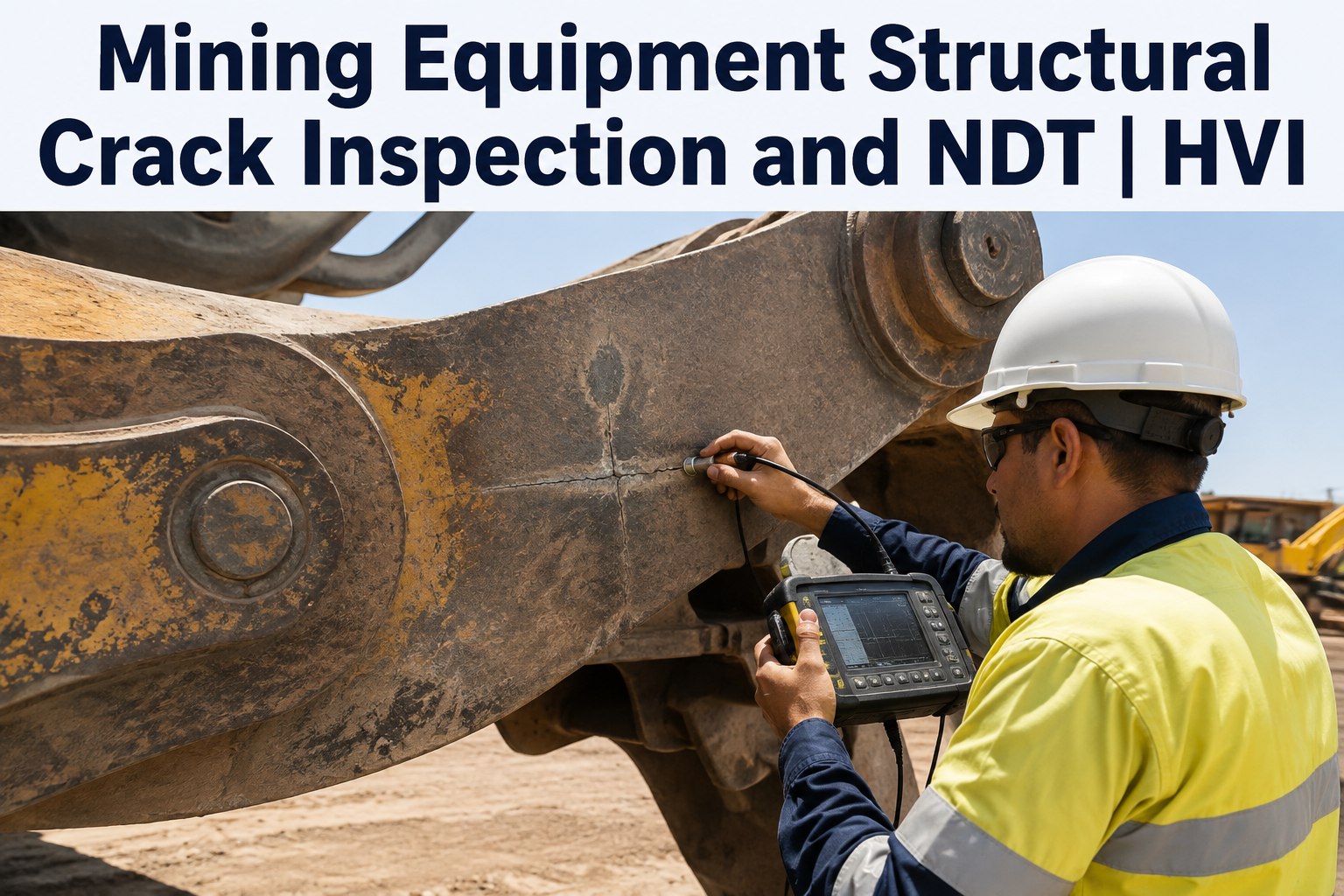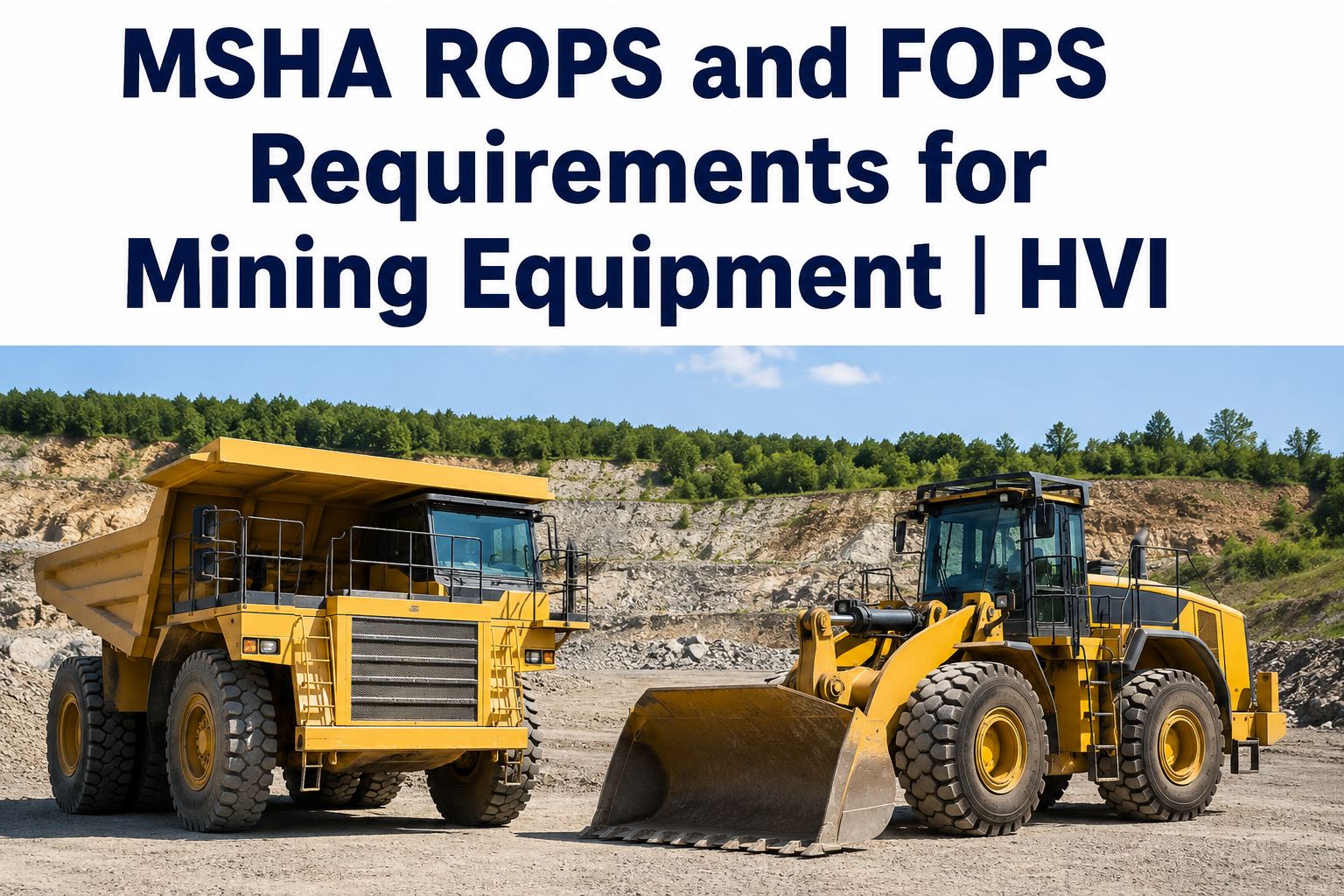
That drilled hole in the ROPS for a light bracket? It just voided the certification on a 40-ton haul truck. Roll-over and falling-object protective structures are the components most quietly compromised on mining equipment, because the damage is rarely spectacular. A cracked weld, a mounting hole, a bent cross-member from a low-speed tip, a patch plate welded in the field. None of it looks like an emergency, but visible cracking or compromised welds means immediate tag-out, not a repair plan. If you want to see how this plays out on a live fleet, walk through a real inspection workflow on your own units.
MSHA Structural Compliance
Is that ROPS still certified, or just standing?
Protective structures only work if the metal, the welds and the mounting stay exactly as the manufacturer built them. Any modification, no matter how small, can turn a life-saving cage into a liability during a roll-over.
ROPS
Roll-Over Protective Structure
A cab or frame engineered to absorb the kinetic energy of a machine rolling over, creating a survival space for the operator. It must be rated to the machine's gross vehicle mass and tested to absorb impact without collapsing inward.
FOPS
Falling-Object Protective Structure
A reinforced roof grid designed to deflect falling rocks, debris and material from entering the operator cabin. It is tested by dropping a specific weight from a calculated height to prove the cab isn't crushed.
MODIFICATION RISK
How a $5 bracket destroys ROPS certification mining compliance
The most common certification failure isn't a roll-over. It's an operator or mechanic drilling a hole to mount a phone holder, a beacon, or a temporary work light.
The accessory mount
A mechanic drills a 10mm hole into the ROPS pillar to mount a rotating beacon. The metal shavings fall inside the hollow tube, never to be seen again.
The structural breach
That hole creates a stress riser. The ROPS was heat-treated and tested as a complete tube. Breaching the wall alters how energy travels through the steel during a roll-over event.
The voided rating
Manufacturer documentation states any unauthorised modification voids the certification. The structure is no longer legally a ROPS. It is just metal.
The audit failure
During an MSHA inspection or accident investigation, the hole is found. The operator was not protected by a certified structure. Liability shifts entirely to the fleet.
COMPLIANCE MAPPING
What MSHA expects vs what the jobsite actually does
If you cannot prove the structural integrity of a cab protection mining asset, you cannot dispatch it. Here is the gap between the rulebook and the yard.
| MSHA Requirement | Standard Jobsite Reality | Risk if Unchecked |
|---|---|---|
| Structures remain intact and structurally sound | Hairline cracks painted over during standard servicing | Catastrophic cab collapse during a roll-over event |
| No unauthorised welding or drilling | Mounting brackets added over years without documentation | Immediate voiding of manufacturer certification |
| Repairs through authorised facilities only | Field welding by site mechanics to save transport time | Unrated repair fails under load, endangering the operator |
| Seat belts worn whenever the machine moves | Operators rely on the structure alone, ignoring restraint | Operator thrown from the protective survival zone entirely |
| Documentation held per asset proving certification | Paper records lost in a binder or left at a different shop | Failed audit, immediate out-of-service order for the unit |
When an inspector asks for proof, a mechanic pointing at the cab and saying "it looks fine" is not a defense. You need a system that ties structural certifications directly to the asset record so the proof is available in seconds.
Stop guessing about cab protection mining compliance
See how HVI flags a cracked ROPS on the walk-around, blocks the dispatch, and routes the work order to the shop automatically.
REPAIR PATHWAY
Why ROPS repair certification requires an authorised facility
When a structure is damaged, the pathway back to service is not a grinder and a welder in the back of the maintenance bay. It is a controlled process.
1. Immediate Tag-Out
Visible cracking, compromised welds, or bent structural members mean the machine is locked out immediately. The key goes in the lockbox.
2. Document the Defect
Photos of the damage, location, and extent are captured on a mobile device. This becomes the baseline record for the repair authorisation.
3. Transport to Authorised Facility
The machine is moved to a facility with the engineering capability to perform structural repairs. Field welding on ROPS components is prohibited.
4. Structural Repair and Recertification
The facility repairs the damage according to manufacturer specs, then performs the required testing to prove the structure meets original energy-absorption ratings.
5. Updated Record and Return to Service
The new certification document is attached to the asset file. The lockout is cleared, and the machine is cleared for dispatch.
Photo-backed walk-around checks
ROPS and FOPS checks sit inside the daily walk-around. Operators must capture a photo of the structural members to pass the inspection, ending pencil-whipped forms.
Critical defects block dispatch
If a critical structural defect is logged, HVI automatically blocks the machine from being dispatched until the shop clears the work order.
Certification documents held per asset
Original ROPS certification documents, repair records, and recertification proofs are stored against the specific asset profile. Hand an inspector the file in seconds.
Instant defect-to-work-order
A flagged ROPS defect converts instantly into a work order routed to the maintenance shop, with priority tagging for structural and safety items.
DO
- Tag out the machine immediately if you see visible cracking or compromised welds.
- Keep a copy of the original manufacturer ROPS certification with the asset file.
- Route structural repairs through authorised facilities with recertification testing.
- Enforce seat belt use every time the machine moves, not just on public roads.
- Photograph structural members during the pre-shift walk-around.
DON'T
- Drill holes into the ROPS frame to mount accessories, lights, or brackets.
- Field weld a cracked ROPS pillar to "get through the shift."
- Paint over rust or hairline cracks to make the cab look presentable.
- Assume the operator is safe just because the cab looks intact.
- Let a machine run without documentation proving its structural rating.
Protective structure integrity is a daily decision
MSHA ROPS and FOPS requirements for mining equipment are not a once-a-year paperwork exercise. Structural protection integrity is decided every time an operator walks up to the machine, every time a mechanic considers a shortcut, and every time a manager signs off on a dispatch. A roll-over protective structure only works if the metal is untouched, the welds are factory-original, the seat belt is worn, and the documentation is instantly available. If you want to start logging structural inspections free today, the setup takes minutes. The cost of a compromised structure is measured in operator safety, and that is a bill no fleet can afford to pay.
"I caught a guy welding a bracket for a strobe light onto the ROPS of a haul truck. He thought he was doing us a favor. That one weld voided the certification, and we had to send the whole cab out for recertification. Three weeks of downtime for a five-minute favor."
Frequently asked questions about ROPS and FOPS
What triggers an immediate tag-out for ROPS mining equipment?
Can I weld a bracket onto a ROPS frame to mount a beacon or camera?
How is ROPS repair certification handled?
Why does the seat belt matter if the machine has a ROPS?
How should I document FOPS inspection for mine compliance?
See HVI running on your own fleet
Book a 30-minute demo and we will show you exactly how ROPS and FOPS checks, defect blocking, and certification records work on your machines.
Free to start - Works on any phone - No card needed