A 200-ton haul truck reversing into an active dump point creates one of the most dangerous environments on earth. The operator cannot see what is directly behind them, meaning ground crews rely entirely on audible warnings to avoid fatal struck-by accidents. Understanding and enforcing backup alarm requirements mining operations must follow is not just a regulatory hurdle—it's a matter of life and death. According to NIOSH, nearly half of all powered haulage fatalities involve reversing equipment. When background noise drowns out a weak horn, or an operator pencil-whips a pre-shift inspection on a broken alarm, disaster follows. Book a demo to see how digital DVIRs force operators to verify alarm functionality before every shift
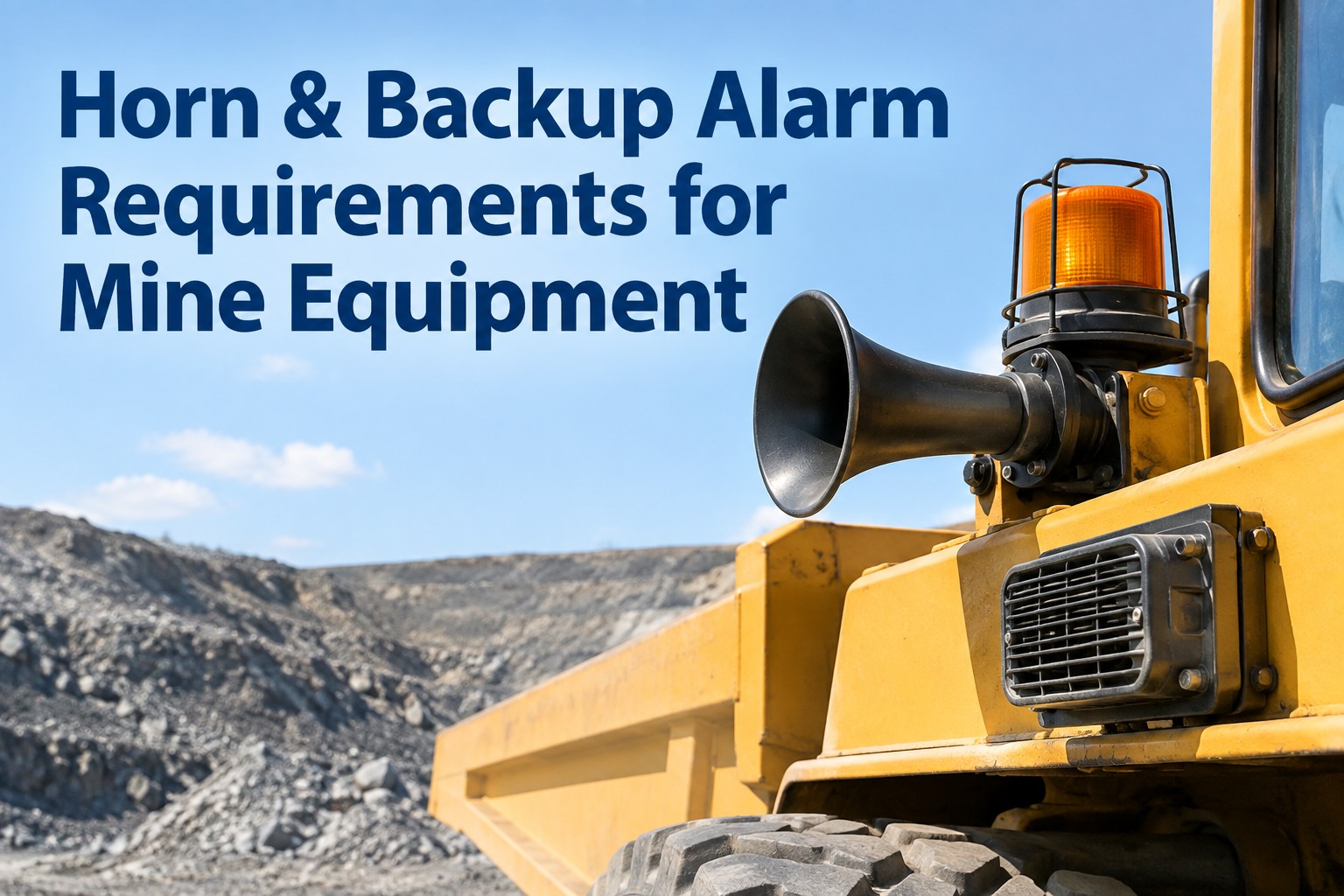
Horn & Backup Alarm Requirements for Mine Equipment
Ambient noise in a pit can exceed 100 decibels. Learn the exact MSHA compliance rules for heavy equipment horns, reverse alarms, decibel testing, and digital inspection tracking.
Decoding MSHA 30 CFR § 56.14132
MSHA regulations explicitly state that all manually operated horns and automatic backup alarms on mobile equipment must be functional and audible above the surrounding ambient noise level. A backup alarm that sounds loud in a quiet maintenance bay may be completely inaudible next to an active rock crusher.
1. Automatic Reverse Activation
Backup alarms must trigger automatically the moment the equipment's transmission is shifted into reverse. Manual activation by the operator is not acceptable for reverse alarms. If the switch connecting the transmission to the alarm fails, the equipment is immediately out of compliance.
2. Ambient Noise Penetration
The tone and volume of the alarm must be distinguishable from the typical background noise of the specific jobsite. Many modern mining operations now utilize "broadband" or "white noise" backup alarms (which emit a shhh-shhh sound) because they are highly directional and cut through heavy machinery rumble better than traditional tonal beepers.
3. Forward Warning Horns
In addition to automatic reverse alarms, mobile mining equipment must be equipped with a manually operable horn. This is critical for signaling intentions at intersections, warning ground crews during forward movement, and adhering to standard mine traffic communication rules.
Failing to document horn checks is a guaranteed MSHA citation. Sign up to deploy digital safety checklists to your entire fleet instantly
The Danger of "Alarm Habituation"
One of the greatest safety risks on a mine site is "alarm habituation." When workers constantly hear high-pitched tonal backup alarms echoing off pit walls from machines that are hundreds of yards away, their brains begin to tune the sound out. This means when a loader reverses directly behind them, they may not register the warning.
To combat this, fleet managers must ensure alarms are properly calibrated. Smart backup alarms dynamically adjust their volume—typically staying 5 to 10 decibels above the ambient noise level. This ensures the alarm is always loud enough to be safe, but not so consistently deafening that workers ignore it. Routine preventive maintenance must include testing these auto-adjusting sensors. Utilizing a connected software platform allows managers to track and fix productivity issues with daily operator reporting on work hours, machine usages, and DVIR defect logs[cite: 1].
Pre-Shift DVIRs: Paper vs. Digital Compliance
MSHA requires that mobile equipment be inspected for safety defects before being placed in operation. Because horns and backup alarms are electrical components exposed to extreme vibration, mud, and water, they fail frequently. Tracking these failures on paper creates a massive liability loop.
The Liability of Paper Inspections
- Drivers routinely check "Horn - OK" without physically testing the button to save time.
- When an alarm does fail, the paper report sits in a cab clipboard until the end of the shift, meaning the truck operates unsafely all day.
- During an MSHA audit or accident investigation, locating historical paper records for a specific truck's audio warnings is nearly impossible.
HVI Digital Safety Platform
- Operators submit signed PDF inspection reports with details on each item, preventing skipped steps[cite: 1].
- If an alarm fails, managers can generate a one-click Work-Order from the inspection report to dispatch a mechanic immediately[cite: 1].
- Reduces administration efforts to maintain machines and compliance data with no paper printing, ensuring perfect audit readiness[cite: 1].
Book a Demo to explore how automated defect routing keeps your haul trucks compliant
Maintaining Backup Alarms & Horns
Warning devices are subjected to brutal conditions. Mud buildup over a speaker grate can muffle a 110-decibel alarm down to a whisper. High-pressure washing can force water into electrical housings, causing shorts. Preventive maintenance is essential.
With a robust maintenance system, fleets can reduce annual maintenance costs by 25% using well-planned PM schedules that trigger alerts to clean alarm housings, check wiring harnesses, and verify reverse-switch linkages[cite: 1]. A broken wire on a backup alarm is a simple, five-dollar fix that prevents a multi-million-dollar fatality and severe MSHA fines.
Conclusion: Make Every Reverse Safe
Meeting backup alarm requirements mining operations depend on is non-negotiable. The moment a heavy machine shifts into reverse, its presence must be immediately known to everyone in the vicinity. Relying on outdated paper systems leaves a massive gap in accountability, increasing the risk of equipment operating with dead horns or muffled alarms.
Transitioning to digital fleet management ensures that pre-shift DVIRs are thorough, defects are instantly routed to maintenance, and your safety documentation is always audit-ready. Sign up for a free trial today to standardize your heavy equipment warning device inspections and build a safer, more compliant mine site.