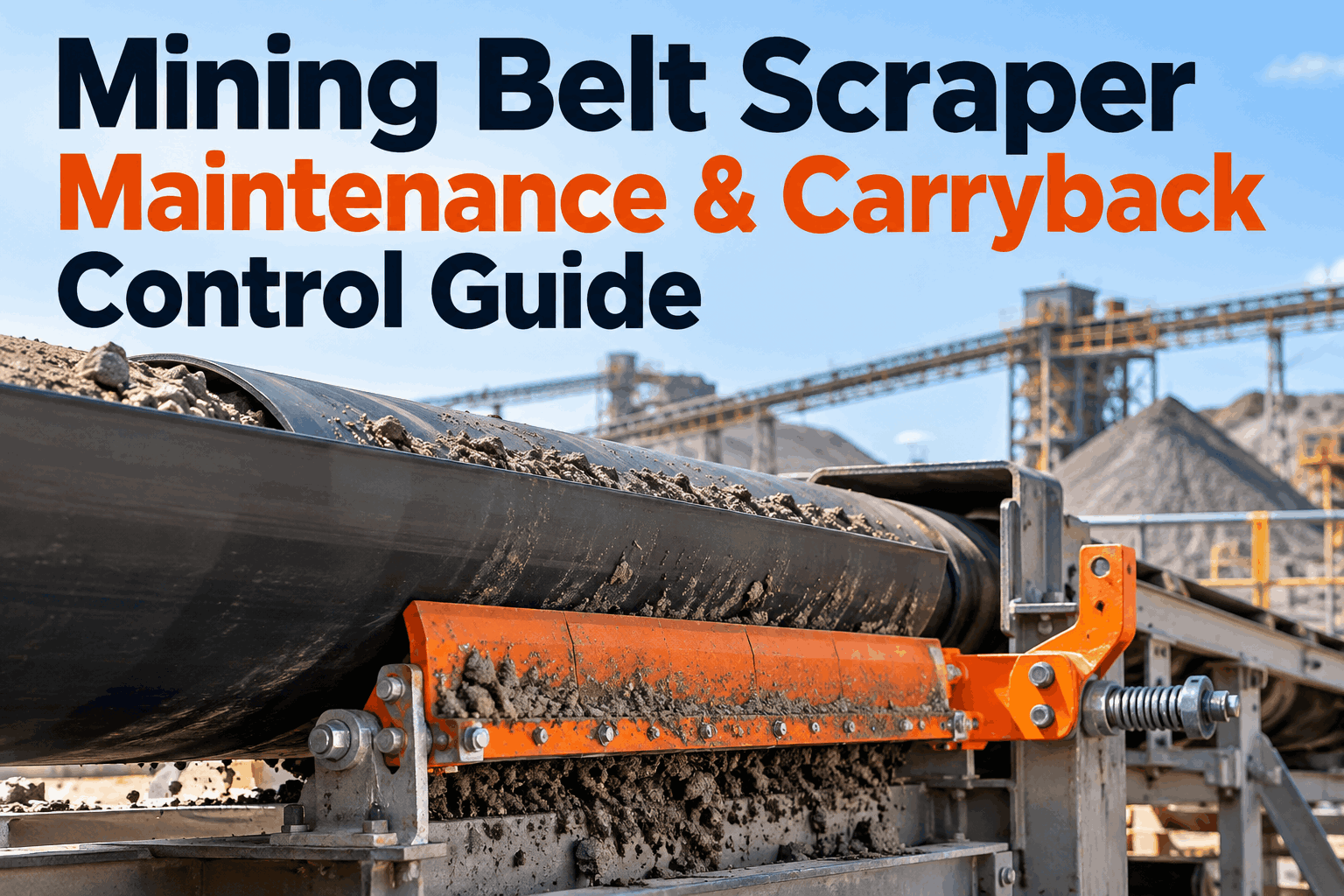
Belt scraper maintenance is one of the simplest ways to control conveyor carryback before it becomes a cleanup, reliability and downtime problem. In mining and mineral processing plants, cleaner performance depends on more than replacing a worn blade: maintenance teams need to inspect blade condition, contact, tension, alignment, mounting hardware and the belt surface as one system. A repeatable inspection process makes it easier to spot declining cleaning performance early and plan corrective work before buildup spreads along the return side.
Stop carryback at the cleaning point—not under the conveyor
Build belt scraper maintenance around blade wear, correct contact, tension, alignment and repeatable inspection records.
Carryback is often the symptom—not the root problem
Material remaining on the belt after discharge can travel onto the return run, accumulate around conveyor structures and increase housekeeping demand. When carryback suddenly increases, simply tightening the cleaner may not solve it. Blade wear, uneven contact, seized tensioning components, poor alignment, damaged mounts or changing material conditions can all reduce cleaning performance.
The cleaning edge loses effective contact or develops an uneven wear profile.
Sections of the blade may no longer maintain the intended relationship with the belt.
More fines and sticky material remain attached after the cleaning point.
Buildup appears along the return side and creates additional cleanup and maintenance work.
Record where buildup begins, inspect the cleaner system and determine why material is getting past the cleaning point.
Maintain each cleaner for the job it is doing
Primary and secondary cleaners work at different positions and typically deal with different parts of the cleaning load. Maintenance records should identify the individual cleaner rather than treating the entire cleaning station as one generic component.
Primary belt cleaner
Positioned at the discharge area to remove the bulk of material adhering to the belt.
CLEANING
Secondary belt cleaner
Provides additional cleaning on the return side to remove material remaining after the primary cleaner.
A digital inspection template can keep the checks for each cleaner position consistent across conveyors and shifts. With HVI, fixed-plant teams can build asset-specific inspection checklists and route findings into maintenance work instead of relying on handwritten inspection notes.
Blade wear patterns can point you toward the next inspection
Do not record only “worn” or “good.” The shape and location of wear can help maintenance teams decide what else needs to be checked before another blade is installed.
Wear is relatively consistent across the working edge.
One portion of the cleaner is wearing faster than the other.
A smaller section shows accelerated wear or loss of cleaning edge.
The working edge is no longer continuous or shows physical damage.
Isolate before inspecting, adjusting or replacing
Conveyor cleaners sit around moving belts, pulleys and other hazardous components. Follow the site's approved isolation procedure and the equipment manufacturer's instructions before hands-on maintenance. For U.S. mine operations, MSHA guidance emphasizes de-energizing electrical power, locking and tagging the main disconnect, verifying that power is removed and blocking equipment against hazardous motion.
Site procedures, manufacturer instructions and applicable regulations take precedence. Do not use a maintenance checklist as a substitute for an approved isolation procedure.
Inspect the cleaning system—not just the replaceable blade
A useful belt scraper inspection should capture conditions that explain cleaning performance. The checklist below can be adapted to cleaner design, conveyor duty and manufacturer requirements.
Wear profile, remaining usable material, chips, cracks or damaged segments.
Wear limit is reached or damage affects cleaning.Consistent contact at the intended cleaning position across the belt.
Gaps or irregular contact allow material to pass.Tensioner condition and setting according to cleaner manufacturer guidance.
Tension cannot be maintained or mechanism is seized.Cleaner position and blade relationship to the belt and pulley.
Misalignment is producing uneven wear or poor cleaning.Frames, brackets, fasteners and supports for looseness, damage or corrosion.
Movement or structural damage affects cleaner position.Material accumulation around the cleaner, chute and nearby structure.
Buildup interferes with cleaner movement or indicates worsening carryback.Surface damage, splices or irregularities affecting cleaner contact.
The belt condition is damaging the cleaner or preventing stable contact.Make the record useful: capture the cleaner position, blade condition, observed carryback, corrective action and replacement date against the conveyor asset. That gives the next technician more than a simple pass/fail result.
Use the pattern to decide where to look next
When cleaning performance deteriorates, record the symptom before making adjustments. A consistent troubleshooting record can reveal whether the same cleaner, component or operating condition keeps returning.
Overall blade wear, tension, cleaner position and material conditions.
Inspect the complete cleaner setup before increasing tension.Uneven blade wear, cleaner alignment and belt condition.
Correct the cause of uneven contact before replacing parts.Tensioner movement, fasteners, mounting stability and buildup.
Check whether the cleaner is losing its setting during operation.Contact pressure, belt surface, installation position and operating duty.
Compare replacement history before treating it as normal wear.The important step is to preserve the finding. HVI's maintenance management workflow can keep inspection findings, work orders and maintenance history connected so recurring cleaner problems are easier to review.
Set the interval from operating conditions—not a universal number
There is no single inspection interval that fits every mining conveyor. Cleaner design, belt speed, operating hours, material abrasiveness, moisture, tonnage and previous failure history all influence how quickly cleaning performance changes. Follow the cleaner manufacturer's requirements and site maintenance strategy, then tighten the interval where inspection history shows faster deterioration.
Look for abnormal carryback, buildup or a visible change in cleaning effectiveness from a safe observation point.
Under approved isolation, check blade condition, tensioning system, mounting, alignment and surrounding structure.
Document adjustments, damaged components or blade replacement before the finding disappears into shift notes.
Use repeated findings and replacement history to decide whether inspection frequency needs to change.
HVI preventive maintenance schedules can help maintenance teams place recurring cleaner inspections into the same planned maintenance system used for other mining assets. See the maintenance workflow in an HVI demo.
Track the cleaner as a maintainable component
The maintenance value increases when each inspection adds to the conveyor's history. Instead of knowing only that a blade was replaced, teams can see what condition triggered the change and whether the same problem is repeating.
Blade, tension, alignment, buildup and belt condition.
Document abnormal wear or poor cleaning performance.
Create work for adjustment, repair or blade replacement.
Review recurring findings and replacement history.
- Previous inspection findings
- Adjustment history
- Blade replacement dates
- Recurring carryback observations
Standardize what technicians inspect and what happens next
Record the conveyor, cleaner stage, design and maintainable components.
Include blade condition, tension, alignment, hardware, buildup and belt condition.
Use manufacturer limits and site criteria for adjustment, repair and replacement.
Convert defects into maintenance work and document what was corrected.
Find cleaners with recurring carryback, adjustment or premature wear.
This is where belt cleaner maintenance becomes part of conveyor reliability rather than a repeated cleanup response. HVI can provide one record for the inspection, maintenance action and subsequent history across fixed-plant assets.
Belt scraper maintenance FAQs
What should be included in a belt scraper maintenance checklist?
A belt scraper maintenance checklist should cover blade wear and damage, blade-to-belt contact, cleaner tension, alignment, mounting hardware, fasteners, corrosion, material buildup, belt condition and the surrounding conveyor structure. Record corrective actions and blade replacements against the conveyor or cleaner asset so recurring problems can be identified.
How often should mining belt scrapers be inspected?
Inspection frequency should follow the cleaner manufacturer's guidance and the mine's maintenance strategy. Operating hours, material characteristics, moisture, abrasiveness, belt speed, tonnage and previous wear history can all affect the appropriate interval. Routine observation can identify changing carryback, while hands-on inspection should be performed under the site's approved isolation procedure.
What causes excessive conveyor carryback?
Carryback can increase when cleaner blades are worn or damaged, blade contact becomes uneven, tension is incorrect, tensioners or mounts are not functioning correctly, the cleaner is misaligned, buildup interferes with movement or material and belt conditions change. Troubleshooting should inspect the complete cleaning system rather than assuming every carryback problem requires more blade tension.
When should a conveyor belt cleaner blade be replaced?
Replace a cleaner blade according to the manufacturer's wear limits and site maintenance criteria. Replacement may also be necessary when physical damage prevents effective cleaning. Before installing a new blade, inspect alignment, tensioning components, mounting condition and the belt surface so an underlying problem does not shorten the life of the replacement.
How can HVI help manage mining conveyor belt cleaner maintenance?
HVI can help mining maintenance teams create digital inspection checklists, schedule preventive maintenance, document scraper defects, create maintenance work orders and retain asset-level maintenance history. This gives teams a consistent record of inspections, adjustments, blade replacements and recurring carryback findings across fixed conveyor systems.
Make every scraper inspection part of the maintenance record
Standardize conveyor inspections, schedule recurring maintenance, turn defects into work orders and build cleaner replacement history without adding another spreadsheet to the plant.
Carryback concentrated on drive side.
Corrective work documented.
Available for the next inspection.