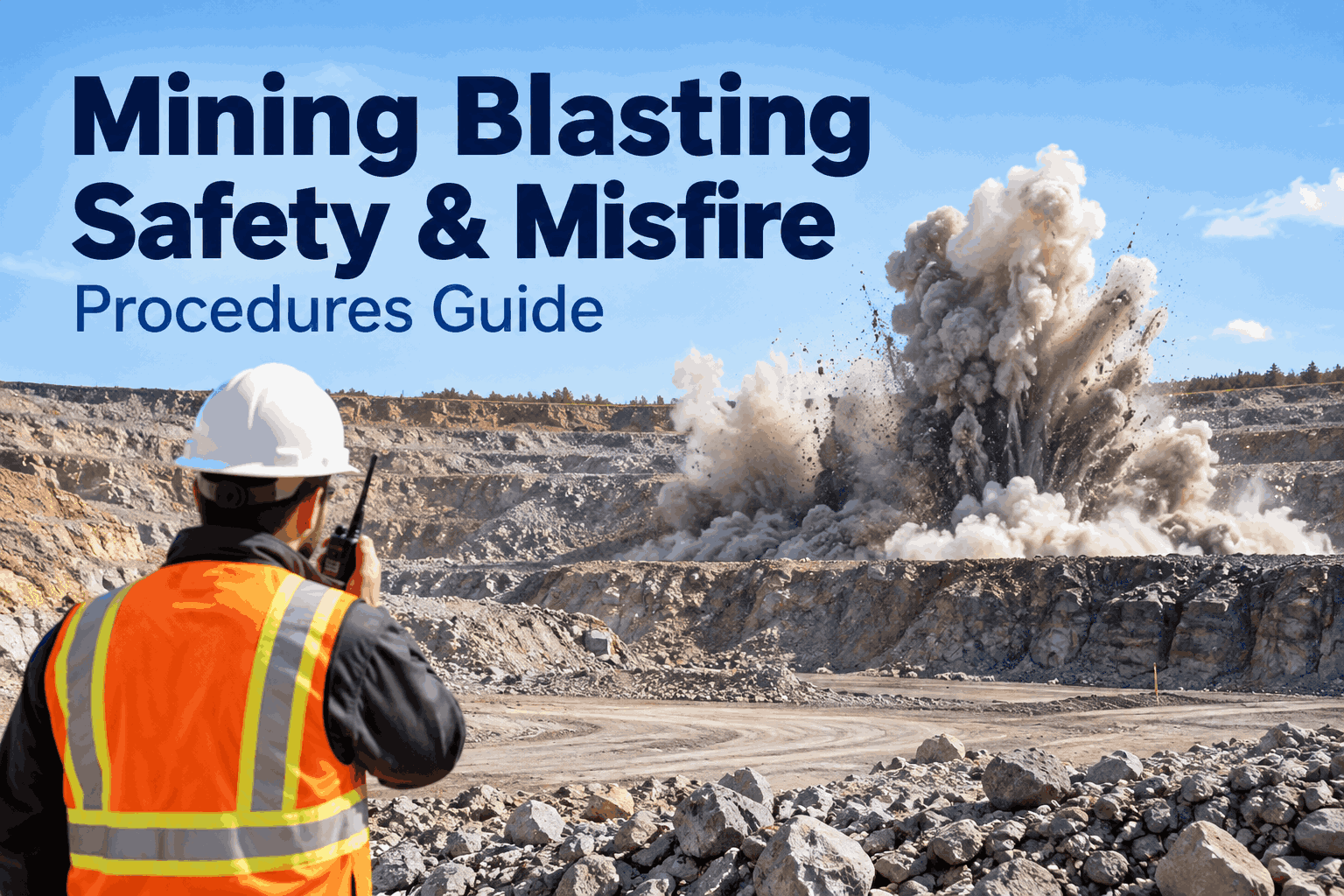
Blasting safety depends on controlled access, clear communication, disciplined blast-area clearance and a documented decision about when work can safely resume. At U.S. metal and nonmetal mines, MSHA requirements address blast-site security, warnings, suspected misfires, post-blast examinations and restrictions on work around unresolved misfires. A strong mine process turns those requirements into repeatable field controls and retrievable safety records.
Control the blast area from clearance to release.
A blast does not end when the shot fires. Personnel and equipment clearance, access control, warning procedures, post-blast examination and misfire response all affect when the area can return to normal operations.
Three MSHA controls shape the blast-to-release process
For metal and nonmetal mines, mining blasting safety can be organized around three connected controls: securing and clearing the blast area, applying the required response when a misfire is suspected, and restricting activity while a misfire remains unresolved. Mine operators should apply the specific Part 56 or Part 57 requirements relevant to their operation.
Loading, blasting & security
Blast sites must be protected against unauthorized entry when explosive materials or initiating systems are present. Before firing, warning and evacuation controls must be completed and access routes to the blast area guarded or barricaded against unauthorized passage.
Suspected misfire waiting period
A suspected misfire begins a no-entry period. The applicable waiting time depends on the initiation system, so a site procedure should identify the system used rather than applying one generic waiting period to every blast.
Handling blasting misfires
Faces and muck piles must be examined for misfires after blasting. Until a misfire is safely disposed of, work in the affected area is restricted to activity necessary to remove the misfire and protect miners performing that work.
Think in boundaries before thinking about firing.
Equipment clearance is more than moving a machine away from the shot. The process should identify the blast site, controlled area, affected access routes, personnel status and equipment status before the firing sequence proceeds.
HVI can help safety teams document clearance checks, responsible personnel, timestamps, exceptions and supporting evidence. See how digital mine safety inspections work.
Seven controlled gates from site security to return to work
A useful blasting safety workflow separates preparation, firing and post-blast release. That distinction prevents “the shot fired” from being treated as “the area is ready for normal operations.”
Secure
Protect the blast site against unauthorized entry while explosive materials or initiating systems are present.
BLAST-SITE CONTROLEvacuate
Confirm personnel and affected equipment are clear according to the mine's blast controls.
PEOPLE & EQUIPMENTCommunicate
Give ample warning, verify evacuation and maintain access controls before firing.
WARNING CONFIRMEDBlast
Complete the controlled firing operation. The firing event itself does not automatically authorize re-entry or normal work.
Restrict entry
Maintain blast-area controls while the required post-blast process is completed.
AREA REMAINS RESTRICTEDPost-blast check
Examine the affected area for potential blast-related hazards and evidence of a misfire.
QUALIFIED EXAMINATIONResume work
Release the area after the required examination and resolution of conditions preventing safe return.
RETURN TO OPERATIONSA suspected misfire interrupts the normal sequence.
Misfire response is deliberately separated from the normal blast flow. A suspected misfire changes access to the blast area and requires the applicable waiting period and restricted-area controls.
No entry during the applicable waiting period.
Apply the requirement for the initiation system used.
30 minutes or the manufacturer-recommended period, whichever is longer.
The end of the waiting period is not automatic clearance. If a misfire exists, the affected area remains controlled until the condition is safely resolved under the applicable procedure.
Four controls after a misfire is identified
Misfire management needs a clear record of the condition, restrictions placed on the area, notifications made and final resolution. These checkpoints help prevent an unresolved event from disappearing between shifts.
Examine
Examine faces and muck piles for evidence of misfires following blasting operations.
Restrict work
Limit work in the affected area to activity necessary to remove the misfire and protect miners performing that work.
Post approaches
If the misfire cannot be safely disposed of, conspicuously post approaches to the affected area to prohibit entry.
Report & document
Record the condition, required notification, access restrictions, corrective action and final resolution.
The blasting team controls the operation. HVI organizes the safety record.
HVI can support mine safety teams with configurable digital inspections, documented findings, photos, timestamps, corrective actions and retrievable compliance records. The platform supports the documentation workflow; it does not replace qualified blasting personnel, the mine's procedures or applicable MSHA requirements.
A controlled blasting process should leave a retrievable trail
The field procedure controls the operation. The digital record supports review afterward. Keeping the two connected helps safety teams determine what checks occurred, who completed them, what exceptions were found and how unusual conditions were resolved.
Blast-area clearance
Date · time · responsible person · exceptions
Documents completion of the site's clearance process.
Equipment clearance
Equipment · affected area · confirmation
Connects equipment movement to the blast event.
Warning & access
Warning confirmation · controlled routes
Preserves an operational control checkpoint.
Post-blast examination
Examiner · time · findings · area state
Separates blast completion from return to work.
Misfire event
Detection · restriction · notification · resolution
Maintains the corrective-action trail when the normal blast sequence is interrupted.
HVI's digital safety workflows can keep inspection findings, supporting evidence and corrective-action records together instead of scattering them across paper forms and disconnected files. Explore HVI Safety Management.
“Blast complete” is not the same as “area released.”
Before normal work resumes, the applicable post-blast examination must address potential blast-related hazards. If a misfire or another condition prevents safe return, the area remains controlled until that condition is handled under the appropriate procedure.
See how HVI records post-blast safety checks →Build the record around the actual blast lifecycle
A useful blasting safety checklist should follow the operation instead of collecting unrelated yes/no questions. Separate pre-blast controls from post-blast examination and exception handling so the record shows exactly where the operation stands.
Mining Blasting Safety FAQs
What does MSHA require before a blast is fired?
What is the MSHA waiting period for a suspected blasting misfire?
Does the end of a misfire waiting period mean the blast area can reopen?
Is a post-blast examination required before work resumes?
How can HVI support mining blasting safety documentation?
Make every blast leave a clear safety record.
Effective blasting safety depends on the correct procedure being followed in the field. HVI helps mining teams standardize safety checks, document hazards and corrective actions, and keep operational safety records available across sites.