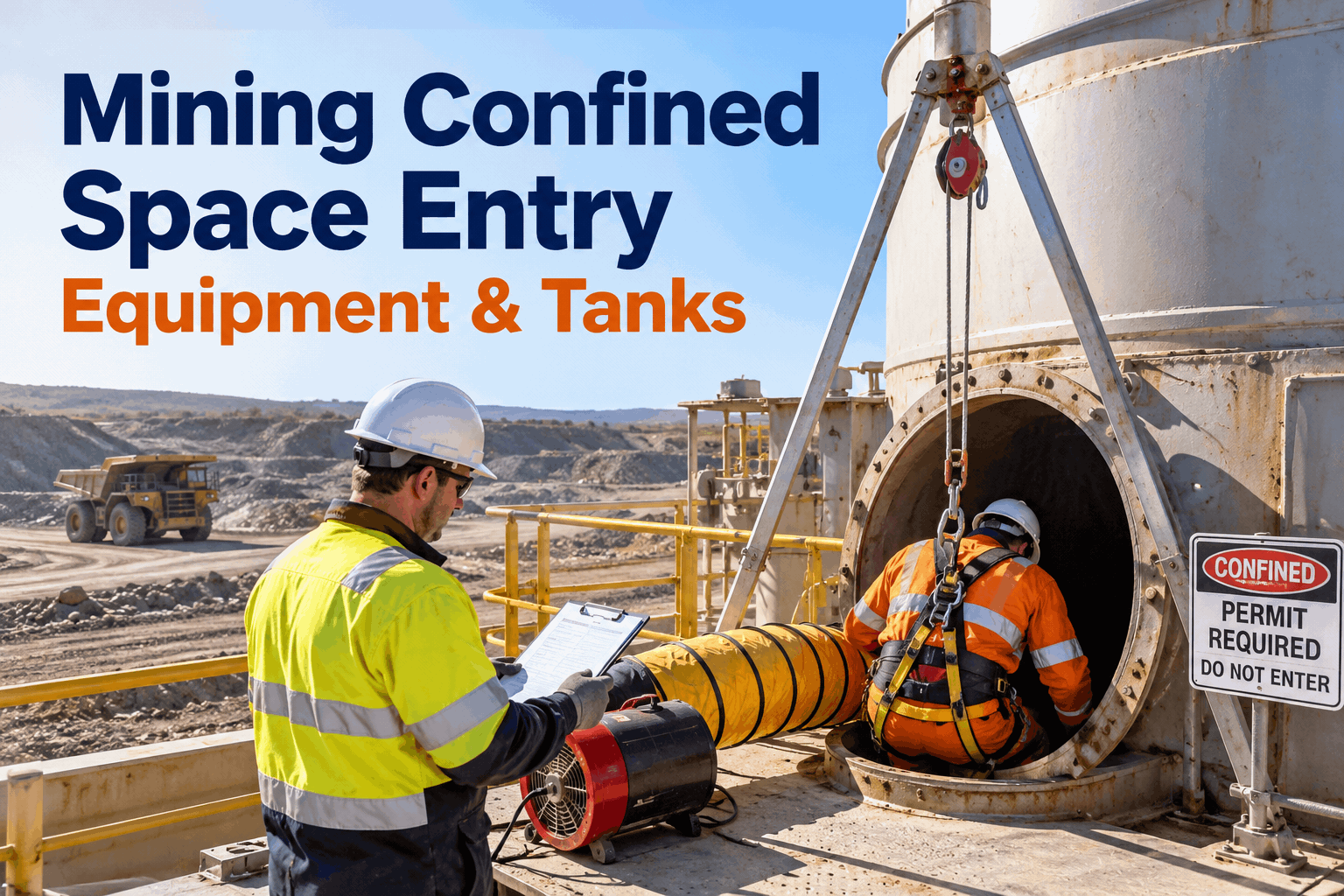
Confined space entry in mining is the one job where the space doesn't give you a second mistake. A bin, a tank, a chute, a baghouse hopper — step inside without testing the air, isolating the energy, and posting an attendant, and a routine clean-out becomes a fatality. MSHA has flagged exactly these entries as a repeat killer in metal and nonmetal mines. Book a confined-space entry demo to see the permit run as a gate, not a form.
Confined Space Entry in Mining: Five Gates Between a Clean-Out and a Fatality
Every control is a gate the entry has to pass through, in order. Skip one and the space takes the chance you gave it. Here's the sequence that keeps a miner coming back out.
- Classified as permit-required
- Energy isolated & locked out
- Air test — O₂ 18.6%, below limit
- Attendant & rescue plan
- Permit signed by supervisor
A confined space isn't defined by how tight it is — it's a space big enough to enter, not built for people to work in, with limited ways out. On a mine site that's a long list: material bins and hoppers, silos, process tanks, transfer chutes, baghouses. What they share is that the thing that makes them useful — they hold or move material — is also what kills the person inside. This page walks the spaces, the three ways they do it, the permit sequence that stops them, and how HVI turns that sequence into a gate nobody can skip.
Where it hidesthe confined spaces on a mine site, and what each one hides
Every one of these gets entered for cleaning, unblocking, repair, or inspection — and every one has a specific way it hurts the person who climbs in. Know the space, and you know what the permit has to defend against.
Bridged or hung-up material can collapse without warning — engulfment is the headline risk.
Flowing material behaves like quicksand; a crust over a void gives way the moment weight lands on it.
Residues give off vapors and eat oxygen; a tanker-railcar clean-out has killed on exactly this.
Belts, feeders, and gates above can start without warning unless energy is locked out first.
Dust, heat, and auger motion combine; a maintenance entry here has left a miner badly burned.
None of these is a "quick look inside" job, however routine it feels on a busy shift. Each one needs the same disciplined entry, and each entry needs a record that it was done right. HVI's safety management keeps every space's entry history in one place instead of a binder in the crib room. Book a demo of entry-permit tracking to see it per space.
The three killerswhat actually takes a miner down inside a confined space
Confined space deaths almost always trace to one of three hazards — and each has a control that has to be proven done before anyone enters, not assumed. Miss the control and the hazard is silent right up until it isn't.
Engulfment
Stored or flowing material buries the entrant — bins, silos, surge piles. Seconds, not minutes.
Bad atmosphere
Low oxygen, flammable vapor, or toxic gas — invisible, and it drops a person before they can climb out.
Stored energy
A feeder, auger, gate, or belt starts while someone's inside — mechanical, electrical, or hydraulic.
Notice the pattern: every control is something you do and record outside the space before entry. That record is the difference between a near-miss nobody logged and a program an MSHA inspector can see working. A trial of HVI's safety management, free to start, puts those control checks on one screen.
The five gatesthe confined space entry sequence, in the order it has to happen
A confined space entry permit isn't a form you fill at the end — it's five gates, each one blocking the next until it's cleared. Run them out of order, or wave one through, and the whole thing fails quietly. This is the sequence.
Classify the space
Decide if it's a permit-required confined space. If it can trap, has a hazardous atmosphere, or holds engulfment or energy risk — it is. Post "Confined Space — Do Not Enter" and treat it as one.
Isolate the energy
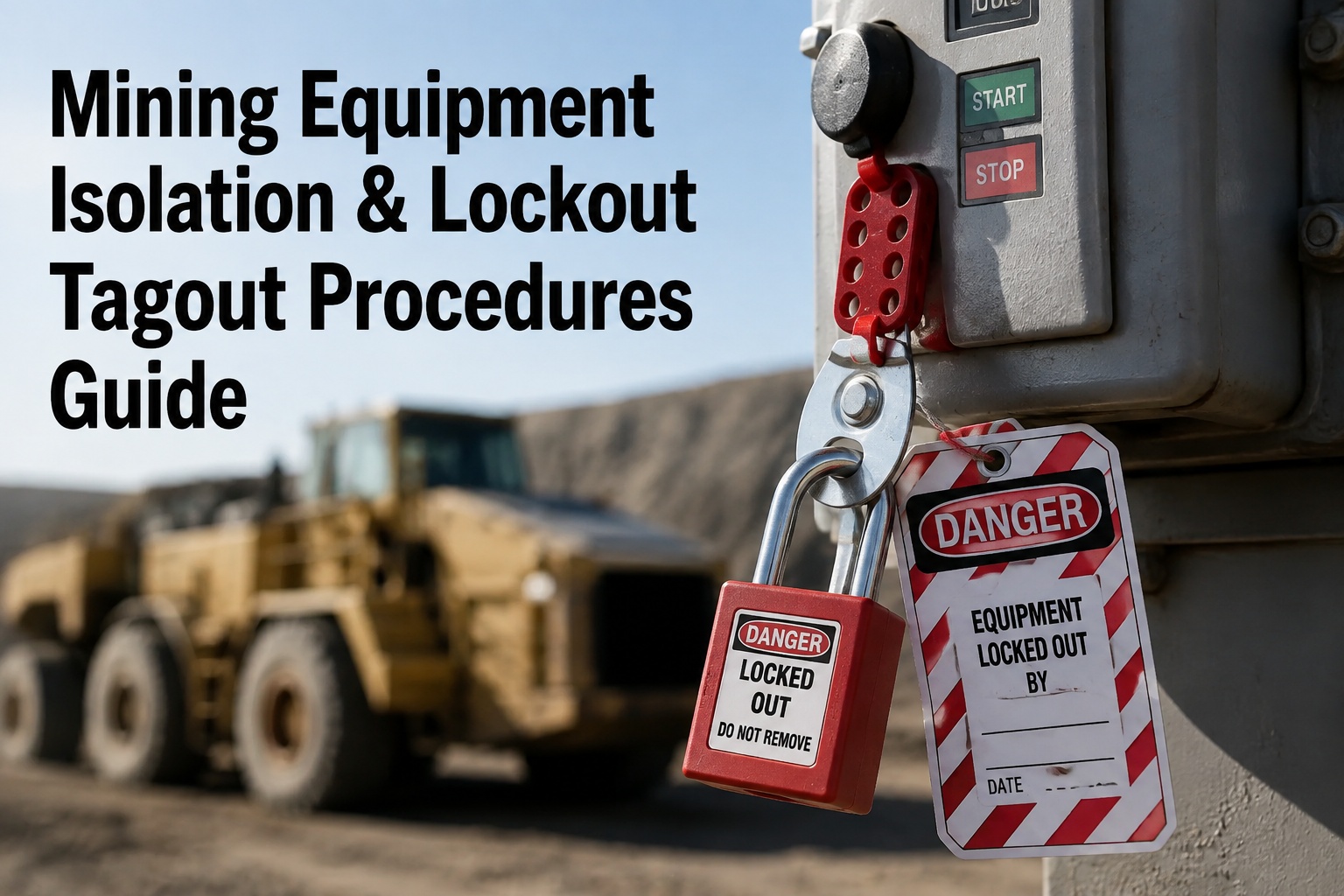
Stop and lock out material supply and discharge, and every mechanical, electrical, and hydraulic source. Verify it's at zero energy — not just switched off, proven dead.
Test the atmosphere
Test oxygen, flammables, and toxics before entry with a calibrated, bump-tested monitor, and monitor continuously while anyone's inside. Below 19.5% oxygen, nobody goes in.
Post attendant & rescue
Station an attendant who stays in contact and never enters. Have a real rescue plan with the right equipment — "call 911" is not a plan, and nobody enters to rescue blind.
Sign the permit
The entry supervisor confirms every gate is cleared and authorizes entry in writing, for a set duration. When conditions change or the time's up, the permit closes and re-entry starts over.
On paper, gate 3 can get ticked without a real reading and gate 5 signed before gate 2 is done — nobody sees the gap until something goes wrong. In HVI's digital inspection flow, a gate can't be cleared until its evidence is in, and the permit won't authorize entry with one open. Book a demo of the gated permit to see a failed gate hold the entry.
Who holds the linethe three roles a confined space entry can't run without
An entry isn't one person's job — it's three defined roles, and blurring them is how attendants wander off and entries run unsupervised. Each role has a hard boundary.
The authorized person inside. Trained for the space, wears the harness and monitor, and gets out the moment the attendant calls or the monitor alarms — no finishing "just this bit."
Stays outside, in constant contact, counting who's in. Never enters, even to help — a would-be rescuer who goes in untethered becomes the second body. Summons rescue instead.
Owns the permit. Confirms every gate is cleared, signs off entry, and shuts it down when conditions change. Accountable that the rescue plan is real before the first boot goes in.
When those assignments live on a paper permit, nobody can tell later who was attendant on a given entry — and that's the first thing asked after an incident. Logging the roles against each permit, as HVI's safety management records do, turns "someone was watching" into a name and a time. Start free and assign entry roles on your next permit.
Pre-entry confined space checklist
Before anyone enters a mining tank, bin, or chute, every item below should be checked and recorded. This is the shape of the permit — grouped by gate, each line observable, nothing assumed.
- Space confirmed permit-required and signed "Do Not Enter"
- Supply and discharge equipment stopped
- All energy sources locked and tagged out
- Zero-energy state verified, not assumed
- Monitor calibrated and bump-tested that shift
- Oxygen, flammables, and toxics tested before entry
- Oxygen reading at or above 19.5%
- Continuous monitoring set for the whole entry
- Attendant posted and in contact with entrant
- Rescue plan and equipment in place and ready
- Harness and lifeline fitted where required
- Permit signed by the entry supervisor
Run this on paper and it lives or dies on whether the clipboard made it back to the office. Run it in HVI and every ticked box is a timestamped, photo-backed record attached to that space and that permit — the proof your program works, ready before an auditor asks. Book a demo of the digital entry checklist to walk one through.
From a mine safety manager who runs the permits
The entries themselves weren't the scary part — the paperwork was. Permits filled in the crib room after the fact, a gas monitor nobody could prove was bump-tested that morning, no clean record of who was the attendant on a given clean-out. The day a silo entry got close, I couldn't answer the simplest question: who signed this and had the air actually been tested? Now the permit won't open until the monitor reads good and the roles are assigned, and every entry leaves a record I can hand straight to MSHA. The procedure didn't change. The proof that we followed it did.
Confined space entry in mining — common questions
What counts as a confined space on a mine site?
Any space large enough to enter, not designed for continuous work, with limited entry and exit — bins, hoppers, silos, tanks, surge piles, transfer chutes, and baghouses. If it can trap you, hold a bad atmosphere, or has engulfment or stored-energy risk, treat it as permit-required and run the full entry procedure.
What are the main confined space hazards in mining?
Three dominate: engulfment by stored or flowing material, a hazardous atmosphere (low oxygen, flammable vapor, or toxic gas), and stored energy from feeders, augers, or belts starting up. Each has a control — isolate and break up material, test and monitor the air, and lock out every energy source — that must be proven before entry.
Do mines need a confined space entry permit?
For permit-required spaces, yes — MSHA expects a written safe-entry procedure with a hazard assessment and a permit system covering testing, isolation, an attendant, and a rescue plan. The permit documents that each control was done before entry. A digital permit makes that record automatic and hard to skip.
What oxygen level is safe for confined space entry?
Active underground mine air must contain at least 19.5% oxygen, and that's the practical floor for any confined space entry — below it, nobody enters. Test with a calibrated, bump-tested monitor before entry and monitor continuously, since an atmosphere that tested fine can change once work starts.
How does HVI help with confined space entry?
HVI runs the entry permit as a digital, gated checklist — classify, isolate, test, attend, sign — where a gate can't clear without its evidence and the permit won't authorize entry with one open. It records atmospheric tests, monitor calibration, role assignments, and sign-offs as timestamped, auditable proof per space. It supports the program; it doesn't replace your written procedure or MSHA obligations.
Run confined space entry in mining as a permit that can't be skipped
The procedure is known. The failure is always the discipline behind it — a skipped test, an unproven lockout, a permit signed on trust. HVI makes each gate a hard stop with a record, so the safe entry is also the provable one.
Digital permit to work · Atmospheric & LOTO records · Audit-ready from day one