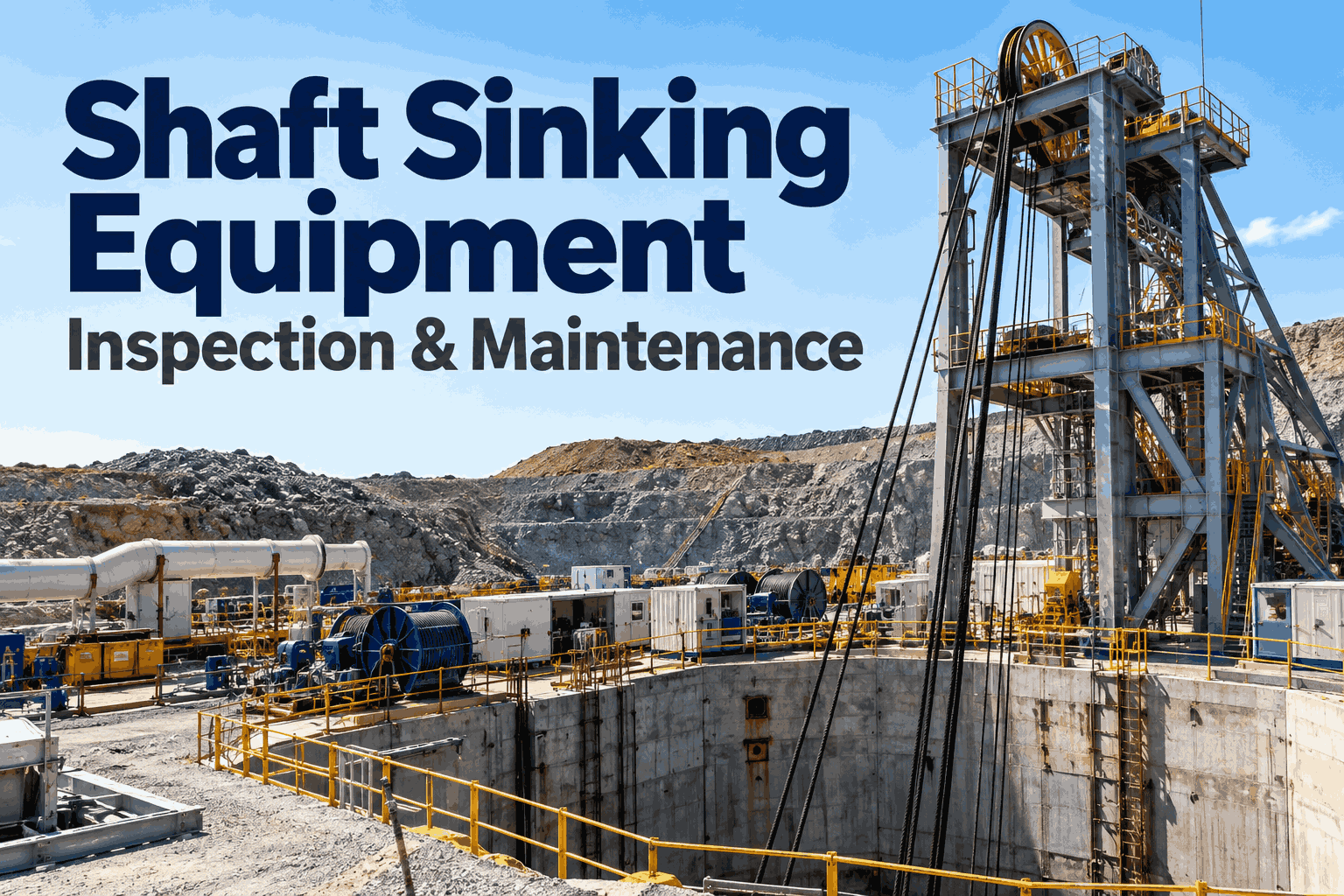
Headframe inspection is the one program on a mine site where "we'll get to it" isn't an option. The headframe is the steel tower standing over the shaft and its sheave wheels carry every load that moves up and down — people, ore, equipment — on a single rope path with no backup. When it fails, it fails catastrophically. That's why the inspection isn't maintenance housekeeping; it's the record that keeps the shaft open and everyone on it safe. Book a demo to see structural and sheave checks tracked as one program.
Headframe inspection follows a single load path
Rope, sheave, steel, foundation — the whole hoisting load runs through one chain of elements, and none of them has a spare. Inspect the load path top to bottom and no weak link stays hidden.
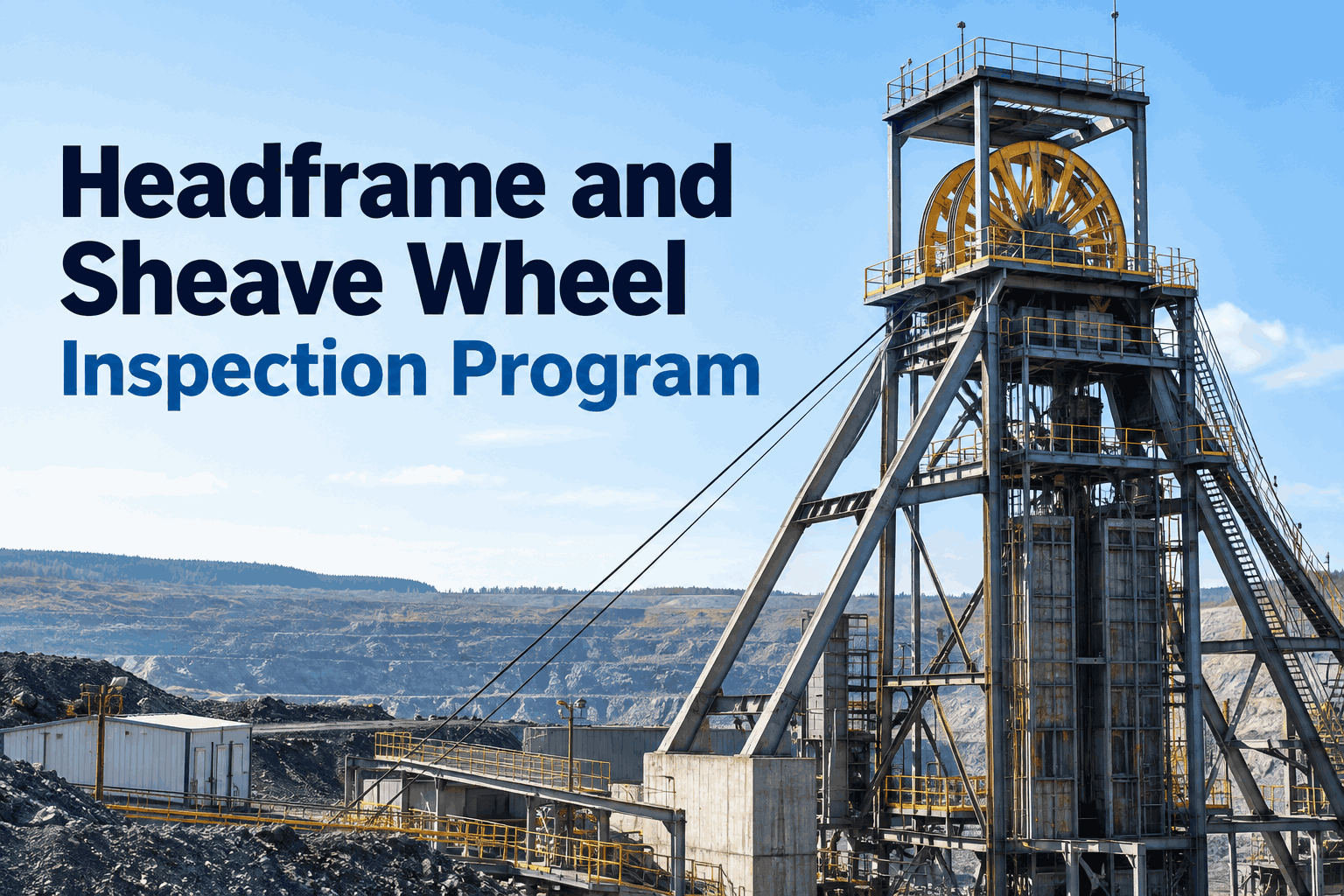
Most equipment inspection asks whether a machine still runs. Headframe inspection asks something heavier: whether a structure that carries people over an open shaft is still sound. There is one headframe, one set of sheaves, one load path — and when any part of it lets go, there is no second unit to fall back on. This guide covers the whole structure: the sheave wheels at the top, the steel that holds them, the foundation beneath, and the tiered inspection program that keeps every element proven safe and on record.
Why a headframe isn't inspected like other equipmentone structure, full load, no backup
Before the checklist, the reason it exists. A haul truck can be pulled from service and replaced. A headframe cannot — and that single fact changes how seriously the inspection has to be taken.
There is no spare
One headframe stands over the shaft. If it comes out of service the whole mine's hoisting stops — so a defect is found and fixed, not swapped around.
It carries people
The same structure that hoists ore hoists the crew. A structural or sheave failure isn't a production loss — it's a life-safety event with no margin.
It's a documented duty
Hoisting structures are inspected and recorded under mine safety law. A gap in the record isn't just risk — it's a finding an inspector will write.
So headframe inspection carries a weight ordinary equipment checks don't, and the documented record matters as much as the walk itself. Book a demo to see hoisting inspections kept as compliance evidence.
The six things every headframe inspection coversstructure, sheave, and the rope between them
Split the load path into six inspection domains and a headframe inspection stops being one intimidating job. Three are the structure, three are the sheave and rope that ride on top of it.
Structural steel & welds
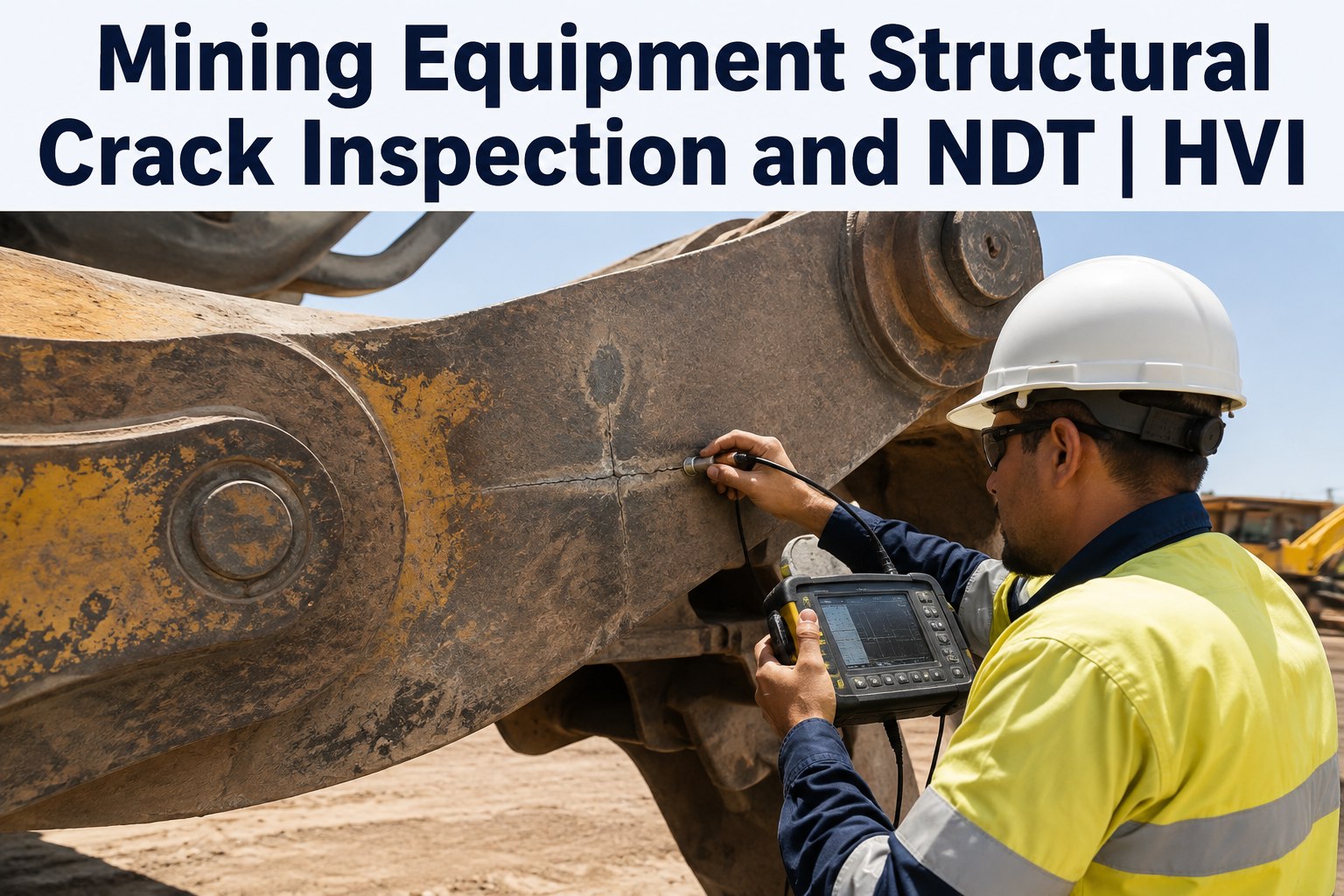
The members and welds that carry the load. Look for cracks at weld toes and connections, bent or buckled members, and impact damage. Critical welds get non-destructive testing, not just a visual.
Check: visual routine · NDT periodicConnections & bolting
Bolted and pinned connections transfer load between members. Check for loose, missing, or corroded bolts, elongated holes, and proper tension on critical joints. A slack connection quietly overloads its neighbors.
Check: routine tightness & lossCorrosion & coatings
A headframe stands in weather and shaft moisture for decades. Section loss from corrosion is the slow structural thief — inspect coatings, pooling points, and hidden faying surfaces, and measure remaining thickness where it's thinned.
Check: routine · gauge where thinnedSheave bearings
The bearings the sheave turns on. Check for wobble, rough or stiff rotation, heat, and lubrication. A worn bearing lets the wheel vibrate, and that vibration fatigues both the rope and the structure it hangs from.
Check: routine feel · lube per OEMSheave groove & wear
The groove the rope rides in. A rope imprint or an undersized groove pinches and abrades the rope and speeds its failure — a worn sheave must be re-machined and re-hardened or replaced. Gauge the groove; don't eyeball it.
Check: gauge groove periodicallyRope & alignment
The hoist rope and how it sits in the sheave. Inspect for broken wires at crown and valley, diameter reduction, and corrosion, and check sheave alignment — a misaligned sheave wears the rope and flange and must be corrected at once.
Check: routine rope · verify alignmentThe structure and the sheave are one system: a worn bearing fatigues the steel, a misaligned sheave chews the rope, corrosion weakens what holds it all up. Start free and put all six domains on one headframe inspection form.
Inspection gets deeper as it goesthree tiers of scrutiny, not one repeated check
A headframe isn't inspected the same way every time. The program layers three levels of depth — a frequent surface look, a periodic hands-on check, and a deep engineering inspection — and each one catches what the level above it can't.
Frequent walk-around of the accessible structure, sheaves, and rope — obvious cracks, loose bolts, rope damage, leaks, unusual noise or vibration. The early-warning layer.
Frequent · trained inspectorPeriodic close-up inspection with measurement — groove gauging, bolt tension, bearing condition, thickness where corroded, alignment. What a walk-by can't quantify.
Periodic · competent personDeep periodic inspection — non-destructive testing of critical welds, structural assessment, and a documented engineering sign-off on fitness for continued service.
Long-interval · engineer / NDTSkip a tier and you lose the failures only that depth would find — a hairline weld crack a visual never sees, a groove that gauges out of tolerance while it still looks fine. Book a demo to run all three inspection tiers on one schedule.
The headframe inspection recordwhat each tier checks, and what proves it happened
Ventilation fans and haul trucks get maintained; a headframe gets inspected and documented. Treat this as a working frame — your mine's structural plan and regulator set the exact scope and intervals for each tier.
| Tier | What it checks | Record kept |
|---|---|---|
| Routine visual | Accessible steel, sheaves, rope, obvious defects | Dated check, photos, flags |
| Detailed hands-on | Groove gauging, bolt tension, bearings, thickness | Measured readings vs history |
| Rope inspection | Broken wires, diameter, corrosion, alignment | Rope log & condemn criteria |
| Engineering / NDT | Critical weld NDT, structural assessment | Signed fitness-for-service report |
| Defect follow-up | Repairs from any tier, closed and verified | Work order to closure |
The tiers find the defect; the record is what proves the structure was fit to carry a cage full of people yesterday, today, and at the next inspection. Doing that across every tier, by hand, is where paper systems fail. Start free and hold every tier's record in one place per structure.
How HVI keeps hoisting structures inspected and proven
The gap in headframe inspection is rarely the walk — it's turning three tiers of scrutiny into one continuous record an inspector will accept, and never letting a measured trend or a due NDT slip. HVI links inspection management, preventive maintenance, and compliance tracking so the whole program lives in one place.
Inspect by tier
Run each tier on a phone or tablet — routine visual, detailed hands-on, engineering — capturing photos, groove and thickness readings, and rope condition against the last inspection.
Flag & schedule
A crack or a groove near limit becomes a tracked work order, and each tier's next inspection and every NDT interval fires on time — nothing waits for someone to remember it's due.
Prove compliance
Every inspection, measurement, and sign-off is stored and exported on demand — the fitness-for-service record ready for an inspector instead of pieced together from binders.
It's the same discipline behind our mining structural crack and NDT inspection guide and our 30 CFR 57.14100 pre-shift inspection workflow — applied to the structure the whole shaft hangs from. It runs on HVI's inspection management and preventive maintenance tools, with every tier kept as compliance evidence.
A visual on our north sheave looked fine for months. When we finally gauged the groove on the detailed round, it was past tolerance — it had been quietly imprinting and pinching the rope the whole time, and the rope was wearing faster than it should. Another few months and we'd have been chasing a rope failure instead of re-machining a wheel.
The lesson stuck: a headframe needs the deep check, not just the walk-by. Now every tier runs on the tablet — the visual, the gauged readings, the NDT dates — and the groove and thickness numbers trend over time. When the inspector comes, the whole fitness record is right there.
Headframe inspection FAQsthe questions hoisting teams ask most
What does a headframe inspection involve?
Inspecting the whole hoisting load path: structural steel and welds, connections and bolting, corrosion and coatings, plus the sheave bearings, groove wear, and rope condition and alignment. It runs in tiers — routine visual, detailed hands-on, and engineering/NDT — each recorded for compliance.
How often should a headframe and sheave wheels be inspected?
On layered intervals: frequent routine visual checks, periodic detailed hands-on inspection with measurement, and long-interval engineering and NDT inspection. The exact frequencies and competent-person sign-offs are set by your mine's structural plan and regulator — confirm them for your operation.
What makes a sheave wheel condemnable?
A groove worn so the rope has imprinted it, or an undersized groove that pinches and abrades the rope — both must be re-machined and re-hardened or the sheave replaced. Bearing wobble, rough rotation, or misalignment that wears the rope and flange also take a sheave out of service.
Why does a headframe need engineering and NDT inspection?
Because a visual can't see a hairline crack inside a critical weld or confirm a structure's fitness to carry load. Non-destructive testing and an engineering assessment find fatigue and structural issues before they become failures — essential for a structure that hoists people with no backup.
Can software manage headframe inspection and compliance?
Yes. HVI runs each inspection tier on schedule, records groove, thickness, and rope readings that trend over time, flags defects into work orders, and stores every sign-off — so a headframe's fitness-for-service record is ready for an inspector rather than reconstructed from paper.
Keep the load path proven — top to bottom
Run every tier of headframe inspection on a phone, capture the groove and thickness readings that trend over time, turn a crack or worn sheave into a tracked repair, and keep the fitness-for-service record an inspector will accept. HVI makes headframe inspection a program, not a binder. Live for your mine in days.
No credit card · set up your first structure on day one