A heap leach isn't one machine you can walk up to — it's a solution loop spread across acres of lined pad. Pumps push leach solution through miles of pipe to drip lines feeding a heap that a stacker is still building, and the pregnant solution drains back to be processed. Heap leach equipment maintenance is hard for one reason: the gear is dispersed, it's soaking in acid, and a quiet failure anywhere steals recovery you never see. See every dispersed asset on one inspection schedule.
Heap leach equipment maintenance that covers the whole loop
Stackers, solution pumps, pipelines and drip lines — every dispersed, acid-soaked asset inspected on a schedule, so a clogged emitter or a failing pump doesn't quietly cost you recovery.
A crusher or a kiln is one place you can stand and inspect. A heap leach is miles of pipe, thousands of emitters and pumps scattered across a pad — so the maintenance problem isn't any single machine, it's never losing track of all of them.
What makes heap leach equipment maintenance its own problem
Two things turn routine PM into a real challenge here, and they compound each other across the whole operation.
Acid is on everything
Leach solution attacks belts, scrapers, liners, pumps, pipe and fittings constantly. Corrosion and scaling aren't occasional — they're the default state of every component.
The gear is spread across acres
Pumps here, pipeline there, emitters across a whole lift. No one can eyeball it all, so a dead zone or a weeping joint hides until recovery numbers drop.
Beat both and the fix is the same: a consistent inspection that reaches every dispersed asset, every cycle — see a round that covers the whole pad.
The four equipment zones a heap leach inspection has to reach
The system breaks into four zones, each with its own failure mode. Miss a zone and you lose solution flow, uptime or recovery.
Radial stackers, grasshopper and tracked conveyors build the heap in lifts. Acid-resistant belts, scrapers and idlers wear fast; belt tracking and the radial pivot need regular checks.
Pumps move barren and pregnant solution all day. Seals, impellers and wear rings take corrosion and abrasion; a failing pump starves a whole section of the heap.
Headers, laterals, valves and fittings carry solution across the pad. Leaks, scaling and UV-brittle pipe steal flow and pressure, and a burst line is a spill and a shutdown.
Emitters and drip line apply solution evenly. Clogging, scaling and plugging create dry zones; uneven application is lost leaching the plant never recovers.
Four zones, every one a logged line on the same round — see each zone captured against its own assets.
The silent loss: clogged emitters you can't see
Most heap leach failures announce themselves with a spill or a dead pump. The expensive one doesn't — it just quietly stops leaching a patch of ore.
Emitters clog, nobody notices
Scale and fines plug emitters across a lift. The solution still flows elsewhere, so nothing alarms — but that patch of heap stops leaching, and the lost metal never shows until the recovery report comes in short.
Flow and emitters checked by zone
Routine flow checks and emitter flushing on a schedule catch the plugging early. Even application holds, the whole heap keeps leaching, and recovery stays where it should be.
On a heap leach, uniform solution application is the money — and the only way to protect it is to inspect for it — put emitter and flow checks on a schedule free.
How HVI runs heap leach equipment maintenance
The inspection round, the PM schedule and the work orders live on one platform, so a corroded line or a clogged zone becomes an action instead of a note lost somewhere on the pad.
One round across every zone
Stackers, pumps, pipeline and drip lines run as a single standardized round on a phone with photos, so nothing dispersed across the pad gets skipped.
PM by hours and condition
Pump service, belt and emitter checks, and corrosion inspections scheduled by run hours and condition, so the acid-soaked gear gets seen on the right cadence.
Defects into work orders & parts
A weeping fitting or a clogged zone becomes an assigned work order with the part attached, and repeat failures by zone point to the real cause.
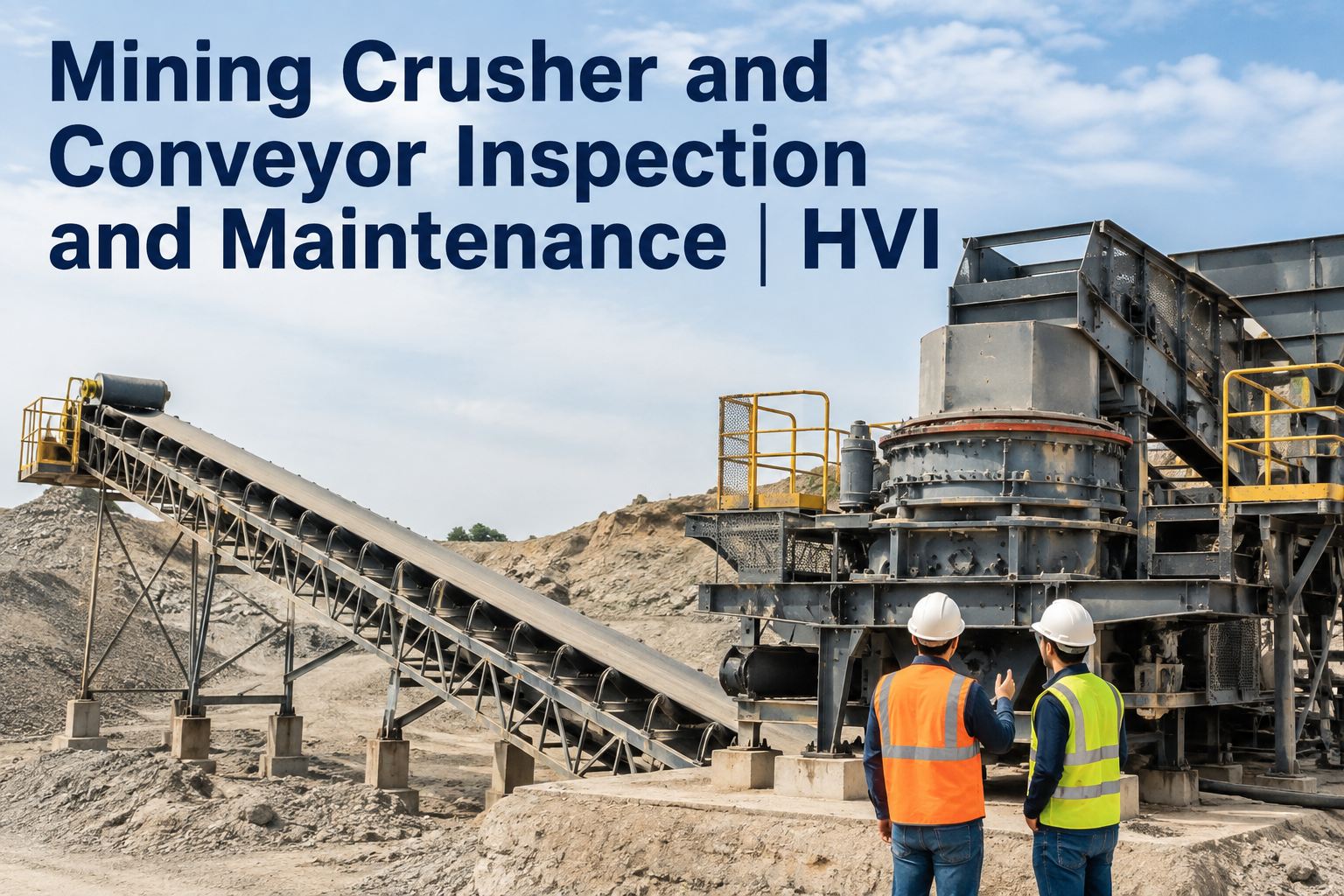
It runs on the same platform as your wider preventive maintenance scheduling and your crusher and conveyor maintenance, so the whole operation lives in one record.
The hard part of a heap leach isn't fixing things — it's knowing what needs fixing when it's spread over a hundred acres. We'd chase a pressure drop for days because nobody had a clear record of which zones were last checked.
Putting every stacker, pump and drip zone on one inspection round changed that. Now a clogged lateral or a weeping pump shows up as a flagged item with a location, not a mystery. Our recovery got steadier the month we stopped losing track.
Frequently asked questions
What does heap leach equipment maintenance involve?
Inspecting and servicing four zones: stacking and conveying (belts, scrapers, idlers, the radial pivot), solution pumps (seals, impellers, wear rings), pipeline and distribution (leaks, scaling, valves), and the drip and irrigation system (emitter clogging and flow). Everything runs in acid, so corrosion checks are constant.
Why is heap leach maintenance harder than other plant equipment?
Two reasons compound. The equipment is dispersed across acres of pad, so no one can eyeball it all, and leach solution is corrosive, so every component is constantly attacked. A quiet failure anywhere can steal recovery long before it shows up as a breakdown.
How do clogged drip emitters affect a heap leach?
Clogged or scaled emitters create dry zones where ore stops leaching, while solution keeps flowing elsewhere so nothing alarms. The lost metal only shows up when recovery comes in short. Routine flow checks and emitter flushing catch it before it costs you.
What are the main failure points on heap leach pumps and pipelines?
Pump seals, impellers and wear rings from corrosion and abrasion, and on pipelines, leaks, scaling, UV-embrittled pipe and failing valves and fittings. A failing pump starves a section of the heap; a burst line is both a spill and a shutdown, so both are high-priority inspection items.
How does HVI help with heap leach equipment maintenance?
HVI runs one standardized inspection round across every zone with photos, schedules PM by hours and condition, and turns a corroded fitting or a clogged zone into a work order with a location and a part. It keeps dispersed, acid-soaked equipment on one record instead of scattered across the pad.
Make heap leach equipment maintenance cover every asset on the pad
One inspection round across stackers, pumps, pipeline and drip lines, PM by hours and condition, and defects routed to work orders with a location. Keep a dispersed, acid-soaked system leaching at full recovery.