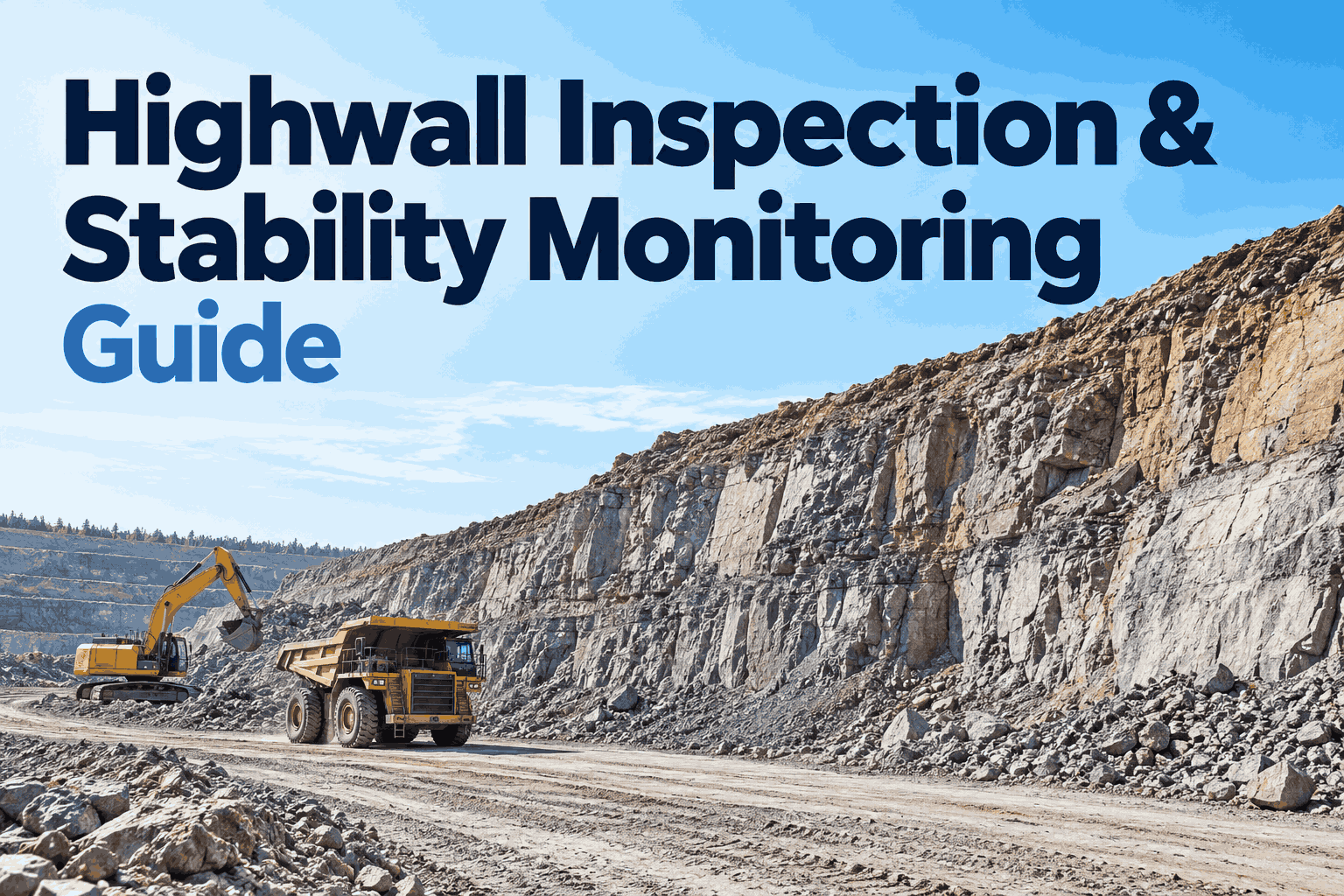
Highwall examination is a ground-control process built around change. A wall that appeared acceptable during an earlier inspection can develop cracks, loose material, sloughing, overhangs, drainage problems or other warning signs after blasting, rainfall, freezing and thawing, excavation or continued weathering. A useful examination program therefore connects what the examiner sees today with previous conditions, site-specific ground-control procedures and the actions required before miners or equipment are exposed to the area.
Read the wall before work reaches the wall.
Standardize highwall inspections around visible ground conditions, changing hazards, stability observations, work-zone exposure and documented corrective actions.
Examine the wall as a ground-control system
A highwall is more than its vertical face. The examination can require attention to the crest, benches, exposed strata, joints and fractures, loose material, drainage, toe conditions and the work or travel area below. What matters most is whether those conditions create or indicate a hazard under the mine's actual ground-control procedures.
Crest & back-break area
Look for cracking, separation, unconsolidated material, surface-water effects and other changes behind the wall.
Highwall face
Observe loose or fractured rock, overhangs, joints, weathered material and visible movement.
Benches & catch areas
Check accumulated material, bench condition and whether the intended protective function is being maintained.
Toe & lower wall
Note sloughing, fallen material, undercutting, water and changes at the base of the wall.
Exposure zone
Consider where miners, drills, loaders, excavators and travelways sit relative to potential ground hazards.
The inspection schedule is only one part of the decision
Ground conditions can change between scheduled examinations. Site procedures should account for events and observations that require another look before work continues.
Before work
Examine applicable ground before miners or equipment are exposed to the work area.
After blasting
Re-examine affected ground for new cracks, loose material, overhangs or other blast-related changes.
Rain & water
Water can alter ground conditions, expose drainage problems and weaken joints or weathered material.
Freeze / thaw
Repeated freezing and thawing can widen discontinuities and loosen rock from the face.
Changing ground
New movement, cracking, falling material or another unusual condition can trigger additional examination.
Turn visual observations into consistent condition records
A highwall inspection checklist should help the examiner describe the condition rather than simply select “pass.” Location, extent, change and supporting evidence make the observation much more useful for ground-control review.
Cracks & fractures
Record location, orientation, approximate dimensions and whether the crack appears new or has changed.
Loose rock
Identify fractured, detached or unstable-looking material that could enter a work or travel area.
Overhangs & undercutting
Record unsupported or undercut material and how the condition relates to the active area below.
Sloughing & fallen material
Fresh material at the toe or on benches can provide evidence that the face has changed since an earlier examination.
Drainage & seepage
Note water entering, flowing across or emerging from the wall, especially where the condition has changed.
Deteriorated material
Identify zones where weathering, weak strata or deteriorated material may affect wall condition.
Visual examination tells you what is visible. Monitoring adds evidence of change.
Where a mine uses survey points, prisms, radar, extensometers, crack measurements or another monitoring method, the resulting information can complement field examination. Monitoring criteria, alarm thresholds and engineering interpretation should come from the mine's ground-control program and qualified technical personnel — not from a generic software threshold.
See how HVI organizes inspection histories →Illustrative trend only. Enter actual measurements and evaluate them against site-specific criteria.
The most useful question may be: what changed since the last highwall examination?
Ground-control records become more useful when successive inspections can be compared. A crack that was not present before, fresh rock on a bench, increased seepage or a newly exposed fracture deserves more context than an isolated checkbox.
Build the inspection process around the applicable ground-control requirement
For metal and nonmetal mines, §56.3401 addresses examination of ground conditions in areas where work is to be performed. Mine operators should apply the exact standard, their ground-control procedures and any other requirements applicable to the operation.
Experience matters
Applicable examinations and tests for loose ground are performed by designated persons experienced in that work.
Examine before exposure
Applicable ground conditions are examined before other work is performed in the area.
Re-examine changed ground
Blasting can alter exposed ground, so the examination process needs to account for post-blast conditions.
Respond to change
Changing conditions can require additional examination rather than waiting for the next routine check.
Frequency follows exposure and changing ground
The standard includes weekly examination of highwalls and banks adjoining travelways, with more frequent examination when changing ground conditions warrant.
Compliance note: A digital checklist can standardize documentation, but it should not replace the mine's ground-control plan, a designated examiner's judgment, engineering evaluation or any site-specific MSHA requirement.
Finding a hazard is only useful if exposure is controlled
Highwall safety is not completed when a crack or loose rock is entered into a form. The inspection process needs a clear route from observation to restriction, evaluation, correction and documented release of the affected area.
Describe the condition, location, extent and evidence of change.
Apply the mine's required controls while the condition remains hazardous or unresolved.
Escalate changing or uncertain ground to the appropriate responsible personnel.
Preserve what was done, who verified it and the status of the affected area.
Build a record that explains the condition — not just the inspection date.
Searchable examination history helps mine safety teams compare recurring conditions across pits and highwall sections. Photos, location references, observed changes, follow-up examinations and corrective actions can remain connected to the same ground-control record.
Explore HVI Safety Management →A practical highwall examination record
The mine's actual checklist should reflect the applicable standard, geology, ground-control plan, work methods and site procedures. From a documentation perspective, these record groups make later review considerably easier.
Where and when?
Mine, pit, wall section, work area, date, shift, examiner and examination trigger.
What was observed?
Cracks, loose material, overhangs, sloughing, weathering, drainage and other relevant ground conditions.
What changed?
Comparison with earlier examinations, photographs, measurements or monitoring information.
Who or what is exposed?
Work areas, travelways, drilling locations, loading areas and equipment operating near the wall.
What action followed?
Restricted access, scaling, further examination, engineering review or another site-required response.
How was it resolved?
Corrective-action evidence, follow-up examination, responsible person, completion and final status.
Keep the wall's condition history together
A sequence of highwall examination records can reveal recurring locations, weather-related changes, repeated scaling needs and unresolved observations more clearly than isolated paper forms.
Action: Ground-control review.
Action: Continue examination.
Action: Follow-up completed.
Connect examinations, hazards and corrective actions.
HVI helps mining teams standardize digital inspection checklists, document changing ground conditions, attach field evidence, assign follow-up actions and maintain searchable safety records across mine sites.
The software supports documentation and workflow control. Decisions about highwall stability, scaling, exclusion zones, monitoring thresholds and safe re-entry remain governed by the mine's procedures and qualified personnel.
Highwall Examination & Stability Monitoring FAQs
What should be checked during a highwall examination?
When should highwalls be examined?
Why should highwalls be checked more often after weather changes?
Does stability monitoring replace visual highwall inspection?
How can HVI help manage highwall inspection records?
Make every highwall examination part of a continuous ground-control history.
Standardized highwall examination records help mine teams see what was inspected, what changed, what hazard was identified and what corrective action followed — without rebuilding the story from scattered forms.