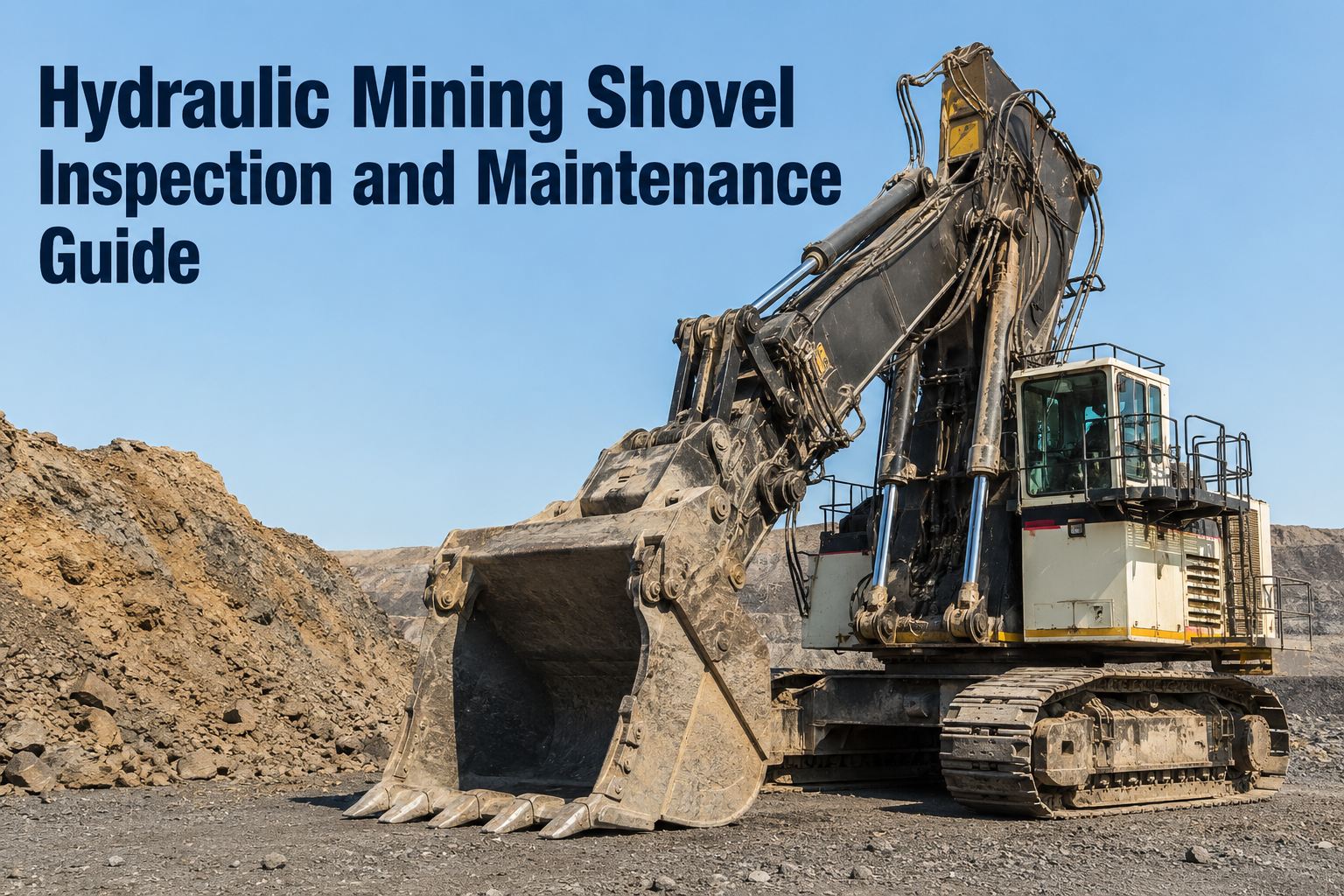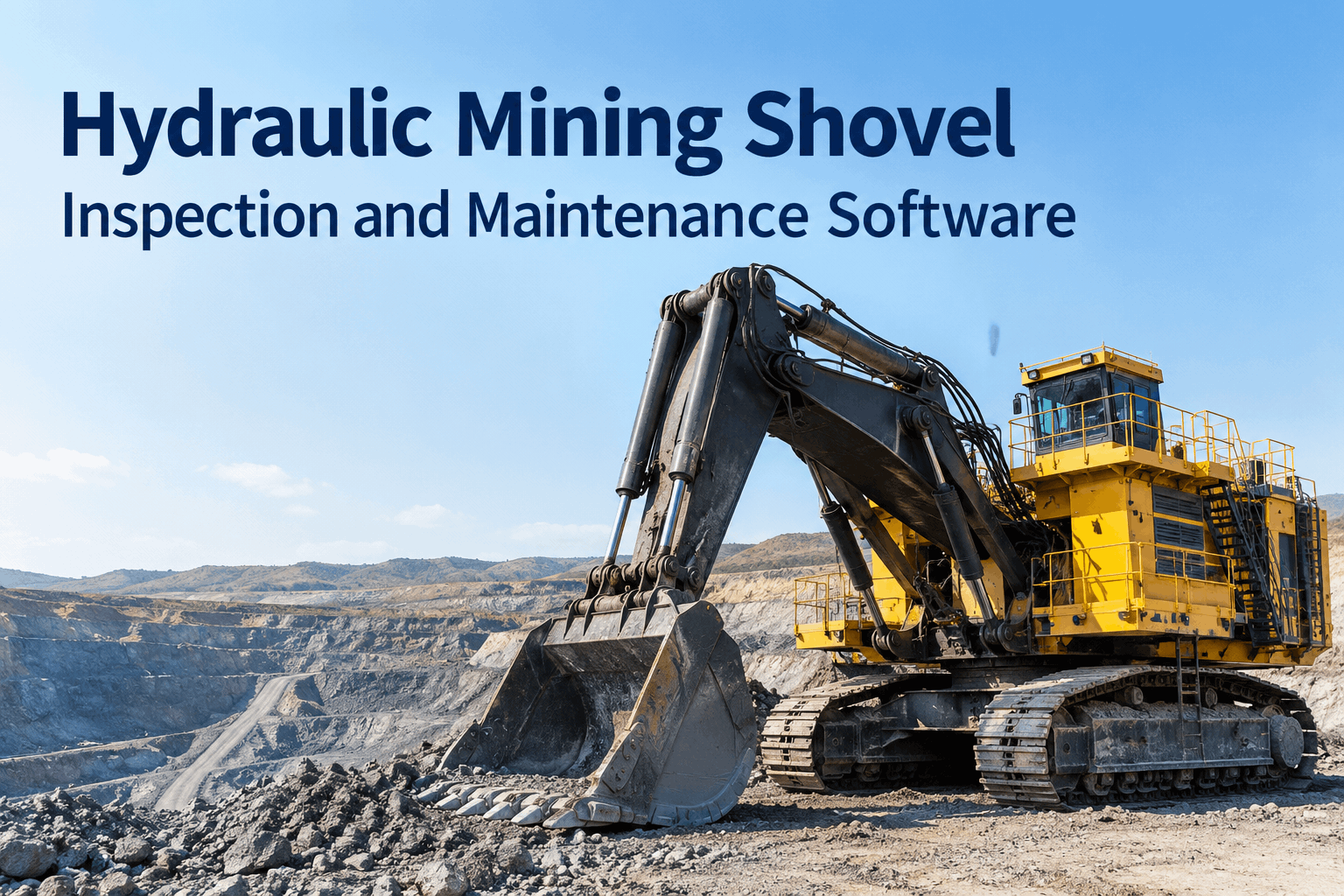
A hydraulic mining shovel doesn't just move material — it sets the pace for every truck behind it. Hydraulic mining shovel inspection and maintenance software tracks structural fatigue, hydraulic health and meter-hour PM so the one machine the whole loading cycle depends on doesn't become the reason trucks queue instead of haul. Book a demo to see it on your pit fleet .
When the Shovel Stops, So Does Every Truck Behind It
Hydraulic mining shovel maintenance software keeps the one loading tool your whole truck fleet is timed against inspected, scheduled, and ready — so the match factor holds and the trucks keep moving.
A pit's whole loading cycle is built around one number: match factor — how well the shovel's loading rate lines up with the trucks arriving to be filled. Most mines target a match factor between 0.85 and 1.0. When a primary shovel goes down, that number doesn't just drop for the shovel — every truck behind it queues, cycle times stretch, and the production loss cascades across the whole fleet, reaching as much as $180,000 an hour at large operations. Hydraulic mining shovel maintenance software exists because this machine isn't maintained for its own sake — it's maintained because the entire haul cycle is timed against it.
Why shovel downtime costs more than the shovelthe match-factor math every production superintendent already feels
Match factor is a simple ratio: trucks arriving versus the shovel's loading rate. It's precise enough to plan a fleet around — and fragile enough that one unplanned shovel outage breaks it instantly.
At this availability, trucks arrive on the rhythm the dispatch plan assumes — match factor holds near target and the loading cycle runs the way it was sized to.
Every truck sized for that shovel now has nowhere to dump its cycle time into. The loss isn't the shovel's repair bill — it's every truck behind it running at a fraction of planned productivity.
This is the case for treating shovel uptime as a fleet-wide metric, not a single-machine one. HVI rolls a shovel's inspection status, open defects, and PM countdown into the same analytics view as the trucks it feeds, so a flagged defect gets weighed against what it costs the whole loading cycle — not just the shovel. Book a demo to see shovel and truck fleet data in one view
The check most shovel programs skipstructural fatigue — why an annual NDE belongs in the maintenance record, not a separate binder
A hydraulic mining shovel's boom, stick, and dipper handle carry enormous cyclic stress — dig, swing, dump, repeat, thousands of times a week. That's a fatigue problem, not just a wear problem, and it's usually managed by a specialist crew running non-destructive examination (NDE) on a schedule most mines set at least annually, separate from routine PM.
The trouble is where that NDE report ends up. Too often it's a PDF in someone's inbox, disconnected from the shovel's day-to-day inspection and work-order history — which means a crack flagged in March can sit unlinked to the hydraulic leak flagged in June, when the two might be telling the same story. HVI keeps the NDE record, the hydraulic fluid sample schedule (typically every 250 hours), and every operator-flagged defect on one machine file, so structural risk isn't the one thing tracked somewhere else. Start a free trial and bring your shovel's NDE schedule into one record
The hydraulic mining shovel daily examination checklistwhat every pre-shift inspection has to cover before the first bucket pass
MSHA requires a daily examination of self-propelled mobile equipment for safety defects (30 CFR §56.14100 surface), and on a machine this large, that examination is also the earliest warning system for the systems covered in depth on our mining excavator guide and our front shovel inspection checklist. Here's the shortlist specific to a hydraulic mining shovel.
In HVI this is a guided mobile template — tick, flag, photo — timestamped to the right shovel, so the daily examination is both compliance-ready and the first line of defense for the structural and hydraulic systems that matter most on a machine this size. Book a demo and see this checklist live on one screen
Meter-hour PM built for shovel-severe dutywhy a shovel's hydraulic sampling interval can't drift
Continuous digging at full hydraulic load, 24 hours a day, means a hydraulic mining shovel's real service interval moves fast against the calendar. Hydraulic fluid analysis every 250 hours and a structural NDE at least annually are the two intervals worth never letting slip.
-
250 hr
Hydraulic fluid analysis
Oil sample across all pump circuits, filter condition check, GET and crowd system inspection.
-
500 hr
Intermediate service
Hydraulic filter replacement, swing-bearing grease and play check, undercarriage wear measurement.
-
Annual
Structural NDE
Full non-destructive examination of boom, stick, and dipper handle at high-stress points, logged against the machine's record.
HVI's meter-hour PM scheduling auto-generates the work order when a shovel's hours cross an interval, and lets you attach the annual NDE as a scheduled event on the same machine file — so it's never the one maintenance item tracked outside the system. Book a demo to see tiered PM set against your shovel fleet
From flagged defect to closed work orderhow one shovel's inspection protects the match factor it's setting for the fleet
A defect caught on a shovel's pre-shift is worth more than the same defect caught on any single truck — because the shovel is the pacing item for everything behind it.
-
1
Operator runs the daily examination
Boom, hydraulics, GET, swing, undercarriage — the shovel-specific checklist, on a phone, before the first cycle of the shift.
-
2
A defect is flagged with photo & severity
A hydraulic weep or a weld concern gets logged with a photo, tied to that exact shovel, and timestamped the moment it's found.
-
3
It becomes a work order in one tap
The flag converts to a work order and lands with the shop — visible before the shovel's own shift is even done.
-
4
Repair closes against that shovel's history
Parts, labor, and sign-off record against the machine's own file, feeding cost-per-hour analytics alongside the truck fleet it feeds.
From a pit production superintendent
Everyone understands a haul truck going down costs that truck's hours. It took longer for the site to really internalize that a shovel going down costs every truck's hours, because the match factor doesn't care which machine broke — it just collapses.
Once we started treating the shovel's inspection and PM record with the same discipline as the truck fleet's, we stopped being surprised by it. A flagged hydraulic leak gets weighed now against what it costs the whole loading cycle, not just against the repair bill. That's a different conversation with the shop.
Frequently asked questions
What is hydraulic mining shovel inspection software?
A mobile digital checklist built around a shovel's wear points — boom/stick, hydraulics, GET, swing, undercarriage — that flags defects with photos and routes them straight to a work order.
Why does shovel downtime cost more than the shovel itself?
Every truck in the fleet is sized against the shovel's loading rate (match factor). When the shovel is down, trucks queue instead of haul, and the cascading loss can reach $180,000/hr at large operations.
What is structural NDE and why does it matter on a shovel?
Non-destructive examination checks the boom, stick, and dipper for fatigue cracking from constant cyclic loading. It's typically run at least annually and should be tracked on the same machine record as routine PM.
How often should a hydraulic mining shovel be serviced?
Hydraulic fluid analysis every 250 hours, intermediate service at 500 hours, and structural NDE at least annually. HVI auto-fires the work order at each interval.
Can HVI track multiple shovels alongside the truck fleet they feed?
Yes. Each shovel gets its own inspection history, PM schedule, and cost record, visible in the same fleet-wide analytics as the haul trucks it loads.
Keep the match factor on your side
HVI gives every shovel operator a hydraulic-shovel-specific daily examination, routes flagged hydraulic, structural, or GET defects to a work order in one tap, fires PM on real meter hours, and keeps the annual NDE on the same machine record — so the loading tool your whole truck fleet is timed against stays on schedule. Live on site in under two weeks.
- Structural, hydraulic & GET condition tracking
- Defect → work order in one tap
- Meter-hour PM plus annual NDE scheduling
- Shovel data alongside your truck fleet analytics