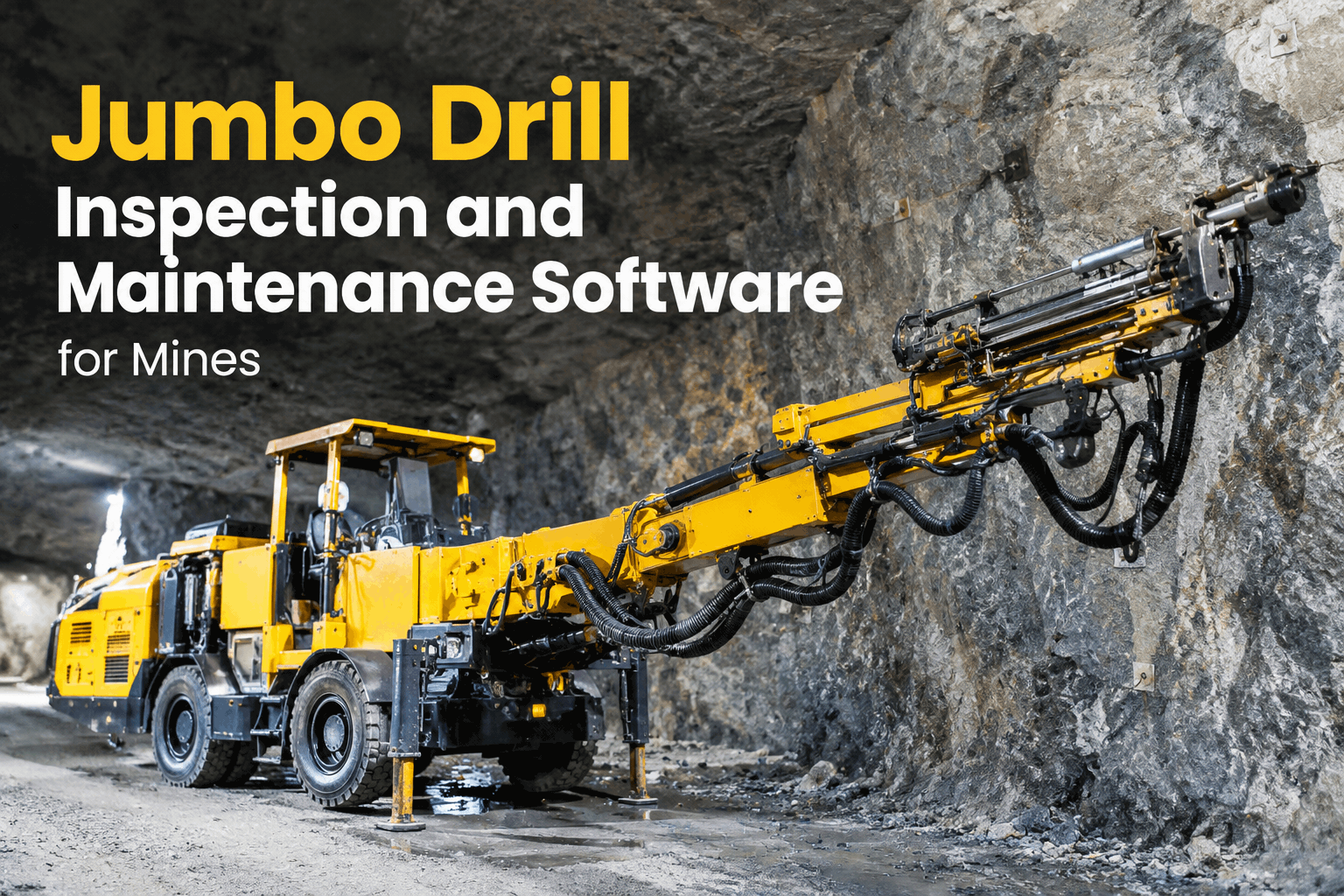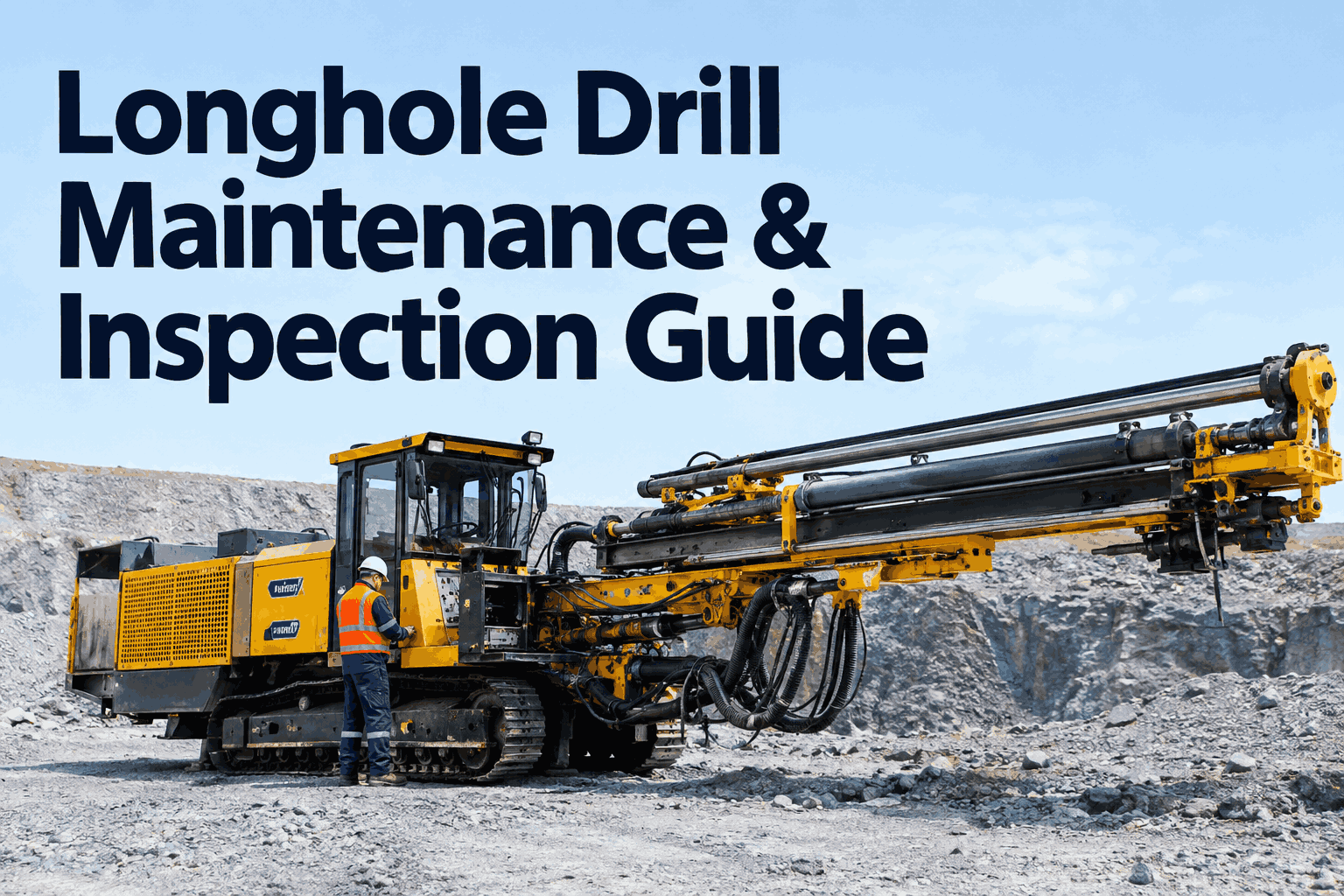
A longhole drill isn't a machine you baby — it's a production asset that runs shift after shift, joining rod after rod to drill deep blastholes, and every metre it doesn't drill is tonnes that don't get blasted. That relentless duty is exactly why its maintenance is different from a one-off rig: the drill string cycles in and out constantly, the percussion unit pounds at high frequency, and the hydraulics run at 200-plus bar in dust and damp. Most of what a longhole drill costs and most of what stops it lives in those cycling, consuming systems — the rods, shanks, bits, and the percussion that drives them. Longhole drill maintenance is really about protecting availability on the machine that feeds the mine. See longhole drill PM and inspections built per rig
A Longhole Drill Repeats One Cycle Thousands of Times — and That's Where It Wears
Every hole runs this loop. The step it repeats most, rod handling, is where availability is won or lost.
Repeat for every rod, every hole, every fan — the string is made up and broken out constantly, which is why rod handling and percussion dominate the maintenance load.
The real cost lives in the parts you burn through
The purchase price of a longhole drill is a fraction of what it costs to run. The number that actually matters is cost per drilled metre, and most of that is consumables — the string tooling that wears against the rock and gets replaced constantly. Tracking these isn't bookkeeping; it's how you see the true economics of the machine and catch a component wearing faster than it should.
Shank adapters
Transmit impact energy from the drifter into the string. High-stress, high-wear — a scored or cracked shank robs penetration and can damage the drifter.
Rods & couplings
Make up the string via threaded connections. Thread wear, fatigue, and bent rods cause deviation and failures — and couplings run hot and wear fast.
Drill bits
The carbide buttons that break the rock. Wear tracks with rock abrasiveness — a dull bit slashes penetration rate and pushes load back up the whole string.
Because these parts turn over so fast, tracking their life against the rig — metres drilled, replacement intervals, cost per component — is what turns a fuzzy "drilling costs" line into a number you can manage. It also surfaces the early warning: a shank or bit wearing abnormally fast is telling you something upstream, in the percussion or the feed, is off. Book a demo to track consumable life per rig.
Two disciplines that decide availability
Beyond the consumables, two systems make or break how much a longhole drill actually drills: the percussion unit that delivers the energy, and the hydraulics that power everything. Neglect either and availability falls off a cliff — and both fail in ways that are entirely preventable.
Percussion rebuild cycles
The drifter or hammer pounds at high frequency and wears from the inside — seals, diaphragms, accumulators, and pistons. Top-hammer units need scheduled preventive rebuilds on a defined interval, not run-to-failure. A drifter run past its seal life scores its piston and turns a rebuild into a replacement.
Hydraulic cleanliness
High-pressure circuits run at 200-250 bar in humid, dust-laden air — the exact conditions that contaminate oil. Strict filtration and clean fluid prevent proportional-valve failures and piston scoring. On a longhole drill, hydraulic contamination control isn't routine servicing; it's the single biggest lever on reliability.
What both share is that failure is gradual and invisible until it isn't — a seal degrades, contamination builds, and then the machine stops mid-fan. Putting rebuild intervals and filtration on a schedule the system enforces is how you keep the failure in the shop, on your terms, instead of underground on the mine's. Try HVI Free — Schedule the Rebuilds.
What actually stops a longhole drill
Ask any longhole crew and the culprits are the same few every time — and they cluster around the systems that cycle and the fluids that power them. Knowing where the downtime concentrates tells you where the maintenance effort belongs.
Read down that list and the priorities are obvious: the top three are the systems that cycle and the oil that powers them, and every one is preventable with scheduled maintenance and a real pre-shift inspection. The feed and tooling items are quieter but hit production quality — a deviated hole wastes the whole blast. Book a demo to target the biggest downtime causes first.
Turning it into a production-availability program
On a machine measured in drilled metres, the whole point of maintenance is keeping it available — and that only happens when the inspections, rebuilds, and consumable tracking run as a system, not from memory across shifts and operators. Three HVI capabilities carry it.
Preventive maintenance
Drifter rebuild cycles, hydraulic filtration, feed and rod-handling service scheduled on hours or drilled metres and assigned — so the preventable failures stay in the shop.
HVI: Preventive MaintenanceEquipment inspections
A standard pre-shift check — percussion, feed, carousel, hydraulics, flushing — the same for every operator, signed before the rig drills its first hole.
HVI: Equipment InspectionsMaintenance records
Every inspection, rebuild, and consumable change against the rig — the history behind cost per metre, availability trends, and any review.
HVI: Maintenance RecordsHeld together, these turn a hard-working production drill into a managed asset: the rebuilds fire before the seal fails, the pre-shift check is standard across crews, consumable life is visible per rig, and the record shows where every metre's cost went. On a machine whose availability is the mine's production, that's the difference between drilling to plan and chasing breakdowns. Start Free — Run It on a Program.
From a longhole drill supervisor
With a production drill, every hour it's down is holes we're not drilling and a stope that slips. Our two killers were always the same — rod-handling jams and drifters we ran too long between rebuilds. Once the rebuild cycles went on hours and the pre-shift carousel-and-hydraulics check became standard, availability jumped and the surprise failures dropped right off. The other win was seeing consumable cost per rig — one drill was eating shanks twice as fast as the rest, and it turned out to be a feed alignment issue we'd never have caught. Now it's a number, not a hunch.
Frequently asked questions
What are the main things to maintain on a longhole drill?
The systems that cycle and the fluids that power them. The drill string and rod-handling system — shank adapters, rods, couplings, bits, and the carousel — are the most-cycled and highest-wear parts. The percussion unit, the drifter or hammer, needs scheduled seal and accumulator rebuilds rather than run-to-failure. The hydraulics that drive everything demand strict cleanliness. And the feed system must stay aligned to keep holes straight. Around those sit flushing, dust control, and the carrier. Each has its own wear pattern, so a longhole drill is maintained as a set of connected high-duty systems rather than one generic service, with the string and percussion carrying most of the load.
Why is consumable tracking so important on a production drill?
Because the purchase price is only a fraction of the lifecycle cost, and most of the rest is consumables — shank adapters, rods, couplings, and carbide bits that wear against the rock and get replaced constantly. The real metric is cost per drilled metre, and you can't manage it without tracking those parts against each rig: metres drilled, replacement intervals, and cost per component. Tracking also surfaces early warnings — a shank or bit wearing abnormally fast usually means something upstream in the percussion or feed is off. Without it, drilling cost is a fuzzy line item; with it, it becomes a number you can actually control and compare across machines.
Why does hydraulic cleanliness matter so much underground?
Because a longhole drill runs high-pressure hydraulic circuits at around 200 to 250 bar in humid, dust-laden underground air — the exact conditions that contaminate oil. Contamination causes proportional-valve failures and scores the drifter piston, both of which take the rig out of production. Strict filtration and clean fluid are what prevent it, which is why hydraulic contamination control is one of the biggest levers on a longhole drill's reliability, not routine servicing you can defer. Keeping filtration and oil condition on a maintained schedule, and checking them in the pre-shift inspection, keeps the whole hydraulic system healthy and the machine available.
How does maintenance affect drilling accuracy and blast quality?
More than most crews realise. On longholes over about 25 metres, hole deviation beyond roughly 2% leads to poor fragmentation, ore dilution, or even frozen stopes — so a straight hole is a production requirement, not a nicety. Deviation comes largely from worn or misaligned feed systems, bent rods, and worn string components, all of which are maintenance items. A well-maintained feed and string drill straight, accurate holes that blast cleanly; a neglected one drills deviated holes that waste the whole blast. So maintaining the feed and tooling isn't only about machine uptime — it directly protects the quality and value of the ore the drilling produces.
Why keep maintenance records for a longhole drill?
Because it's a production asset whose availability is the mine's output, so managing it needs data, not memory. Records of every inspection, drifter rebuild, hydraulic service, and consumable change against each rig reveal cost per drilled metre, availability trends, and which machines are outliers — like a drill eating shanks twice as fast as its peers. That turns maintenance from guesswork into a managed program: rebuilds fire on schedule, the pre-shift standard stays consistent across crews, and problems show up as patterns before they become breakdowns. Records also support accountability and any review. On a machine that feeds the mine, a documented history is both a reliability tool and a cost-control one.
Keep the drill that feeds the mine drilling
HVI schedules drifter rebuilds and hydraulic filtration, standardises the pre-shift inspection for every longhole rig, and tracks consumable life and cost per metre against each machine. So the preventable failures happen in the shop, the drill stays available shift after shift, and you can see exactly where your drilling cost and downtime go — on the production asset the whole mine depends on.
No credit card · Pre-shift inspection & rebuild scheduling per rig · Consumable & cost tracking