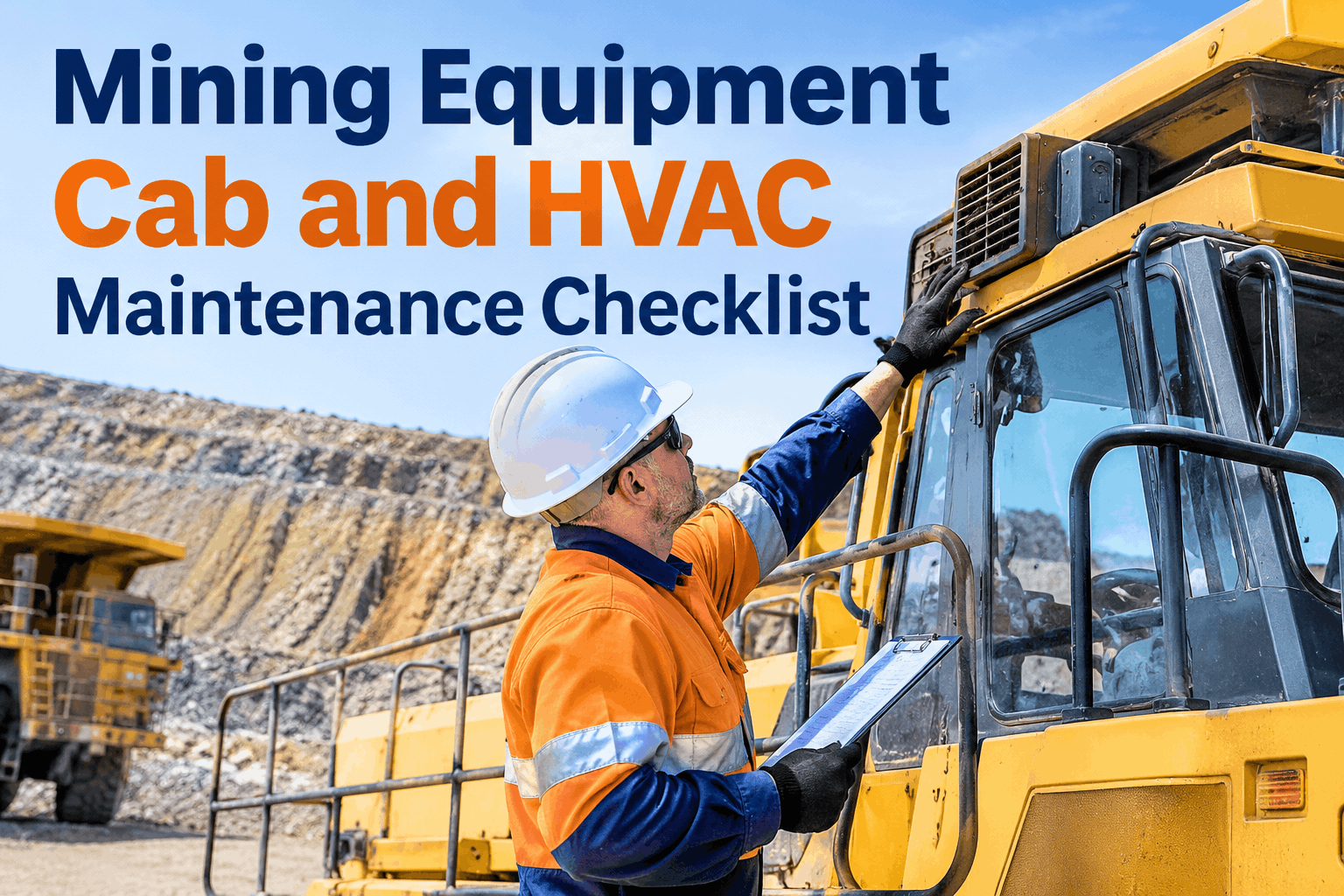
The cab is supposed to be the one place on the pit that's clean air. Then a recirculation filter goes three months past due, a door seal cracks in the heat, and the operator's breathing the same dust as the ground outside — just slower. See My Fleet's Cab Checklist
The Cab Is Supposed to Be the Safe Place
A sealed, pressurized, filtered cab is one of the main engineering controls mining relies on against silica dust. A cracked seal or a clogged filter quietly turns it off — with no warning light to tell anyone.
Positive pressure keeps dust out through every seal and vent — the filtration system is doing exactly what it's designed for.
Pressure drops, dust finds the gap — and nothing on the dash tells the operator it's happening.
What a working cab is actually protecting againstthe standards behind "just a filter change"
That 1:10.1 number is the whole case for maintaining a cab like it matters: the hardware already works, when it's actually serviced. See This Tracked Across Your Fleet.
What actually fails in a cab HVAC systemthe parts a generic inspection doesn't ask about
Recirculation & intake filters
Load up with dust over weeks, not days — a filter that looks "fine" visually can already be past its effective service life.
Door & window seals
Heat, UV, and years of door slams crack the rubber — the single biggest source of a cab losing positive pressure.
Pressurizer fan & blower
Weak output means the cab can't out-pressure the dust outside, even with a brand-new filter installed.
AC & heater core
Beyond comfort — a failed AC in extreme heat is its own operator fatigue and safety risk on long shifts.
Cab shell & mounting points
Stress cracks and vibration-loosened panels open dust paths a filter was never meant to handle.
Pressure gauge & test port
The only way to actually confirm positive pressure — if nobody's reading it, the system's being trusted on faith.
The cab & HVAC inspection checklistwhat to run before every shift, not just at PM
Recirculation filter condition
Checked against its actual service interval, not a visual guess.Door & window seals intact
No cracking, no gaps, door closes with a solid seal every time.Positive pressure confirmed
Read off the gauge, not assumed because the fan is making noise.AC & heater function tested
Blows cold and hot on demand, not just "runs."Vents & airflow clear
No blockage, consistent flow across all cab outlets.Cab shell checked for cracks
Stress points and panel gaps that create unplanned dust paths.Visible dust buildup inside cab
A dusty dash or console is a sign the system's already losing the fight.Filter housing & mounting secure
A loose housing bypasses the filter entirely, no matter how good the filter is.Three checks, three schedulescab maintenance on its own clock, not an afterthought
Visible dust, seal condition, and a quick pressure check — part of the regular walkaround.
Recirculation and intake filters replaced on real usage hours, not "whenever someone notices."
Full pressure & filtration verification against ISO 23875, documented per cab.
HVI's PM scheduling fires the filter interval automatically. See My Fleet's Filter Schedule.
From a flagged seal to a closed work orderhow a cab defect moves through HVI
-
1
Operator checks the cab on the walkaround
Seal condition, filter, and pressure gauge checked alongside the rest of the standard inspection.
-
2
A cracked seal or weak pressure gets flagged
Logged with a photo, before the machine starts its shift in a dusty cut.
-
3
It's a work order and a record
Routed to the shop and written to the cab's permanent history — proof the hazard was caught and fixed.
From a safety manager who stopped trusting the fan noise
For years our cab checks were "does the AC turn on" and nothing more. Then an industrial hygienist did some dust sampling and found a loader cab with a worn door seal was basically giving the operator no real protection — the fan ran fine, the filter was clean, but the seal let dust straight past all of it.
Now the seal and a pressure reading are part of the same checklist as the brakes and lights. It's not a separate program anymore, it's just the inspection. That's the only reason it actually happens every shift instead of whenever someone remembers.
Frequently asked questions
What is a mining equipment cab and HVAC maintenance checklist?
It's an inspection checklist covering cab filtration, seals, pressurization, and the AC/heater system — the components that protect an operator from dust and heat, beyond what a standard equipment DVIR checks.
What is cab pressurization and why does it matter?
A properly maintained cab is kept at positive pressure relative to the outside air, which keeps dust from entering through seals and gaps. This is one of the main engineering controls used to limit silica dust exposure.
How often should a cab's filters be replaced?
Replacement should be based on actual meter or usage hours rather than a fixed calendar date, since dust load varies with the environment and shift intensity. HVI schedules this automatically per machine.
What is ISO 23875?
ISO 23875 is the international design standard for mining operator enclosure air quality control systems, covering performance requirements and test methods for cab filtration and pressurization.
Can cab checks be part of the regular pre-shift inspection?
Yes. Seal condition, filter status, and a pressure check can be added as items on the same digital inspection drivers already complete, rather than running as a separate process.
Don't let the cab's protection quietly fail silently
HVI builds cab seal, filter, and pressure checks into every inspection, schedules filter replacement on real meter hours, and keeps a signed record for every machine. Live on your fleet this week.