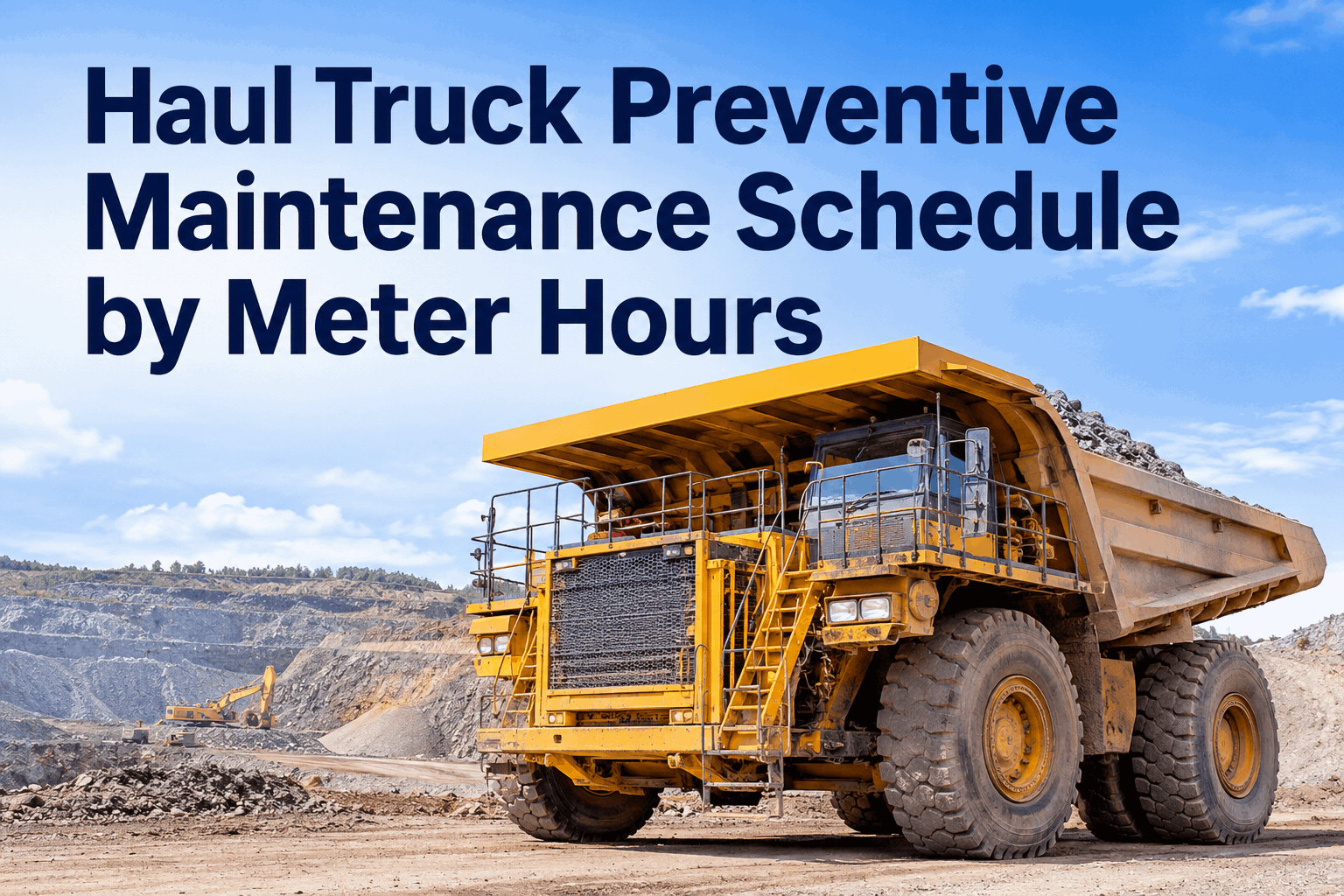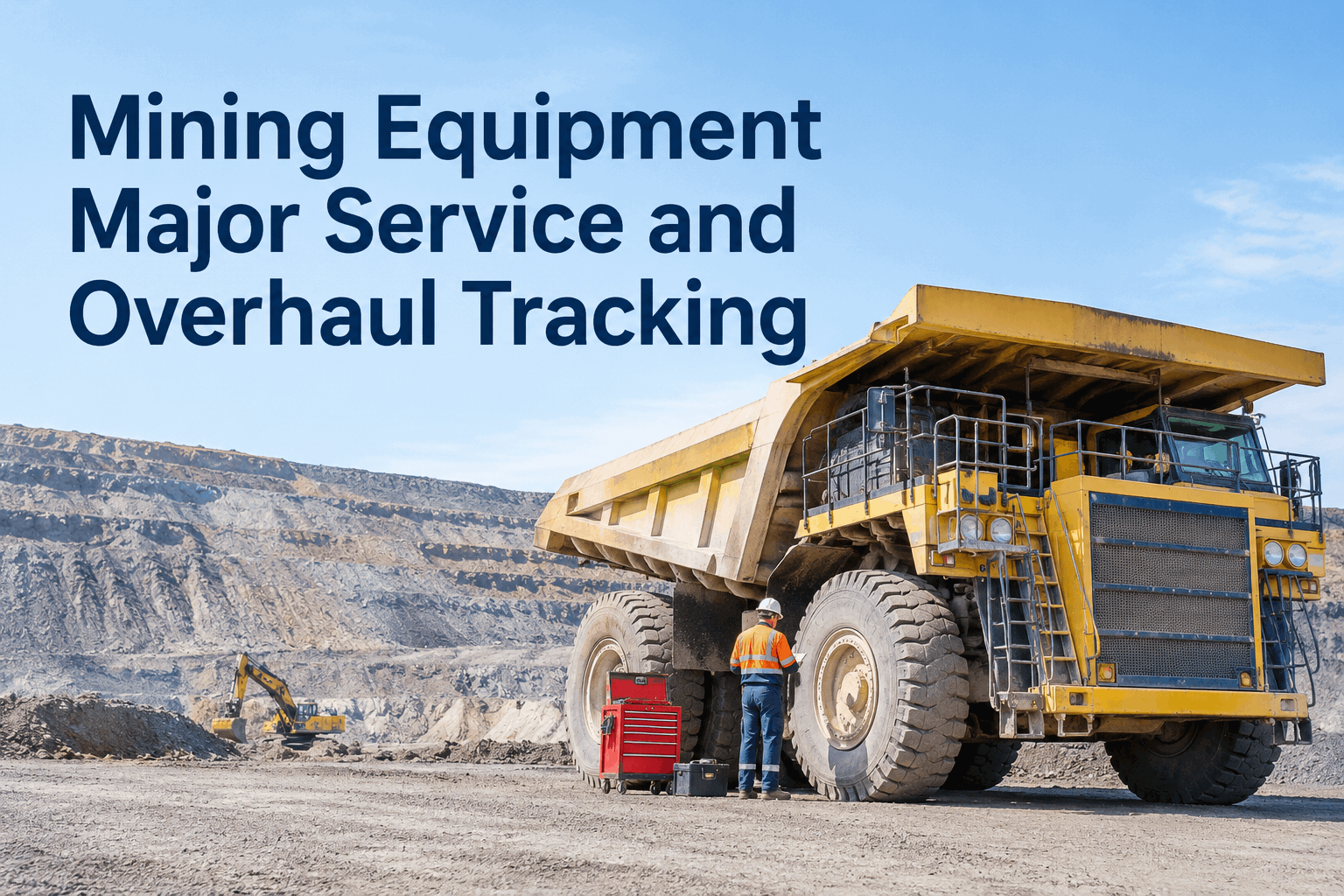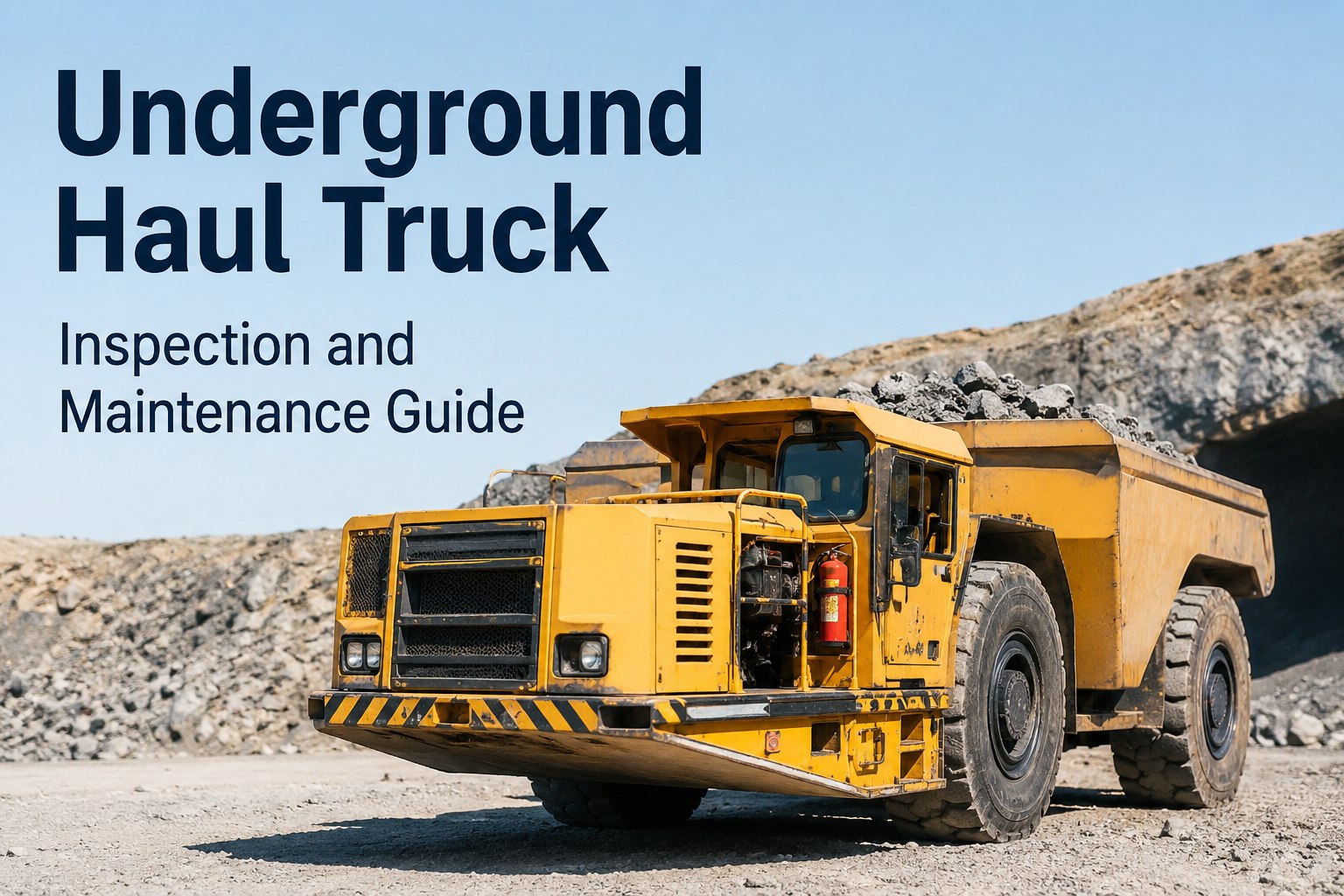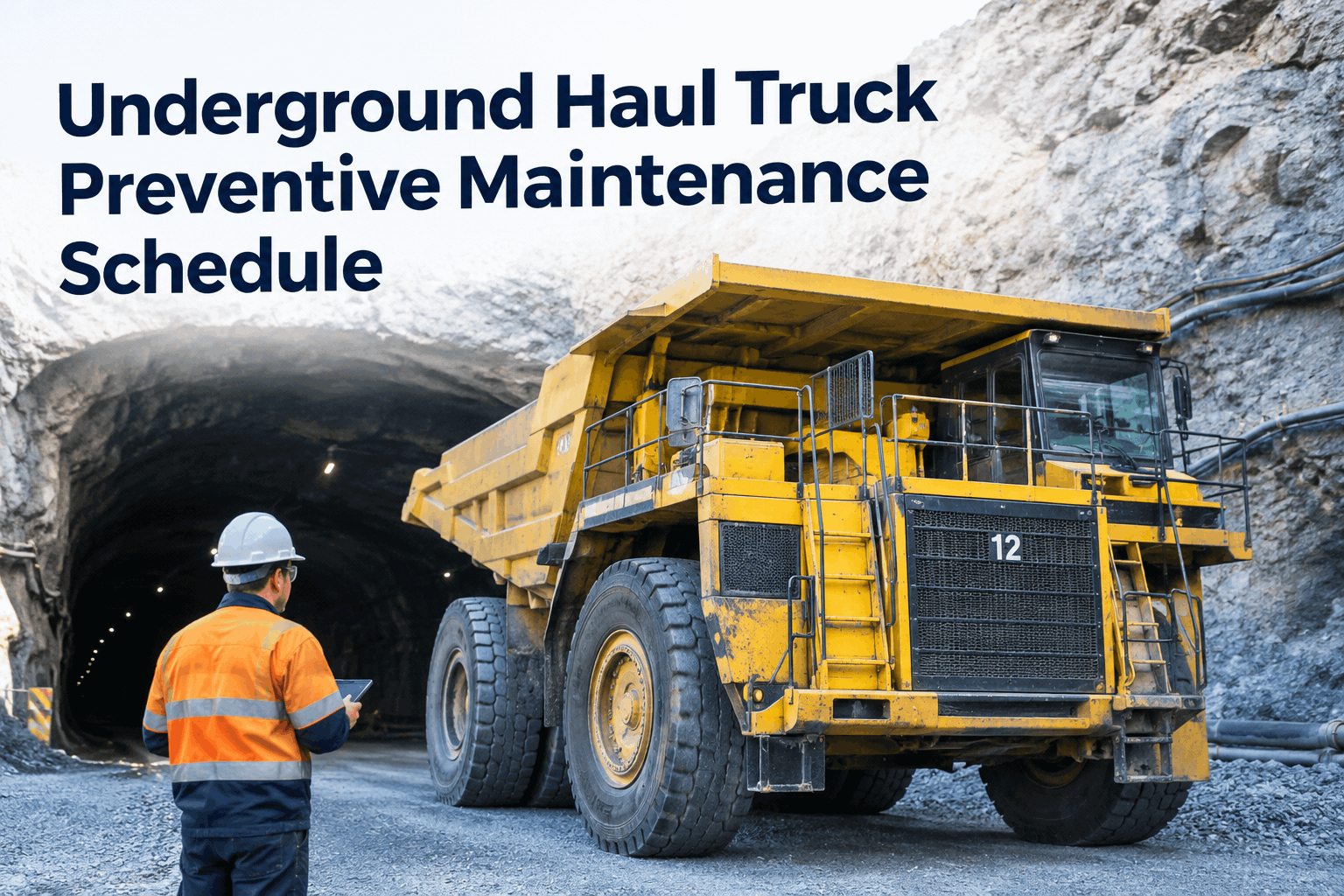
On the surface, a haul truck's engine hours sync to the PM schedule automatically through OEM telematics. Underground, that link usually doesn't exist — leaky feeder and Wi-Fi mesh networks run at a fraction of surface bandwidth, so the same tiered PM schedule needs a different way to know when a truck's hours are actually due. Book a demo to see offline PM scheduling on your underground fleet .
The Telematics Feed That Works on Surface Doesn't Reach the Decline
A tiered PM schedule is only as good as the hour count driving it. Underground haul truck PM scheduling needs to work when the truck's hours aren't streaming in live.
Mining preventive maintenance runs on engine hours, not calendar dates, for good reason — a 250-hour service comes due every two to three weeks under mining duty instead of every two to three months. Surface fleets make that work by syncing hours automatically from OEM telematics like Cat MineStar or Komatsu KOMTRAX, so the schedule updates itself as the truck runs. Underground, that same automatic sync is often the thing that's missing: leaky feeder and Wi-Fi mesh networks underground carry a fraction of the bandwidth and reliability of a surface network, and many underground haulage trucks simply don't have a live telematics link running where they actually work. A PM schedule built around a feed that isn't there drifts quietly until someone notices a service is overdue.
Why the surface playbook doesn't transfer undergroundthe connectivity gap that breaks a telematics-driven PM schedule
The tiered PM model itself — 250/500/1,000/2,000-hour intervals, triggered on engine hours — doesn't change underground. What changes is how reliably those hours actually reach the system that's supposed to act on them.
GPS and engine-hour data stream continuously, so the PM schedule updates itself the moment a truck crosses an interval.
Underground wireless infrastructure was built for voice and low-bandwidth data, not continuous real-time telemetry from every truck on every decline.
This isn't a reason to abandon hour-based PM underground — it's a reason to build the hour-tracking workflow around the connectivity that's actually available, not the connectivity surface fleets assume. Start a free trial and set up offline PM tracking for your underground trucks
How PM scheduling works without a live feedoffline-first hour tracking that still fires on time
The fix isn't more infrastructure — it's a PM system built to run offline by default, syncing the moment a truck or a phone reaches signal, rather than assuming a connection it won't reliably have.
HVI runs inspections, PM schedules, and work orders entirely offline, built for sites with little or no underground connectivity, and syncs the moment a device reaches signal — so an underground truck's PM clock keeps moving even when its telematics link can't. Book a demo and see offline-first PM scheduling live
The tiered schedule itself, adjusted for underground dutywhy the interval shortens even before connectivity enters the picture
The connectivity gap is one layer of the underground problem. The duty cycle is the other — steep sustained declines and confined ventilation pull the standard tiered intervals in further than surface haulage sees.
-
250 hr
Basic service
Engine oil and filter, brake and retarder inspection, fluid levels — the interval that typically comes due every 2–3 weeks under mining duty.
-
500 hr
Intermediate service
Hydraulic filter and sample, retarder system inspection, steering and suspension check — shortened further on sites with sustained steep declines.
-
1,000+ hr
Major service tiers
Final drive, transmission, and emissions system service — emissions intervals often compressed further by confined underground ventilation.
HVI's meter-hour PM scheduling lets you apply site-specific adjustments to every interval on top of the standard tiers — so the schedule reflects both the underground duty cycle and however the hours actually reach the system. Our underground haul truck inspection guide covers the daily defect-reporting side in depth. Book a demo to see tiered PM set against your underground fleet
From logged hours to closed work orderhow the PM clock keeps moving without a live connection
The workflow has to hold together end to end, or an offline reading is just a number nobody acts on.
-
1
Operator logs hours on the pre-shift
Meter reading captured on a phone, offline, as part of the daily inspection — no separate step to remember.
-
2
The reading queues and syncs at the first signal point
No manual entry back at the surface office, no lag waiting for someone to transcribe a paper log.
-
3
A PM work order fires automatically when the interval hits
The work order generates off the synced hour count, not a date on a calendar or a whiteboard.
-
4
Service history builds against the truck's real hours
Every service closes against the machine's own record, feeding cost-per-hour analytics across the underground fleet.
From an underground maintenance planner
Every vendor demo we sat through assumed hours would stream in automatically, because that's how it works on the surface fleet. Then we'd ask how it handles the decline where our radios barely hold a signal, and the answer was usually some version of "it doesn't, really."
What we needed wasn't better connectivity — we don't control that. We needed a system that didn't fall apart without it. Once hours were logged on the phone every shift and synced whenever signal showed up, the PM schedule stopped drifting. Nobody's waiting on a radio signal to know a truck's due for service.
Frequently asked questions
Why doesn't surface telematics work for underground haul truck PM scheduling?
Underground wireless infrastructure like leaky feeder and Wi-Fi mesh networks carries a fraction of surface bandwidth and often doesn't support continuous real-time hour streaming the way OEM telematics does on surface.
How does a PM schedule stay accurate without a live hour feed?
By logging the meter reading on each pre-shift inspection, offline if needed, and syncing it the moment a device reaches signal — so the PM clock updates from the latest reading instead of drifting on a stale number.
What are the standard PM intervals for underground haul trucks?
The same tiered 250/500/1,000/2,000-hour structure used on surface, but typically shortened further for sustained steep declines and ventilation-constrained emissions servicing.
Can HVI use OEM telematics where underground connectivity does exist?
Yes. Where a live telematics feed is available, HVI syncs hours automatically; where it isn't, logged pre-shift readings keep the same PM schedule running without a gap.
Does offline PM tracking still generate work orders automatically?
Yes. Once a synced hour count crosses a PM interval, a work order generates automatically, the same as it would from a live telematics feed.
Build a PM schedule around the connectivity you actually have
HVI logs engine hours offline on every pre-shift inspection, syncs the moment signal returns, layers in OEM telematics wherever it's available, and fires tiered PM work orders automatically — so your underground haul fleet's maintenance schedule never depends on a signal it can't count on. Live on site in under two weeks.
- Offline hour logging, every pre-shift
- Auto-sync the moment signal returns
- Tiered PM work orders, triggered automatically
- OEM telematics layered in where available