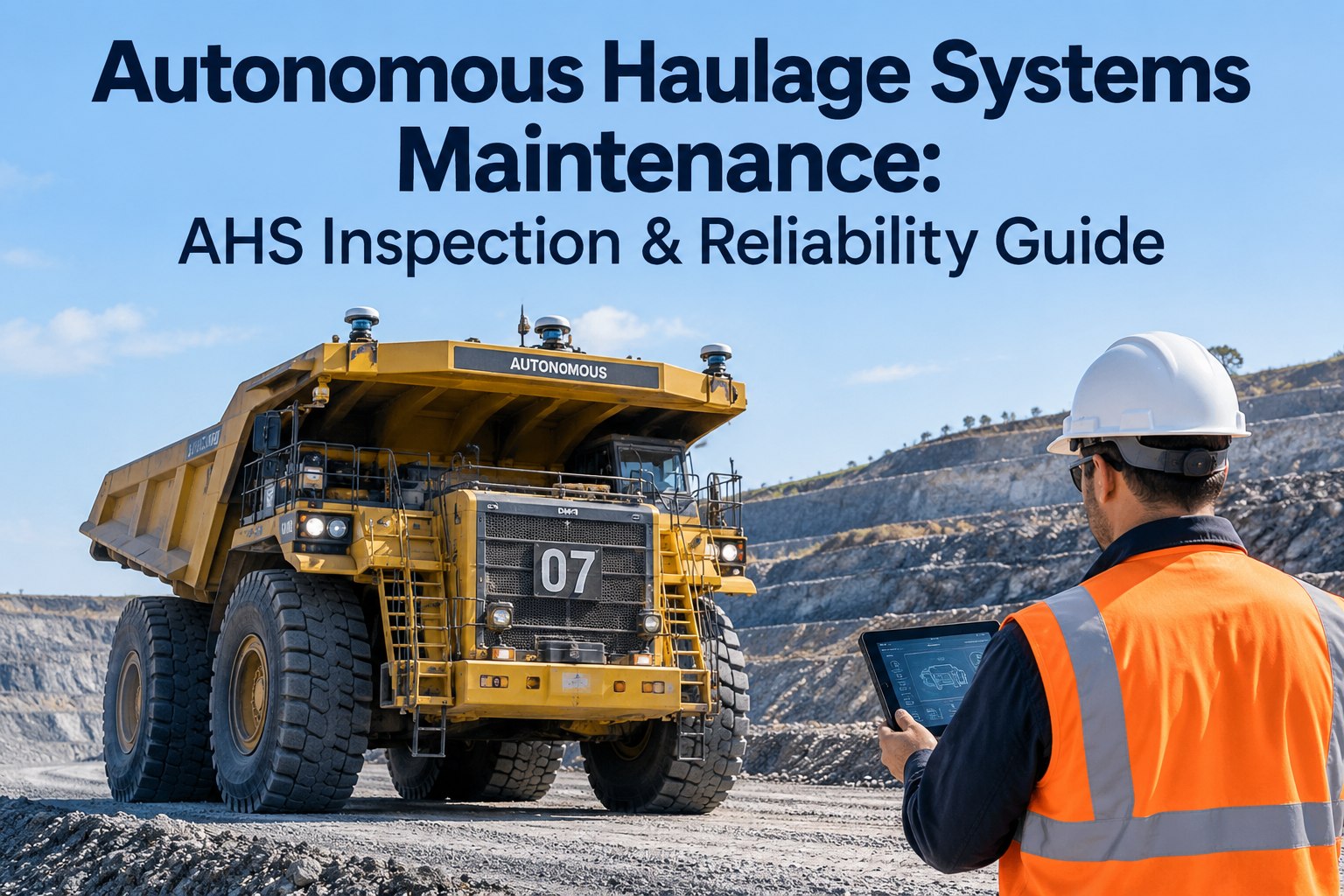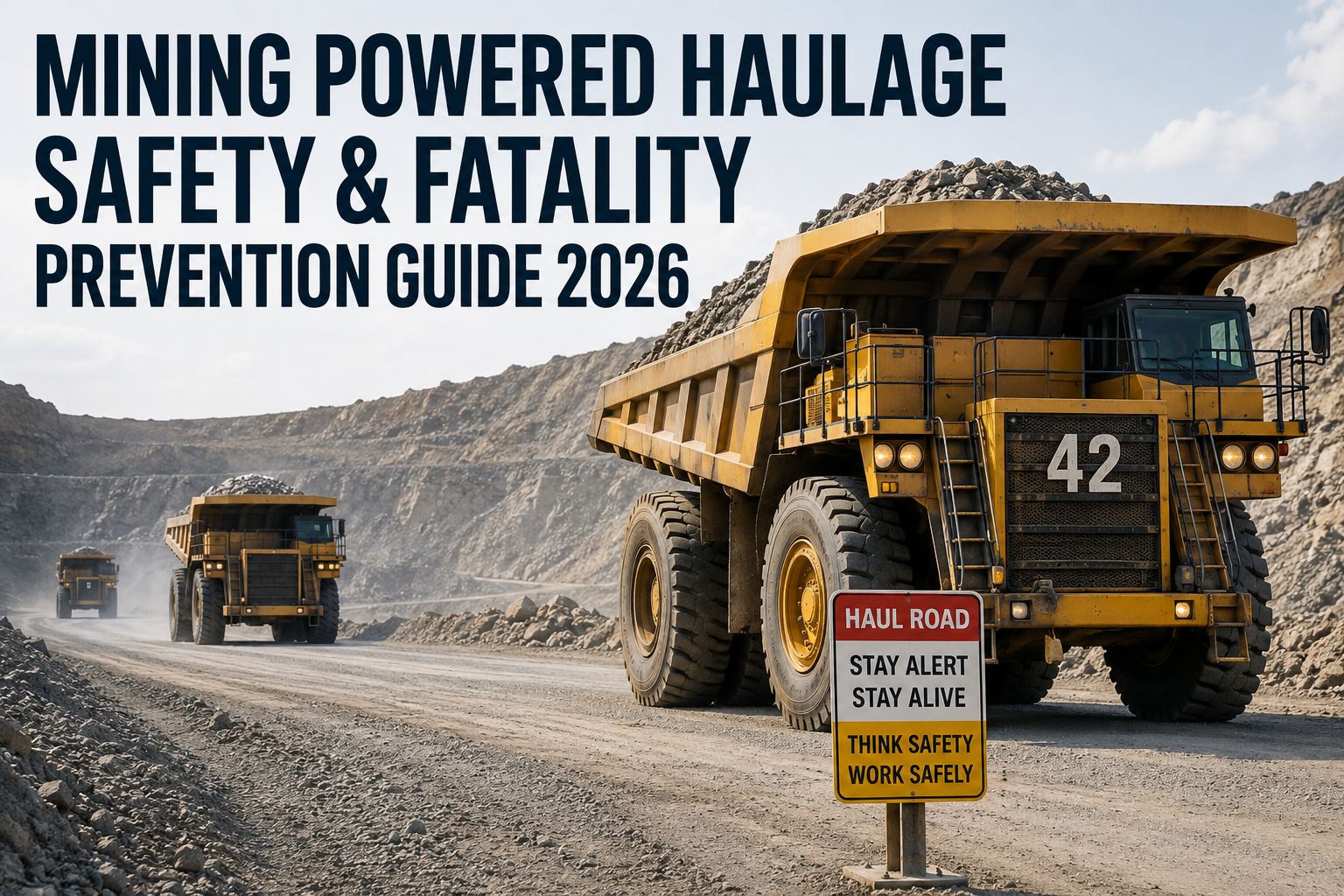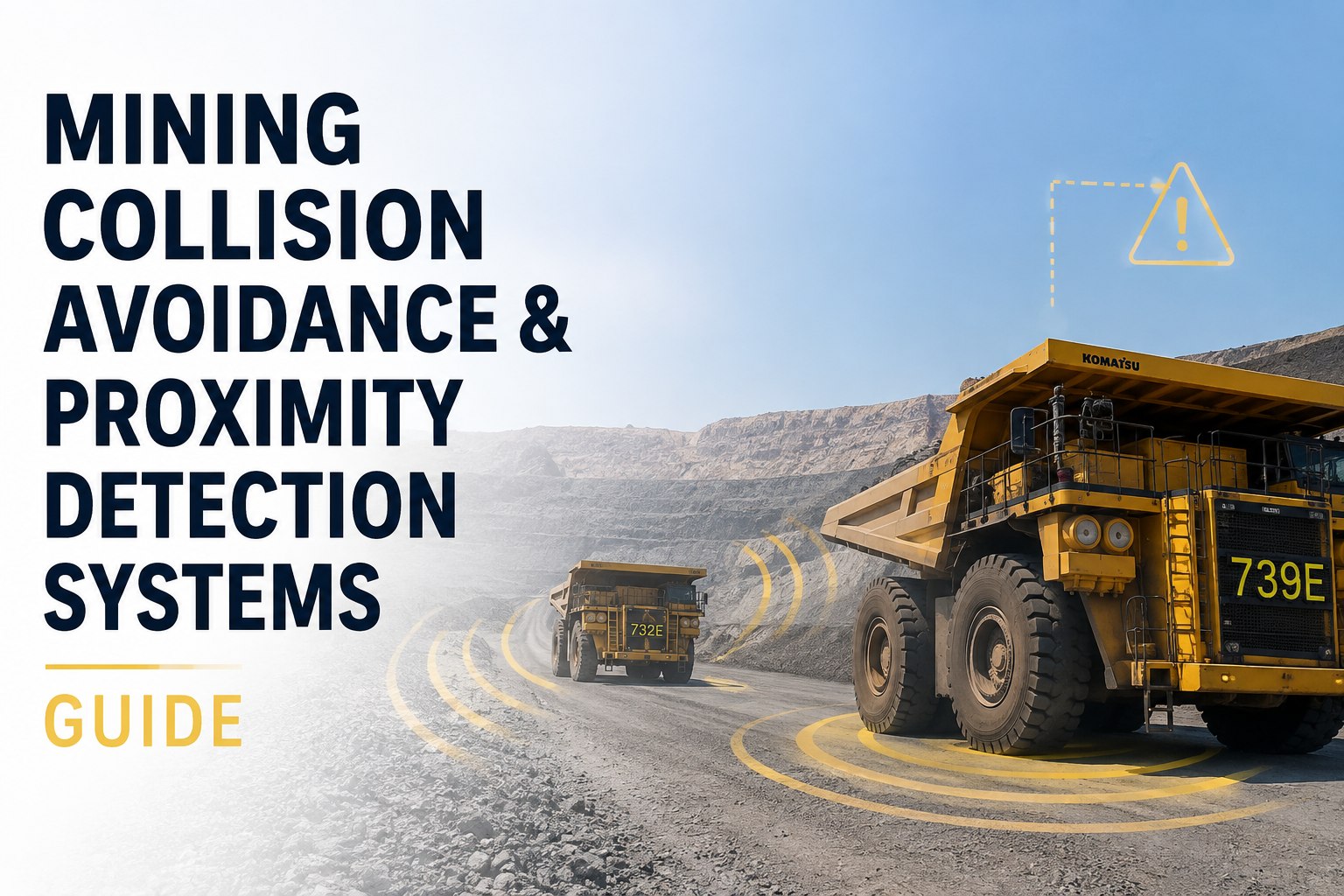
Mining collision avoidance systems (CAS) and proximity detection systems (PDS) are heavily-mandated safety technologies — MSHA's 30 CFR 75.1732 requires PDS on continuous mining machines in underground coal, with parallel mandates in Australia, South Africa, and other jurisdictions. But sensors get contaminated, tags fail, and calibration drifts. A CAS or PDS is only as reliable as the maintenance discipline behind it: documented pre-shift checks, defect capture, calibration records. This 2026 guide walks the technology and the maintenance reality. Book a demo .
Mining Collision Avoidance & Proximity Detection — How the Zones Work and What Breaks Them
Every CAS or PDS relies on physical sensors, communication links, and calibration. Each element has specific failure modes that maintenance discipline addresses.
The gap between "we have collision avoidance systems installed" and "our CAS/PDS coverage is actually reliable" is where most vehicle-interaction incidents in mining still happen. The system was working during commissioning; the sensor was clean during the vendor demo; the personal tag was tested six months ago. Between those points and now, dust accumulates, vibration shifts alignment, cables chafe, batteries deplete, and automated self-tests confirm electrical connectivity without confirming that the system would actually stop a machine if a miner walked into the zone right now. The MSHA final rule under 30 CFR 75.1732 requires PDS on continuous mining machines in underground coal, and the agency actively encourages deployment on surface and metal/non-metal equipment — but neither the rule nor the technology substitutes for the maintenance discipline that keeps installed systems dependable across shift after shift.
CAS vs PDS — the distinction that matters for hazard controlSame underlying sensing; different response layer — and different EMESRT control classification
The terminology is often used interchangeably in vendor marketing, but the operational distinction between PDS and CAS matters for how each fits into a mine's overall vehicle interaction control strategy. Book a demo to see HVI's inspection workflows for CAS/PDS-equipped fleets
Function: Detects when a miner, vehicle, or object enters defined proximity zones around the machine. Sends warning signal to operator via in-cab alarm, visual indicator, or coaching light.
Response: Operator remains responsible for evaluating the situation and taking action. System does not control the machine.
EMESRT classification: Levels 7–8 (Awareness and Advisory controls).
Function: All PDS capability, plus automatic machine intervention when defined danger thresholds are met. Typical interventions: audible/visual warning → speed reduction → brake application.
Response: System overrides operator input when necessary to prevent collision. Highest level of automated protection currently deployed.
EMESRT classification: Level 9 (Intervention control) — the highest level in the 9-layer vehicle interaction control model.
Sensing technologies — what's actually inside the systemThe underlying detection technologies and where each performs differently in mine conditions
Different systems use different sensing technologies, and each has performance characteristics that matter for the specific mine environment. Understanding what's under the badge helps operators evaluate whether a system actually fits the site.
Radio-frequency sensing. Long range, works through dust and rain, unaffected by lighting. Can struggle with static objects vs moving distinction, and metal surfaces can produce reflection artifacts. Common on surface mining haul trucks.
Laser scanning. High spatial resolution, precise distance measurement, good object classification. Performance degrades in heavy dust or rain. Higher hardware cost. Common in surface applications where visibility conditions are managed.
Visual object recognition with on-device AI. Rich context data; can identify pedestrians vs equipment vs terrain features. Requires adequate lighting; dust and mud on lens degrades performance rapidly. Enhances other sensor layers.
Satellite positioning. Good for large-area situational awareness in open-pit surface operations. Not usable underground; less precise than radar/LiDAR at close range. Foundation for many multi-vehicle interaction systems.
Miners wear tagged devices (cap lamp, belt tag, wristband). Machine detects tag presence within programmed zones. Common in underground coal per MSHA-approved systems. Requires each miner's tag to be functional, powered, and worn correctly.
Generates low-frequency magnetic field around machine; personal-worn devices detect field strength to calculate distance. Works through structures, rock, and vehicle bodies where higher-frequency systems can be blocked. Common in underground coal.
Each sensing approach comes with maintenance implications specific to how the sensor interacts with mine conditions. Book a demo to see HVI's sensor-specific pre-shift check templates
Pre-shift check discipline — the operational foundationThe specific checks that catch failures the automated self-test misses
The pre-shift check is where CAS/PDS reliability holds or fails. Automated self-tests confirm electrical function; the pre-shift check confirms operational function — a different and complementary assurance. Start a free trial to build CAS/PDS checks into your existing pre-shift inspection workflow.
Confirm system power-on state, no active fault codes, all sensors reporting operational. Fault indicators addressed before shift start — not deferred.
Walk-around inspection of each sensor housing: physical damage, mounting security, cable condition, contamination (dust, mud, ice, insect nests). Wipe-down where required by site procedure.
In-cab alarm audible test, visual indicator LED test, any external warning lights or coaching indicators visible from operator position. Sound, light, and vibration where designed.
Miners entering the work area verify tag is powered on, battery indicator adequate, no physical damage. Where site procedure requires, functional detection test at controlled distance.
Site-approved detection test at defined distance and configuration — not a substitute for the automated self-test but a supplement to it. Frequency per manufacturer specification and site procedure.
Any failed check documented immediately with photo evidence where possible. Defect routed to maintenance dashboard the moment the operator submits — not held in a paper form until end of shift.
Six checks, executed every shift, captured on mobile with photo evidence and immediate defect routing — the operational discipline that keeps installed CAS/PDS actually reliable. Book a demo to build this into your existing inspection workflow
The two human-factor risks technology introducesFalse confidence and alarm fatigue — the failure modes that come from the system, not from missing it
Adding safety technology introduces its own operational risks. Both are documented across mining safety research and addressed through training, alarm design, and procedure discipline — not by disabling the technology.
What happens: Operators or pedestrians begin to trust the technology to catch everything — reducing personal situational awareness, mirror checks, spotter use, and communication discipline. When the system misses a detection (contaminated sensor, tag battery failure, blind spot in zone geometry), the reduced human awareness compounds the failure.
Control: Training that explicitly reinforces system limitations. Operator responsibility remains primary; the system augments rather than replaces personal vigilance. Regular refresher on scenarios where the system may not detect (line-of-sight, environmental conditions, tag failures).
What happens: Poorly configured zones, over-sensitive detection, or frequent false positives generate warnings the operator learns to ignore. When a real hazard alarm activates, response is delayed or dismissed. Genuinely dangerous events get treated as another routine nuisance beep.
Control: Alarm design, configuration, and periodic review as part of the overall safety program. Zone thresholds tuned to actual operating conditions. Distinct alert profiles for warning vs danger vs intervention. Alarm frequency data reviewed regularly — if operators are getting more than a handful of false positives per shift, the system is training them to ignore it.
From a mine safety manager on the maintenance side of CAS reliability
We installed CAS on our haul truck fleet after two near-miss events in a year. The technology worked as advertised during commissioning — the vendor's functional tests all passed, operators completed initial training, and we had documented system coverage on every unit. Six months in, we started noticing something odd: incident reports mentioning "the alarm didn't sound" or "the system didn't detect me." Not incidents yet — near-misses where the system's absence surprised people.
When we investigated, it wasn't system failures in the classic sense — it was accumulated maintenance drift. Radar sensors coated with fine dust that hadn't been cleaned in weeks. Two personal tags with dead batteries carried by miners who assumed the low-battery indicator meant something else. A wiring connector corroded to the point that intermittent signal loss was showing as random false negatives. Every single one preventable through pre-shift check discipline that we hadn't yet built. We added CAS-specific items to our digital pre-shift inspection template, routed any failed check to work orders immediately, and tracked calibration records per unit. The near-misses dropped substantially — not because the technology got better, but because the maintenance around it did.
Frequently asked questions
What is a collision avoidance system in mining?
A mining collision avoidance system (CAS) is a safety technology that detects the presence of miners, vehicles, or objects within defined proximity zones around mobile equipment and takes action to prevent collision. CAS combines proximity detection sensing (radar, LiDAR, cameras, GNSS, RF tags, or magnetic field technology depending on system design) with automated intervention capability — typically progressing from operator warning through speed reduction to automatic brake application as the detected object enters closer zones. The distinction between CAS and a Proximity Detection System (PDS) is important: PDS detects and warns the operator, who then decides how to respond; CAS does everything PDS does plus intervenes directly when human reaction time is insufficient. In the Earth Moving Equipment Safety Round Table (EMESRT) 9-layer vehicle interaction control model, PDS falls at Levels 7–8 (awareness and advisory) while CAS falls at Level 9 (intervention). MSHA's final rule under 30 CFR 75.1732 requires proximity detection systems on continuous mining machines in underground coal mines, and the agency actively encourages deployment across surface and metal/non-metal operations. Australia, South Africa, and other jurisdictions have adopted parallel mandates. Neither PDS nor CAS eliminates the need for other vehicle interaction controls: traffic separation, exclusion zones, road design, operator training, and communication protocols remain essential layers of the overall safety program.
Are collision avoidance systems legally required in mining?
Regulatory requirements vary substantially by jurisdiction and equipment type. In the United States, MSHA's final rule under 30 CFR 75.1732 requires proximity detection systems on continuous mining machines in underground coal mines — a specific and narrow mandate covering approximately 863 machines when the rule was finalized. MSHA does not mandate CAS or PDS on surface mining equipment or on metal/non-metal underground equipment, but the agency identifies proximity detection and collision warning as important controls and "actively encourages" deployment. Powered haulage remains the most-common fatality classification in MSHA data. Australia's Earth Moving Equipment Safety Round Table (EMESRT) framework has influenced adoption globally through OEM design changes; South Africa's Mine Health and Safety Council has mandated CAS on trackless mobile machinery in underground metalliferous mines with progressive Levels 7→8→9 timelines; Chile, Canada, and various European jurisdictions have adopted or proposed similar frameworks. Because regulatory requirements differ substantially by jurisdiction, equipment class, and mine type, operators should confirm applicable requirements with the specific regulator having authority over their operation and with qualified mining safety counsel. This article summarizes publicly available regulatory guidance for informational purposes and is not a substitute for jurisdiction-specific compliance advice.
How often should proximity detection systems be tested and calibrated?
Testing and calibration intervals vary by manufacturer specification, system technology, operating environment, and site-specific procedures. There is no single universal interval that applies across CAS and PDS systems. Automated self-tests typically run continuously during operation, catching most electrical faults, sensor disconnection, and communication loss — but self-tests may not fully confirm actual detection performance under real operating conditions. Manufacturer specifications typically define scheduled calibration intervals based on the underlying sensing technology: radar-based systems may specify quarterly or semi-annual calibration; LiDAR systems may require more frequent alignment checks due to vibration sensitivity; RF tag systems typically require battery replacement schedules and periodic detection range verification. Site procedures typically layer additional requirements on top: pre-shift visual inspection of sensors and warning devices; shift-start tag verification for personal proximity systems; periodic functional detection tests at controlled distance; and post-incident or post-maintenance verification. MSHA's proximity detection rule requires operators to establish performance and maintenance standards, but leaves specific intervals to be defined by manufacturer specification and site procedure. Fleets should follow the specific interval requirements from the equipment manufacturer, the CAS/PDS vendor, and the mine's approved site procedures — not general industry rules of thumb.
Do collision avoidance systems eliminate the risk of vehicle-pedestrian incidents?
No. CAS and PDS reduce risk but do not eliminate it, and treating them as a complete solution introduces its own failure modes. Detection performance varies based on technology (radar vs LiDAR vs RF), equipment configuration, environmental conditions (dust, rain, snow, temperature), line-of-sight, weather, sensor contamination, terrain, vehicle speed, and specific system design. Personal tag systems depend on every miner having a functional, powered tag correctly worn — a dead battery or damaged tag renders the miner effectively invisible to the equipment. Sensor contamination silently narrows detection range without triggering fault alarms. Two well-documented human-factor risks come from the technology itself: false confidence, where operators or pedestrians over-rely on the system and reduce personal situational awareness; and alarm fatigue, where frequent false positives train operators to ignore warnings that should trigger response. Both are addressed through training that explicitly reinforces system limitations, alarm configuration reviewed as part of the overall safety program, and layered controls that don't depend solely on the detection technology. The EMESRT 9-layer vehicle interaction control model positions CAS/PDS as one layer among nine — alongside traffic separation, exclusion zones, road design, communication protocols, speed controls, and training. Technology augments the control hierarchy; it never replaces it.
How does HVI support collision avoidance system maintenance?
HVI supports the inspection, defect capture, work order, and maintenance records layer that keeps installed CAS and PDS reliable across shifts — it is not itself a proximity detection or collision avoidance system. Features that apply to CAS/PDS maintenance workflows include: pre-shift inspection templates configurable with equipment-specific CAS/PDS check items (system status, sensor condition, warning device function, tag verification, functional test where required); photo capture with GPS and timestamp for documenting sensor contamination, physical damage, or fault indicators; defect-to-work-order routing so failed checks reach maintenance the moment the operator submits; searchable per-asset maintenance history including calibration records where configured; and audit-ready documentation of the checks and corrective actions supporting system reliability. HVI is not a CAS or PDS manufacturer, sensor vendor, MSHA compliance officer, calibration service, or mining safety consultant. Detection technology itself, sensor calibration procedures, functional test protocols, and specialized safety consulting remain with the CAS/PDS vendor and the mine's qualified safety personnel. What HVI provides is the inspection and records infrastructure that supports the maintenance discipline the technology depends on — captured on mobile, documented per asset, retrievable for audit.
CAS and PDS are only as reliable as the maintenance discipline behind them — capture it in one workflow
HVI adds CAS/PDS-specific pre-shift checks to your existing inspection workflow, captures sensor contamination and warning-device failures with photo evidence, routes defects to work orders instantly, and produces the maintenance records that MSHA audit response and site safety review depend on.
No credit card · No hardware · Setup in minutes