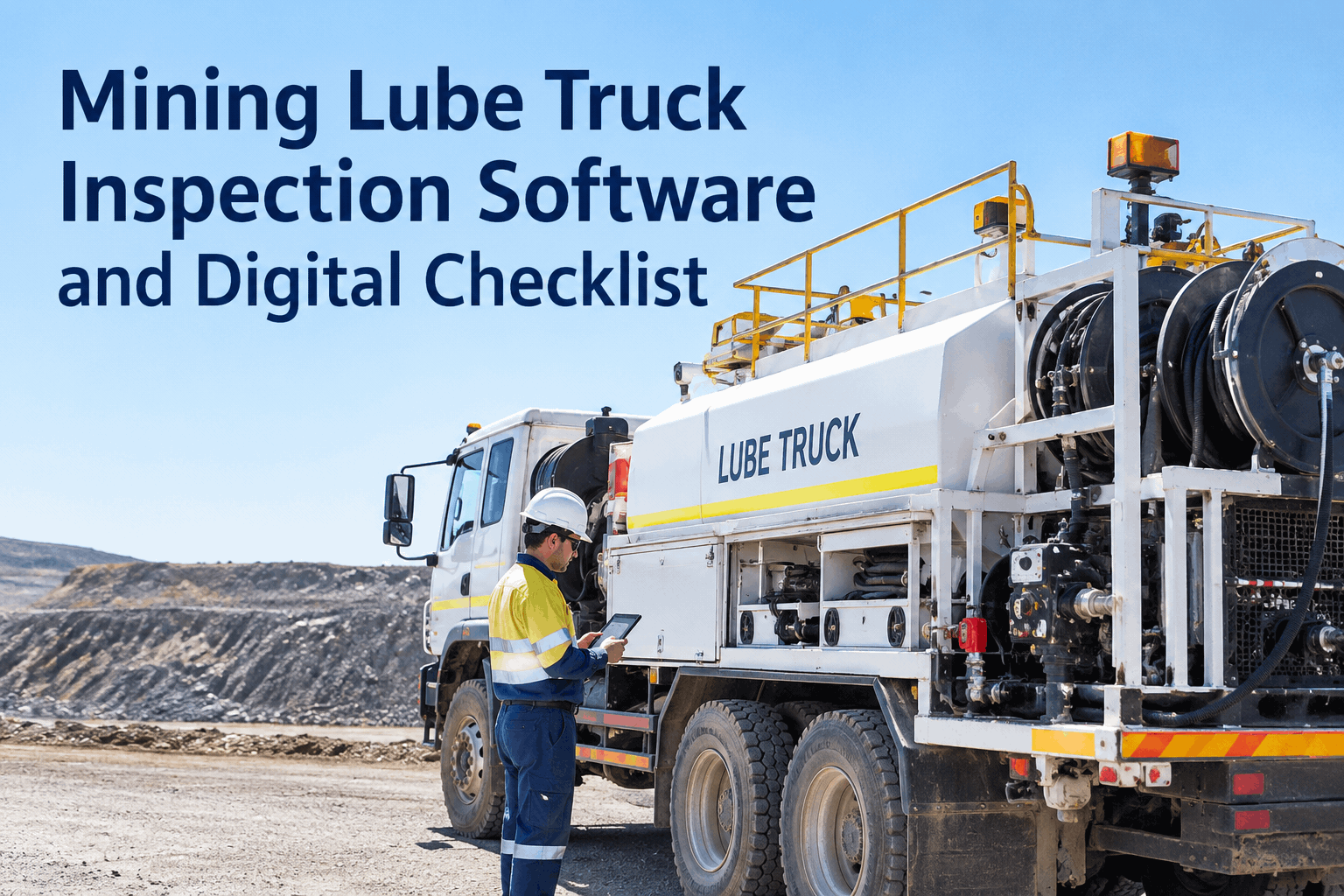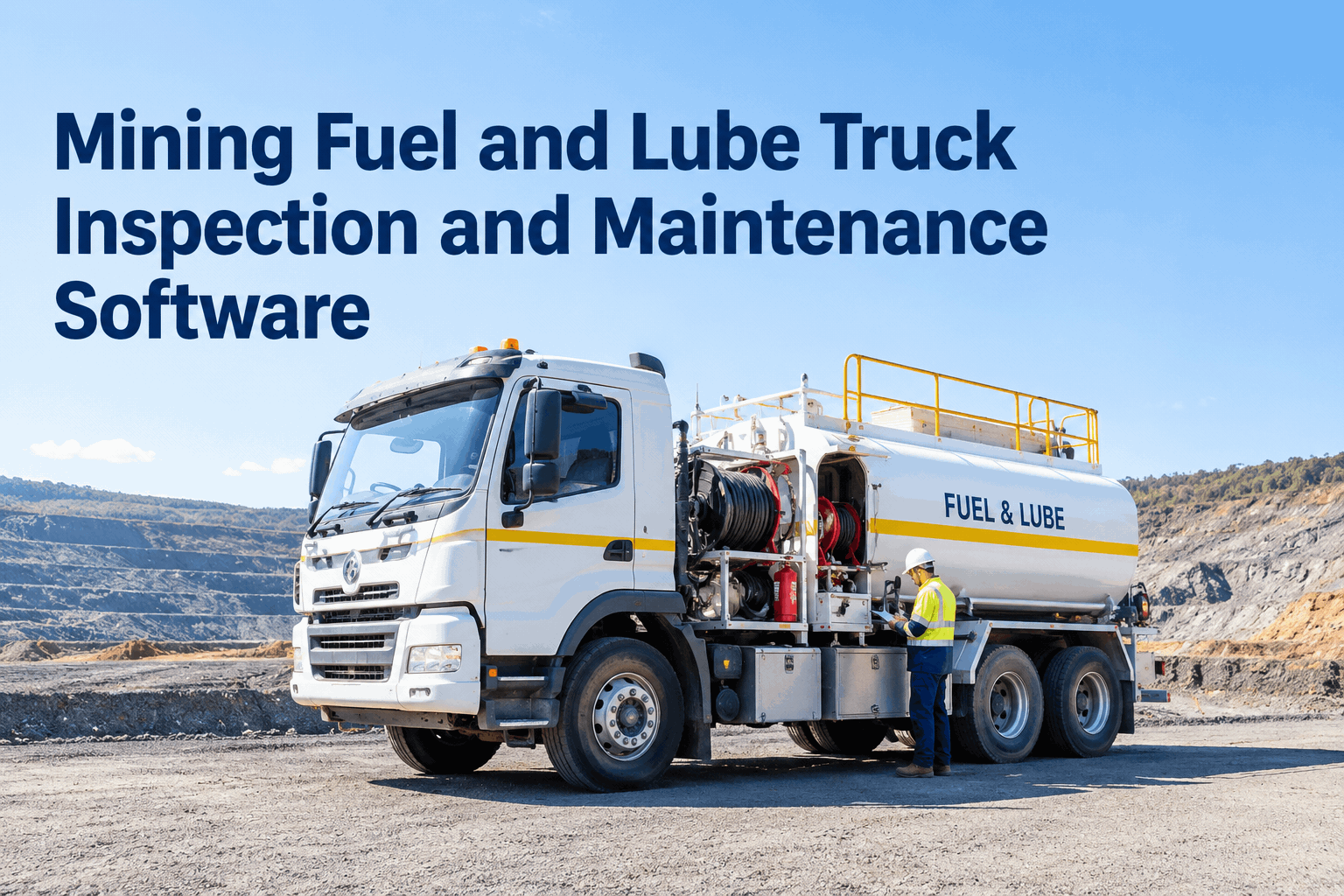
A fuel and lube truck doesn't dig, haul, or grade — but when it is down, nothing else on site can either. Mining fuel and lube truck inspection and maintenance software keeps the tank, pump, hose, and metering system tracked so the one vehicle every other machine depends on doesn't become the reason the whole pit waits. Book a demo to see it on your support fleet .
One Truck Down. Every Machine It Serves Waits.
Fuel and lube truck maintenance software keeps the tank, pump, hoses, and metering system inspected and scheduled — so the truck that services the whole fleet doesn't become the bottleneck for it.
Nobody budgets much attention for the fuel and lube truck — it's not the asset that moves ore, so it rarely gets the scrutiny a haul truck or excavator does. But it's the one vehicle that touches every other machine on site, every shift. A dead pump, a failed meter, or a hose that can't be trusted means dozers, graders, and haul trucks queue for service instead of working. Mining conditions accelerate wear on this truck the same way they do on everything else — dust, constant load-and-unload cycling, and 24-hour operation can pull component wear forward 20–40% against the OEM's base schedule, which is exactly why mining fuel and lube truck inspection software exists: to keep the support fleet from becoming the actual bottleneck.
What a mine-site fuel and lube truck has to get rightthe systems that decide whether it's ready when the next machine rolls up
This isn't a standard service truck. It's carrying flammable liquid, running multiple fluid systems off one chassis, and expected to be ready at any point on the haul road. Five systems decide whether it is.
Tank, baffles & containment
Shell integrity, baffle condition, and secondary containment under EPA SPCC expectations. A compromised tank isn't a maintenance item — it's a spill event waiting to happen.
Pump system
The fuel pump and the separate lube/grease/coolant pumps — seal condition, flow rate, PTO engagement. A weak pump turns a 15-minute service stop into an hour.
Hoses & reels
Hose integrity, reel retraction, nozzle and static-bonding clips. A cracked hose or a failed bonding clip is the fastest route to a spill or an ignition risk.
Metering & flow accuracy
Flow meter calibration tied directly to fuel-theft and variance control — a drifting meter either overcharges the equipment log or quietly bleeds fuel inventory.
Grounding & bonding
Grounding cable condition and bonding clip function — required before fuel moves on most sites, and the one check that's easiest to skip under time pressure.
Every one of these is a line a generic truck checklist glosses over. HVI's mining fuel & lube truck inspection puts tank, pump, hose, and grounding condition on the operator's phone with photo capture, so a weak point is a flag — not a surprise at the next service stop. Book a demo to see a fuel & lube truck template built for your fleet
The mining fuel & lube truck daily examination checklistwhat every pre-shift inspection has to cover before fuel moves
MSHA requires a daily examination of self-propelled mobile equipment for safety defects (30 CFR §56.14100 surface, §57.14100 underground), and on diesel fuel handling specifically, MSHA's rules require the truck's own engine to be shut down while it's being refueled into its own tank. Grounding before any transfer is standard practice on top of that. A digital checklist is the fastest way to prove all of it happened.
In HVI this is a guided mobile template — tick, flag, photo — timestamped to the right vehicle, so the daily examination is both compliance-ready and something maintenance can actually act on. Start a free trial and load this checklist against your support fleet
Meter-hour PM, pulled in for mine-severe dutywhy a fuel & lube truck's service interval shouldn't match a road-going tanker's
A fuel and lube truck on a mine site isn't idling between stops the way an over-the-road tanker might — it's running constant PTO load across every service call, all shift. Mining dust and duty cycle can pull a 250-hour service in to every two to three weeks instead of every two to three months, which is exactly the kind of drift a whiteboard or a paper log misses.
-
250 hr
Basic service
Chassis engine oil and filter, pump seal check, hose and reel inspection, fluid level checks across all tanks.
-
500 hr
Intermediate service
Flow meter calibration check, tank interior inspection, grounding system test, PTO and pump drive inspection.
-
1,000 hr
Major service
Full pump rebuild inspection, tank and containment structural check, complete hose and fitting replacement review.
HVI's meter-hour PM scheduling auto-generates the work order when a truck's hours cross an interval, and lets you shorten any interval for severe-duty sites instead of relying on a service date nobody tracks consistently. Book a demo to see tiered PM set against your fuel & lube fleet
From flagged defect to closed work orderhow one fuel truck's inspection connects to every machine it's about to service
A fuel and lube truck that's offline doesn't just cost itself downtime — it stalls every machine that was waiting on it next. The faster a defect routes to a work order, the shorter that chain of waiting gets.
-
1
Operator runs the daily examination
Tank, pumps, hoses, grounding, meter — the fuel-and-lube-specific checklist, on a phone, before the first stop of the shift.
-
2
A defect is flagged with photo & severity
A weeping pump seal or a cracked hose gets logged with a photo, tied to that exact vehicle, and timestamped the moment it's found.
-
3
It becomes a work order in one tap
The flag converts to a work order and lands with the shop — visible before the truck's own shift is even done.
-
4
Repair closes against that truck's history
Parts, labor, and sign-off record against the vehicle's own file, feeding cost-per-hour analytics across the whole support fleet.
From a mine-site fleet reliability supervisor
For years, the lube trucks were the last thing anyone thought about. All the attention went to the haul trucks and the shovels, and the service rigs just got driven until something broke — usually a pump seal or a hose, usually at the worst possible time, usually with three machines waiting on it.
Putting a real inspection in front of those drivers changed the math. A weeping seal gets flagged on the walkaround now, not discovered mid-service when a dozer's already sitting there waiting. We stopped losing production hours on equipment that was perfectly fine — it just couldn't get fueled.
Frequently asked questions
What is mining fuel and lube truck inspection software?
A mobile digital checklist built around a fuel/lube truck's systems — tank, pumps, hoses, metering, grounding — that flags defects with photos and routes them straight to a work order.
Why does one support truck matter so much to the whole fleet?
Every machine it services queues behind it when it's down. Idle haul-truck downtime alone runs $5,000–$20,000/hr, multiplied across every machine waiting on fuel or lube.
How often should a mining fuel and lube truck be serviced?
Typically 250-hour basic, 500-hour intermediate, and 1,000-hour major service tiers, often pulled in from every 2–3 months to every 2–3 weeks under mining duty. HVI auto-fires the work order at each interval.
What compliance requirements apply to these trucks?
MSHA's daily equipment examination rule (30 CFR §56.14100/§57.14100), diesel fuel-handling rules requiring engine shutdown during self-refueling, grounding before transfer, and EPA SPCC containment expectations.
Can HVI track multiple fuel and lube trucks across a site?
Yes. Each truck gets its own inspection history, PM schedule, and cost record, with defects and work orders visible site-wide the moment they're flagged.
Keep the truck that fuels everything else fueled up itself
HVI gives every fuel & lube truck operator a mining-specific daily examination, routes flagged pump, hose, or grounding defects to a work order in one tap, fires PM on real meter hours, and keeps a cost-tracked history per vehicle — so the one truck your whole fleet depends on doesn't become the reason it's waiting. Live on site in under two weeks.
- Tank, pump & hose condition tracking
- Defect → work order in one tap
- Meter-hour PM, pulled in for severe duty
- Cost-per-hour per vehicle, fleet-wide