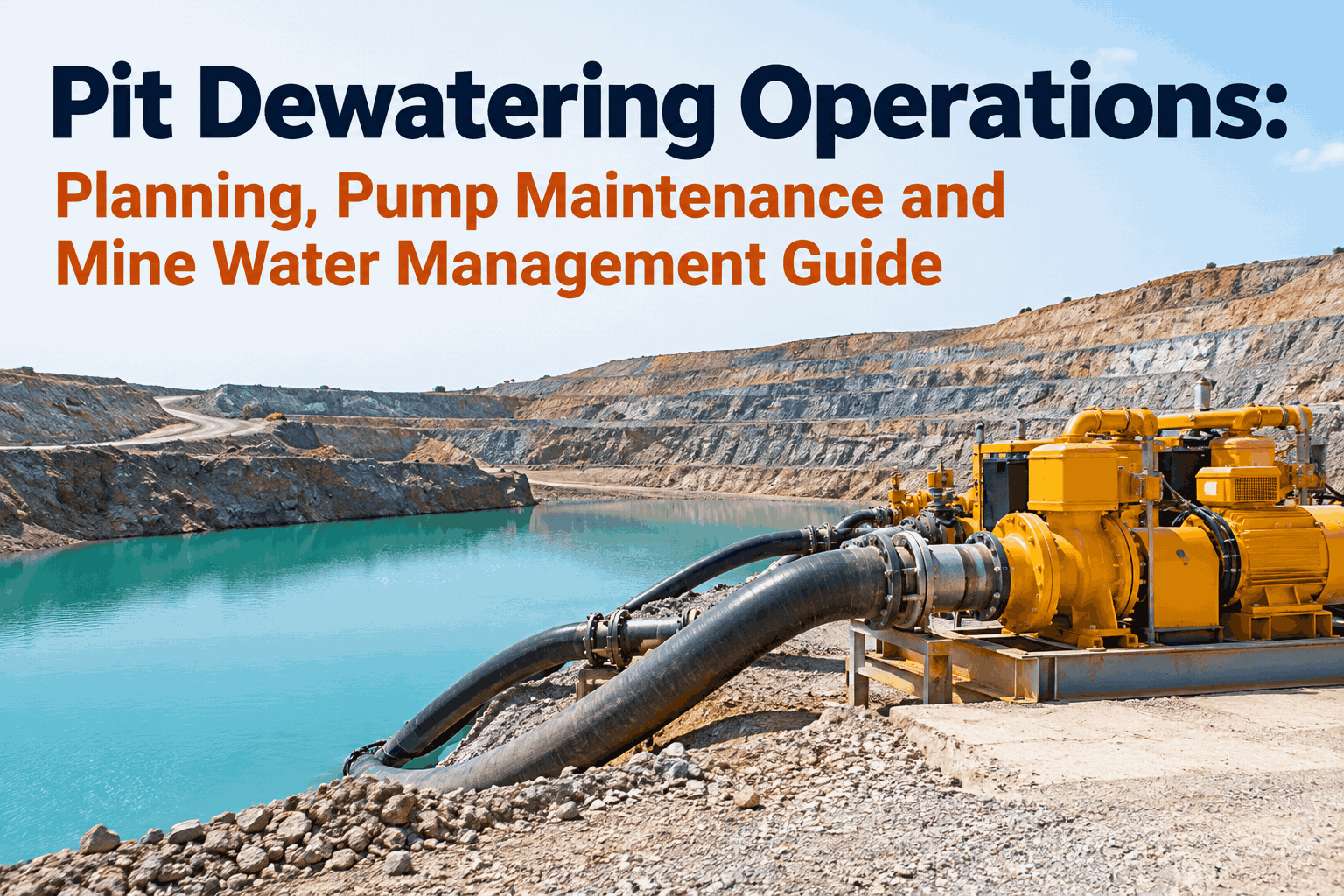
Pit water does not wait for a maintenance window. A pump may be healthy while a blocked discharge line sends water back toward the working bench, or a standby unit may look ready until it is asked to start. Effective pit dewatering operations connect water balance, equipment readiness and defect response—so the mine can act before a rising sump disrupts production. See how HVI supports dewatering maintenance records.
The pump is running. Why is the pit still filling?
A dewatering plan fails when the water path and the maintenance plan live in separate places. Know what must move water, what can stop it, and which defect needs action before the next shift.
The pit floods at the weakest link
A maintenance manager can service every pump and still lose the water balance.
Picture a night shift after heavy rain: the duty pump is operating, the standby unit is listed as available, and the sump continues to rise. The problem is not necessarily the motor. A blocked suction, leaking discharge, lost power supply or insufficient pond capacity can stop the system from moving enough water. That is why pit dewatering management needs both an operating response plan and maintenance records for every critical component.
Water in versus water out
Before scheduling pumps, establish whether the installed system can handle expected inflow.
Open-pit dewatering capacity must account for groundwater, runoff, rainfall and process-water contributions. Compare that inflow with effective pumping and discharge capacity—not simply the sum of nameplate pump ratings. Pipe friction, lift, wear and operating restrictions can reduce actual flow.
Headroom can disappear if a pump trips or discharge resistance increases.
Illustrative arithmetic only. These values are not mine design criteria. A qualified site team must calculate inflow scenarios, pump curves, duty/standby arrangements, discharge constraints and safe operating limits.
Set actions before the sump rises
A water-level trigger is useful only when somebody knows what happens next.
A robust operating plan defines site-specific alert levels, who confirms pump performance, when additional capacity is mobilized, and when access to affected areas must be restricted. The following response ladder is a planning example—not universal setpoints or a substitute for mine emergency procedures.
Record level trend, flow evidence, running hours and inspection status.
Check suction, discharge, controls and standby readiness; escalate abnormal trends.
Activate approved additional capacity and protect affected work areas.
Follow the mine's evacuation, isolation and incident procedures.
HVI helps document the inspection and repair side of this response. It should not be described as a water-level alarm, automated pump controller or emergency warning system.
The dewatering inspection checklist
Inspect the equipment that moves the water—and the components that can prevent it.
Use configurable checklists matched to the installed equipment and OEM instructions. Operators should report defects and abnormal conditions without attempting electrical, pressure-system or confined-space work beyond their authorization.
Pumps & prime movers
- Leaks, vibration, noise and temperature abnormalities
- Seals, lubrication and bearing condition
- Running hours and service due status
- Standby start/run-test evidence
Suction & discharge
- Intake blockage and suction condition
- Hose, pipe, coupling and valve integrity
- Visible leaks, erosion and support condition
- Flow or pressure anomalies for investigation
Power, controls & access
- Authorized electrical/control checks
- Alarm and level-sensor test records
- Safe access, guarding and isolation points
- Emergency contacts and response readiness
Service the standby before you need it
A backup pump is not truly ready simply because it has not been running.
Plan mine dewatering pump maintenance around operating hours, elapsed time, duty conditions and OEM requirements. Standby units need documented functional testing; pipeline, valve, sensor and power-system checks need their own inspection ownership.
Observe sump trend, operating condition, leaks and defects; verify status before handover.
Test standby operation and inspect valves, discharge routes, alarms and controls to approved procedures.
Schedule lubrication, seals, filters, electrical work and overhaul tasks to manufacturer guidance and site conditions.
Intervals depend on equipment type, duty and site risk assessment. Do not use a generic hour threshold in place of the OEM service manual.
From “pump checked” to “system ready”
The record matters most when an inspection finds something that prevents safe operation.
Consider a discharge hose showing abrasion near a support. A checklist alone does not close the risk. The finding needs an equipment reference, a documented restriction where required, assigned corrective work and verification before release. This is where HVI's inspection, work-order and maintenance-history capabilities support a repeatable process.
The five facts the next shift needs
Handover should show what changed—not force the incoming supervisor to reconstruct the last 12 hours.
A useful dewatering handover combines live operating information from the site's monitoring systems with maintenance information from equipment records. Keep those sources distinct and identify who verified each update.
Start free with HVI to begin organizing equipment inspection and maintenance records alongside your site's dewatering procedures.
Pit dewatering operations FAQs
Common questions from mine operations and maintenance teams.
What are pit dewatering operations?
They are the planning and operation of systems that collect and remove groundwater, rainfall and runoff from a mine pit. They include inflow assessment, sump design, pumping, discharge, monitoring, equipment maintenance and emergency response.
How do mines determine dewatering pump capacity?
Site engineers assess expected inflow scenarios, required drawdown, pumping head, pipe losses, equipment performance and redundancy. Effective discharge capacity must be sufficient for the approved operating conditions; nameplate ratings alone are not enough.
What should a dewatering pump inspection checklist cover?
Typical items include leaks, vibration, seals, bearings, lubrication, suction and discharge condition, electrical and control checks by authorized personnel, standby proving, service status and documented defects. The exact checklist should follow the OEM and site procedures.
How can a mine reduce dewatering pump downtime?
Maintain duty and standby equipment, inspect the full discharge route, schedule preventive maintenance, keep critical spares appropriate to the site, test backup readiness and track defects through verified repair completion.
How does HVI support pit dewatering management?
HVI can help maintain asset records, configurable inspection checklists, preventive maintenance schedules, work orders and maintenance history for dewatering equipment. It is not a replacement for hydrological design, water-level instrumentation, pump automation or mine emergency systems.
A dewatering plan is only ready when its equipment is
Move beyond scattered inspection sheets and uncertain standby status. See how HVI brings pump and supporting-asset maintenance records into a clearer workflow—while your mine's engineering and control systems manage the water.