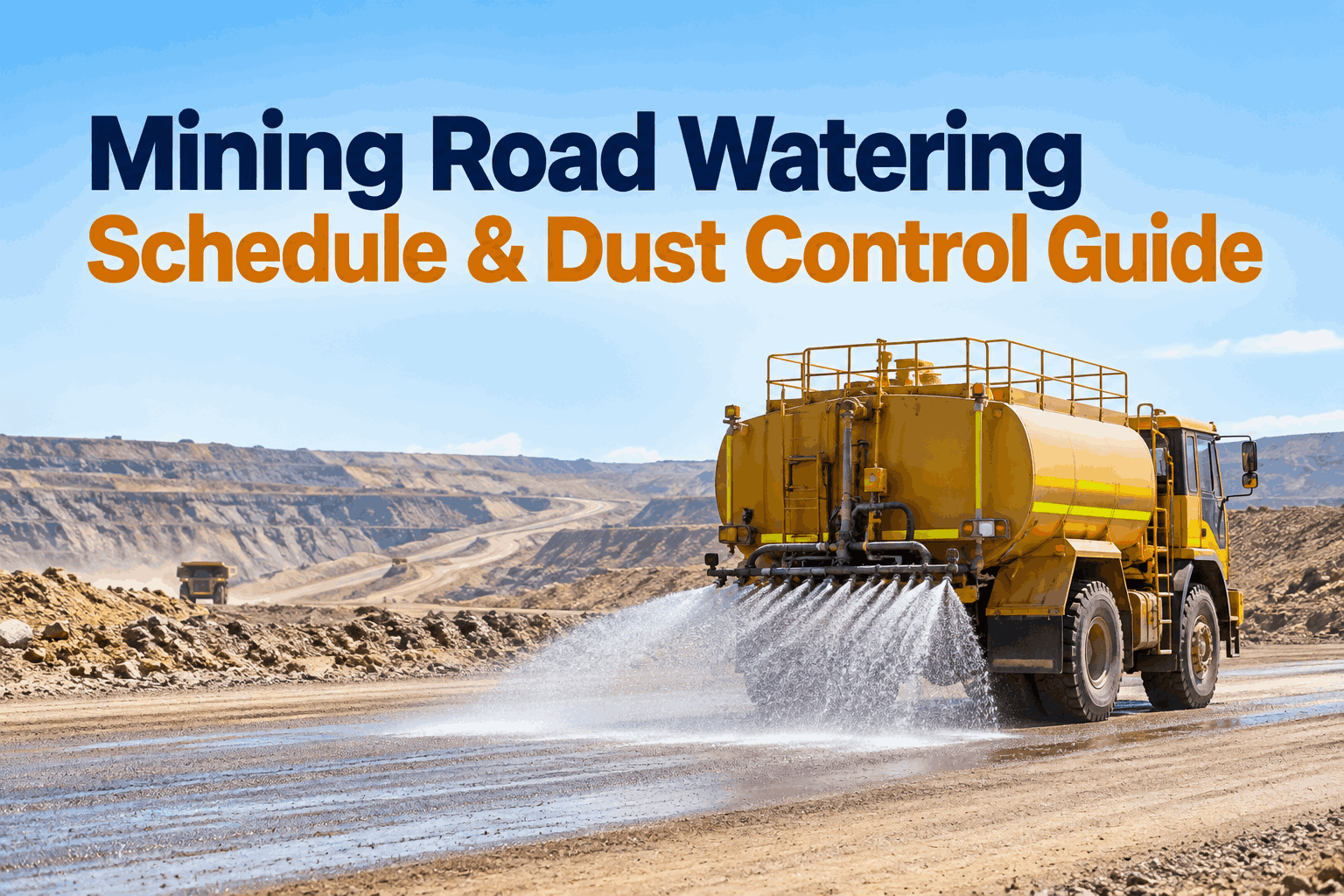
A road watering schedule looks simple on paper — send the water truck around on a loop and keep the haul road knocked down. Then the pump packs up mid-shift, nobody has a spare rigged, and within an hour the road is a dust cloud hiding light vehicles and grinding silica into every air filter on site. The schedule didn't fail; the truck did. Here's how mining teams keep a haul road watering program running by keeping the trucks behind it ready.
Dust control lives or dies on uptime.
You can build the perfect watering loop, but a haul road re-dusts fast when the water truck isn't rolling. The real lever on dust control isn't a smarter route — it's water trucks that are inspected, serviced and ready so the schedule you set actually runs, shift after shift.
Let's be clear about where software helps and where it doesn't. HVI doesn't plan your watering route, calculate coverage maps or measure dust levels — that's your operations call, read off the road and the weather. What HVI does is keep the equipment that executes the plan reliable: inspections, daily operator reports, preventive maintenance and a single asset list for every water truck. HVI already has a detailed mining water truck and dust suppression equipment inspection guide for the checks themselves; this piece is about keeping the whole watering program running. See the water-truck fleet on one system.
Why haul road dust control is a safety and cost problemwhat's really riding on the road watering schedule
Dust on a haul road isn't a cosmetic nuisance — it's four real risks at once, and every one of them gets worse the longer a watering pass is missed.
Lost visibility
Dust clouds hide light vehicles and pedestrians on the haul road — a leading collision risk at any mine.
Respirable silica
Airborne crystalline silica is a serious health hazard and a core focus of MSHA dust compliance.
Accelerated wear
Fine dust clogs air filters and chews up components across the whole haul fleet, not just the road.
Road degradation
A dry, dusting surface ravels and potholes faster — and over-watering swings the other way into slick, unsafe roads.
Get the watering right and all four improve together. Get behind on it — usually because a truck is down — and they all slide at once. See daily reporting from every water truck.
A watering schedule is only as good as the truck behind itwhere haul road dust control actually breaks down
Here's the part that gets missed when teams go hunting for a smarter schedule: the plan is rarely the problem. The coverage gap almost always traces back to the equipment — a truck that's down, a fault nobody reported, or no backup ready to fill in.
A failed pump, blown spray bar or chassis fault pulls the only truck off the loop mid-shift.
A weak nozzle or low water pressure that the operator never logged, so nobody fixed it.
A skipped PM that turns into a mid-shift failure right when the road needs water most.
When the primary truck drops, there's no inspected backup rigged to take over.
Close these four and the schedule you built actually holds. That's squarely what a maintenance and inspection system is for — and starting a free water-truck list is the fastest way to see the gaps.
Keep the water-truck fleet ready to runhow HVI supports your road watering schedule — without planning it for you
HVI's job is reliability, not routing. Each feature targets a different way a watering program slips, so the trucks are available when the schedule calls for them.
Operators log a shift report from the cab — water system, pump pressure, leaks, faults — so problems surface the same day, not after the road's already dusting.
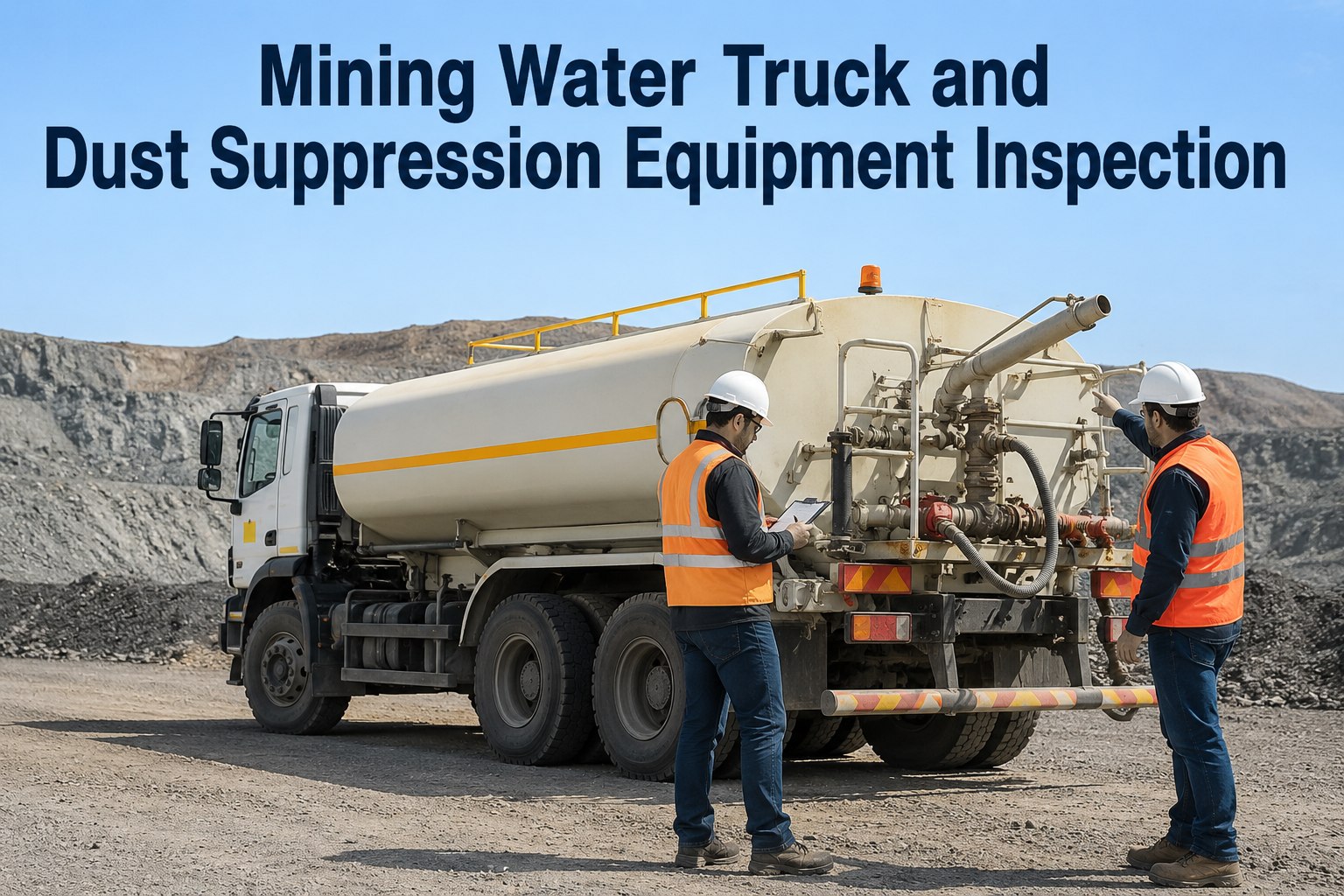
Spray bars, nozzles, pump, water cannon, tank baffles and chassis — a configurable inspection that checks the dust-suppression gear, not a generic truck form.
Hour-based PM on the engine and the water system catches pump and spray failures before they strand a truck mid-loop.
Every water truck and spare on one list with its status, hours and history — so you always know what's ready to roll.
Stagger services so you're never down to zero available trucks when the haul road needs water.
It's the daily operator reporting and preventive maintenance behind the schedule doing the heavy lifting. See water-truck PM scheduled by the hour.
What the operator checks before the shift
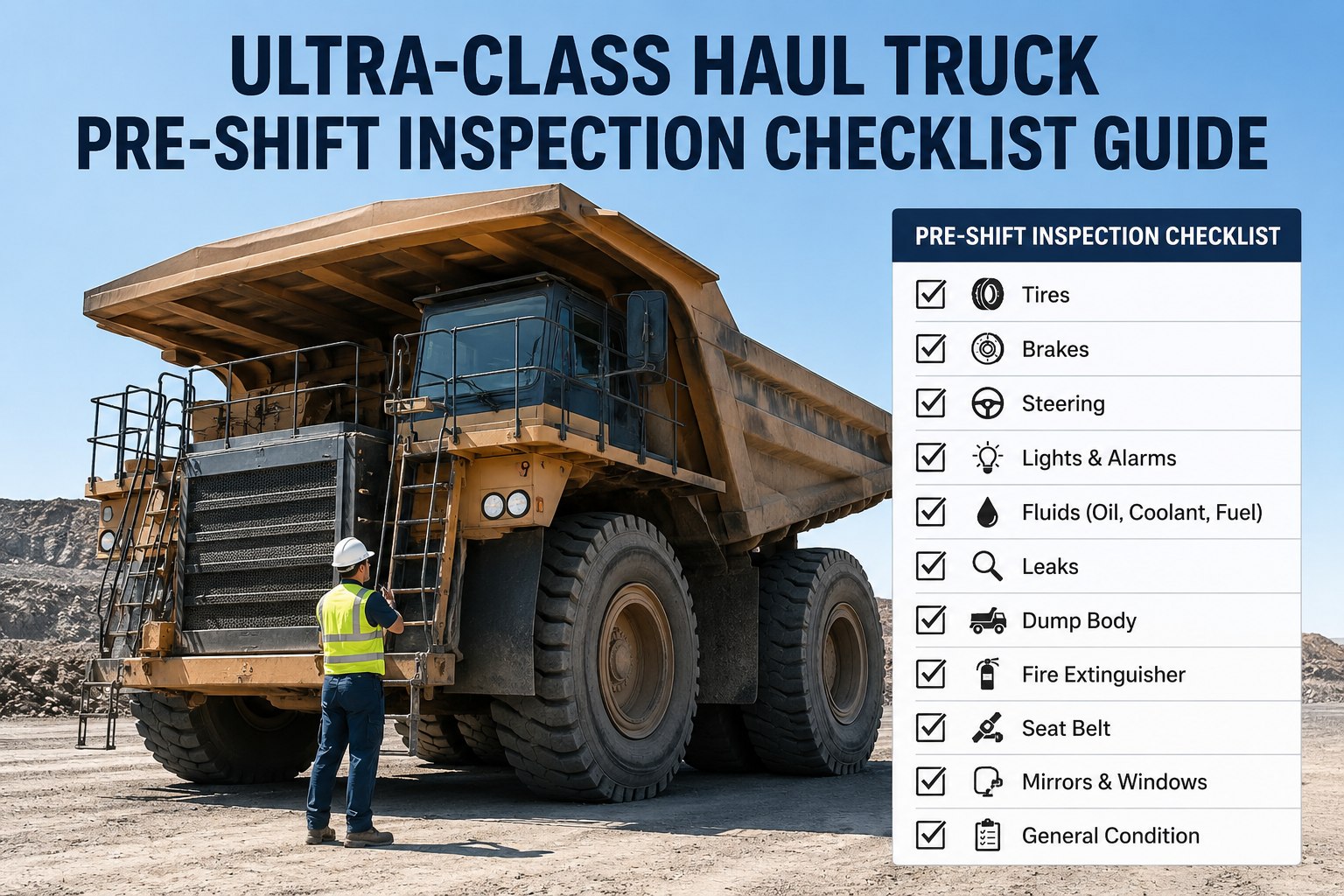
A two-minute pre-shift report is what stops a small water-system fault from becoming an afternoon of dust. These are the items a water-truck inspection should capture every shift:
Pump operation & water pressure
Spray bars & nozzles clear and even
Water cannon & controls working
Tank level, baffles & no leaks
Engine fluids, brakes & tires
Lights, beacon & visibility aids
Anything flagged becomes a work order on the spot, and the truck's status updates so dispatch knows what's truly ready. It all runs from a phone — add your water trucks free to set your own form.
What changes on the haul road
Coverage gaps
Reliable trucks and ready spares mean the watering loop keeps running through a shift.
Clearer haul roads
Consistent watering keeps visibility up and respirable dust down where crews work.
Fleet wear & cost
Less airborne dust means cleaner filters and longer life across the haul fleet.
Readiness at a glance
You know which water trucks are ready to roll before the shift starts, not after.
Manage the fleet that runs the schedule through HVI for mining, and the dust-control plan stops depending on luck.
From a haul road supervisor
We spent a whole quarter arguing about the watering route like it was some optimization puzzle. Turned out the route was fine — our two water trucks just weren't reliable. One was always down with a pump or a spray-bar issue nobody had written up, and we had no spare rigged, so every breakdown meant the pit road dusted over and we'd slow the haul for sightlines.
Once we put the water trucks on the same inspection and PM system as the rest of the fleet, the shift reports started catching the little pump and nozzle problems early. Now I actually know which trucks are ready before the shift, I keep a spare serviced, and the dust complaints have dropped right off. The schedule was never the issue — the uptime was.
Road watering schedule — FAQs
Does HVI plan the watering schedule or measure dust coverage?
No — and it's important to be straight about that. HVI doesn't build watering routes, calculate coverage maps or measure dust and silica levels. That's an operations decision you make from the road, the weather and your site's dust plan. What HVI does is keep the water trucks that carry out the schedule reliable: inspections, daily operator reports, preventive maintenance and a clear view of which trucks are ready to run.
How often should a mine haul road be watered?
It depends on conditions — surface material, traffic volume, temperature, wind and humidity all change how fast a road dries out, so frequency is set on-site and adjusted through the day. There's no universal number. The constant is that whatever frequency the road needs, you can only hit it if a water truck is actually available — which is the part a maintenance and inspection system protects.
Why do water trucks cause dust-control failures?
Because they're hard-working trucks with a water system bolted on, and both can fail. A worn pump, blocked nozzles, a split spray bar or a skipped service will pull a truck off its loop, and if there's no inspected spare ready, the road starts dusting within the hour. Catching those faults early through shift reports and preventive maintenance is what keeps the coverage from breaking.
What should a water-truck inspection cover?
Beyond the normal heavy-truck checks — engine, brakes, tires, lights — a water-truck inspection should cover the dust-suppression system: pump operation and pressure, spray bars and nozzles, the water cannon and its controls, and the tank, baffles and fittings for leaks. A configurable inspection lets you check exactly that gear, and anything flagged can become a work order immediately.
Can HVI manage water trucks alongside the rest of the mining fleet?
Yes. Water trucks, haul trucks, loaders, dozers and support equipment all sit on one asset list with their own inspections, schedules and service history. That single view is the advantage — your dust-suppression fleet is managed to the same standard as everything else on site, instead of being the afterthought that quietly falls behind until the road tells on it.
Make your road watering schedule something you can count on
You set the watering plan; HVI keeps the trucks behind it inspected, serviced and ready — so the haul road stays knocked down and the dust-control program runs on reliability, not luck. See it on your own water-truck fleet in 30 minutes.
Shift reports · Water-system inspections · Hour-based PM · Ready-to-run status