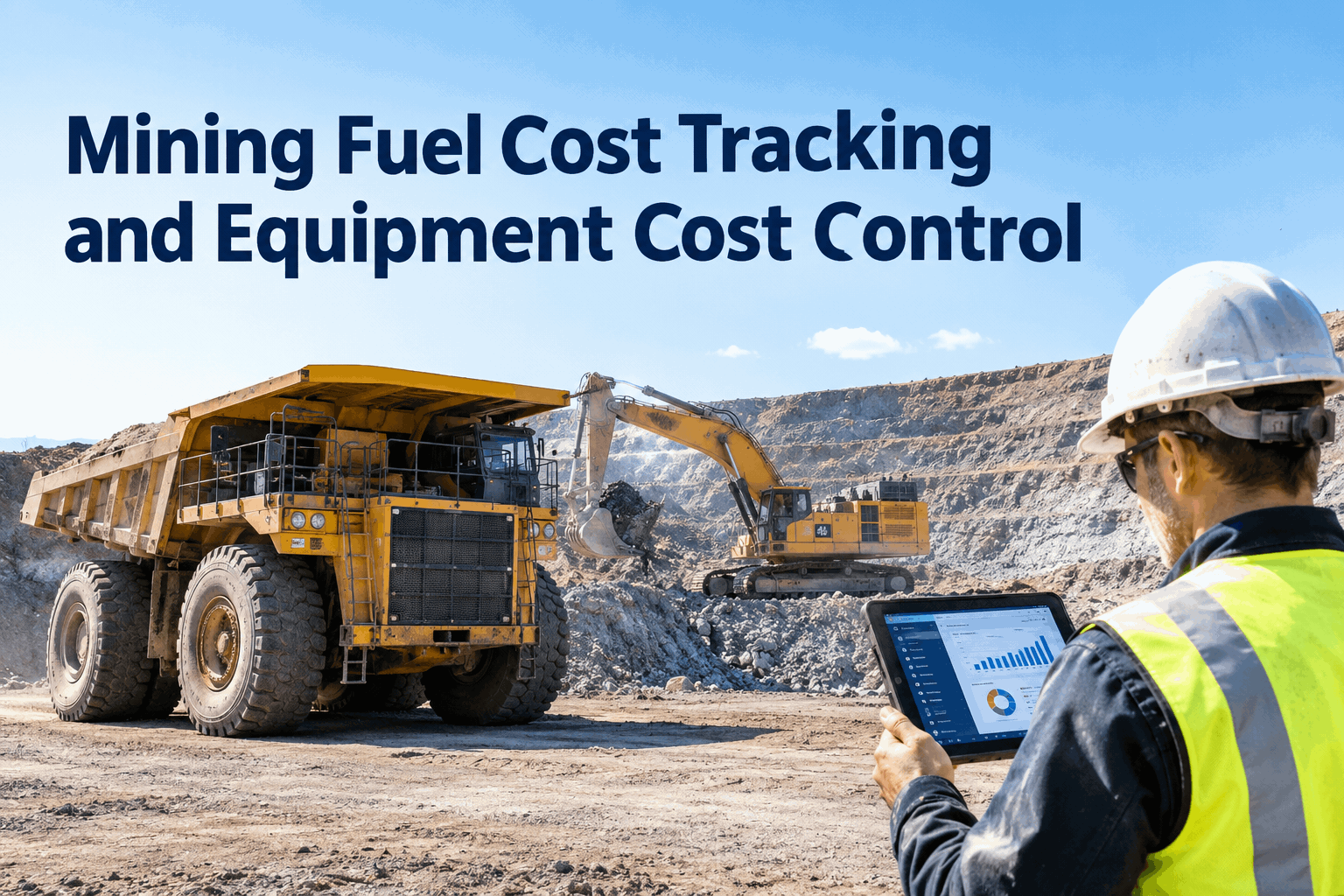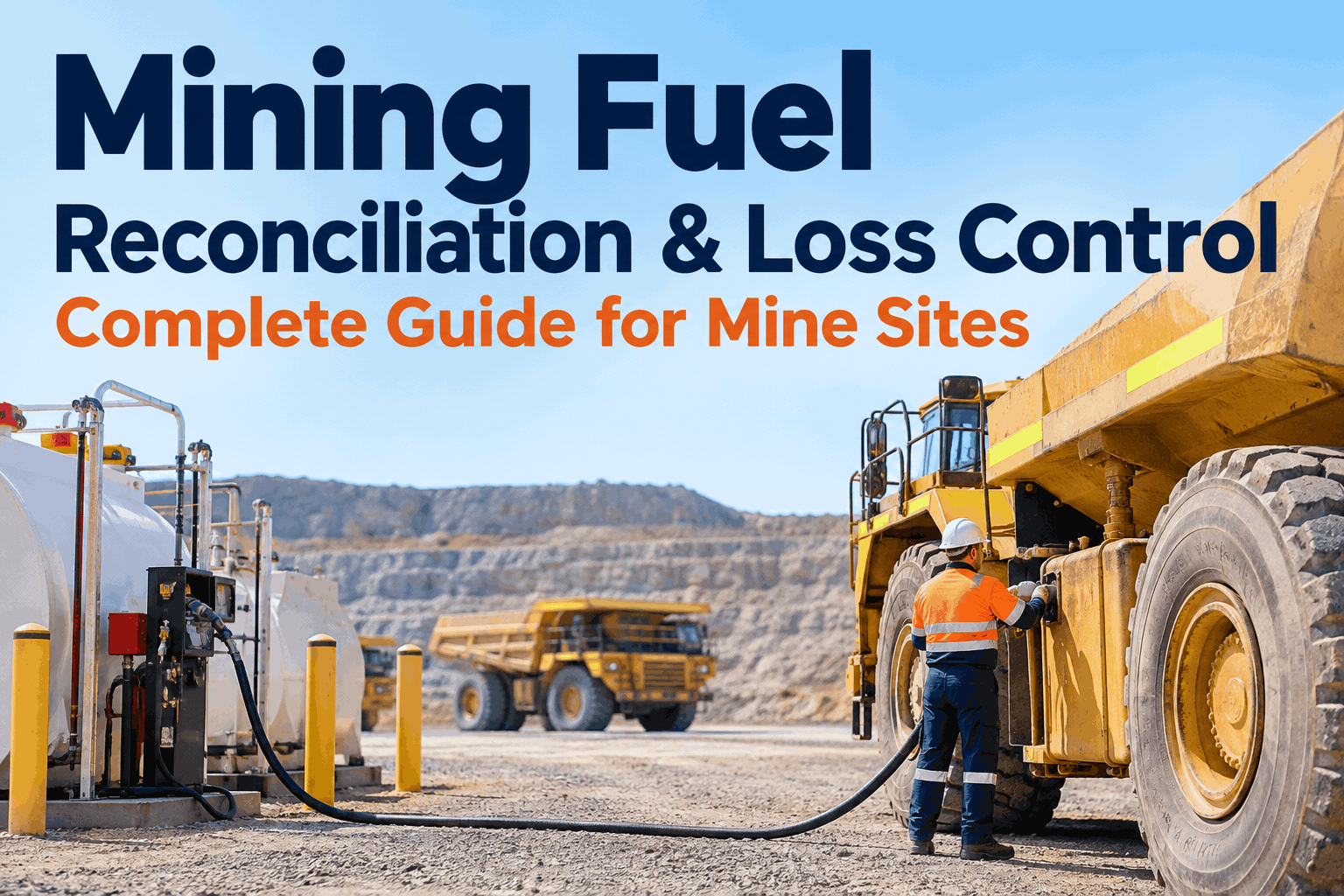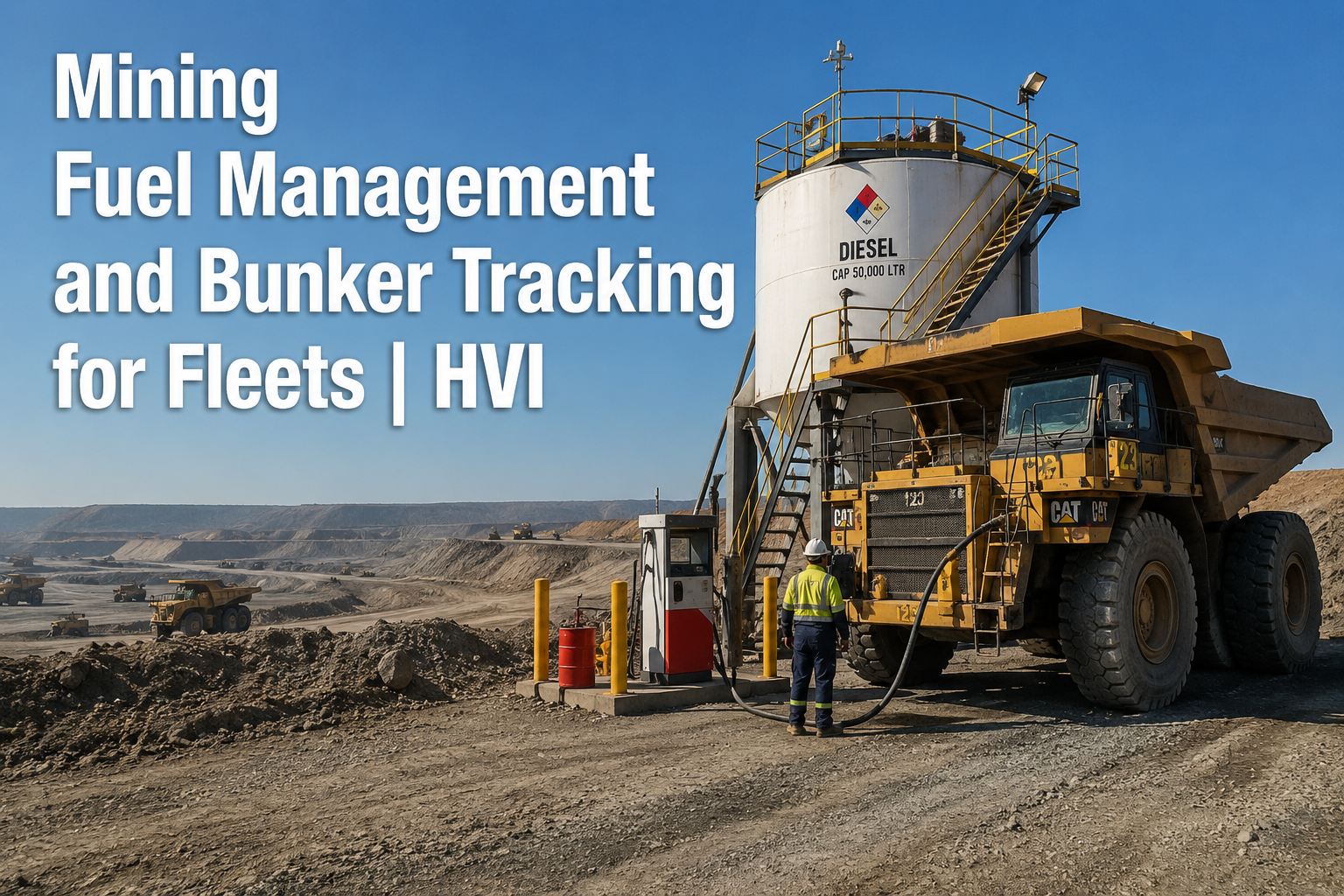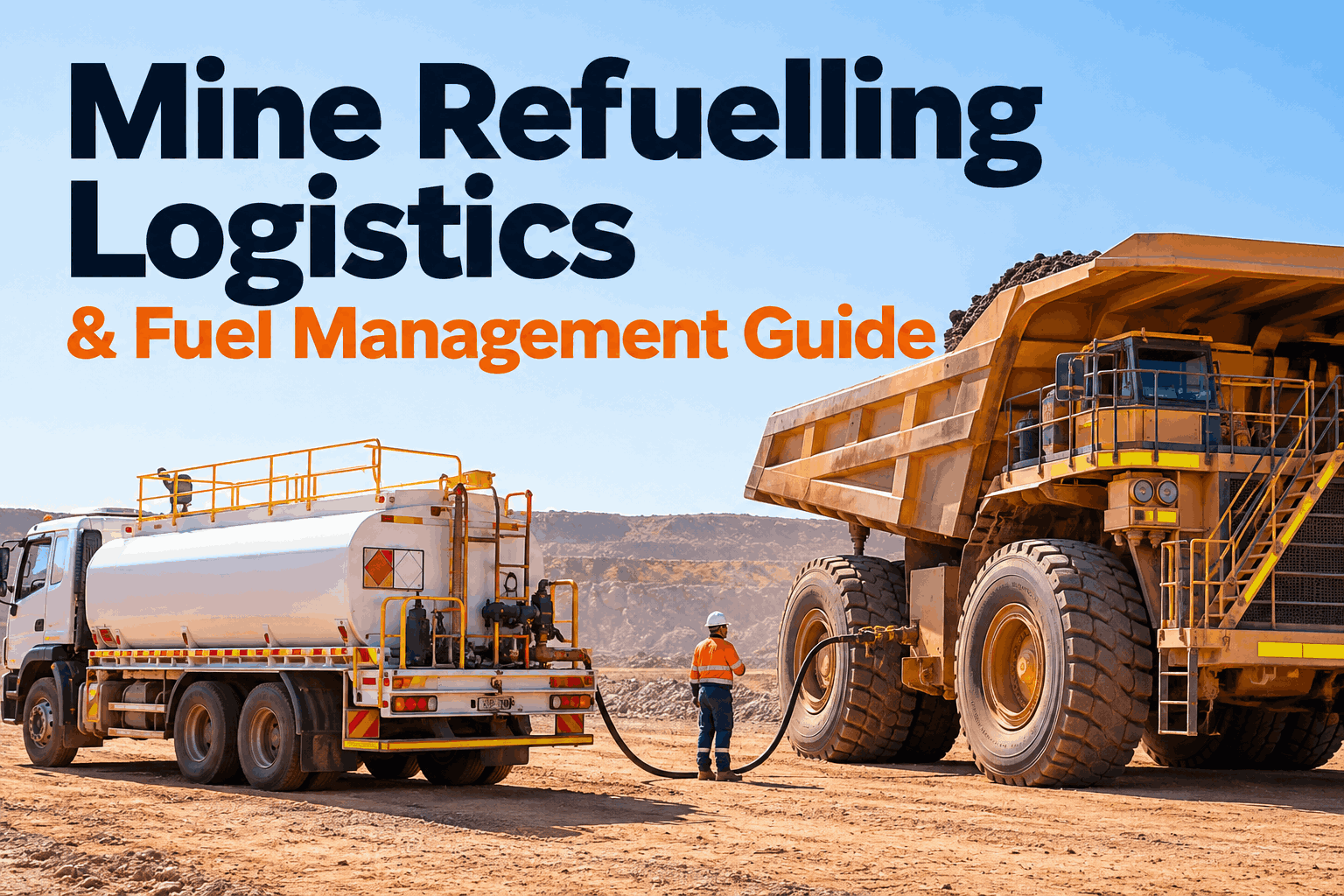
Mine refuelling logistics is one of those costs that hides in plain sight — nobody books "refuelling" as downtime, but add up the trips to the fuel bay, the queues, the waiting on a fuel truck and the litres scribbled on a sheet, and it's real production gone every shift. Fuel is also one of the biggest line items on the whole operation, yet most sites can't say what each machine actually burns. Here's where refuelling quietly costs you, and how to book a demo and put the whole thing on the record.
Every litre logged. Every machine accounted for.
Refuelling is a cost centre and a downtime source rolled into one — and on most sites it runs on paper and guesswork. Put every fill on a digital log tied to the machine, and fuel stops being the blind spot in your operation.
Let's be clear on what a maintenance platform does and doesn't do here. HVI doesn't dispatch your fuel trucks, route them around the pit or automate the dispensing hardware — that's your fuel logistics and bulk-fuel systems. What HVI does is capture every refuelling as a record tied to the machine, track consumption per unit, and surface the downtime and cost that refuelling hides. HVI already has a deeper mining fuel management and bunker tracking guide; this one is about the refuelling logistics — the time it eats and how to see it. Book a demo of fuel logs and consumption tracking.
Where refuelling drains time on a mine sitethe hidden downtime inside mine refuelling logistics
Refuelling rarely shows up as a single delay — it's scattered across the shift in ways nobody adds up. Put together, these are where the hours go.
Travel to the fuel bay
A haul truck that leaves the face to refuel is out of the cycle for the whole round trip.
Queueing at the bay
One pump and several machines means trucks waiting in line, burning shift for nothing.
Waiting on the fuel truck
Field refuelling that isn't aligned with the cycle leaves machines idling until the truck arrives.
Manual fuel logging
Litres written on a sheet get delayed, lost or guessed — and the record is never quite right.
Run-dry & emergency fills
A machine that runs out mid-shift is the most expensive fill of all — unplanned, and stopped dead.
You can't see what you don't record, and refuelling downtime is almost never recorded. Book a demo of fuel consumption tracking to make it visible.
Fuel you can't see is fuel you can't managewhy mining fuel management needs per-machine data
Time loss is only half of it. Fuel is one of the largest consumable costs on a mine, and when it's tracked as a single bulk number, four expensive problems stay invisible.
You can't spot the truck whose consumption is creeping up — often the first sign of a developing fault.
Without reconciling issued fuel against machines, shrinkage and errors go unnoticed.
Fuel spend you can't attribute to a machine or job can't be managed or benchmarked.
If refuelling time isn't logged, it never appears in your utilization picture — so it never gets fixed.
Rising fuel burn on one machine is a maintenance signal as much as a cost one — which is why fuel and fleet records belong on the same system. Book a demo of the fuel management module.
How HVI puts your fuel on the recordthe features behind digital mine refuelling logistics
Five features carry the fuel side of the fleet. They don't move fuel — they make sure every litre is logged, attributed and visible alongside the rest of the machine's record.
Fuel logs & storage
Record every fill and track bulk fuel and bunker levels, so issued fuel reconciles against machines.
Fuel consumption tracking
See litres per hour and per machine, and catch a unit whose burn is drifting up before it fails.
Asset management
Fuel sits on each machine's record next to hours, defects and service — one picture per asset.
Daily operator reporting
Operators log the fill at the machine, so the fuel record is captured where and when it happens.
Fleet maintenance records
Fuel trends feed the maintenance history, linking consumption to the work a machine actually needs.
It all runs through the same daily operator reporting your crews already use. Start a free trial and log your first refuelling.
What a digital fuel record captures
A fuel log is only useful if it's complete and tied to the machine. Each digital fill record locks in:
Machine / asset ID refuelled
Litres dispensed
Meter / hour reading at fill
Date, time & operator
Fuel source / bunker
Consumption since last fill
From those few fields you get per-machine consumption, fuel reconciliation and a cost trail — automatically. Start a free trial to track fuel per machine.
What changes across the fleet
Less refuelling downtime
Once the time loss is visible, you can plan fills around the cycle instead of against it.
Consumption you can see
Per-machine burn turns a bulk fuel bill into data you can act on, machine by machine.
Fuel that reconciles
Issued fuel matched to machines closes the gap where loss and errors hide.
An early fault signal
A rising burn rate flags a machine for attention before it becomes a breakdown.
Manage fuel alongside everything else through HVI for mining. Start a free trial and bring fuel onto one system.
From a mine fuel & fleet manager
Fuel was our second-biggest cost and I couldn't tell you what any single truck burned. It all came in as one monthly diesel bill, the fills were logged on a clipboard at the bay, and reconciliation was a guess. Worst part was the downtime — trucks queuing at the bay or running dry mid-shift, and none of it showing up anywhere I could point to.
Once every fill was logged against the machine on a phone, the whole thing opened up. I can see litres per hour per truck, I caught two units with creeping consumption that turned out to be real problems, and reconciling issued fuel actually balances now. The refuelling downtime finally shows in the numbers, so we could schedule fills properly. For a cost that size, flying blind was never acceptable — we just didn't have the data.
Mine refuelling logistics — FAQs
Does HVI dispatch fuel trucks or automate dispensing?
No — that's an important boundary. HVI doesn't route or dispatch fuel trucks, and it doesn't control dispensing hardware or bulk-fuel automation. Those belong to your fuel logistics and bulk-fuel systems. HVI is the record and tracking layer: it captures every fill against the machine, tracks consumption per unit, reconciles issued fuel, and surfaces the downtime and cost refuelling hides. It makes your fuel visible and accountable, not automated.
How does tracking fuel reduce refuelling downtime?
You can't reduce what you can't see. When every fill is logged with a time and a machine, refuelling time stops being invisible and starts showing up in your utilization picture — the queues at the bay, the field waits, the run-dry emergencies. Once it's measurable, you can plan fills around the work cycle, balance the bay load, and stop the unplanned fills that cause the worst stoppages.
Why track fuel consumption per machine?
Because a bulk fuel bill hides everything useful. Per-machine consumption tells you what each unit actually burns, lets you benchmark similar machines, and — most valuably — flags a unit whose burn is creeping up, which is often an early sign of a developing mechanical problem. It turns fuel from a lump-sum cost into both a budgeting tool and a maintenance signal.
Can operators log refuelling in the field?
Yes. Through daily operator reporting, the person doing the fill records it on a phone at the machine — litres, meter reading and fuel source — so the log is captured at the point it happens instead of transcribed from a paper sheet later. That's what makes the data reliable enough to reconcile and trend, rather than a best-guess written up at the end of shift.
How does fuel data connect to maintenance?
Fuel sits on the same asset record as hours, inspections, defects and service history. That connection is the point: a rising consumption trend becomes a maintenance flag, fuel-related faults are visible in context, and the machine's full story — how hard it works, what it burns, what it needs — lives in one place instead of scattered across a fuel sheet and a separate maintenance log.
Put mine refuelling logistics on the record
Keep your fuel trucks and bulk systems where they are — and give every fill a digital record tied to the machine, so you can see consumption per unit, reconcile the fuel, and finally measure the downtime refuelling costs. Fuel managed on data, not guesswork.
Every fill logged · Consumption per machine · Downtime you can see