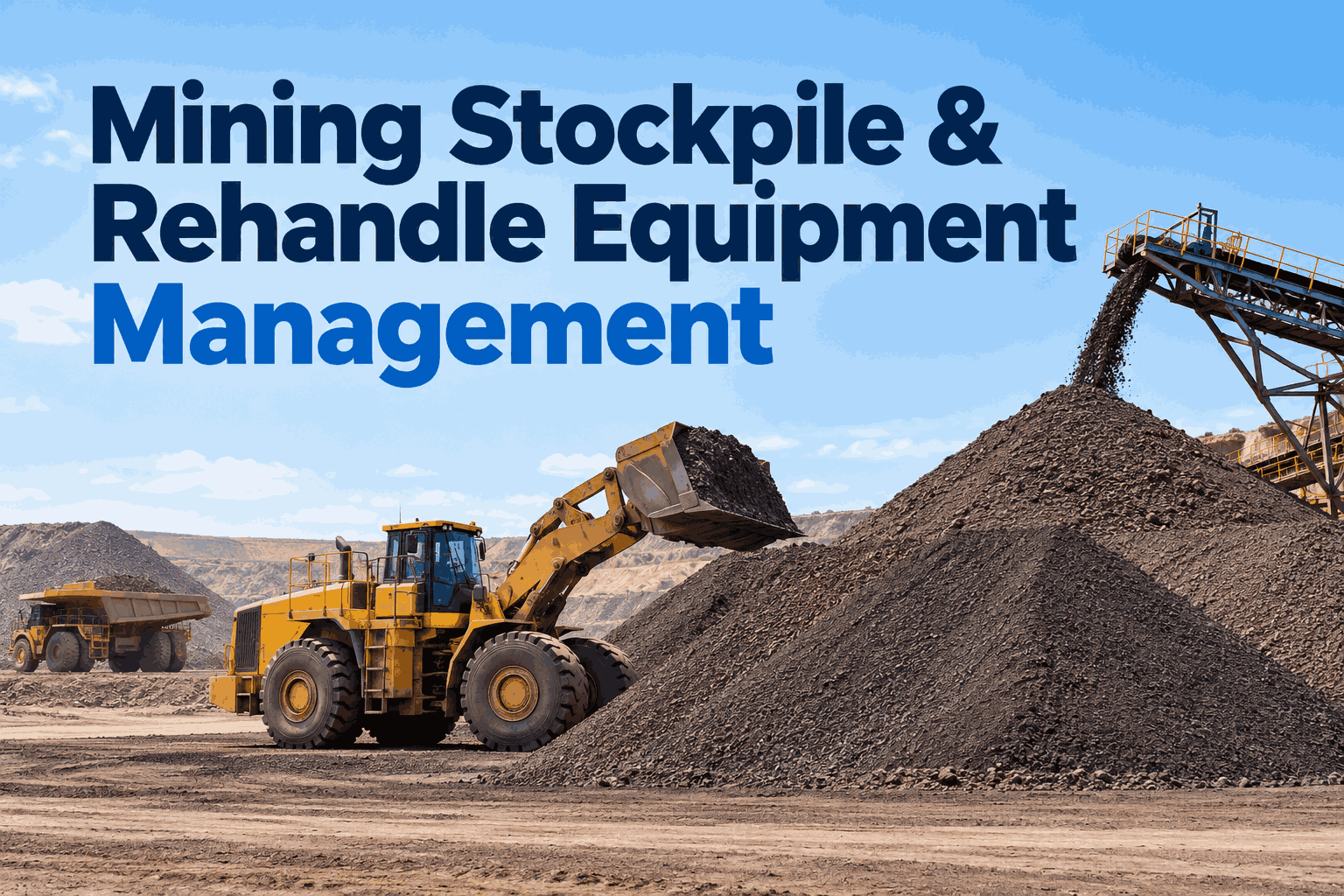
In mining, stockpile management lives or dies on one thing nobody puts on the plan: whether the equipment shows up. You can build the smartest stockpile and rehandle strategy on the planet, but the day a loader is down or a dozer won't start, the material gets moved twice, blended wrong, and the plan quietly falls apart. Rehandle is where margin leaks — and most of it traces back to equipment that wasn't ready. Here's how readiness and rehandle connect — see how HVI keeps the fleet ready as you read.
Move it once. Not twice.
Every tonne you rehandle is a tonne you pay to move again — in fuel, hours, tires and wear. Good stockpile planning keeps rehandle low, but it only works when the loaders, dozers and haul trucks are actually ready to run.
Rehandle is one of those costs that never shows up as a line item but quietly eats a mine's margin all year. Material gets stockpiled in the wrong place, blended poorly, or double-moved because a truck wasn't available when the plan called for it — and every extra pass burns diesel, clocks machine hours, chews tires, and ties up a loader that should be feeding the crusher. Smart stockpile management is how you keep that number down. But here's the part that gets missed in planning meetings: the whole strategy assumes the equipment is available. When it isn't, the plan bends to the breakdown, and rehandle climbs. This is where equipment readiness and stockpile efficiency stop being separate conversations.
What rehandle actually costs youwhy stockpile management in mining is really a cost-control problem
Think of every tonne as carrying a "handle factor" — how many times you touch it before it leaves the mine. The closer that number stays to one, the lower your cost per tonne. Let it drift, and the same material quietly costs you half again as much to move.
Material placed right the first time — the planned cost per tonne.
Re-stacking and blending fixes — fuel, hours and tires climbing.
Double and triple handling to work around downtime — margin gone.
The drivers are always the same: extra fuel, extra machine hours, accelerated tire and component wear, and a loader stuck re-stacking instead of loading trucks. Much of that extra handling isn't a planning failure at all — it's equipment that wasn't ready when the plan needed it. Start a free equipment log and the pattern gets hard to ignore.
The rehandle chain is only as strong as its weakest machinemining rehandle equipment that has to work together
Stockpile and rehandle work is a chain of machines handing material to each other. Dozers push and stack, loaders feed trucks and the crusher, haul trucks move it, and support equipment keeps the roads and faces workable. When any one link goes down, the others don't just wait — they create rehandle working around the gap.
Dozers
Push up, stack and reclaim. A down dozer means loaders dig poorly-shaped piles.
Loaders
Load trucks and feed the crusher. The bottleneck everything else waits on.
Haul trucks
Move material to stockpile or plant. One short means others double-cycle.
Support
Graders and water trucks keep hauls fast. Lose them and cycle times slip.
One unreliable machine doesn't cause one problem — it ripples into extra passes across the whole chain. Keeping every link in that chain available is exactly what good preventive maintenance is for, and how PM keeps the chain moving is the real lever on rehandle.
Your plan assumes the fleet shows upequipment availability is the hidden input to every stockpile plan
Here's the honest part: a stockpile plan is only as good as the availability behind it. Every schedule quietly assumes the loader will be there, the trucks will cycle, the dozer will reclaim. Unplanned downtime is what breaks that assumption — and when a machine fails mid-shift, the crew does whatever keeps production moving, which almost always means more rehandle.
- A surprise failure pulls a machine mid-shift
- Material gets stockpiled wherever it can, not where planned
- Loaders re-stack and blend to cover the gap
- Rehandle climbs and cost per tonne follows
- Machines are serviced before they fail, on hours
- Material lands where the plan intended, first time
- The chain runs at cycle, no scramble to improvise
- Rehandle stays near 1× — the planned number
To be clear about scope: HVI isn't a stockpile optimization or material-tracking platform, and it won't design your rehandle plan. What it does is protect the assumption every plan rests on — that the equipment is available — by helping you track and hold equipment availability. Pair it with your planning tools and downtime-reduction work on the haul fleet, and the plan finally has a fleet it can count on.
Keeping the rehandle fleet readywhere HVI fits in mining equipment management
HVI's job is narrow and real: keep the loaders, dozers, haul trucks and support equipment reliable so the rehandle plan actually executes. Four things do most of the work.
Pre-shift inspections
Operators catch the small defects — a leaking hose, a worn edge — before they pull a machine out mid-shift.
Hours-based PM
Service by engine or operating hours so each machine is maintained on its real duty cycle, not a guess.
Fast work orders
A flagged defect becomes a work order with parts and labor in one step, so repairs happen before failures do.
Equipment records
Every service and repair lives on the machine, so you know its real reliability and cost before it strands a shift.
Run through maintenance management, the loop closes on each asset: a dozer inspection flags a cracked pin, it becomes a work order, the repair closes into a signed record — and that machine stays in the chain. Watch a defect become a work order on a mining asset.
From a mobile equipment manager
Our planners used to blame rehandle on the pit layout. Some of it was. But when we actually tracked it, a huge chunk of our double-handling happened in the shifts where a loader or a truck was down and the crew was just improvising to keep feeding the crusher. We were paying to move the same material two or three times because a machine surprised us.
Getting the whole rehandle fleet on real PM and pre-shift inspections didn't fix our stockpile plan — that's a different job — but it stopped the breakdowns that were blowing the plan up. Fewer surprises, less scramble, and rehandle came down on its own. The planners finally had a fleet they could trust to show up.
The reliability numbers worth watchingmetrics that connect equipment readiness to rehandle
If rehandle is the symptom, these are the vital signs behind it. Track them per machine and the link between readiness and material cost stops being a hunch.
The share of scheduled time a machine is ready to work. Low availability on a loader or truck is where rehandle is born.
Hours lost to failures you didn't schedule — the surprises that force the improvising that drives double-handling.
How much scheduled maintenance actually happens on time. The leading indicator that availability will hold up.
What each machine really costs to keep running — the basis for repair-or-replace calls on your rehandle fleet.
These live in analytics and reporting once inspections, PM and work orders are flowing — the same data that tells you which machine is quietly costing you the most rehandle. It's the kind of visibility mining teams already expect across their heavy equipment fleet.
Stockpile & rehandle equipment — FAQs
How does equipment readiness affect stockpile rehandling?
Directly. Every stockpile and rehandle plan assumes the loaders, dozers and haul trucks will be available. When a machine fails unexpectedly, the crew improvises to keep production moving — material gets stockpiled in the wrong place, blended poorly, or double-moved — and rehandle climbs. Reliable equipment keeps material moving the way it was planned, which keeps the handle factor near one and cost per tonne down.
Is HVI a stockpile management or optimization platform?
No — and it's important to be clear. HVI doesn't plan stockpiles, model blending, or track material movement and grade. It's an equipment maintenance system: inspections, preventive maintenance, work orders and equipment records that keep your loaders, dozers, haul trucks and support machines reliable. It protects the availability your stockpile plan depends on; your planning and material-tracking tools still do the optimization.
Which equipment matters most for rehandle efficiency?
The whole chain, because they hand material to each other. Loaders are usually the bottleneck everything waits on, haul trucks set the cycle, dozers shape and reclaim the piles, and support equipment keeps roads and faces fast. A failure anywhere ripples into extra passes elsewhere, so availability across the full rehandle fleet matters more than any single machine.
How does preventive maintenance reduce rehandle costs?
By replacing surprise failures with planned service. Hours-based PM and pre-shift inspections catch wear before it becomes a mid-shift breakdown, so machines are available when the plan calls for them. Fewer surprises mean less improvising, which means less double-handling. The maintenance doesn't lower rehandle directly — it removes the downtime that was driving rehandle up.
What should a mine track to connect readiness and rehandle?
Equipment availability and unplanned downtime per machine, PM compliance, and true cost and history per asset. Together they show whether the rehandle fleet is holding up and which machine is quietly costing you the most extra handling. Once inspections, PM and work orders are flowing in one system, those numbers become visible instead of anecdotal.
Give your stockpile plan a fleet it can trust
You handle the stockpile and rehandle strategy. HVI keeps the machines that execute it ready — hours-based PM, fast work orders, and a reliability history on every loader, dozer and haul truck. Fewer surprises, less scramble, and rehandle that stays close to the number you planned.
Readiness behind the plan · Hours-based PM · Inspection → work order → history