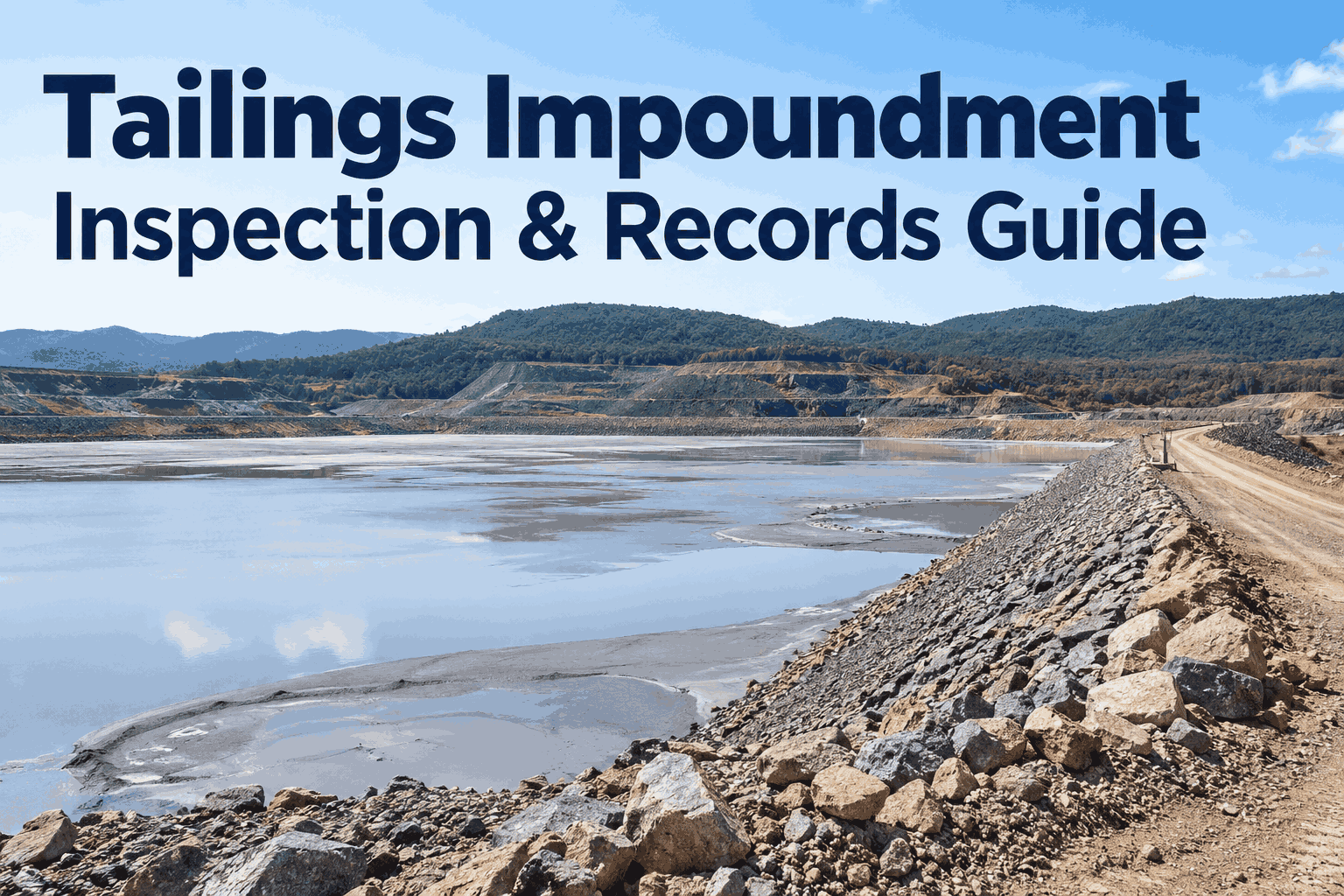
Tailings impoundment inspection is not simply a walk around a dam. A useful inspection record connects the condition of the embankment, crest, slopes, seepage areas, drainage features, spillways, pool conditions and instrumentation with what changed since the previous inspection. When an observation indicates deterioration or a potentially hazardous condition, the record also needs to show what happened next.
Inspect the facility as a system. Record the changes that matter.
Build a repeatable tailings inspection process around physical conditions, monitoring observations, instrumentation, corrective actions and searchable inspection history.
A tailings inspection should follow the physical structure
Generic safety forms make it easy to record that an inspection occurred without showing what was actually examined. A stronger tailings inspection checklist follows the facility from crest to downstream toe and includes the water-management and monitoring features that influence its condition.
Record what you see — then compare it with what changed.
An isolated observation has limited context. Condition history makes the inspection more useful by showing whether seepage, erosion, settlement or another feature is stable, improving or changing.
Cracking, settlement, bulging, sloughing or deformation.
NEW / EXPANDINGLocation, dimensions, photo and comparison.
Location, flow, clarity, wet areas and drainage response.
TREND CHANGEObserved condition, measurement and supporting evidence.
Rills, gullies, surface loss or damaged drainage paths.
DEEPER / WIDERExtent, location and corrective-action status.
Pool elevation, location and relationship to water controls.
UNUSUAL LEVELLevel, date, weather context and relevant observations.
Required readings and instrument condition.
TREND / LIMITReading, unit, instrument ID and comparison.
A reading becomes useful when it has history
Monitoring data should be interpreted under the facility's approved plans, engineering criteria and applicable requirements. The maintenance record can support that process by keeping readings tied to the same facility and inspection history.
The system should preserve actual readings rather than inventing a generic “safe” number. Thresholds and response criteria belong to the facility's approved engineering and monitoring program.
Coal impoundments and metal/nonmetal dams need separate compliance logic
One of the most important recordkeeping decisions is identifying which requirements actually apply to the facility. Do not convert the coal impoundment inspection frequency into a universal rule for every mine dam.
Qualifying water, sediment or slurry impoundments
Impoundments meeting §77.216(a) are examined for appearances of structural weakness and other hazardous conditions at intervals not exceeding seven days, or as otherwise approved by the District Manager.
*Or another interval approved by the District Manager under the regulation.
Water or silt retaining dams that create a hazard if they fail
The metal and nonmetal standards state that where failure of a water or silt retaining dam would create a hazard, the dam must be of substantial construction and inspected at regular intervals.
Inspection frequency and scope should reflect the requirements applicable to the specific operation.
Compliance note: The inspection software should mirror the approved facility process. It should not substitute generic thresholds, frequencies or engineering judgments for requirements established by regulation, approved plans or qualified professionals.
A condition record should answer five questions
“Seepage observed” is rarely enough for a useful inspection history. The record becomes more actionable when the observation is located, described, supported with evidence, compared with previous conditions and assigned a response.
Changed condition at downstream toe
Record the actual field observation here. Avoid replacing a measured or observed condition with a generic pass/fail result.
Do not let an abnormal condition disappear into inspection notes.
The purpose of a structured inspection record is not to assign an engineering conclusion automatically. It is to make sure unusual observations reach the people and process responsible for evaluating them.
See how HVI manages inspection findings →The value is in the history, not just the latest form
Tailings conditions develop over time. Searchable impoundment inspection records let safety and facility teams review previous observations, photos, instrumentation entries and corrective actions without reconstructing the history from separate binders or spreadsheets.
Follow-up: Compare next inspection.
Follow-up: Trend retained.
Follow-up: Corrective item closed.
A searchable record also makes it easier to prepare for internal reviews, engineering discussions and compliance inspections. Explore HVI digital inspections.
Turn recurring inspections into a facility history.
HVI can help mining teams configure inspection checklists, document observed conditions, attach field evidence, assign corrective actions and retain searchable inspection records across mine sites. The platform supports the inspection and documentation process while facility-specific engineering decisions remain with the qualified people responsible for the impoundment.
What should a tailings inspection checklist capture?
The exact checklist should match the facility, applicable requirements and approved plans. As a recordkeeping framework, however, these groups help prevent critical observations from being buried in one large comment field.
Facility identification
Impoundment ID, inspection date, inspector, operating status and relevant site context.
Embankment condition
Crest, upstream and downstream conditions, settlement, cracking, erosion and deformation.
Seepage & drainage
Observed wet areas, seepage locations, drainage condition and changes from previous inspections.
Water-management features
Pool conditions, spillways, channels, culverts and other applicable water-control features.
Instrumentation
Instrument identification, readings, condition and trend context required by the monitoring program.
Actions & evidence
Photos, measurements, unusual observations, notifications, corrective actions and closure evidence.
Tailings Impoundment Inspection FAQs
How often must qualifying coal impoundments be inspected under MSHA?
Does the seven-day MSHA rule apply to every tailings dam?
What should a tailings dam inspection look for?
Why is inspection history important for tailings impoundment monitoring?
How can HVI help with tailings impoundment inspection records?
Make every tailings inspection part of the facility record.
A strong tailings impoundment inspection program connects recurring field checks with monitoring data, observed changes, supporting evidence and corrective actions. HVI helps mining teams keep those records organized and retrievable across sites.