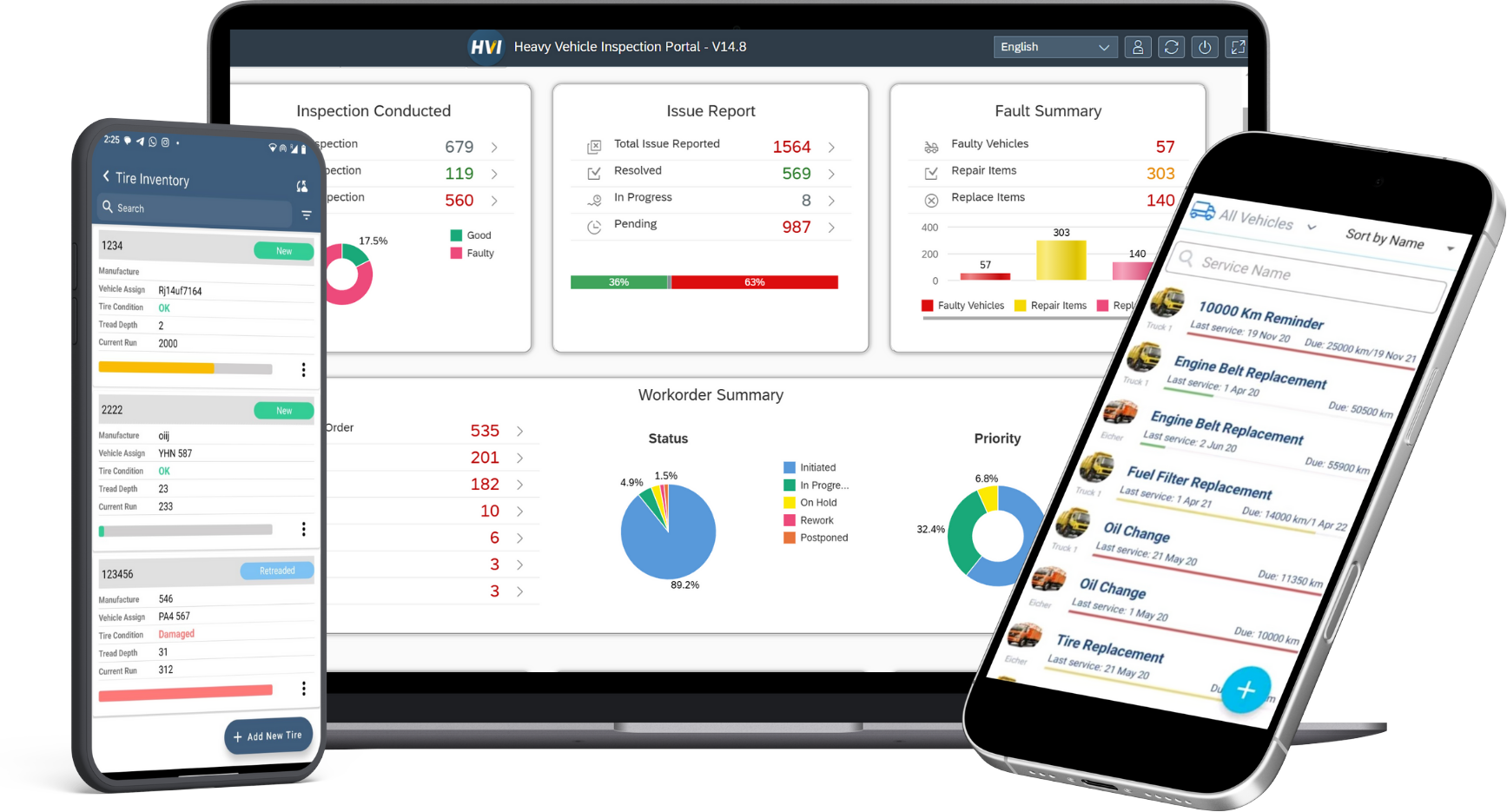
How to Improve Your CSA Score with HVI and Motive: A Comprehensive Guide
Introduction
As every professional in the trucking industry knows, maintaining a good Compliance, Safety, and Accountability (CSA) score is vital. Providing tools for clean, safe, and efficient operations not only keeps you in good standing with the Federal Motor Carrier Safety Administration (FMCSA), but it also cuts down on risks and liabilities while boosting your bottom line. In this guide, we explore how Human Vehicle Interaction (HVI) and a strong underlying Motive can play an essential role in improving your CSA score.
Why Is Improving Your CSA Score Important?
First, let's tackle why it’s crucial to maintain and improve your CSA score. A CSA score is used by the FMCSA to measure a carrier's safety and compliance performance. High CSA scores may lead to unwanted FMCSA interventions, potential fines, or even a decrease in business since shippers and brokers likely prefer carriers with lower CSA scores. Thankfully, technology—such as HVI—and a robust commitment to safety and compliance can significantly boost your performance.
Key Features of a Good CSA Improvement Strategy
A good CSA improvement strategy has several distinguishing features:
- Regular safety training - Ongoing education keeps safety principles and practices on the top of everyone's minds.
- Thorough pre-trip inspections - Detailed inspections can help prevent on-road equipment failures.
- Solid maintenance program - Regular maintenance reduces the chances of mechanical failures that lead to CSA violations.
- Adherence to HOS regulations - Making sure operators aren't driving for too long without breaks reduces the risk of accidents and associated penalties.
- Use of technology like HVI - Technological tools provide valuable data and insights that can help you improve safety and compliance.
The Role of HVI and Motive
Let's focus on the role of HVI and Motive in improving your CSA score. Both factors crucially contribute to the effective management of fleet safety and compliance.
HVI stands for 'Human Vehicle Interface.' It's a technology designed to improve the interaction between a vehicle and its operator, enhancing safety and minimizing driver error—the cause of a significant percentage of road accidents.
On the other hand, the Motive refers to the imperative driving the efforts to improve CSA scores. This could be regulatory compliance, a desire to reduce operational costs, or the ambition to improve the company's reputation. The Motive keeps all stakeholders committed to the endeavor.
How to Implement a CSA Improvement Strategy Effectively
In implementing a CSA improvement strategy, a clear roadmap is essential. Here is a simple step-by-step guide.
- Create a CSA task force - A dedicated team focuses on improving the CSA score.
- Identify the problem areas - Use CSA data to pinpoint where your carriers are falling short.
- Implement education and training - Regular, focused training keeps best practices at the front of all considerations.
- Use technology like HVI - High-quality technological tools give you the data and resources you need to make better safety and compliance decisions.
- Monitor progress - Keep track of your CSA scores and how they change based on different measures.
- Refine strategies - Work continuously to refine your strategies and improve your CSA score.
Top 5 FAQs
1. What is a CSA score?
A CSA score is a rating given by the Federal Motor Carrier Safety Administration (FMCSA) that measures a carrier's safety and compliance performance.
2. How is a CSA score calculated?
The CSA score is based on data from inspections, crash reports, and investigations. It is weighted to account for the severity of violations and the length of time since they occurred.
3. What does HVI stand for?
HVI stands for 'Human Vehicle Interface.' It's a technology designed to improve the interaction between a vehicle and its operator.
4. How can I improve my CSA score?
Improving your CSA score involves regular safety training, thorough inspections, a solid maintenance program, adherence to Hours of Service (HOS) regulations, and the use of technology like HVI.
5. How often should I check my CSA score?
CSA scores are updated monthly, so it's a good idea to check your score at least once a month. More frequent monitoring allows you to stay on top of changes and react promptly.
Conclusion
Improving your CSA score doesn't happen overnight. It requires a thoughtful, comprehensive, and ongoing strategy. However, committing to safety and compliance—and leveraging technology like HVI—can significantly improve your performance, reduce risks, and enhance business prospects in the long run. Prepare to embark on this journey with determination, leveraging your Motive, staying in tune with technology, and ultimately focusing on your goal: a better CSA and a safer, more compliant fleet.