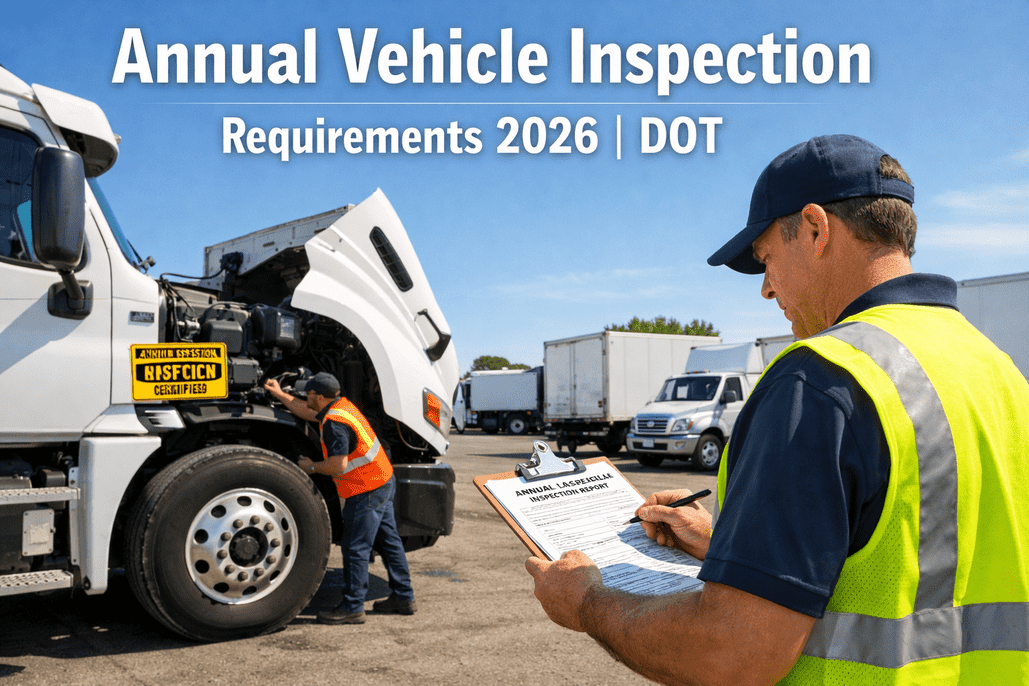
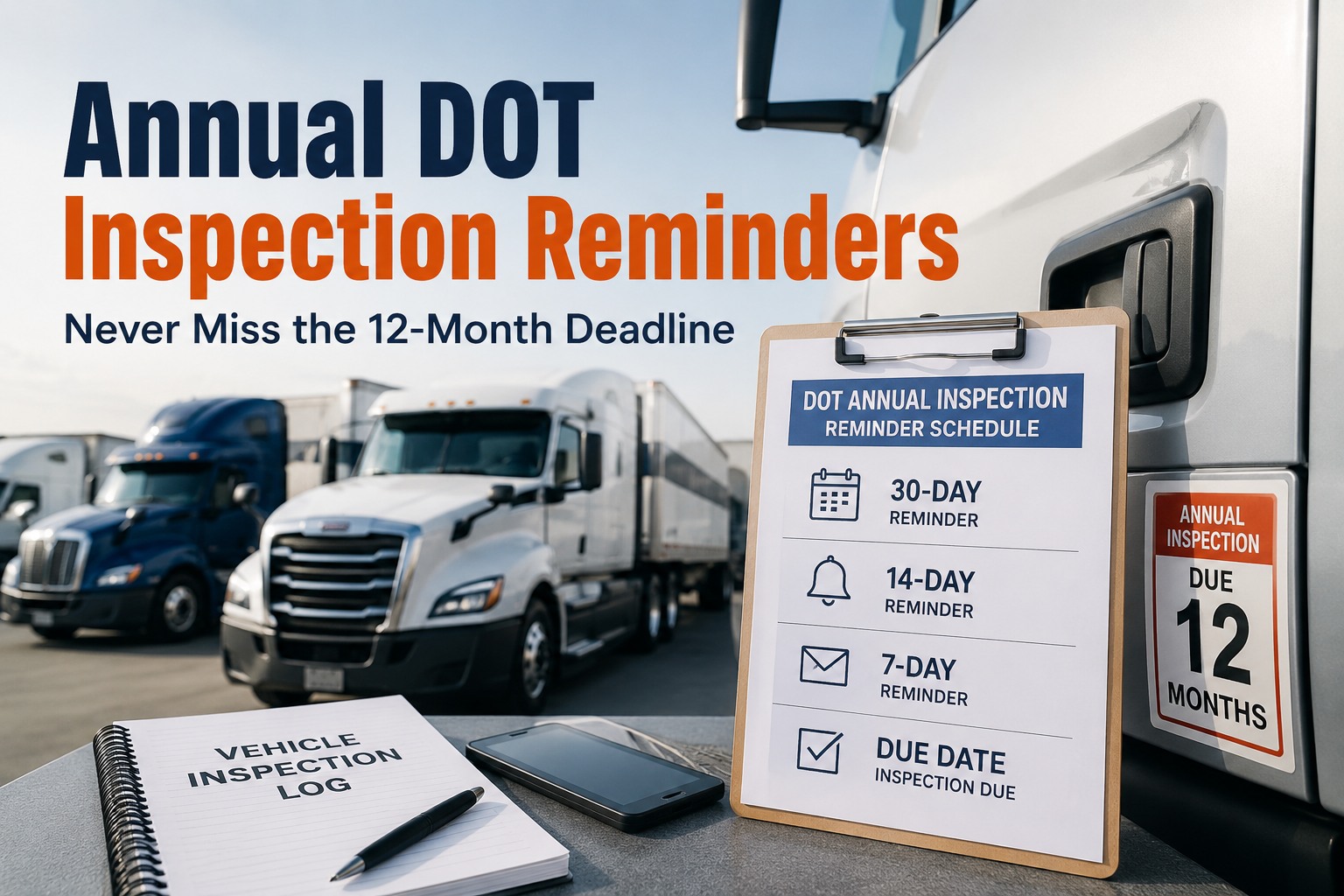
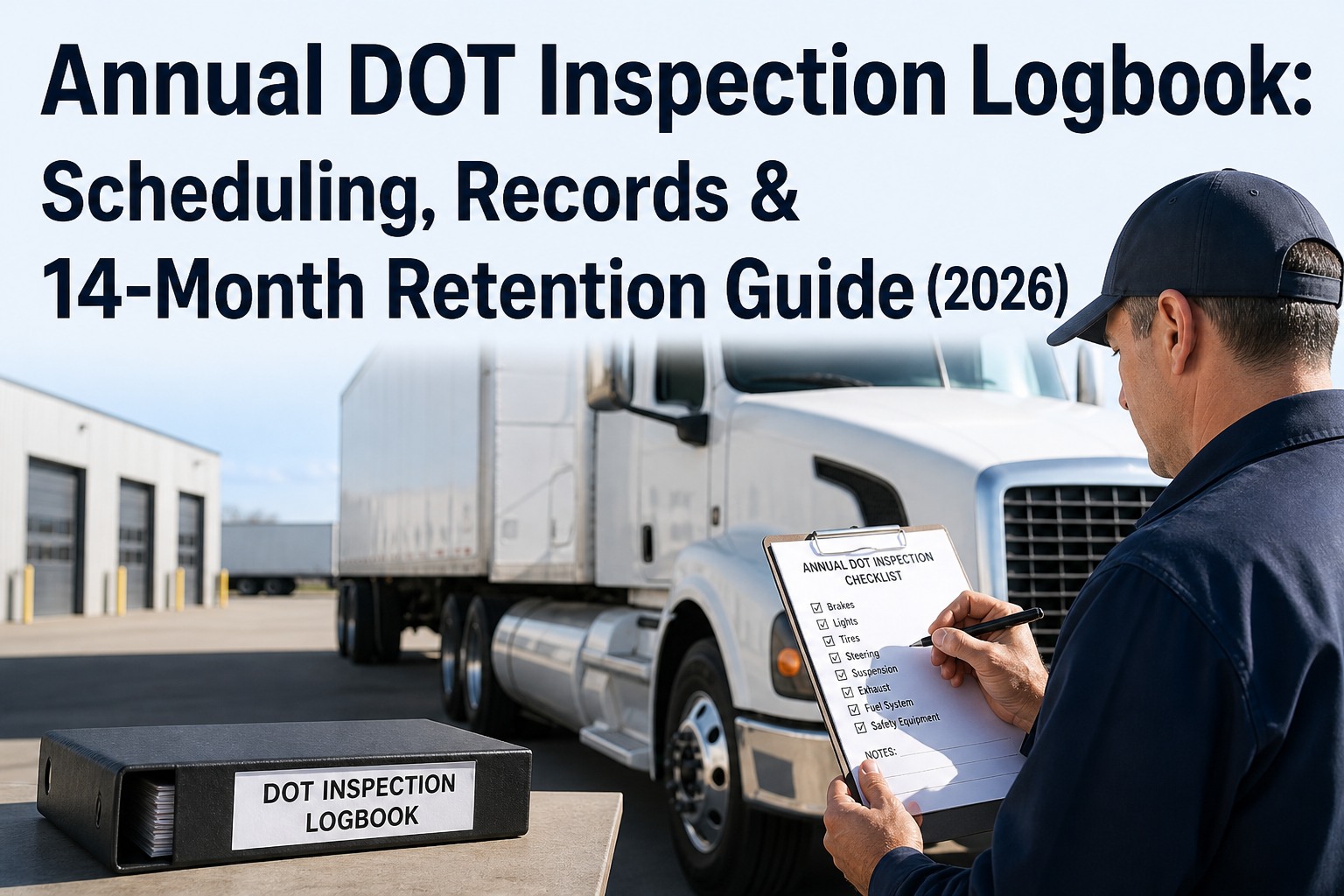
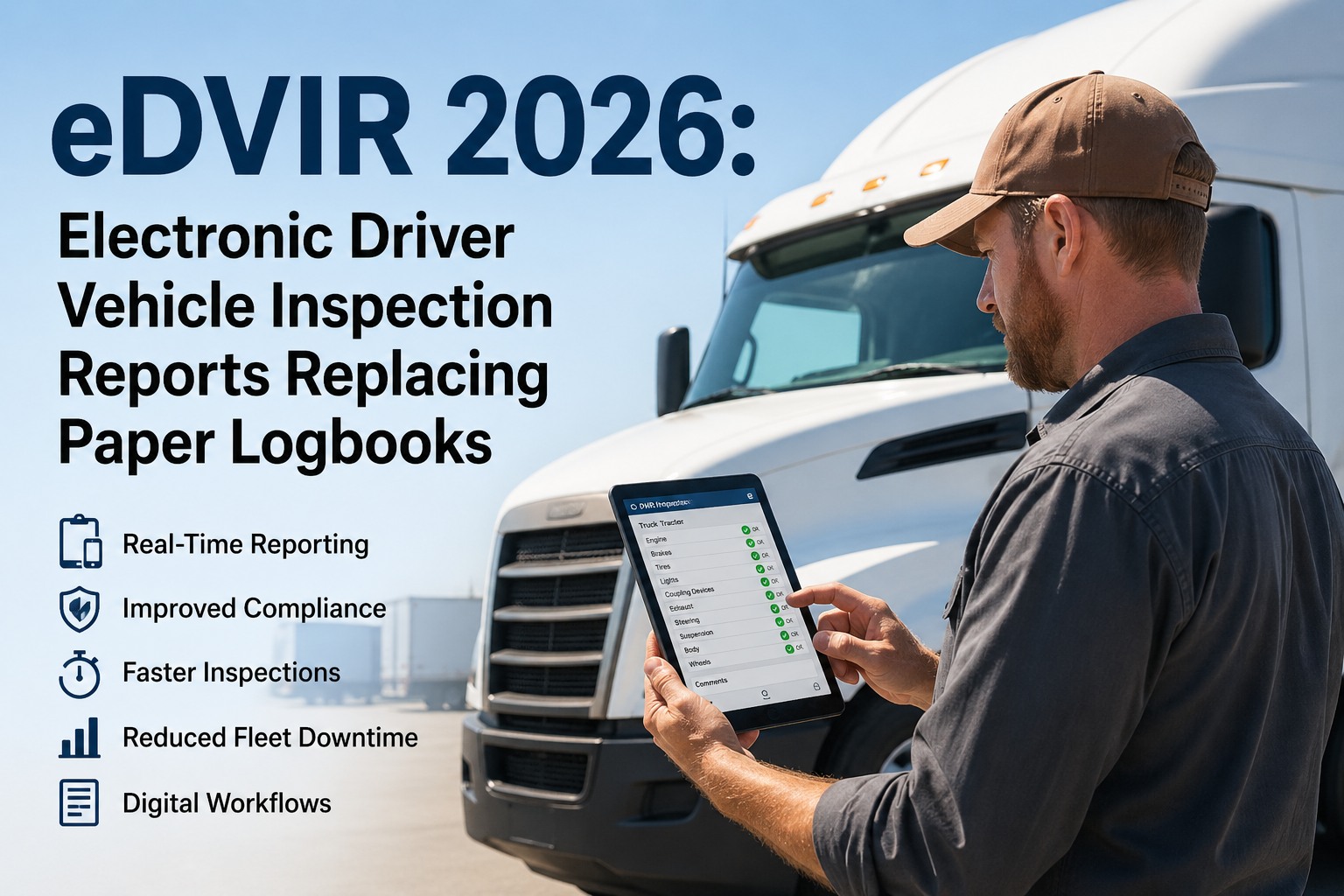
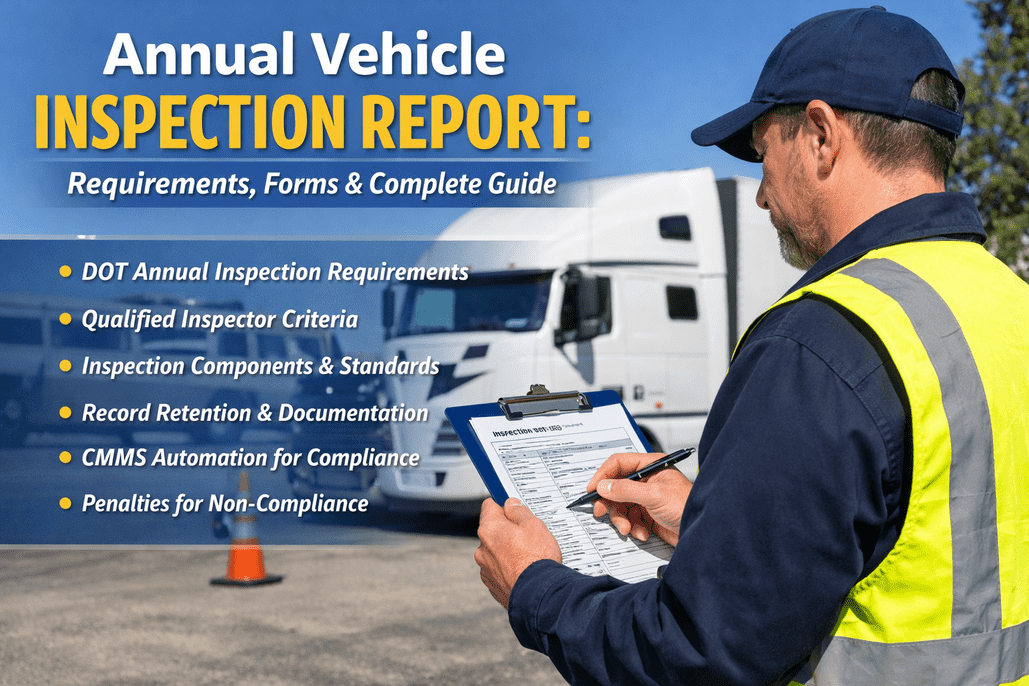
Every commercial motor vehicle in the United States must pass a comprehensive annual inspection at least once every 12 months — and documentation proving it must be on the vehicle at all times. Under 49 CFR 396.17, this isn't a suggestion — it's a federal requirement enforced through roadside inspections, compliance reviews, and DOT audits. The annual periodic inspection covers 15 major component categories defined in Appendix A to Part 396, must be performed by an inspector qualified under 49 CFR 396.19, and generates a report that carriers must retain for 14 months. Each vehicle in a combination counts separately: a tractor-semitrailer-full trailer combination requires three separate annual inspections. Despite the regulation's clarity, annual inspection violations consistently rank among the top FMCSA audit findings — approximately 133,000 annual inspection citations are issued nationally each year, making it the second most common FMCSA violation category. Only 7% of carriers pass focused compliance reviews without a single violation. This guide covers the complete regulatory framework, who can perform the inspection, the 15 Appendix A component categories, documentation and certification requirements, common violations, and how to build an annual inspection management program that passes audits.
Regulatory Framework: The Four CFR Sections That Govern Annual Inspections
The annual inspection program spans four interconnected CFR sections. Understanding each section prevents the documentation gaps that auditors find most often — particularly around who performed the inspection, where the report is, and whether the inspector was actually qualified.
49 CFR 396.17
Periodic Inspection
Every CMV must pass inspection at least once every 12 months covering all items in Appendix A. Documentation must be on the vehicle at all times — either the inspection report itself or a sticker/decal referencing the report. Each vehicle in a combination (tractor, semitrailer, full trailer, converter dolly) must be individually inspected. A vehicle cannot be operated if its annual inspection is more than 12 months old.
Key requirement: Inspection valid for 12 months from the last day of the month in which it was performed.
49 CFR 396.19
Inspector Qualifications
Inspectors must: (1) understand Part 393 and Appendix A criteria and identify defective components, (2) master the methods, procedures, tools, and equipment used in inspections, and (3) have either completed a Federal/State training program or have training and experience totaling at least 1 year. Carriers must retain evidence of inspector qualifications while active plus 1 year after.
Key requirement: No formal certification required by federal regulation — but qualification evidence must be documented and retained.
49 CFR 396.21
Inspection Report
The qualified inspector must prepare a report identifying: the inspector, the motor carrier, the date and location, the vehicle inspected, all components checked with results (including any not meeting Appendix A standards), and a certification of accuracy and completeness. The report must be retained for 14 months from the inspection date. Original or copy must be available where the vehicle is housed or maintained.
Key requirement: 14-month retention. Report must be available on demand to Federal, State, or local officials.
49 CFR 396.23
Equivalent State Inspections
Vehicles passing periodic inspections performed under any state government program meeting the minimum Appendix A standards are considered to have met the annual inspection requirement for 12 months. This applies to state programs in the US and equivalent programs in Canadian provinces, Yukon Territory, and Mexico. Not all states have equivalent programs — verify your state's status.
Key requirement: State inspection must meet Appendix A minimum standards to substitute for federal annual inspection.
HVI tracks annual inspection due dates, inspector qualifications, and report retention for every vehicle in your fleet — with automated 90-day lookahead alerts so no inspection expires unnoticed.
Book a demo to see fleet-wide annual inspection management. Or
start free.
Who Can Perform the Annual Inspection
The annual inspection can be performed by three categories of inspectors. The qualification requirements are the same regardless of who performs it — the difference is where the inspection happens and who manages the paperwork.
Self-Inspection by Carrier
396.17(d)
Motor carriers can perform their own annual inspections using in-house technicians, provided those technicians meet the 396.19 qualification requirements. The carrier must retain evidence of each inspector's qualifications. This is common for large fleets with dedicated maintenance shops and qualified personnel.
Inspector meets all 396.19 qualification criteria
Carrier maintains inspector qualification documentation
Carrier retains inspection report for 14 months
Third-Party Commercial Business
396.17(e)
Carriers may use a commercial garage, fleet leasing company, truck stop, or similar business to perform the inspection as their agent. The business must maintain appropriate facilities for CMV inspections and employ qualified inspectors per 396.19. The carrier remains responsible for ensuring the inspection is completed and documented.
Third-party facility is appropriate for CMV inspections
Third-party employs 396.19-qualified inspectors
Carrier retains copy of inspection report for 14 months
State Periodic Inspection Program
396.17(f) / 396.23
Vehicles passing state government periodic inspections meeting Appendix A minimum standards satisfy the federal annual requirement for 12 months. The carrier does not need to maintain separate inspector qualification documentation for state-performed inspections. Not all states have FMCSA-equivalent programs — verify your state's status with FMCSA.
State program meets Appendix A minimum standards
No separate inspector qualification documentation required
Valid for 12 months from last day of month performed
Inspector Qualification Requirements (49 CFR 396.19)
1
Knowledge: Understand inspection criteria in Part 393 and Appendix A to Part 396. Can identify defective components.
2
Proficiency: Knowledgeable of and have mastered the methods, procedures, tools, and equipment used when performing an inspection.
3
Experience: Either (a) completed a Federal/State-sponsored training program or State/Province certificate, OR (b) combination of training and experience totaling at least 1 year.
2025 ATA Exemption: FMCSA granted a 5-year exemption (effective January 16, 2025 through January 15, 2030) allowing TMC Recommended Practice-based training programs (minimum 540 hours: 1/3 classroom + 2/3 hands-on) as an alternative path to qualification under 396.19(a)(3)(ii). Carriers using this path must verify the training program is on ATA's self-certified list.
Brake inspector additional requirements: Under 49 CFR 396.25, individuals performing brake inspections, maintenance, service, or repair must meet separate qualification standards including understanding the brake task, ability to perform it, and training/experience requirements. Brake inspector qualification documentation must be retained while active plus 1 year.
The 15 Appendix A Component Categories
Appendix A to 49 CFR Part 396 defines the minimum inspection standards for annual periodic inspections. Every component listed below must be inspected and either pass or be identified as deficient. A vehicle cannot be certified until all deficiencies are corrected. These are the same categories that roadside inspectors evaluate — catching failures before roadside prevents out-of-service orders.
01
Brake System
Service brakes, parking brake, brake drums/rotors, brake hose, brake tubing, low-air warning device, air compressor, electric brakes, hydraulic brakes, vacuum system
Top failures: brake adjustment out of spec, lining below minimum thickness, air leaks, inoperative ABS
02
Coupling Devices
Fifth wheels, pintle hooks, drawbars, safety devices, saddle mounts
Top failures: fifth wheel mounting cracks, missing safety chains, worn kingpin
03
Exhaust System
Leaks, positioning relative to fuel system and combustibles, exhaust system condition
Top failures: leaks near fuel system, exhaust discharge location, damaged components
04
Fuel System
Fuel system integrity, tank mounting, cap, and visible leaks
Top failures: fuel leaks, loose mounting, damaged fuel lines
05
Lighting Devices
Headlights, tail lights, stop lights, turn signals, clearance lights, reflectors, marker lights
Top failures: inoperative lights, missing reflectors, cracked lenses
06
Safe Loading
Cargo securement, load distribution, protection against shifting, tailgate security
Top failures: inadequate securement, load shift potential, damaged tie-down points
07
Steering Mechanism
Steering wheel free play, steering column, steering gear, linkage, power steering system
Top failures: excessive free play, worn tie rod ends, power steering leaks
08
Suspension
Springs, spring hangers, spring U-bolts, shock absorbers, torque rods, air bags
Top failures: broken springs, missing U-bolt nuts, cracked spring hangers
09
Frame
Frame rails, cross members, fasteners, frame accessories
Top failures: cracked frame rails, loose or missing fasteners, weld deterioration
10
Tires
Tread depth, condition, inflation, size and load rating, mounting
Top failures: tread below minimum (4/32" steer, 2/32" other), sidewall damage, mismatched duals
11
Wheels & Rims
Wheel and rim integrity, fasteners, hub oil seals, bearing condition
Top failures: cracked rims, loose lug nuts, hub seal leaks, bearing wear
12
Windshield
Windshield condition, cracks in driver's view area, glazing
Top failures: cracks in wiper sweep area, obstructed vision, damaged glazing
13
Windshield Wipers
Wiper operation, blade condition, washer system
Top failures: inoperative wipers, worn blades, empty washer reservoir
14
Horn
Audible warning device operation
Top failures: inoperative horn, insufficient sound level
15
Body Components
Floor condition, doors and latches, safety guards, rear bumper, mud flaps, body integrity
Top failures: floor holes, inoperative doors, missing or damaged mud flaps, rear bumper height
22.6%
CMV out-of-service rate at roadside inspections (2025)
~133,000
Annual inspection citations issued nationally per year
14 months
Minimum retention period for annual inspection reports
$23,048
Maximum per-incident fine for operating with expired annual
HVI provides digital annual inspection templates covering all 15 Appendix A categories with pass/fail criteria, photo documentation, and inspector certification — all stored for 14+ months with instant audit retrieval.
Book a demo. Or
start free.
Documentation: The Inspection Report and Vehicle Certification
The annual inspection generates two critical pieces of documentation: the inspection report (retained in files) and the vehicle certification (on the vehicle). Both must be present and current. Missing either one is a violation — and it's the second most commonly cited FMCSA violation category.
Inspection Report (49 CFR 396.21)
The qualified inspector must prepare a written report containing all of the following elements. Missing any element can result in a violation — auditors check completeness, not just existence.
Individual performing the inspection (name, signature)
Motor carrier operating the vehicle
Date of inspection
Vehicle inspected (unique identification)
Components inspected with results (including any not meeting Appendix A standards)
Certification of accuracy and completeness
Retention: 14 months from inspection date. Original or copy retained where vehicle is housed or maintained. Available on demand to authorized officials.
Vehicle Documentation (On-Vehicle)
Documentation that the vehicle passed inspection must be on the vehicle at all times. This can be the inspection report itself or another form (sticker, decal, label) containing the following information.
Date of inspection
Name and address of entity where full inspection report is maintained
Information uniquely identifying the vehicle (if not clearly marked on the CMV)
Certification that the vehicle passed all Appendix A items
Important: An expired sticker (more than 12 months old) is treated the same as no sticker at all during roadside inspection. Ensure the sticker date, the report date, and the actual inspection date all align.
Most Common Annual Inspection Violations
1
No annual inspection report or expired inspection. Vehicle operated with no current inspection documentation. Either no inspection was done, or the 12-month period has lapsed. Immediate OOS order.
2
Inspection report not on vehicle. Inspection was done and report exists in the office, but no sticker/decal/report is physically on the vehicle. Roadside officers cannot verify compliance without on-vehicle documentation.
3
Inspector not qualified or qualification not documented. Carrier cannot produce evidence that the person who performed the inspection met 396.19 requirements. Even if the inspector was qualified, missing documentation is a violation.
4
Incomplete inspection report. Report exists but is missing required elements — inspector identity, vehicle identification, component results, or certification. Each missing element is a potential separate violation.
5
Trailer/dolly not individually inspected. Carrier inspected the tractor but forgot that each vehicle in the combination requires its own inspection. Common for carriers that frequently interchange trailers.
6
Report not retained for 14 months. Report was destroyed or lost before the retention period expired. Digital storage eliminates this risk — paper records do not.
Building an Annual Inspection Management Program
Managing annual inspections across a fleet of heavy vehicles requires a systematic approach — especially when trailers, dollies, and interchanged equipment each need their own inspections on their own schedules. The goal is zero expired inspections, zero missing reports, and zero unqualified inspectors.
Step 1
Inventory Every CMV Subject to Annual Inspection
Build a complete list of every vehicle under your control for 30+ days: tractors, trailers, straight trucks, buses, converter dollies, and any leased/rented equipment with terms exceeding 30 days. Each unit needs its own inspection record. Missing a single trailer or dolly from the list means a vehicle operating without current inspection — a violation waiting to happen.
Step 2
Establish a 90-Day Lookahead Calendar
For each vehicle, record the last annual inspection date and calculate the expiration (12 months from the last day of the inspection month). Set alerts at 90 days, 60 days, and 30 days before expiration. Stagger inspections across the fleet so you're not scheduling 50 inspections in the same month. Distribute across the calendar year to balance shop workload.
Step 3
Verify and Document Inspector Qualifications
For every individual who performs annual inspections — whether in-house or third-party — maintain qualification documentation per 396.19: evidence of Part 393/Appendix A knowledge, proficiency with inspection methods and tools, and training/experience credentials (Federal/State program, or 1+ year training/experience, or TMC RP program under the 2025 ATA exemption). Retain documentation while active + 1 year after.
Step 4
Standardize the Inspection and Reporting Process
Use a consistent inspection template covering all 15 Appendix A categories with pass/fail criteria for each component. Every report must contain all six required elements from 396.21. Apply the inspection sticker/decal immediately upon passing — before the vehicle leaves the shop. File the report where the vehicle is housed or maintained. Digital platforms enforce completeness automatically.
Step 5
Self-Audit Quarterly
Pull 5-10 random vehicle files quarterly and verify: annual inspection current (within 12 months), sticker on vehicle matches report date, inspection report complete with all 6 required elements, inspector qualification documentation on file, and report retained per 14-month requirement. Test with sold/disposed vehicles too — records must be retrievable for 14 months after last inspection even if vehicle leaves the fleet.
CSA Vehicle Maintenance Split Increases Annual Inspection Visibility
The 2026 CSA overhaul splits Vehicle Maintenance into "Standard" (shop-detected) and "Driver Observed" categories. Expired or missing annual inspections fall squarely in the "Standard" category — and with the new scoring methodology, these violations carry OOS severity weight of 2. Carriers with clean annual inspection records will see a measurable CSA score advantage over those with gaps.
2025 ATA Inspector Qualification Exemption Creates New Training Path
FMCSA's January 2025 exemption allows TMC Recommended Practice-based training programs (minimum 540 hours: 1/3 classroom + 2/3 hands-on) to satisfy the 396.19(a)(3)(ii) experience requirement. This 5-year exemption (through January 15, 2030) provides an accelerated path for new technicians — approximately 13.5 work weeks instead of the standard 1-year experience requirement. Carriers must verify the program is ATA self-certified.
Book a demo.
Digital Inspection Reports Increasingly Expected by Auditors
With the eDVIR final rule (effective March 23, 2026) establishing explicit digital record authority, FMCSA's direction is clear: electronic records are the standard. Carriers using digital annual inspection reports with searchable databases, photo documentation, and automated retention management demonstrate the "systematic maintenance" that auditors evaluate during compliance reviews. Paper inspection reports are still legal but create retrieval and completeness challenges.
Wheel End Focus: 2025 International Roadcheck
CVSA's 2025 International Roadcheck focused on wheel end components — accounting for approximately one-quarter of all vehicle OOS violations historically. Hubs, bearings, seals, lug nuts, rims, and wheel mounting are all Appendix A annual inspection items. Carriers that focus extra attention on wheel end components during annual inspections will be better positioned for roadside success.
The Annual Inspection Is the Cornerstone of Fleet Compliance
The annual periodic inspection isn't optional, it isn't flexible, and it isn't forgiving. Every CMV, every 12 months, every Appendix A component, performed by a qualified inspector, documented in a complete report, retained for 14 months, and certified on the vehicle. The 93% of carriers who fail compliance reviews aren't operating unsafe vehicles — they're operating vehicles with incomplete documentation, expired stickers, or unqualified inspectors. Build the system: inventory every vehicle, stagger inspection schedules, verify inspector qualifications, standardize reporting, and self-audit quarterly. The carriers who treat annual inspections as a managed program — not a last-minute scramble — are the 7% who pass audits clean.
Never Miss an Annual Inspection Again
HVI tracks inspection due dates, inspector qualifications, and report completeness across your entire fleet — with automated alerts, digital Appendix A templates, and 14-month retention built in.
Frequently Asked Questions
Q: How often must commercial vehicles be inspected?
At least once every 12 months under 49 CFR 396.17. The inspection must cover all 15 component categories in Appendix A to Part 396. Each vehicle in a combination (tractor, semitrailer, full trailer, converter dolly) must be individually inspected. The inspection is valid for 12 months from the last day of the month in which it was performed.
Q: Who can perform a DOT annual inspection?
Three options: (1) In-house carrier technicians meeting 396.19 qualification requirements, (2) third-party commercial garages, fleet leasing companies, or truck stops with qualified inspectors and appropriate facilities, or (3) state periodic inspection programs meeting Appendix A minimum standards. The inspector must understand Part 393 and Appendix A criteria, master inspection methods and tools, and have either completed a Federal/State training program or have 1+ year of training and experience.
Q: How long must the annual inspection report be retained?
14 months from the date of the inspection report, per 49 CFR 396.21. The original or copy must be retained where the vehicle is housed or maintained and be available on demand to authorized Federal, State, or local officials. Inspector qualification documentation must be retained while the inspector is active plus 1 year after. Best practice: retain all reports for 3+ years for litigation protection.
Start free with HVI for automated retention management.
Q: What must be on the vehicle to prove annual inspection?
Either the inspection report itself or a sticker/decal containing: date of inspection, name and address of entity where the full report is maintained, information identifying the vehicle (if not clearly marked), and certification that it passed. An expired sticker (over 12 months old) is treated the same as no sticker at roadside. Ensure the sticker date matches the report date.
Q: Can a carrier perform its own annual inspection?
Yes — 49 CFR 396.17(d) allows self-inspection provided the carrier employs qualified inspectors meeting all 396.19 requirements. The carrier must retain evidence of each inspector's qualifications while active plus 1 year. Alternatively, the carrier can use a third-party business under 396.17(e) or rely on an equivalent state inspection program under 396.23.
Q: What are the penalties for expired or missing annual inspection?
Operating a CMV without a current annual inspection can result in out-of-service orders and fines up to $23,048 per incident. Missing inspection reports at audit are cited per occurrence. Annual inspection violations fall under the CSA Vehicle Maintenance BASIC and carry OOS severity weight of 2 under the 2026 scoring methodology. Approximately 133,000 annual inspection citations are issued nationally each year — making it the 2nd most common FMCSA violation category.