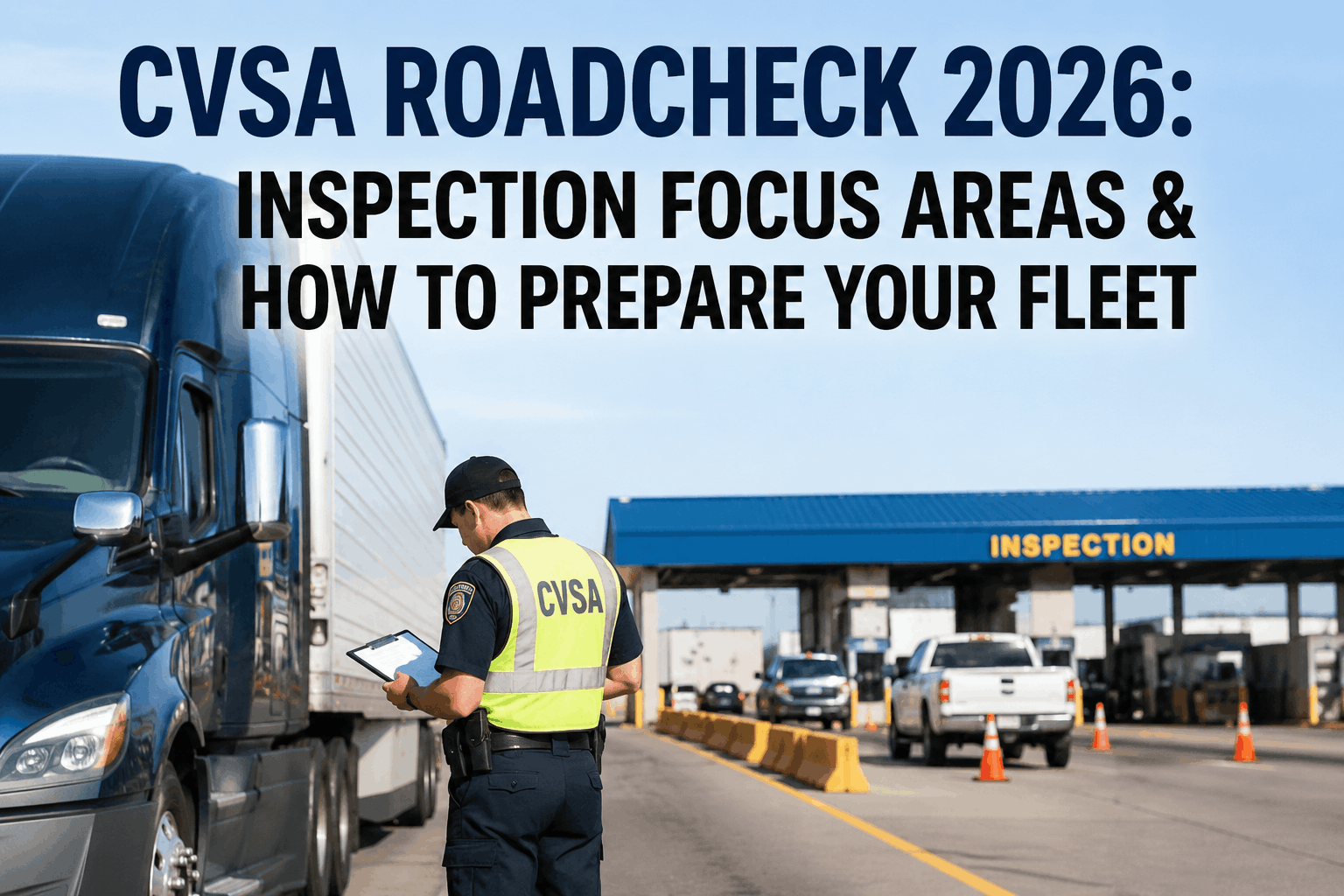
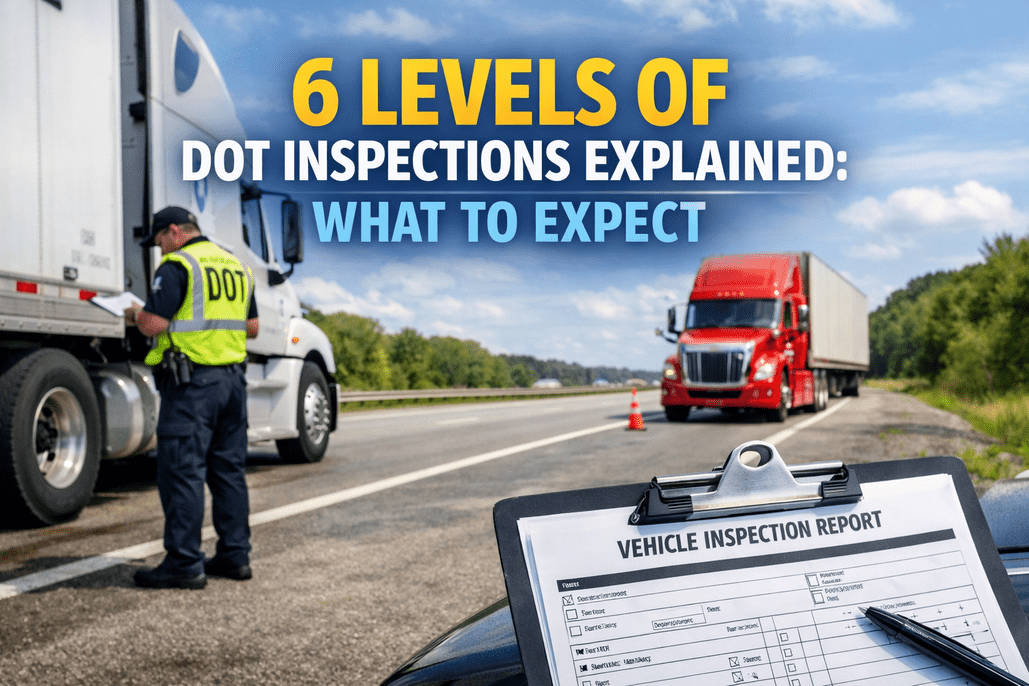
For 72 hours every spring, North America's roads turn into the largest commercial-vehicle enforcement event on earth. CVSA's International Roadcheck — known across the industry as DOT Blitz Week — ran May 12–14, 2026, with certified inspectors at weigh stations, fixed sites, and pop-up checkpoints across the U.S., Canada, and Mexico inspecting roughly 15 trucks every minute. Most were North American Standard Level I inspections, the comprehensive 37-step review of both driver and vehicle. The stakes are real: in 2025, 18.1% of vehicles inspected were placed out of service — nearly one in five — and early 2026 data pointed even higher. Each year CVSA names one driver and one vehicle focus area, and for 2026 those were ELD tampering, falsification, and manipulation on the driver side and cargo securement on the vehicle side. But here's what every veteran fleet manager knows: inspectors don't stop checking brakes because the focus shifted — brake-system condition still drives more than 40% of all vehicle out-of-service orders. Roadcheck is a fixed event, but your truck can be inspected to the same standard any day of the year, which is exactly why preparation is a year-round discipline, not a one-week scramble. A disciplined digital inspection program is how fleets walk into Blitz Week already passing. This guide breaks down the focus areas, the Level I inspection, the common OOS triggers, and a pre-event prep checklist.
15 Trucks a Minute. 1 in 5 Placed Out of Service. Be the 4 That Pass.
HVI builds the disciplined pre-trip that beats Roadcheck — guided Level I-aligned inspections covering brakes, tires, lights, and cargo securement, with photo-verified defects, instant work-order routing, and audit-ready records that prove every check happened.
Roadcheck 2026 at a Glance
The essential facts of the event — the dates, the scale, and the standard your truck is measured against whether it's Blitz Week or any other day.
May 12–14
2026 dates
A 72-hour blitz across the U.S., Canada, and Mexico — but the same standard applies year-round.
~15 / min
trucks inspected
High-volume enforcement at weigh stations, fixed sites, and pop-up checkpoints across North America.
37 steps
Level I inspection
The most thorough standard inspection — full driver credentials plus complete vehicle mechanical fitness.
18.1%
2025 OOS rate
Nearly one in five vehicles placed out of service last year — and 2026 data pointed higher still.
The 2026 Focus Areas
CVSA spotlights one driver and one vehicle category each year, signaling where inspectors apply extra scrutiny. For 2026, both targets address fast-rising risks — but neither displaces the perennial OOS leaders.
DRIVER FOCUS
ELD Tampering & Falsification
Inspectors target false or manipulated records of duty status — edits that conceal driving time, unassigned driving, and electronic spoofing. Falsification of RODS was the second most-cited driver violation last year at 58,382 violations.
Prep: audit RODS, driver edits, unassigned driving time, and log-transfer readiness in the weeks before.
VEHICLE FOCUS
Cargo Securement
Inspectors verify cargo is contained, immobilized, and secured so it can't leak, spill, blow off, or fall. FMCSA requires the aggregate working load limit of tiedowns to be at least half the cargo weight. In 2025 this drove ~11% of vehicle OOS.
Prep: inspect tiedowns, anchor points, working load limits, and load distribution before and during every trip.
A critical reminder: brakes are not a named 2026 focus area, but inspectors never stop checking them. Brake-system violations drove more than 40% of all vehicle out-of-service conditions in 2025 — the focus area gets extra attention, it doesn't replace the full inspection.
What the Level I Inspection Covers
The 37-step Level I is the inspection most trucks face during Roadcheck. It splits into two halves — the driver and the vehicle — and a critical violation in either places you out of service.
DRIVER SIDE
CDL, medical card, and endorsements
Hours-of-service & ELD records (2026 focus)
Record-of-duty-status accuracy
Alcohol/drug indicators, seat belt use
Personal conveyance use, where claimed
VEHICLE SIDE
Brake systems — the #1 OOS category
Tires, wheels, rims, and hubs
Lighting and reflective devices
Cargo securement (2026 focus)
Steering, suspension, frame, coupling, exhaust
The Common OOS Triggers
Roadcheck out-of-service orders cluster in a predictable set of categories — and nearly all are catchable in a thorough pre-trip. Know where trucks fail, and you know where to look.
#1
Brakes
40%+
Of all vehicle OOS. Out-of-adjustment, defective components, air leaks. Catchable on a pre-trip brake check.
#2
Tires
High
Tread below limit, under-inflation, sidewall damage, flats on duals. A two-minute walk-around catch.
#3
Lights
High
Inoperative lamps, signals, markers. The most preventable OOS category — a quick bulb fix in the yard.
★
Cargo Securement
~11%
The 2026 focus. Degraded straps, too few tiedowns, inadequate working load limit. Inspect every load.
The Pre-Event Prep Checklist
Walk into Blitz Week — or any inspection — already passing. These are the moves that close the gap between an OOS order and a CVSA decal, grouped by where the violations actually happen.
VEHICLE READINESS
1Run a full brake-system check
Adjustment/stroke within limits, no air leaks, linings and hoses sound. Brakes are the #1 OOS category — start here.
2Inspect tires, wheels & lights
Tread depth, inflation, sidewalls, lug nuts; every lamp, signal, and marker working. The high-frequency, easy-catch items.
3Verify cargo securement
Tiedowns in good condition, enough of them, anchor points sound, aggregate working load limit at least half the cargo weight.
4Check steering, suspension & coupling
Play, leaks, cracks, and fifth-wheel condition — the structural items that quietly trigger an OOS at inspection.
DRIVER & DOCUMENTATION
5Audit ELD & hours-of-service records
The 2026 driver focus. Check for unassigned driving, improper edits, and log-transfer readiness; correct discrepancies now.
6Verify driver credentials
CDL valid, medical card current, endorsements correct. Expired documents are an instant driver OOS regardless of the truck.
7Confirm DVIR records are complete
Current DVIRs with the three-signature chain, defects repaired and certified — the paper trail that proves the truck is maintained.
8Run a mock inspection
Walk a truck through the full Level I yourself in the weeks before. Fix every finding so the real inspection holds no surprises.
Walk Into Blitz Week Already Passing
Guided Level I-aligned pre-trips covering brakes, tires, lights, and cargo securement; ELD and DVIR record-keeping; photo-verified defects; instant work-order routing; and audit-ready documentation — so your fleet earns the decal instead of the out-of-service order. Year-round readiness, not a one-week scramble. Trusted by 25,000+ users worldwide.
Frequently Asked Questions
When is CVSA International Roadcheck 2026?
International Roadcheck 2026 took place May 12–14, 2026 — a 72-hour enforcement blitz, often called DOT Blitz Week, conducted simultaneously across the United States, Canada, and Mexico. CVSA-certified inspectors worked weigh stations, fixed inspection sites, and pop-up checkpoints, inspecting roughly 15 commercial vehicles per minute. While the named event is a fixed three days, it's important to remember your truck can be inspected to the identical North American Standard at any time of year, which is why Roadcheck readiness is really year-round readiness.
Sign up for a free HVI trial to stay inspection-ready.
What are the 2026 Roadcheck focus areas?
CVSA named two for 2026: on the driver side, electronic logging device (ELD) tampering, falsification, and manipulation — targeting edited or spoofed records that conceal driving time; and on the vehicle side, cargo securement — verifying loads are contained, immobilized, and secured with an aggregate tiedown working load limit of at least half the cargo weight. These signal where inspectors apply extra scrutiny, but they don't replace the full inspection. Brakes, though not a 2026 focus area, still drove more than 40% of vehicle out-of-service orders in 2025 and remain a core inspection item.
Schedule a demo to prep for the focus areas.
What is a CVSA Level I inspection?
The North American Standard Level I inspection is the most comprehensive roadside inspection — a 37-step procedure covering both the driver and the vehicle. The driver portion reviews CDL, medical card, endorsements, hours-of-service and ELD records, seat belt use, and alcohol/drug indicators. The vehicle portion examines brakes, tires, wheels, lighting, steering, suspension, frame, coupling devices, exhaust, and cargo securement. It's the inspection most trucks face during Roadcheck, and passing one without critical violations earns a CVSA decal valid for up to three months.
Sign up for a free HVI trial to inspect to that standard.
What are the most common out-of-service violations?
They cluster in a predictable set. Brake-system violations are consistently number one, accounting for more than 40% of all vehicle out-of-service conditions, followed by tires (tread, inflation, sidewall damage) and lighting (inoperative lamps and signals). Cargo securement — the 2026 vehicle focus — drove about 11% of vehicle OOS in 2025. On the driver side, hours-of-service and falsified record-of-duty-status violations top the list. Nearly all of these are detectable in a disciplined pre-trip inspection, which is exactly why preparation works.
Schedule a demo to catch them first.
How should a fleet prepare for Roadcheck?
Treat it as year-round readiness, not a one-week scramble. On the vehicle side, run thorough pre-trips focused on brakes, tires, lights, and cargo securement, and address steering, suspension, and coupling. On the driver side, audit ELD and hours-of-service records for unassigned driving and improper edits ahead of time, verify every driver's CDL, medical card, and endorsements, and confirm DVIR records are complete with the three-signature chain. Then run a mock Level I inspection on a truck and fix every finding before the real thing. A digital inspection program makes each step required, documented, and provable.
Sign up for a free HVI trial to get Roadcheck-ready.