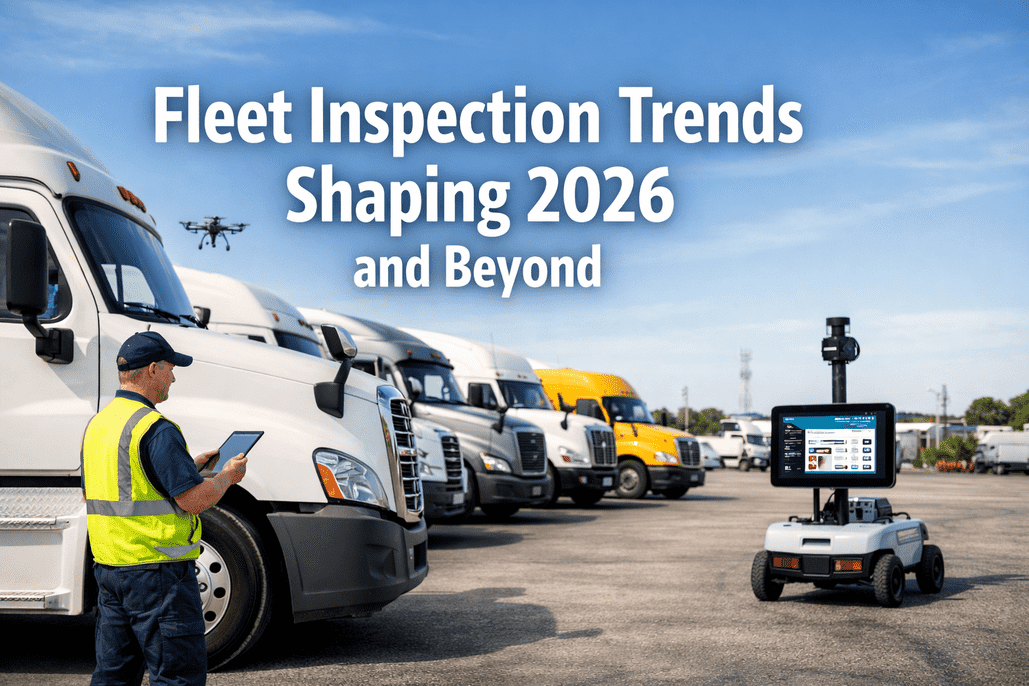
Fleet inspections are undergoing the most significant transformation in decades. The convergence of AI-powered defect detection, overhauled CSA scoring, predictive maintenance analytics, and automated compliance workflows is reshaping how fleets identify risk, maintain vehicles, and satisfy regulators. With the AI vehicle inspection market projected to reach $6.9 billion by 2033 and FMCSA's enhanced Safety Measurement System taking full effect in February 2026, the gap between early adopters and lagging fleets is widening fast. This guide breaks down the inspection trends defining 2026—and shows you how to position your fleet on the right side of the divide.
Evolution of Fleet Inspections
Fleet inspections have evolved from clipboards and carbon copies to mobile-first, sensor-driven workflows. Each phase brought measurable gains in defect detection, compliance documentation, and operational efficiency. Understanding this trajectory reveals where the industry is headed—and why 2026 marks the tipping point.
Paper-Based Era
Handwritten DVIRs, carbon-copy forms, manual filing. Inspections were compliance exercises—slow, inconsistent, and prone to pencil-whipping. Defect detection relied entirely on inspector skill and honesty.
Digital Transition
Mobile apps replaced paper. ELD mandates forced electronic logging adoption. Photo documentation became standard. Inspection data became searchable and auditable for the first time.
Connected Intelligence
Telematics integration linked real-time vehicle data to inspection workflows. Fault codes triggered inspections automatically. Dashcams added visual verification. Data silos began breaking down.
Predictive & AI-Driven
AI achieves 95-99% defect detection. Predictive models forecast failures before symptoms appear. Continuous monitoring replaces periodic checks. Inspection becomes proactive, not reactive.
Traditional Inspections
Manual checklists with subjective assessments. 70-80% defect detection accuracy. Paper DVIRs lost or illegible. No real-time visibility into fleet condition. Reactive—problems found only after failure. Compliance docs fragmented across filing cabinets.
2026 Inspections
AI-guided workflows with objective measurements. 95-99% defect detection accuracy. Digital records with photo evidence and GPS verification. Real-time dashboards showing fleet-wide health. Predictive—problems identified before symptoms. Instant audit-ready documentation.
Ready to move from reactive to predictive? Start your free trial — or book a demo to see HVI in action.
AI & Automation Trends
Artificial intelligence is the defining technology trend in fleet inspections for 2026. From computer vision that spots hairline cracks to predictive algorithms that forecast brake failures weeks in advance, AI is closing the gap between what inspectors can see and what data reveals. With 65% of maintenance teams planning to adopt AI by year's end, this isn't emerging—it's arrived.
Computer Vision Defect Detection
High-resolution cameras and AI algorithms scan vehicles as they enter and exit facilities, automatically identifying damage, defects, and compliance issues. Systems achieve 95-99% accuracy versus 70-80% with manual inspection—catching the 1-in-5 defects that human inspectors miss due to fatigue, time pressure, or inconsistency.
Predictive Maintenance Intelligence
AI models analyze telematics data, inspection histories, and sensor readings to predict failures before they occur. The shift from time-based to condition-based maintenance is the biggest operational change in fleet management this decade. Fleets using predictive diagnostics report nearly 30% reduction in safety-related vehicle failures.
AI Safety Cameras & Driver Monitoring
Edge-computing dashcams detect distraction, drowsiness, following distance, lane departures, and rolling stops in real time. In-cab alerts prevent incidents before they happen—coaching through accountability rather than fear. When combined with telematics, these systems create comprehensive risk profiles for every driver and vehicle.
Automated DVIR Workflows
Digital DVIRs with guided checklists, photo prompts, voice commands, and vehicle diagnostic integration replace paper forms. Defects trigger instant maintenance alerts. GPS and time verification prevent pencil-whipping. Inspection completion times drop while documentation quality increases dramatically.
On the Radar: Emerging Tech
IoT Sensor Networks
Continuous tire pressure, brake temperature, battery voltage, and fluid-level monitoring between inspections. 90%+ of 2026 vehicles ship with embedded telematics—creating always-on vehicle health visibility without aftermarket hardware.
Platform Convergence
CMMS, telematics, ELD, and inspection systems merging into unified platforms. Eliminates data silos, enables automated work orders from inspection findings, and provides single-pane fleet visibility across every operation.
Autonomous Vehicle Standards
FMCSA targeting May 2026 to propose inspection, repair, and maintenance standards for automated driving systems—potentially the most transformative fleet regulation of the decade.
Regulatory Pressure
2026 brings the most significant regulatory changes to fleet inspections since the ELD mandate. FMCSA's overhauled Safety Measurement System, stricter Drug and Alcohol Clearinghouse enforcement, and a shift toward data-driven continuous oversight are raising the compliance bar—while creating opportunities for fleets that embrace digital inspection workflows.
Medical Certification & Electronic Records
Paper medical examiner certificates no longer accepted after January 10. All certifications must be verified electronically through MVRs. Electronic signatures and recordkeeping expected for Part 40 testing rules. FMCSA payments now require debit/credit—no paper checks.
CSA Safety Measurement Overhaul
The biggest CSA change since 2010. BASICs renamed to "Compliance Categories." Vehicle Maintenance split into two categories—separating driver-observed defects from technician responsibilities. Over 950 violations consolidated into ~116 groups. Simplified severity weights (2 for OOS, 1 for non-OOS). Proportionate percentiles reduce score volatility for smaller carriers.
ELD & Clearinghouse Updates
FMCSA removed dozens of non-compliant ELDs from the registry—carriers must replace affected devices immediately. ELD technical modifications and streamlining expected by May 2026. Clearinghouse data access expanding, and fentanyl may be added to the drug testing panel.
What's Coming Next
Automatic emergency braking (AEB) mandate advancing for Class 7-8 trucks. Unified Registration System modernization with digital tools. Data-driven safety rating system under consideration for continuous carrier oversight. Inspection standards for automated driving systems targeted for proposal.
What the CSA Overhaul Means for Your Fleet
Stay ahead of 2026 compliance changes. Start your free trial — or book a demo to see how HVI simplifies compliance.
Preparing Fleets for 2026
The gap between inspection leaders and laggards is widening. Fleets that invest in digital workflows, AI-assisted detection, and integrated data platforms are seeing 300-500% ROI within the first year. Those still relying on paper forms and reactive maintenance face rising costs, higher violation rates, and competitive disadvantage. Here's how to prepare.
Digitize Inspections
If you're still using paper DVIRs, this is your top priority. Digital inspections with photo documentation, GPS verification, and instant defect alerts eliminate pencil-whipping, create audit-ready records, and enable same-day defect resolution. Typical breakeven: 60-90 days. Platforms start at $15-45/vehicle/month.
Review CSA Scores Under New Methodology
Use FMCSA's Prioritization Preview Tool to see how your fleet scores under the new compliance categories. Identify which violations carry the most impact and prioritize corrections. Pay special attention to the new Vehicle Maintenance split between driver-observed and technician categories.
Integrate Telematics with Inspections
Connect vehicle sensor data to inspection workflows. Fault codes should trigger targeted inspections automatically. Real-time tire pressure, brake temperature, and engine diagnostics close the visibility gap between periodic inspections and enable condition-based maintenance.
Pilot AI-Assisted Inspection Technology
Start with your highest-cost or highest-utilization vehicles. AI inspection pilots typically cost $15K-$25K and pay for themselves with the first prevented breakdown. Even small fleets see outsized ROI because one prevented failure has immediate margin impact.
Year 1 Returns
Typical breakeven in 60-90 days through fuel savings and efficiency gains. First-year ROI of 300-500% for fleets over 15 units. The first prevented breakdown often pays for the entire system.
Compounding Benefits
Better inspection data improves CSA scores, lowering insurance premiums. Predictive maintenance extends asset life 15-20%. Reduced emergency repairs save 25-40% on maintenance budgets.
Competitive Advantage
Strong CSA scores win shipper contracts. Lower accident rates attract better drivers. Audit-ready documentation protects operating authority. Data-driven operations enable smarter fleet rightsizing.
Position Your Fleet for 2026 and Beyond
HVI delivers AI-powered inspection tools, real-time defect tracking, predictive maintenance alerts, and compliance dashboards designed for the trends shaping fleet operations today.
Start Free Trial Book a Demo