In the construction industry, equipment downtime can lead to significant delays, increased costs, and lost productivity. Proper maintenance is critical to ensure that your machinery operates efficiently and reliably. In this guide, we'll explore five essential construction equipment maintenance tips that can help you prevent costly downtime and keep your projects on track. Streamline your maintenance with HVI or schedule a 30-minute walkthrough with our team.
Proactive maintenance is always more cost-effective than reactive repairs.
HVI's Fleet Management System brings automated maintenance scheduling, real-time diagnostics, and digital inspection checklists into one platform — so you prevent breakdowns, extend equipment life, and keep every project running smoothly.
Five essential maintenance tips
Effective equipment maintenance comes down to five practices that, applied consistently, prevent the breakdowns that derail schedules and budgets. Each tip pairs the practice with a pro tip you can put to work today.
Regular inspections and preventive maintenance
Routine inspections are the cornerstone of effective equipment maintenance. By conducting regular checks, you can identify potential issues before they escalate into major problems. Preventive maintenance should include checking fluid levels, inspecting tires, examining hydraulic systems, and ensuring all moving parts are well-lubricated. A preventive maintenance schedule helps extend the life of your equipment, reduces unexpected breakdowns, and ultimately saves time and money.
Pro tip: Use digital inspection tools, like those integrated with HVI, to streamline the inspection process and keep accurate records of maintenance activities.
Keep equipment clean and free of debris
Construction sites are often filled with dirt, dust, and debris, all of which can negatively impact your equipment's performance. Accumulated debris can clog filters, damage hydraulic systems, and cause overheating. To prevent these issues, regularly clean the exterior, pay attention to air filters, and ensure that radiators and coolers are free from obstructions.
Pro tip: Implement a routine cleaning schedule as part of your maintenance program to prevent build-up that can lead to equipment failure.
Monitor fluid levels and replace fluids regularly
Fluids such as engine oil, hydraulic fluid, coolant, and transmission fluid are vital to smooth operation. Monitoring fluid levels and replacing fluids at the recommended intervals is crucial to avoid overheating, wear and tear, or even complete engine failure. Regular fluid analysis can also detect early signs of component wear or contamination, letting you take corrective action before a major failure occurs.
Pro tip: Use high-quality fluids that meet or exceed manufacturer specifications to ensure optimal performance and longevity of your equipment.
Train operators on proper equipment usage
Even the most well-maintained equipment can suffer from premature wear and tear if not used correctly. Ensure operators are well-trained on the proper use of machinery — covering safe operating procedures, correct loading techniques, and the importance of not overworking the equipment. Good operating habits reduce strain, decrease the frequency of repairs, and minimize downtime.
Pro tip: Regularly update training programs and include refresher courses to keep operators informed of best practices and any new equipment updates.
Keep spare parts on hand for quick repairs
Unexpected breakdowns can still occur despite your best efforts. When they do, having a stock of essential spare parts on hand can significantly reduce downtime. Critical components such as filters, belts, hoses, and gaskets should be readily available so repairs can be carried out swiftly. Partnering with a reliable supplier who understands your equipment's needs ensures you get the right parts when you need them.
Pro tip: Use inventory management software to track spare parts and ensure you always have critical components in stock without over-investing in inventory.
Tracking five maintenance practices across a full fleet on paper is where breakdowns slip through. sign up for a free HVI account and automate inspections, scheduling, and parts tracking, or book a live demo to see it on your equipment.
How HVI can support your maintenance efforts
At HVI, we understand the importance of keeping your construction equipment in top working condition. Our advanced Fleet Management System (FMS) offers tools designed to help you monitor, maintain, and optimize your equipment's performance.
Automated maintenance scheduling
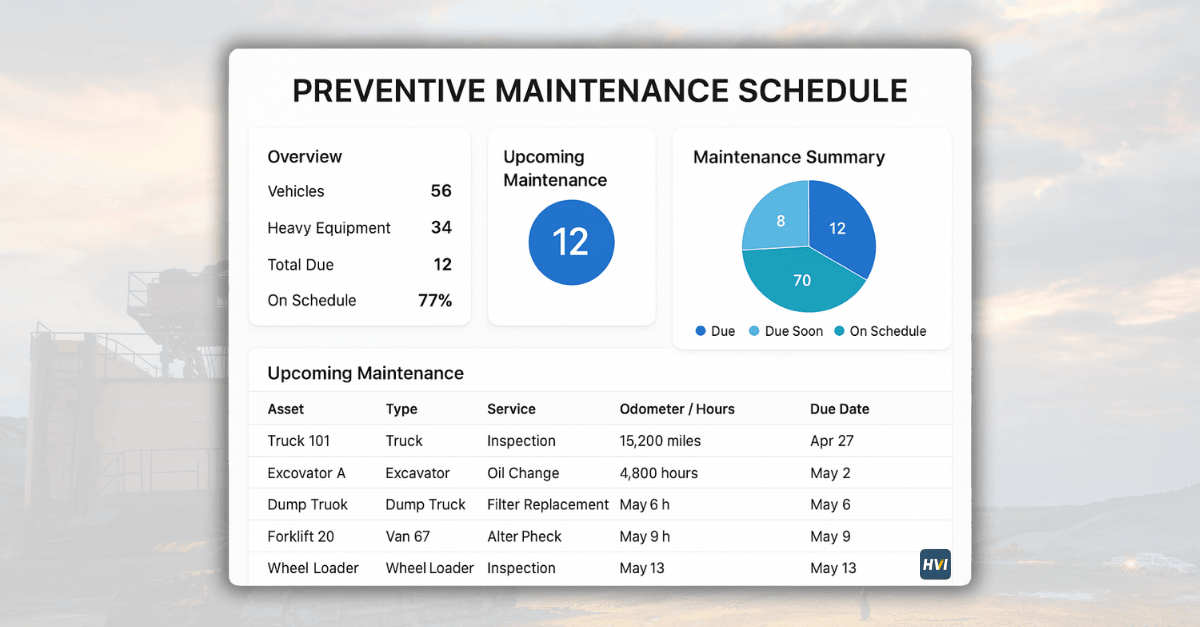
Schedules every service interval automatically so nothing is missed and preventive maintenance stays on track.
Real-time diagnostics
Surfaces issues as they emerge, helping you catch problems before they escalate into costly downtime.
Digital inspection checklists
Standardized digital checklists make inspections faster, more consistent, and fully recorded for compliance.
With these features, HVI makes it easier than ever to prevent costly downtime and keep your construction equipment performing at its best.
The bottom line
By implementing these five essential construction equipment maintenance tips, you can reduce the risk of unexpected breakdowns, extend the lifespan of your machinery, and keep your projects running smoothly. Remember, proactive maintenance is always more cost-effective than reactive repairs. With automated scheduling, real-time diagnostics, and digital inspection checklists in one platform, HVI helps you optimize your maintenance practices, reduce downtime, and increase overall efficiency.
Ready to take control of your equipment maintenance?
See how HVI helps you optimize your maintenance practices, reduce downtime, and increase overall efficiency — with automated maintenance scheduling, real-time diagnostics, and digital inspection checklists in one platform. Let's keep your construction projects on track together.
No credit card required · Automated scheduling + real-time diagnostics + digital inspection checklists in one platform