A ratchet strap that looked fine at the yard is now frayed halfway through, sixty miles into a haul with 46,000 lbs of steel coil riding behind you. On a flatbed, the trailer passing inspection is only half the job — the securement gear is the other half, and it's the half most fleet software ignores. Flatbed fleet maintenance software that actually fits open-deck work has to inspect the straps, chains, binders, and tarps as seriously as the brakes. Book a demo to see HVI built for flatbed carriers
Maintenance software that inspects the deck and the securement gear
eDVIR, strap & chain condition tracking, defect-to-work-order, and FMCSA securement records — all on the driver's phone.
Why flatbed needs more than engine maintenance software
Dry van fleets inspect a sealed box. Flatbed carriers inspect an open deck, a dozen or more pieces of securement gear, and a load that's exposed to the road the whole way. A worn strap or a cracked deck board doesn't just fail an inspection — it drops a load on the interstate. Any flatbed fleet maintenance software that only watches the engine and brakes is missing the exact things that cause the headline incidents.
Ratchet straps
Cuts, fraying, UV wear & hardware checked each trip.
Chains & binders
Grade, stretch, gouges & binder function inspected.
Tarps & edge guards
Tears, grommets, bungees & corner protectors logged.
Winches & track
Sliding winches, weld points & track rail condition.
When each strap set, chain, and tarp is a tracked item with a condition state and a working-load-limit record, a frayed strap gets swapped at the yard — not discovered on the shoulder of I-80. Start free and track your securement gear from day one
The flatbed pre-trip & securement checklist HVI loads by default
FMCSA §393 makes the driver responsible for securement before and during the trip, and flatbed is where cargo-securement violations concentrate. This is the checklist HVI ships ready to run — the deck, the gear, and the load, signed on the phone before the wheels turn.
Deck & trailer
- Deck boards — cracks, rot, missing
- Rub rails & side rails secure
- Stake pockets & D-rings intact
- Winch track & sliding winches
- Headboard / bulkhead condition
- Tires, brakes, lights, landing gear
- Suspension, springs, air bags
Securement gear
- Straps — cuts, fraying, UV damage
- Ratchet hardware works & locks
- Chains — grade, stretch, gouges
- Binders function & secure
- Edge protectors / corner guards
- Count straps/chains vs load need
- Working Load Limit (WLL) adequate
Load & compliance
- Load centered & weight distributed
- Tie-down count meets §393 minimum
- Tarp secured, no flapping edges
- Blocking / bracing where required
- Overhang flags / lights if needed
- Re-check plan after first 50 miles
- Permits & oversize markings
Every item signed, every defect photographed, every inspection timestamped. When a DOT officer checks securement at the scale, your record is already built and defensible. Start free — the flatbed checklist is loaded on day one
Built for every deck you run
Flatbed isn't one trailer. A step-deck tarps differently than a standard flat, and an RGN has its own ramp and gooseneck wear points. HVI lets you template the inspection per deck type so the checklist matches what the driver is actually walking around.
Standard flatbed
48'–53' open deck. Straps, chains, full tarp sets, winch track.
Step-deck / drop
Lower deck for taller loads. Extra tarp area, ramp & deck-drop wear.
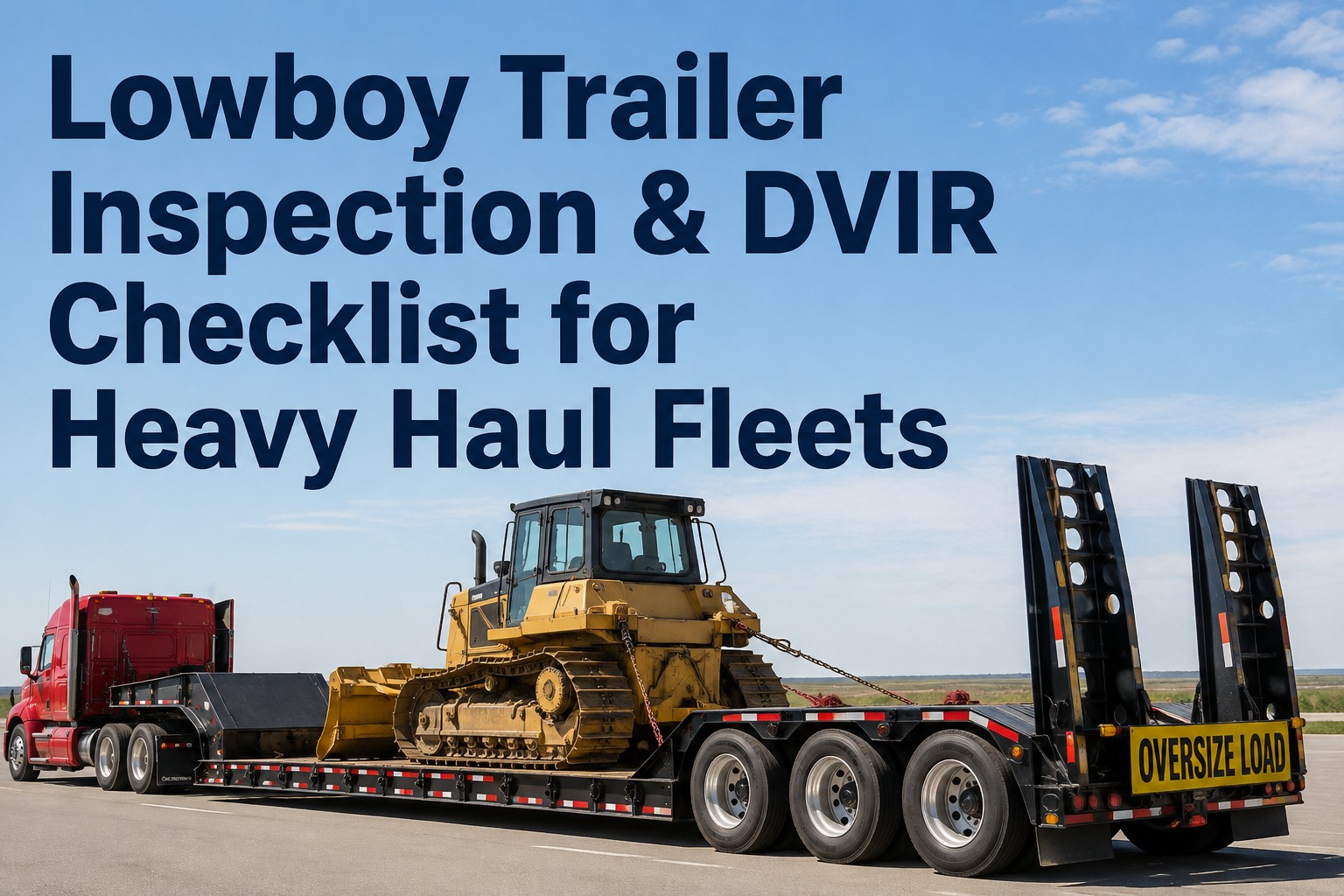
RGN / lowboy
Detachable gooseneck for heavy equipment. Ramp, hydraulics, axle load.
Conestoga / curtain
Rolling tarp system. Rail, bows & sliding-cover mechanism checks.
One template per trailer type means the inspection never asks a step-deck driver about gear a standard flat has, or skips the ramp checks an RGN needs. Book a demo to see per-deck inspection templates
What a securement failure actually costs
A cargo-securement violation at a roadside inspection is one of the fastest ways to rack up CSA points and an out-of-service order — and a strap that lets go at speed is a lost load, a closed lane, and potentially a liability claim with a lot of zeros. The gap between those outcomes and a clean record is a thirty-second gear check.
Per FMCSA roadside-inspection data, cargo-securement violations are consistently among the most-cited categories for flatbed operations — and most trace back to gear that was already worn before the trip started. HVI's securement tracking is built to catch exactly that. Book a demo to see securement defect capture in action
Engine-only tracking vs. full flatbed tracking
Engine & brakes only
- Securement gear tracked on paper, if at all
- No wear state or WLL record per strap/chain
- Deck board & rub rail damage goes unlogged
- §393 compliance rebuilt by hand at audit
- No photo trail for a disputed violation
- Same checklist for every trailer type
Deck, gear & load
- Straps, chains, tarps tracked as serviceable items
- Condition state & WLL logged per device
- Deck & rub-rail defects photo-logged to the asset
- §393 securement file exportable as signed PDF
- Every defect photo-stamped with time & place
- Per-deck templates: flat, step, RGN, Conestoga
The carriers that pass securement checks and win claims aren't guessing — they have the gear history to prove it. Start a free trial and build that history automatically
From a flatbed safety manager
Our drivers were good about the walk-around but the straps were a black hole. Nobody knew how old a strap set was, when it was last inspected, or which trailer it lived on. We found out the hard way when one let go on a ramp exit — thankfully it was a short drop, but the DOT audit that followed was ugly because we had nothing in writing.
Putting strap and chain condition on the same signed inspection as the brakes changed the whole culture. Drivers started retiring gear on a schedule instead of running it till it failed. Our cargo-securement violations went to basically zero, and when a shipper claimed a load shifted, we had the signed pre-trip to shut it down.
What's inside HVI for flatbed carriers
Securement gear tracking
Straps, chains, binders, and tarps logged with condition state and working-load-limit.
Deck & securement eDVIR
Signed, timestamped, photo-logged pre-trip covering deck, gear, and load.
Defect-to-work-order
A frayed strap or cracked deck board opens a work order and routes to the shop.
PM & gear-swap cycles
Mileage-based PM plus scheduled retirement of straps and chains before they fail.
Per-deck templates
Flatbed, step-deck, RGN, and Conestoga each get the right inspection items.
§393 & DOT export
Securement and inspection records as a signed PDF for any officer or auditor.
All of it on the driver's phone at the yard and the web dashboard back at the office. Start a free trial and have your fleet live this week
Frequently asked questions
Can HVI track securement gear like straps, chains, and tarps?
Yes. HVI logs straps, chains, binders, and tarps as serviceable items with a condition state and working-load-limit record, so worn gear is flagged and swapped on a schedule instead of failing on the road.
Does HVI help with FMCSA §393 cargo securement compliance?
Yes. The default flatbed checklist covers tie-down counts, WLL, deck condition, and securement gear, and every inspection is signed and timestamped so your §393 records are audit-ready.
Can I use different inspection templates for step-deck or RGN trailers?
Yes. HVI lets you build a template per deck type, so a step-deck, RGN, or Conestoga inspection asks about the right ramps, winches, and gear instead of a one-size checklist.
Does a securement defect automatically create a work order?
Yes. When a driver flags a frayed strap, bad binder, or cracked deck board, HVI opens a work order and routes it to the shop so the fix is tracked to completion.
How fast can a flatbed fleet get running on HVI?
Most carriers run their first signed inspection within a day or two of signup. Full setup of trucks, trailers, deck templates, and driver logins typically takes under two weeks.
Run the deck, the gear, and the load on one record
Inspections, securement-gear condition, defect-to-work-order, and §393 records — signed at the yard and filed before the wheels turn.
No credit card · No hardware install · Securement file from day one
-
Securement gear trackingStraps, chains, tarps with WLL
-
Deck & securement eDVIRSigned & photo-logged pre-trip
-
Defect → Work OrderFrayed gear caught before dispatch
-
Per-deck templatesFlat, step, RGN, Conestoga
-
§393 exportAudit-ready signed PDF, any time
-
Gear-swap schedulingRetire straps before they fail