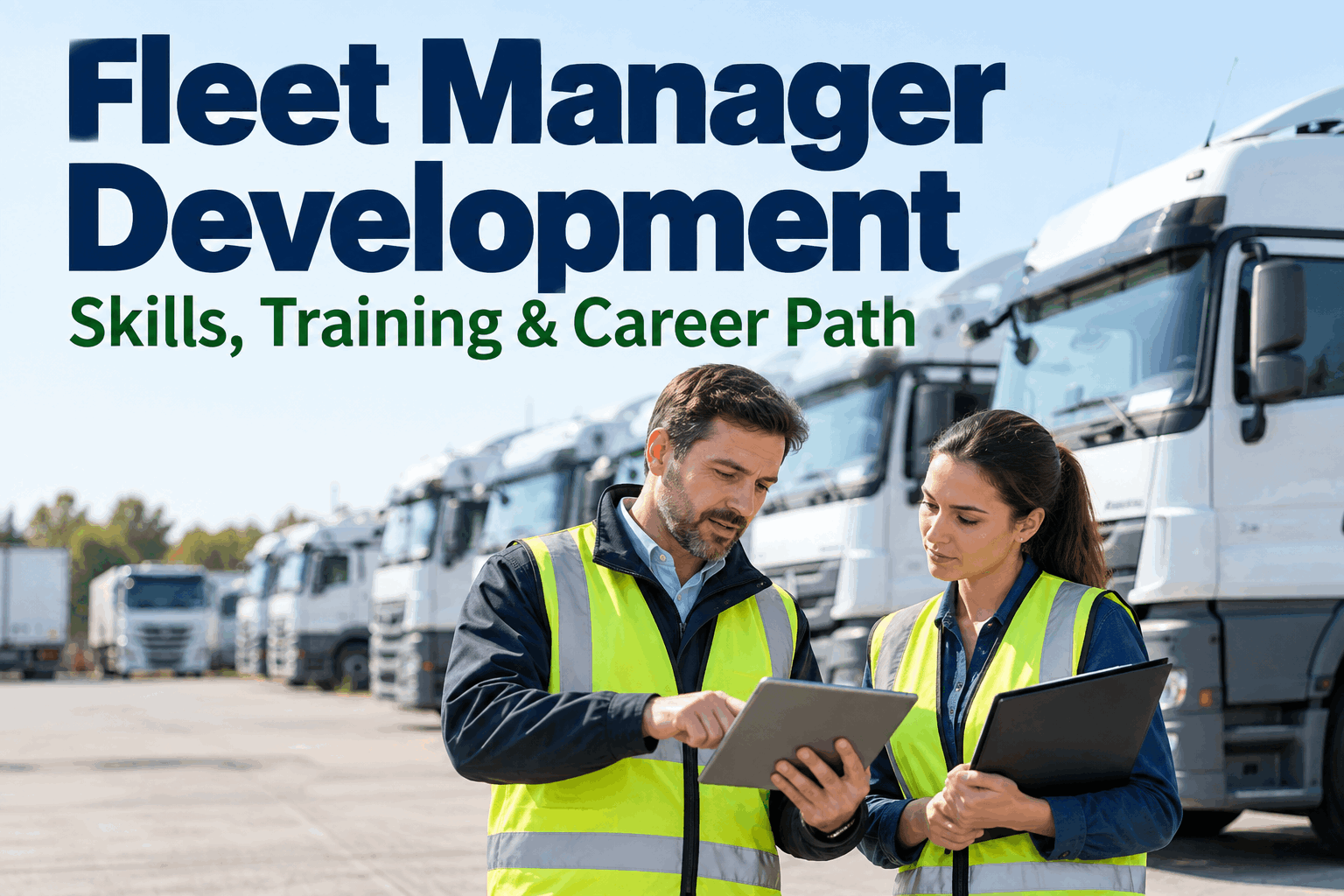
Fleet manager development is no longer limited to learning vehicles and maintenance operations. Modern fleet leaders work across maintenance strategy, data analysis, budgeting, compliance, procurement, technology and people management. A structured development programme gives employees a visible path forward while helping organizations build the management capability needed for increasingly complex fleet operations.
Build the Skills Behind the Next Generation of Fleet Leaders
Map the progression from operational expertise to fleet leadership with defined competencies, practical experience, qualifications, mentoring and measurable development records.
A useful development programme does not assume that a strong technician automatically becomes a strong manager. The responsibilities change. Supervisors and managers must interpret fleet information, control costs, communicate decisions, manage suppliers, understand operational risk and develop people. The goal is therefore to identify the fleet manager skills required at each career stage and deliberately create opportunities to build them.
The Job Changes Before the Title Does
Employees preparing for fleet management often already understand vehicles, inspections, repairs and shop realities. Their biggest development needs may sit outside those technical strengths.
As responsibility increases, success depends less on personally solving every operational problem and more on building systems that help the entire team make consistent decisions.
Six Capabilities Modern Fleet Managers Need to Develop
A balanced development plan combines operational credibility with analytical, commercial and leadership capability. The required depth will vary by fleet, role and organizational structure.
MANAGER balanced capability
Maintenance and Asset Management Knowledge
Fleet managers do not need to personally perform every repair, but they need enough technical understanding to evaluate maintenance priorities, question recurring failures, understand preventive maintenance strategy and communicate effectively with technicians and suppliers.
Fleet Data Analysis and KPI Interpretation
Dashboards only create value when managers can interpret what the numbers mean. Development should include reading maintenance trends, availability, downtime, cost information, inspection activity and other operational indicators relevant to the fleet.
Budgeting, Cost Control and Lifecycle Thinking
A manager needs to move beyond knowing what a repair costs. Development should cover budget preparation, cost categories, maintenance expenditure, replacement decisions and the trade-offs involved in keeping, repairing or replacing assets.
Compliance Awareness and Documentation
Fleet leaders need to understand the requirements that apply to their operation and the internal processes used to manage them. That includes knowing where records live, who owns required actions and how qualification, inspection and maintenance information is reviewed.
Procurement, Suppliers and Contract Management
Managers increasingly participate in equipment acquisition, outsourced maintenance, parts supply and technology purchasing. They need to define requirements, compare proposals, understand service expectations and evaluate supplier performance against operational needs.
Communication, Coaching and Team Development
Leadership requires more than assigning work. Fleet managers must set expectations, explain priorities, handle difficult conversations, coach employees, recognize development needs and communicate fleet issues to people outside the maintenance function.
Keep Qualifications, Procedures and Fleet Information Connected
HVI can support workforce development with qualification records, expiry visibility, operational procedures, analytics and role-based fleet information.
What Development Can Look Like at Each Career Stage
Career paths do not need to be identical. The important step is defining what broader responsibility looks like and what evidence demonstrates readiness for the next level.
Build operational knowledge and understand how fleet records, maintenance processes and procedures connect.
Learn to coordinate people and workflow while balancing safety, productivity, service demand and maintenance priorities.
Take ownership of performance, budgets, vendors, compliance processes, workforce capability and operational decision-making.
Translate operational information into fleet strategy, capital planning, organizational priorities and long-term workforce capability.
Start Development With the Gap, Not the Course
Fleet manager training is more effective when it responds to a defined development need. Before assigning courses or qualifications, assess what the role requires and where the employee currently stands.
A competency review can combine manager observations, practical assignments, performance evidence, qualifications and employee career goals. The output should be a manageable development plan rather than an overwhelming list of weaknesses.
Fleet Manager Development Should Happen in More Than a Classroom
Formal learning can provide structure, but management capability also develops through practical responsibility, feedback and exposure to decisions outside an employee’s current role.
Training & Qualifications
Use relevant courses, industry programmes and qualifications to build structured knowledge where the competency gap requires it.
Mentoring & Coaching
Pair developing managers with experienced leaders who can explain decisions, challenge assumptions and provide regular feedback.
Stretch Assignments
Give employees controlled responsibility for projects involving finance, procurement, compliance, technology or other departments.
Operational Projects
Let future leaders own a KPI review, cost initiative, vendor evaluation or process improvement and present the outcome.
Use Credentials as Evidence—Not as the Entire Development Plan
Fleet manager qualifications and professional certifications can validate knowledge and create useful learning structure. Their relevance depends on geography, fleet type, job responsibilities and the professional bodies operating in your market.
Organizations should identify which qualifications are required, preferred or useful for each role rather than assuming every employee needs the same credential.
Qualifications, licences or authorizations specifically required for assigned responsibilities.
Fleet, maintenance, safety, finance or management learning aligned with the position.
Development that prepares the employee for responsibilities beyond the current position.
HVI Supports the Management System Around Development
HVI is not a fleet management training or certification provider. Its role is different: helping fleet organizations keep operational information, procedures and workforce records visible while managers develop and perform their responsibilities.
See HVI for fleet qualification tracking →Maintain visibility into documented workforce qualifications.
Help teams identify time-sensitive qualification records.
Give managers access to standardized operational processes.
Support management conversations with operational information.
Present relevant fleet information for different responsibilities.
Support visibility into records and processes managed by the fleet.
Career Development and Succession Planning Should Reinforce Each Other
A career path becomes more valuable when it also protects organizational continuity. Fleets can identify positions where retirement, promotion or turnover would create a knowledge gap and deliberately prepare potential successors.
Which positions would create significant operational disruption if suddenly vacant?
Document procedures, vendor knowledge, recurring decisions and asset-specific expertise.
Compare potential candidates against the competencies actually required by the role.
Use mentoring, assignments and formal learning to build missing capabilities.
Turn Career Ambition Into Specific Development Actions
A practical plan should be short enough to use regularly. Focus on a small number of capabilities, assign meaningful actions and agree how progress will be demonstrated.
Give Developing Fleet Leaders Better Operational Information
See how HVI can support qualification records, procedures, fleet analytics, cost visibility and role-based operational workflows.
Measure Progress Through Capability, Not Attendance Alone
Completing training can be useful evidence, but it does not automatically prove that a manager can apply the learning. Review development through observable responsibilities and results.
Can the employee explain the concept and its relevance to the fleet?
Can the employee apply it during real operational work?
Can the employee manage the responsibility without continuous direction?
Can the employee improve the process and coach others effectively?
Build Fleet Managers Before You Need to Fill the Role
Effective fleet manager career development starts by defining what good management looks like in your organization. Technical expertise remains important, but progression increasingly requires financial judgment, analytical capability, supplier management, regulatory awareness, communication and people leadership.
Create a visible fleet management career path, assess competency gaps and combine formal learning with mentoring, cross-functional exposure and real responsibility. Review development regularly and connect succession planning with knowledge transfer so critical capability does not disappear when experienced employees leave.
Technology should support that process rather than pretend to replace it. HVI can help organizations maintain qualification records, procedures and operational visibility while managers build their capabilities. Book an HVI demo for fleet qualification tracking or start free.
Fleet Manager Development FAQs
Common questions about skills, training, qualifications and career progression for fleet management professionals.
01 What skills does a fleet manager need?
Fleet manager skills commonly span maintenance and asset knowledge, data analysis, KPI interpretation, budgeting, lifecycle cost management, compliance awareness, supplier management, communication and people leadership. The required depth depends on fleet size, asset types, organizational structure and the manager’s responsibilities.
02 How can a technician prepare to become a fleet manager?
A technician can build beyond technical expertise by gaining experience in scheduling, KPI reviews, budgeting, supplier discussions, compliance processes and team leadership. Mentoring and controlled stretch assignments can expose the employee to management decisions before they assume full responsibility for them.
03 What should a fleet manager training plan include?
Start with the competencies required by the role and assess the employee against them. Then combine relevant formal learning with practical assignments, mentoring, cross-functional exposure and measurable responsibilities. Each development action should have an expected outcome and a review point.
04 Are fleet management certifications necessary?
Requirements vary by employer, geography and role. Professional qualifications and certifications can provide structured learning and evidence of knowledge, but they should be evaluated against the responsibilities of the position. Organizations should distinguish credentials that are required from those that are preferred or useful for professional development.
05 How can software support fleet manager development?
Fleet software does not replace training, mentoring or leadership experience. It can support the surrounding management process by organizing operational information, qualification records, procedures, cost data, analytics and reporting. HVI can support these records and operational workflows while the organization remains responsible for its training and development programme.
Support Developing Managers With Better Records and Visibility
Explore HVI for qualification records, expiry visibility, procedures, analytics, cost reporting and role-based fleet information.